
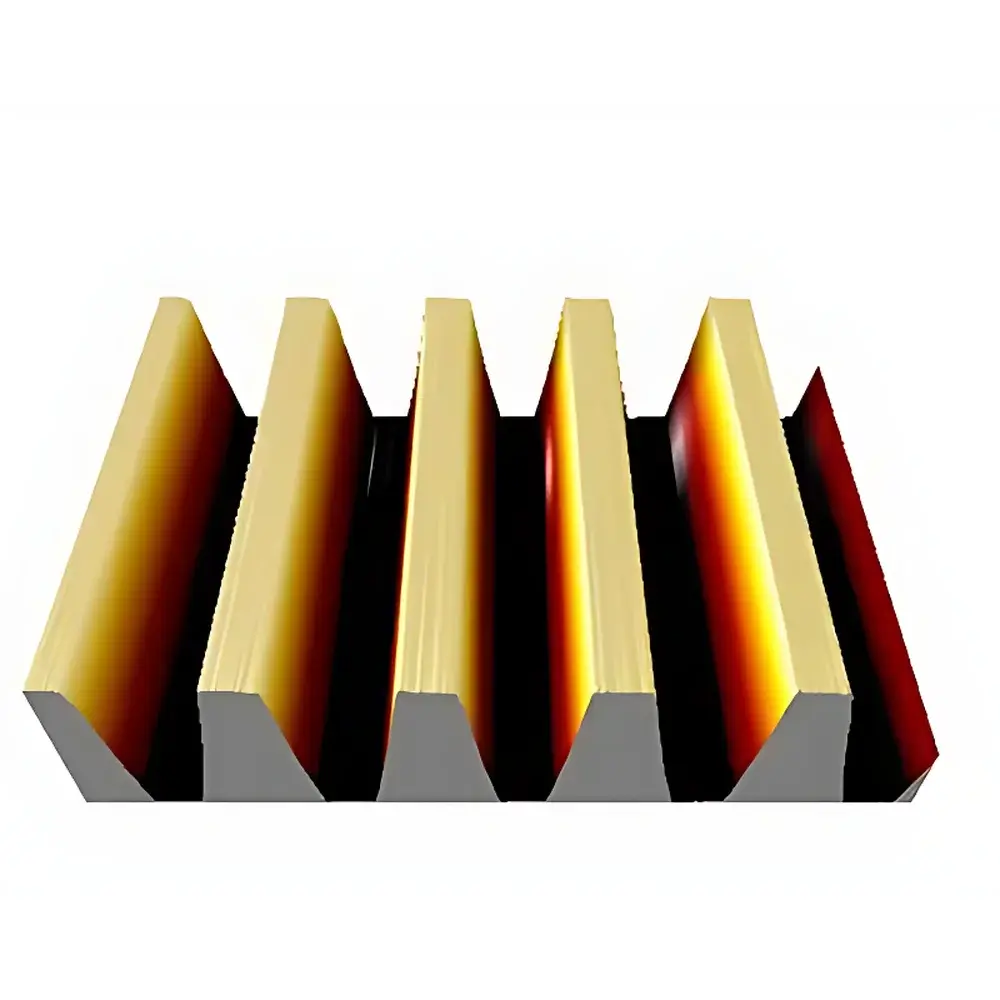
SPIP Surface Analysis Software for Nanoscale Imaging and Quantitative Metrology
| Brand | Image Metrology |
|---|---|
| Model | SPIP 6.0.13 |
| Origin | USA |
| Software Type | Modular SPM/SEM/Interferometry Image Processing Platform |
| Supported Modalities | SPM, SEM, TEM, White-Light Interferometry, Confocal Microscopy, Optical Profilometry, 3D Topography |
| Core Modules | Base Analysis Module + 13 Optional Add-on Modules |
| Compliance | ASTM E2927, ISO 25178-2, ISO/IEC 17025 (data integrity workflows), FDA 21 CFR Part 11-ready audit trail (via optional GLP/GMP module) |
| Licensing | Perpetual node-locked or floating license |
| System Requirements | Windows 10/11 64-bit, ≥16 GB RAM, ≥50 GB SSD storage, OpenGL 4.5-compatible GPU |
Overview
SPIP (Scanning Probe Image Processor) is a rigorously engineered, modular software platform designed for quantitative surface metrology and nanoscale image analysis across multiple high-resolution imaging modalities. Developed since 1995 by Image Metrology A/S—originating from Dr. Jan F. Jørgensen’s doctoral research at the Technical University of Denmark—the software implements standardized algorithms rooted in ISO 25178-2 (Geometrical product specifications – Surface texture), ASTM E2927 (Standard Practice for Measurement of Surface Roughness Using Atomic Force Microscopy), and traceable calibration frameworks validated in collaboration with national metrology institutes including DTU and the Danish Fundamental Metrology Institute. SPIP operates as a vendor-neutral data processing environment, accepting native file formats from major SPM platforms (e.g., Bruker, Keysight, Park Systems), SEM/TEM systems (Thermo Fisher, Zeiss, JEOL), white-light interferometers (Zygo, Sensofar), confocal microscopes (Leica, Olympus), and optical profilers. Its architecture supports pixel-level metrological traceability, enabling repeatable, inter-laboratory comparable measurements of topography, roughness, particle distribution, grain boundaries, step heights, and tip-sample interaction features.
Key Features
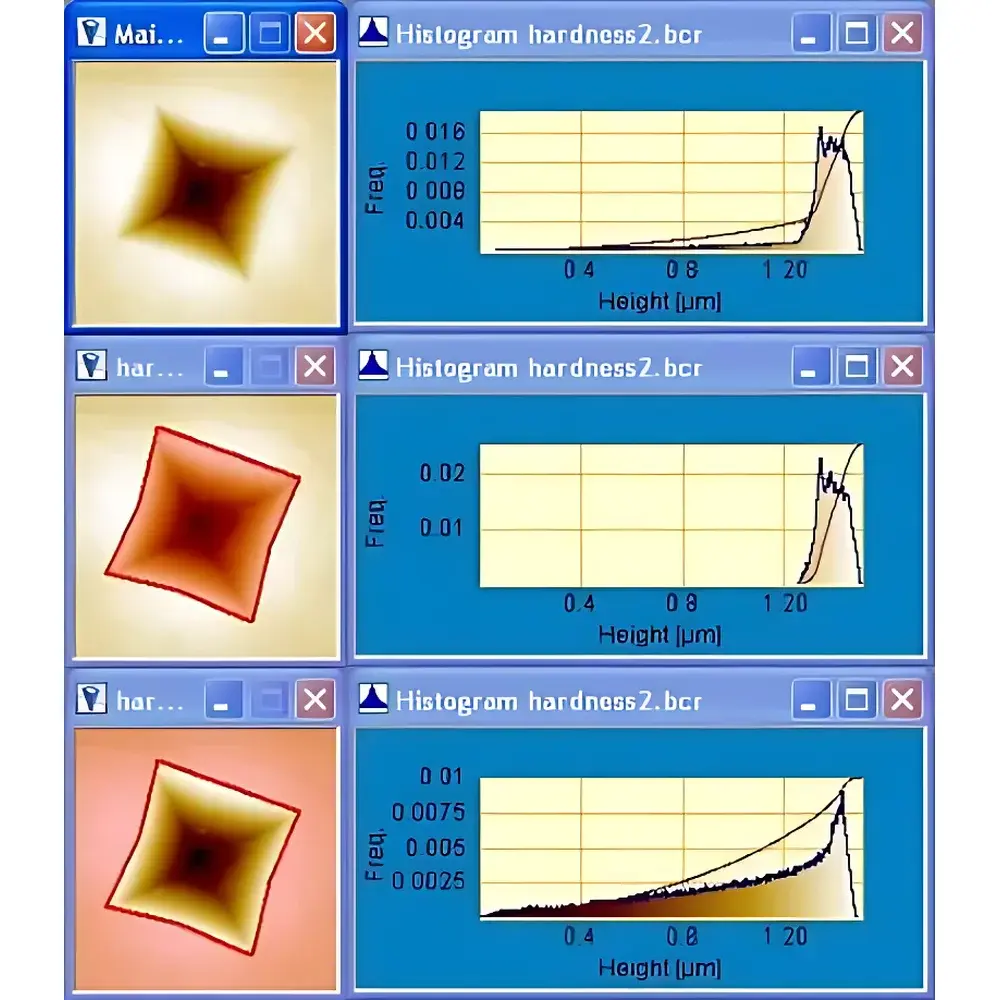
- Modular Architecture: Base module includes file import/export (over 120 native formats), planar and polynomial flattening, height histogram generation, cross-section extraction, and ISO-compliant roughness parameter calculation (Sa, Sq, Sz, Sdr, etc.).
- Advanced Signal Enhancement: Implements correlation averaging, adaptive Gaussian and median filtering, wavelet-based denoising, and extended Fourier analysis—including power spectral density (PSD) computation and lateral resolution assessment per ISO 25178-3.
- Tip Characterization & Deconvolution: Integrated tip modeling tools support blind tip reconstruction (BTR), tip convolution simulation, and deconvolved topography correction to mitigate artifacts in high-aspect-ratio feature imaging.
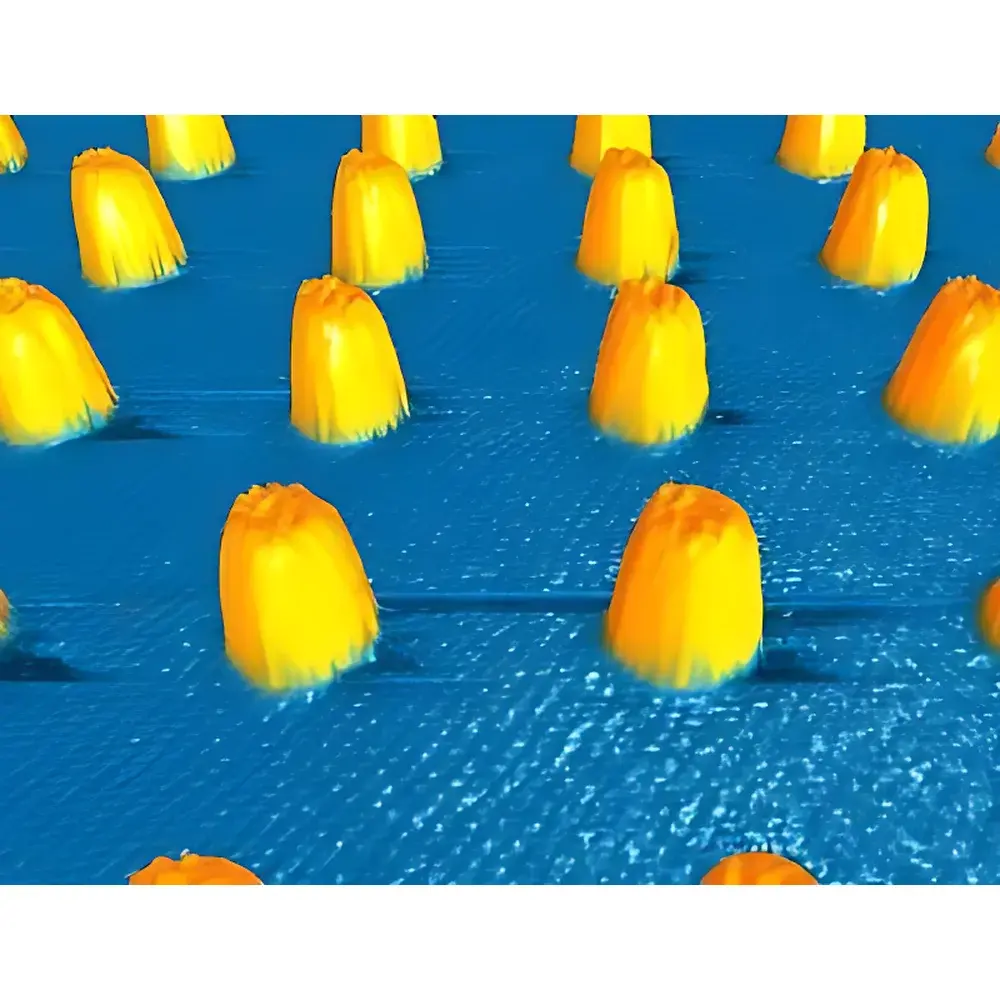
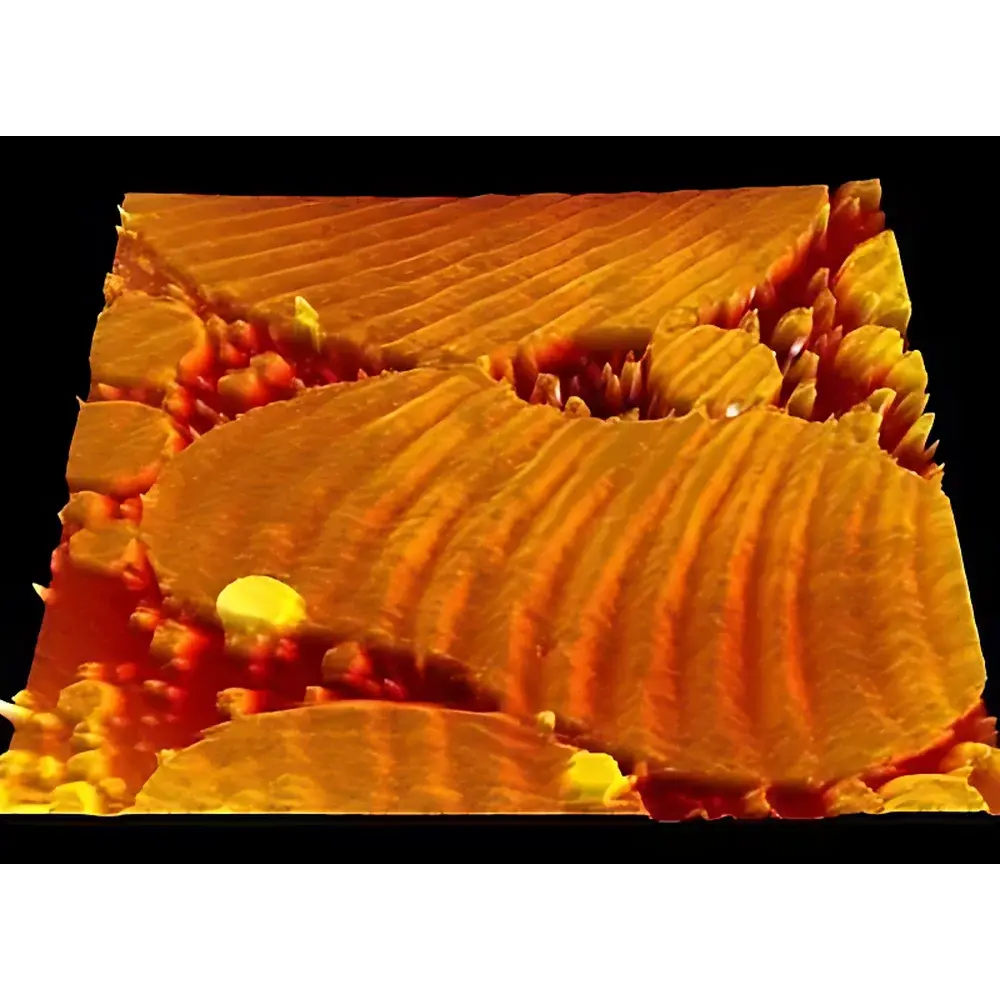
- Quantitative 3D Visualization: GPU-accelerated rendering engine enables real-time rotation, lighting adjustment, false-color mapping, and iso-surface extraction for volumetric feature identification.
- Automated Batch Processing: Scriptable workflow engine (Python API) allows unattended processing of hundreds of images with customizable reporting templates compliant with GLP/GMP documentation standards.
- Time-Series & Video Analysis: Supports temporal evolution tracking of surface dynamics—including oxidation, etching, or self-assembly—with frame-by-frame parameter export and drift compensation.
Sample Compatibility & Compliance
SPIP processes data from conductive and non-conductive samples imaged under ambient, vacuum, or liquid environments. It accommodates diverse material classes—including semiconductors (Si, GaN, SiC wafers), thin-film coatings (ITO, DLC, ALD layers), polymers, biomaterials (collagen scaffolds, lipid bilayers), and geological specimens—without requiring proprietary hardware lock-in. All measurement routines adhere to ISO/IEC 17025 requirements for method validation, and optional modules provide full 21 CFR Part 11 compliance—including electronic signatures, immutable audit trails, user role-based access control, and change history logging—validated for regulated QC/QA laboratories in semiconductor manufacturing and medical device R&D.
Software & Data Management
The software employs a hierarchical project structure with metadata tagging (sample ID, instrument ID, acquisition date, operator, environmental conditions). Raw and processed data are stored in HDF5 format with embedded calibration metadata, ensuring long-term readability and FAIR (Findable, Accessible, Interoperable, Reusable) data principles. Integration with LIMS and ELN systems is supported via RESTful API. Version 6.0.13 introduces enhanced DICOM-SPIP interoperability for correlative microscopy workflows and improved memory management for datasets exceeding 10 GB. License management supports both node-locked installations and enterprise-wide floating licenses with centralized administration.
Applications
- Semiconductor process control: Line-width roughness (LWR), trench depth uniformity, CMP endpoint detection
- Advanced materials R&D: Grain size distribution in polycrystalline films, porosity quantification in MOFs and aerogels, defect density mapping in 2D materials
- Biomedical surface engineering: Cell adhesion topography correlation, protein monolayer thickness validation, stent coating homogeneity assessment
- Tribo-corrosion studies: In-situ wear track volume loss quantification, oxide layer thickness profiling
- Standards calibration: Transfer of traceability from NIST-traceable step-height standards to production instruments
FAQ
Does SPIP support real-time processing during SPM acquisition?
No—SPIP is an offline post-processing platform. It does not interface directly with microscope control hardware but accepts exported scan files with full metadata preservation.
Can SPIP import and analyze SEM images with EDS elemental maps?
Yes—SPIP imports SEM TIFF/RAW files with spatial calibration; EDS maps can be overlaid and co-registered using fiducial-based alignment tools in the Correlative Microscopy Module.
Is training and technical support included with purchase?
Image Metrology provides documented installation, a comprehensive digital user manual, and optional on-site or remote application-specific training. Support contracts include priority email response and annual software updates.
How is calibration traceability maintained across different instruments?
SPIP embeds calibration parameters within each dataset (e.g., Z-sensitivity, lateral scaling, scanner nonlinearity coefficients) and supports user-defined calibration certificate import for audit-ready documentation.
Are custom algorithm developments possible?
Yes—licensed users may access the C++ SDK and Python API to develop and integrate domain-specific analysis routines, subject to Image Metrology’s software development agreement.



