
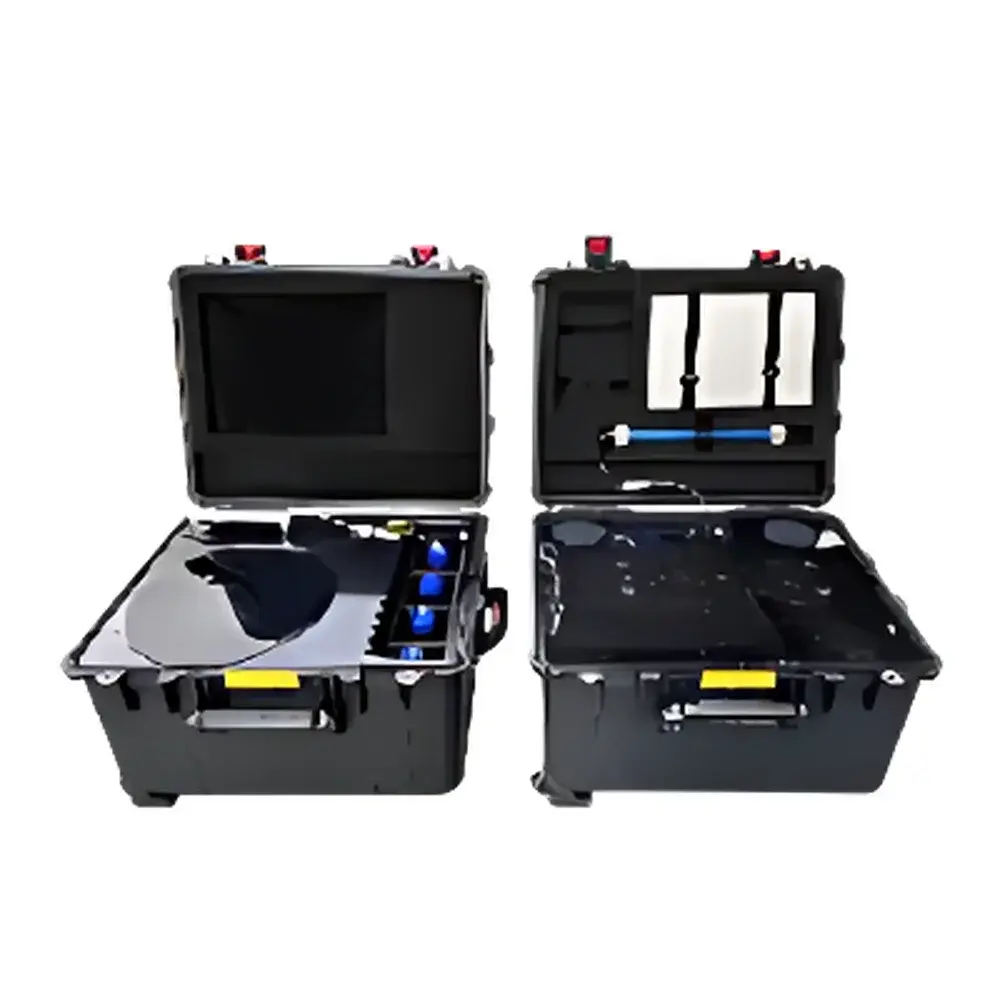
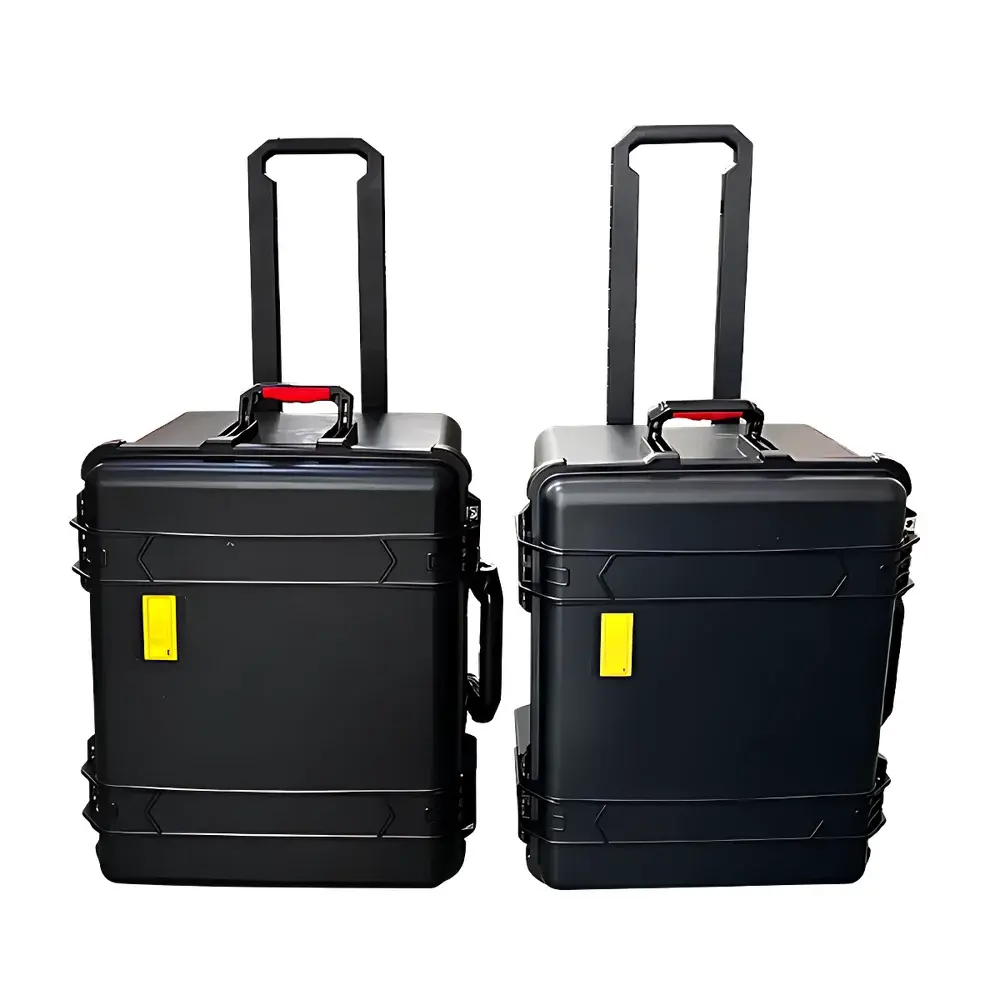
Beiyu Technologies SGMA-730 Portable Gas Phase Molecular Absorption Spectrometer
| Brand | Beiyu Technologies |
|---|---|
| Origin | Shanghai, China |
| Manufacturer Type | Direct Manufacturer |
| Country of Origin | China |
| Model | SGMA-730 |
| Pricing | Upon Request |
Overview
The Beiyu Technologies SGMA-730 Portable Gas Phase Molecular Absorption Spectrometer is an integrated, field-deployable analytical instrument engineered for quantitative determination of nitrogen- and sulfur-containing species in aqueous environmental samples. It operates on the principle of gas-phase molecular absorption spectroscopy (GPMAS), where target analytes—such as ammonia nitrogen (NH₃-N), total nitrogen (TN), nitrate nitrogen (NO₃⁻-N), nitrite nitrogen (NO₂⁻-N), sulfide (S²⁻), and Kjeldahl nitrogen—are chemically converted into volatile gaseous molecules (e.g., NO, NO₂, NH₃, H₂S) under controlled reaction conditions. These gaseous species are then swept by carrier gas into an optical cell, where their characteristic absorption intensities at specific UV–visible wavelengths (e.g., 193.0 nm for NO, 214.4 nm for NO₂, 258.0 nm for NH₃, 202.6 nm for H₂S) are measured with high spectral resolution. The SGMA-730 implements this methodology in a compact, battery-compatible platform optimized for rapid, on-site water quality assessment—particularly in emergency response, watershed monitoring, and regulatory compliance verification scenarios where laboratory access is limited.
Key Features
- Field-ready portable architecture: Fully integrated optical, pneumatic, fluidic, and control subsystems housed within a single lightweight chassis (<18 kg); designed for operation on uneven terrain, vehicle-mounted deployment, or handheld transport via wheeled carry case.
- Self-contained carrier gas generation: Onboard air compressor with integrated desiccant and particulate filtration; dual-mode support for external nitrogen or compressed air supply with pressure regulation and flow stabilization (0–2.0 L/min, ±1% repeatability).
- Real-time automatic moisture removal: Integrated thermoelectrically cooled condenser and hydrophobic membrane separator to eliminate water vapor interference prior to optical detection—critical for maintaining signal stability across variable ambient humidity (20–95% RH).
- Automated standard dilution module: Programmable serial dilution capability (1:2 to 1:1000) using high-precision peristaltic pumps and calibrated syringes; enables multi-point calibration from a single stock standard without manual intervention.
- Ruggedized industrial-grade electronics: Fanless embedded controller with extended temperature range operation (−10 °C to +50 °C); conformal-coated PCBs and shock-absorbing mounting to withstand vibration during transit and field use.
Sample Compatibility & Compliance
The SGMA-730 is validated for direct analysis of raw surface water, groundwater, wastewater effluent, and treated drinking water matrices without pre-filtration (optional 0.45 µm filtration recommended for turbid samples). It complies with six current Chinese Environmental Protection Standards (HJ series), including HJ 195–2023 (ammonia nitrogen), HJ 199–2023 (total nitrogen), HJ 200–2023 (sulfide), HJ 197–2024 (nitrite nitrogen), HJ 198–2024 (nitrate nitrogen), and HJ/T 196–2005 (Kjeldahl nitrogen). While not certified to ISO/IEC 17025 or ASTM D5179/D5428, its measurement traceability aligns with NIST-traceable calibration practices, and data acquisition supports audit-ready metadata logging required under GLP-compliant workflows.
Software & Data Management
Instrument control, method execution, and spectral acquisition are managed through Beiyu’s proprietary SGMA Control Suite v3.2 (Windows 10/11 compatible). The software provides real-time absorbance tracking, dynamic baseline correction, peak integration with configurable dwell time (0.1–5.0 s), and automatic limit-of-detection (LOD) calculation per EPA Method 40 CFR Part 136 guidelines. All raw spectra, calibration curves, sample IDs, operator timestamps, and environmental logs (temperature, pressure, humidity) are stored in encrypted SQLite databases with optional export to CSV, PDF, or XML formats. Audit trail functionality records user login/logout events, parameter modifications, and result approvals—supporting alignment with FDA 21 CFR Part 11 principles for electronic records integrity.
Applications
- Rapid field screening of nutrient pollution in rivers, lakes, and estuaries following rainfall events or industrial discharge incidents.
- On-site verification of wastewater treatment plant effluent compliance with discharge permits (e.g., TN < 15 mg/L, NH₃-N < 5 mg/L).
- Emergency response for accidental spills involving ammonium-based fertilizers, nitrate explosives, or sulfide-containing industrial effluents.
- Mobile laboratory support for environmental consulting firms conducting multi-location surveys across rural or remote watersheds.
- Method validation and inter-laboratory comparison studies where portability and method harmonization across fixed and mobile platforms are required.
FAQ
What sample volume is required per analysis?
Typical analysis consumes 10–25 mL of aqueous sample per test, depending on analyte concentration and selected dilution factor.
Is external power mandatory for operation?
No—the system supports both AC mains (100–240 V, 50/60 Hz) and DC input (12–24 V) for compatibility with optional external lithium-iron-phosphate mobile power stations (up to 8 hours continuous runtime).
Can the SGMA-730 quantify organic nitrogen compounds directly?
No—it measures only inorganic and hydrolyzable nitrogen forms (e.g., NH₃-N, NO₃⁻-N, NO₂⁻-N, TN after alkaline persulfate digestion); organic nitrogen requires prior acid digestion or Kjeldahl conversion.
How often must the optical cell be cleaned?
Under normal field use, cleaning is recommended every 50–100 analyses using ethanol-rinsed lint-free wipes; frequency increases with high-sulfide or high-salinity sample loads.
Is remote firmware update supported?
Yes—via USB or Ethernet connection using signed firmware packages; updates preserve all user-defined methods and calibration history.






