ASTM D323/D4953 Compliant 700 Series Online Reid Vapor Pressure (RVP) Analyzer
| Origin | USA |
|---|---|
| Manufacturer Type | Authorized Distributor |
| Origin Category | Imported |
| Model | 700 Series, ASTM D323, D4953, D5482, D5191 |
| Measurement Range | 0–35 psi (0–250 kPa) |
| Cycle Time | ≤5 min |
| Repeatability | ±0.05 psi (±3.5 mbar) |
| Temperature Control | 37.8 °C ±0.1 °C |
| Pressure Resolution | ±0.01 psi |
| Pressure Accuracy | ±0.01% of full scale |
| Sample Flow Rate | 0.04–0.1 L/min |
| Sample Pressure | 20–35 psi (1.4–2.4 bar), optional up to 120 psi (8.3 bar) |
| Sample Particle Size | ≤10 µm |
| Enclosure Rating | NEMA 4X / IP65 |
| Hazardous Area Certification | NEC Class 1 Div 1 Group C+D / ATEX Zone 1 II 2G IIB+H2 T4 |
Overview
The 700 Series Online Reid Vapor Pressure (RVP) Analyzer is an industrial-grade, continuous-monitoring instrument engineered for real-time determination of vapor pressure in hydrocarbon liquids—primarily gasoline, naphthas, and light distillates—according to the standardized Reid method. It operates on the fundamental thermodynamic principle defined in ASTM D323: a fixed 4:1 vapor-to-liquid volume ratio is established within a sealed, thermostatically controlled test chamber at 37.8 °C (100 °F), and the equilibrium vapor pressure is measured using a high-stability, digital pressure transducer. Unlike offline laboratory testers requiring manual sample transfer and discrete batch analysis, this analyzer integrates directly into process streams via dedicated sampling interfaces, enabling unattended, representative measurement without operator intervention. Its design eliminates complex chromatographic or mass-spectrometric subsystems—relying instead on robust mechanical architecture, precision fluidic control, and deterministic thermal management to deliver metrologically traceable results aligned with regulatory enforcement thresholds (e.g., EPA RVP limits ≤9.0 psi for summer-grade gasoline). With over two decades of field deployment across refineries, pipeline terminals, and blending facilities, the system has demonstrated long-term stability, minimal drift, and compatibility with high-throughput refinery automation infrastructures.
Key Features
- Continuous online operation compliant with ASTM D323, D4953 (for motor fuel), D5482 (for volatile crude oil), and D5191 (mini-method for rapid screening)
- Digital syringe-based sample metering ensures precise 4:1 vapor/liquid ratio establishment without mechanical variability
- Integrated magnetic stirrer accelerates phase equilibration while maintaining consistent temperature uniformity across the measurement chamber
- High-resolution pressure sensing (±0.01 psi) coupled with active diagnostics continuously monitors system integrity—including leak detection, sensor drift, and thermal deviation
- Modular hardware architecture supports scalable configuration: single-stream monitoring, dual-stream parallel sampling (P/N 700171), or high-pressure recirculation (up to 120 psi, P/N 700172)
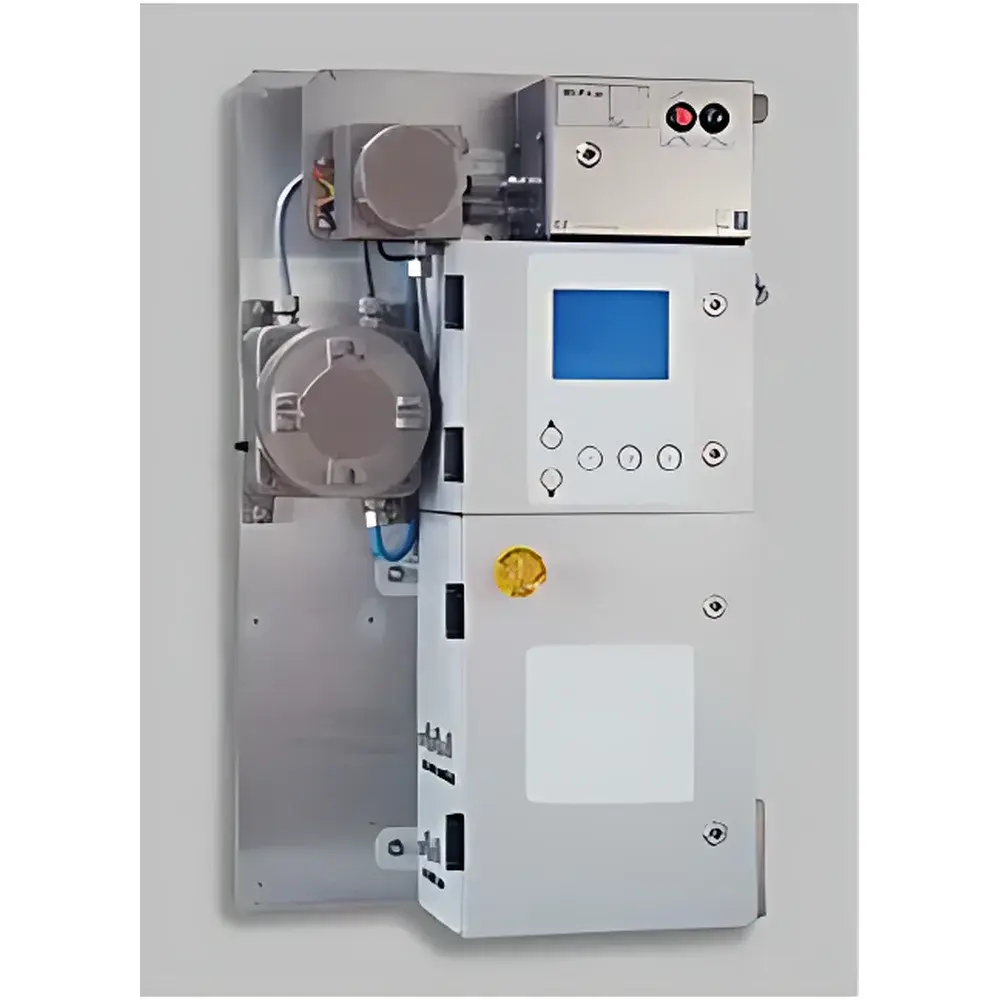
- NEMA 4X/IP65-rated stainless-steel enclosure rated for hazardous locations (NEC Class 1 Div 1 Group C+D; ATEX Zone 1 II 2G IIB+H2 T4)
- Self-zeroing sequence with inert gas purge (dry nitrogen ≥98% purity, 40–100 psi supply) ensures baseline stability between cycles
Sample Compatibility & Compliance
The analyzer accepts homogeneous, anhydrous, single-phase liquid hydrocarbon samples with particle content ≤10 µm. Minimum required sample flow is 0.04 L/min; maximum allowable backpressure is 35 psi (standard), extendable to 120 psi with optional pressure regulation (P/N 700173). Sample temperature must remain within 2–40 °C during delivery to avoid premature volatilization or condensation. The system meets U.S. EPA regulatory requirements for RVP enforcement under the Clean Air Act Amendments of 1990 and is routinely deployed in applications subject to Title 40 CFR Part 80 compliance reporting. All measurements are fully traceable to NIST-certified pressure standards and validated per ASTM E29 and ISO/IEC 17025 principles. Instrument calibration verification protocols support GLP/GMP audit readiness and FDA 21 CFR Part 11-compliant electronic record retention when integrated with approved data acquisition software.
Software & Data Management
The analyzer communicates via 4–20 mA analog output and Modbus TCP/IP digital interface, enabling seamless integration with DCS, SCADA, and LIMS platforms. Optional VisioGraph diagnostic software provides real-time visualization of pressure transients, thermal profiles, cycle status flags, and fault-condition advisories—including predictive alerts for filter clogging, pressure sensor saturation, or purge gas depletion. Audit trails log all operational events (start/stop, calibration actions, alarm triggers) with timestamp, user ID, and contextual metadata. Data export supports CSV and XML formats compatible with statistical process control (SPC) tools such as Minitab and JMP. Firmware updates are performed remotely via secure HTTPS channel, ensuring version control and cybersecurity alignment with IEC 62443-3-3 Level 2 requirements.
Applications
- Real-time RVP control during gasoline blending to maintain specification compliance (≤9.0 psi summer limit) and minimize rework
- Feedstock quality verification at crude unit inlets and hydrotreater off-gas streams
- Automated custody transfer monitoring at pipeline receipt points and marine terminal loading arms
- Process optimization in alkylation and reforming units where vapor pressure correlates with octane distribution
- Regulatory reporting support for EPA Tier 3 gasoline certification and California Air Resources Board (CARB) volatility compliance
FAQ
What standards does the 700 Series RVP Analyzer validate against?
It is fully compliant with ASTM D323 (primary reference), D4953 (motor fuel), D5482 (crude oil), and D5191 (mini-method), and supports validation protocols aligned with ISO/IEC 17025 and EPA Method 25A.
Can it operate in explosive atmospheres?
Yes—the analyzer carries NEC Class 1 Division 1 Group C+D and ATEX Zone 1 II 2G IIB+H2 T4 certifications for installation in classified hazardous areas.
Is manual sample injection required?
No. It uses automated digital syringe metering and pneumatic valve sequencing for fully unattended, continuous operation.
How frequently does it require calibration verification?
Per ASTM D323 Section 8.2, daily zero checks with certified reference gas are recommended; full span calibration is typically performed quarterly or after maintenance, supported by NIST-traceable pressure standards.
Does it support dual-stream monitoring?
Yes—optional dual-inlet sampling module (P/N 700171) enables alternating or simultaneous analysis of two independent process lines with shared analyzer core.