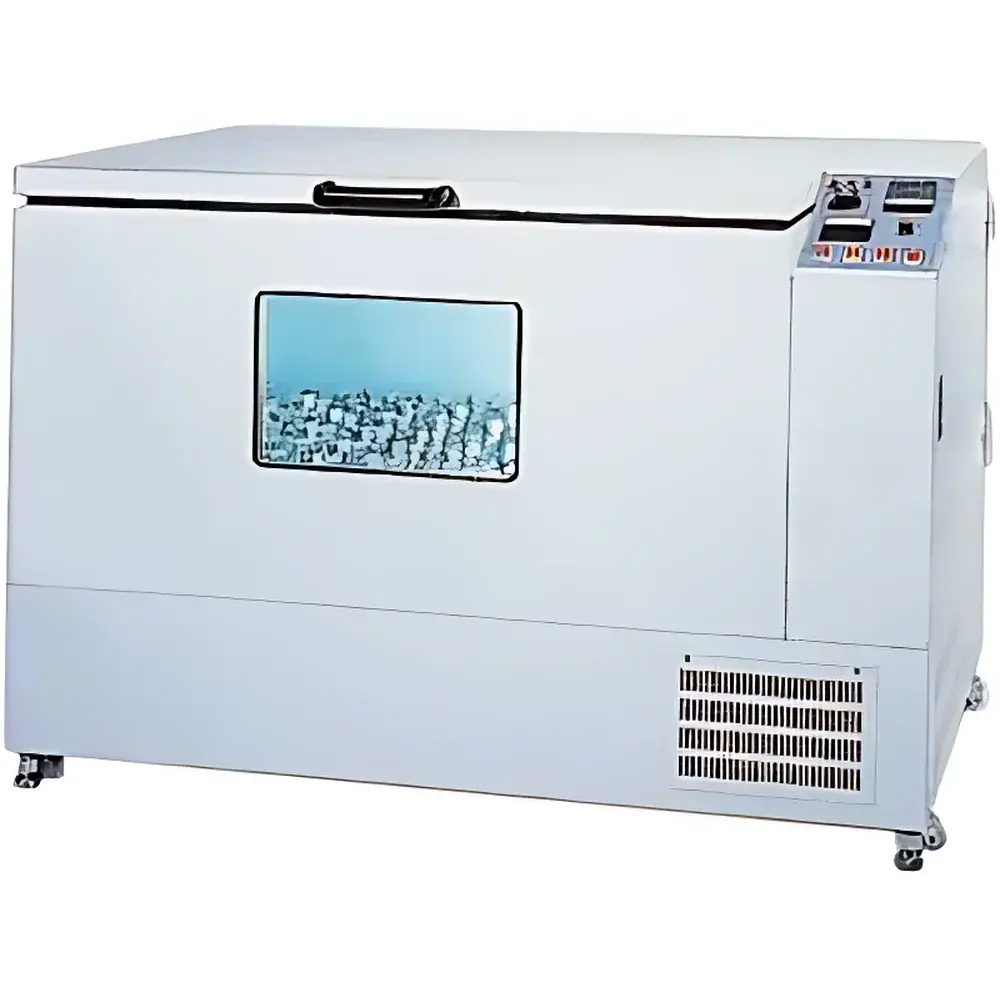
LM-510 Series Cryogenic Orbital Shaker
| Origin | USA |
|---|---|
| Manufacturer Type | Authorized Distributor |
| Origin Category | Imported |
| Model | LM-510 |
| Price | Upon Request |
Overview
The LM-510 Series Cryogenic Orbital Shaker is an engineered platform for precision-controlled, temperature-regulated orbital agitation of biological and biopharmaceutical samples under refrigerated to elevated thermal conditions. Designed around a robust dual-mode thermoelectric and compressor-based cooling architecture—complemented by high-wattage resistive heating—the system delivers stable, programmable temperature control from 0 °C to 60 °C, enabling uninterrupted cultivation of mammalian cells, microbial strains (e.g., E. coli, S. cerevisiae), recombinant protein expression systems, and secondary metabolite production workflows. Its horizontal orbital motion (25 mm or 50 mm eccentricity, selectable by model variant) ensures uniform suspension and oxygen transfer across large-volume vessels without vortexing-induced shear stress. The shaker operates on the principle of controlled centrifugal acceleration (0.8–3.2 g at 250–400 rpm), optimized for scalability from benchtop flask culture to process-relevant bioreactor seed train preparation.
Key Features
- Wide operational temperature range: 0 °C to 60 °C, with independent cooling (¼ HP hermetic compressor) and heating (600 W resistive element)
- PID-controlled microprocessor regulation using PT-100 platinum resistance thermometers, delivering ±0.1 °C stability and ±1 °C uniformity at 37 °C
- Rapid thermal response: ≤15 min for 25 → 60 °C ramp; ≤40 min for 25 → 0 °C ramp
- Large-capacity horizontal chamber (208 L internal volume; 690 × 570 × 530 mm W×D×H) accommodating up to six 6 L flasks or equivalent configurations
- Reinforced stainless-steel chamber with corrosion-resistant coating; tempered glass observation window for real-time monitoring without interruption
- Intelligent safety interlock: automatic motor shutdown upon lid opening, overtemperature cutoff, short-circuit protection, and low-temperature alarm
- Adjustable orbital speed range: 20–400 rpm (LM-510-2) or 20–250 rpm (LM-510-5), with selectable eccentricity (25 mm or 50 mm)
- Shelf dimensions: 600 × 480 mm (W×D); maximum load capacity: 30 kg distributed evenly
Sample Compatibility & Compliance
The LM-510 supports standardized laboratory vessels including Erlenmeyer flasks (50–6000 mL), baffled bottles, and multi-well plates mounted on universal platforms. Its chamber geometry and airflow design comply with ISO 13485-aligned environmental control requirements for GMP-compliant cell banking and upstream bioprocessing steps. Temperature and speed logging—including timestamped setpoint changes and deviation alerts—supports audit readiness for FDA 21 CFR Part 11 when integrated with compliant LIMS or ELN systems. The unit meets IEC 61010-1:2010 safety standards for laboratory equipment and carries CE marking for electromagnetic compatibility (EMC) and low-voltage directive compliance.
Software & Data Management
While the base LM-510 operates via intuitive front-panel controls with LED display, optional RS-485/Modbus RTU or Ethernet (TCP/IP) interfaces enable integration into centralized lab automation networks. Third-party SCADA or LabVantage-compatible drivers permit remote parameter setting, real-time telemetry streaming (temperature, rpm, runtime), and event-triggered data export. All logged parameters—including ambient drift compensation values and compressor duty cycles—are stored in non-volatile memory with GLP-compliant audit trail functionality (user ID, timestamp, action type). Firmware updates are performed via secure USB interface with cryptographic signature verification.
Applications
- Mammalian and insect cell line expansion (CHO, HEK293, Sf9) under hypothermic (10–15 °C) or physiological (37 °C) conditions
- High-density bacterial fermentation (e.g., Pseudomonas, Bacillus) with dissolved oxygen optimization via variable-speed agitation
- Secondary metabolite screening in filamentous fungi (Aspergillus, Penicillium) requiring prolonged low-temperature induction
- Antibody fragment refolding studies involving cold-start denaturation followed by gradual thermal ramping
- Preparation of inocula for single-use bioreactors (SUBs), ensuring consistent viable cell density and metabolic state
- Stability assessment of therapeutic proteins under accelerated thermal stress protocols (ICH Q5C)
FAQ
What is the difference between LM-510-2 and LM-510-5 models?
The LM-510-2 features a 25 mm orbital eccentricity and extended speed range (20–400 rpm), optimized for high-shear-sensitive cultures and rapid mixing. The LM-510-5 uses a 50 mm eccentricity and 20–250 rpm range, prioritizing gentle agitation for viscous media or fragile suspension cells.
Can the LM-510 operate continuously for 72+ hours?
Yes—designed for unattended operation with redundant thermal fusing, compressor thermal overload protection, and continuous duty-cycle-rated motors meeting IE3 efficiency standards.
Is validation documentation (IQ/OQ/PQ) available?
Factory-generated IQ/OQ protocols compliant with ASTM E2500-13 and Annex 15 are provided upon request; PQ execution support includes certified NIST-traceable temperature mapping kits and rpm calibration certificates.
Does it support external humidity control?
No—humidity is not regulated; however, optional desiccant trays or nitrogen purge ports (accessory) mitigate condensation during sub-ambient operation.
What maintenance intervals are recommended?
Compressor oil inspection every 24 months; PT-100 sensor calibration annually; door gasket integrity check quarterly; fan filter replacement every 6 months under continuous use.