
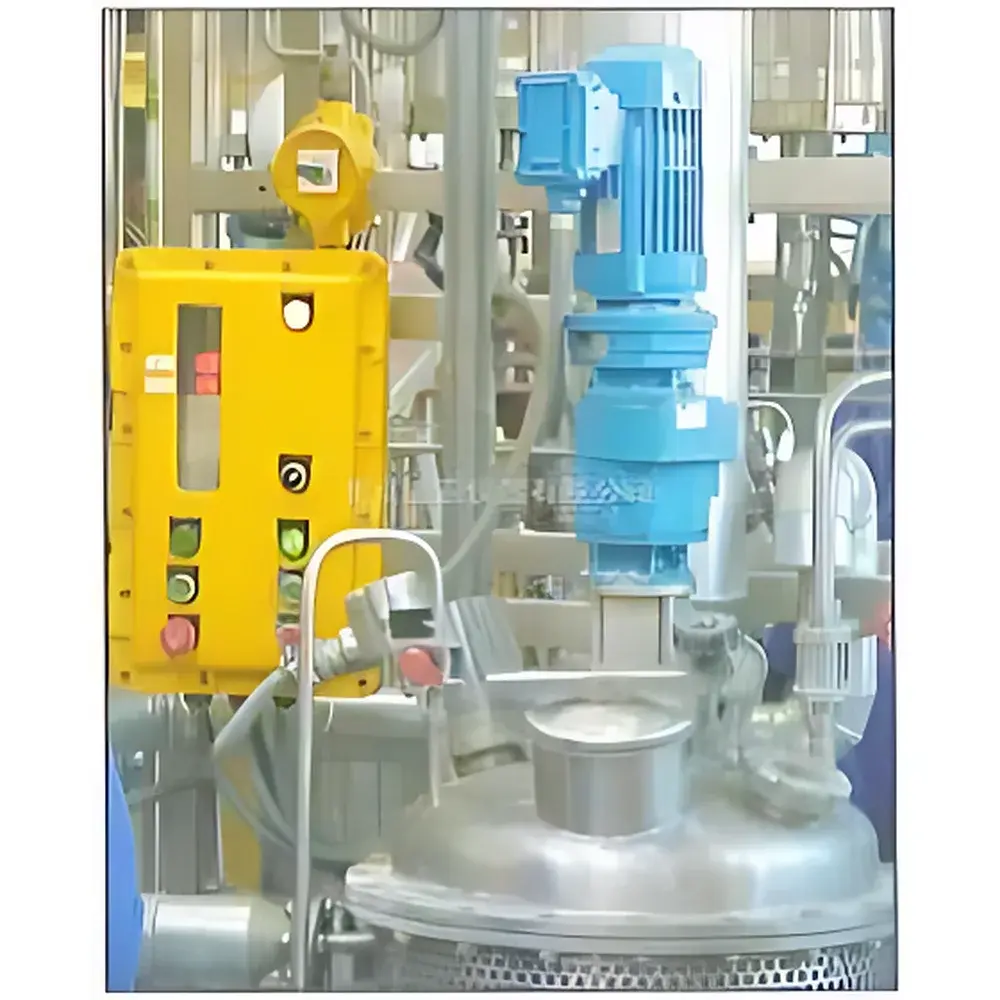
Deasphaltop Deasphalting Distillation Apparatus
| Origin | Czech Republic |
|---|---|
| Manufacturer Type | Authorized Distributor |
| Origin Category | Imported Instrument |
| Model | Deasphaltop |
| Pricing | Available Upon Request |
Overview
The Deasphaltop Deasphalting Distillation Apparatus is an engineered laboratory-scale system designed for the selective removal of asphaltene fractions from base oils via solvent-based deasphalting (SDA). Operating on the principle of differential solubility in non-polar hydrocarbon solvents under controlled pressure and temperature, this apparatus enables precise fractionation of heavy feedstocks—particularly vacuum residua and deasphalted oils—to isolate high-quality, low-asphaltene base oil components. Asphaltene precipitation is induced by introducing n-paraffinic solvents (nC3–nC7) under pressurized conditions, leveraging thermodynamic immiscibility to drive phase separation. The system supports process development aligned with ASTM D3279 (Standard Test Method for Asphaltene Precipitation from Crude Oil Using n-Heptane) and serves as a critical tool for refinery R&D, lubricant formulation laboratories, and catalyst evaluation units requiring reproducible, scalable deasphalting data.
Key Features
- 30 L jacketed stirred reaction vessel rated for continuous operation at up to 60 bar and 200 °C, constructed from ASTM A240 316 stainless steel with ASME Section VIII Div. 1 compliance documentation available upon request
- Integrated feed system featuring a 30 L temperature-controlled stainless steel storage tank and diaphragm metering pump (max. flow: 20 L/h; max. discharge pressure: 150 bar; max. fluid temperature: 100 °C)
- Crystallization vessel equipped with dual thermal management: external heating jacket with thermostatic heat-transfer oil circulation and internal cooling coil for chilled water exchange
- Explosion-proof lighting, sight glass with borosilicate viewport, redundant pressure transducers (0–100 bar, ±0.25% FS), and RTD-based temperature control (±0.5% accuracy across 20–200 °C range)
- Variable-speed agitator (30–600 rpm) with mechanical seal and torque monitoring capability for real-time crystallization kinetics assessment
- 30 L jacketed stainless steel collection vessel with level sensing and vent filtration interface
- Büchner-type filtration unit with double-jacketed stainless steel body, compatible with standard 142 mm filter discs and vacuum-assisted cake dewatering
Sample Compatibility & Compliance
The Deasphaltop accommodates a broad spectrum of petroleum-derived feedstocks—including vacuum gas oils, atmospheric residues, and spent hydroprocessing catalyst slurries—with viscosities up to 500 cSt at 40 °C and asphaltene contents ranging from 1.5% to 25 wt%. Solvent compatibility includes n-propane through n-heptane, with automated pressure regulation enabling safe handling of volatile C3/C4 systems. All wetted surfaces conform to NACE MR0175/ISO 15156 for sour service environments. The apparatus meets CE marking requirements (2014/34/EU ATEX Directive for Zone 1 hazardous areas) and supports GLP-compliant operation when paired with validated electronic logbooks and audit-trail-enabled controllers.
Software & Data Management
While the base configuration features analog/digital hybrid instrumentation with local HMI control, optional integration with LabView™-based acquisition software provides synchronized logging of pressure, temperature, agitation speed, and solvent injection rate at 1 Hz resolution. Data export formats include CSV and TDMS, supporting traceability per FDA 21 CFR Part 11 when combined with user authentication, electronic signatures, and change-control protocols. Calibration records, maintenance logs, and method templates are stored in encrypted SQLite databases with automatic backup to network drives.
Applications
- Optimization of commercial deasphalting unit (DAU) operating parameters—including solvent-to-oil ratio, temperature gradient, and residence time
- Screening of alternative solvents (e.g., mixed n-alkanes or cycloparaffin blends) for enhanced selectivity and reduced energy intensity
- Generation of asphaltene onset curves for fouling propensity modeling in downstream hydrotreaters and FCC feed systems
- Preparation of defined asphaltene-free reference materials for spectroscopic characterization (FTIR, XRD, SARA analysis)
- Supporting ASTM D6560 (Asphaltene Content of Crude Petroleum by n-Heptane Precipitation) method validation studies
FAQ
What solvent types are validated for use with the Deasphaltop system?
n-Propane, n-butane, n-pentane, n-hexane, and n-heptane are fully supported; solvent selection must account for pressure rating limits and flash point safety protocols.
Can the system be operated under inert atmosphere conditions?
Yes—integrated nitrogen purge ports and pressure-relief interlocks allow safe operation under N2 blanket (≤5 bar gauge) during solvent loading and depressurization phases.
Is third-party calibration certification included with delivery?
Factory calibration certificates for all primary sensors (pressure, temperature, flow) are provided; ISO/IEC 17025-accredited field calibration services are available separately.
What maintenance intervals are recommended for the diaphragm pump and agitation seals?
Diaphragm replacement every 1,200 operational hours; mechanical seal inspection every 6 months or after 200 cycles, whichever occurs first.
Does the system support automated solvent recovery?
Not as standard; however, a condensate recovery module with cryogenic trap and vacuum distillation loop can be integrated as a custom option.





