
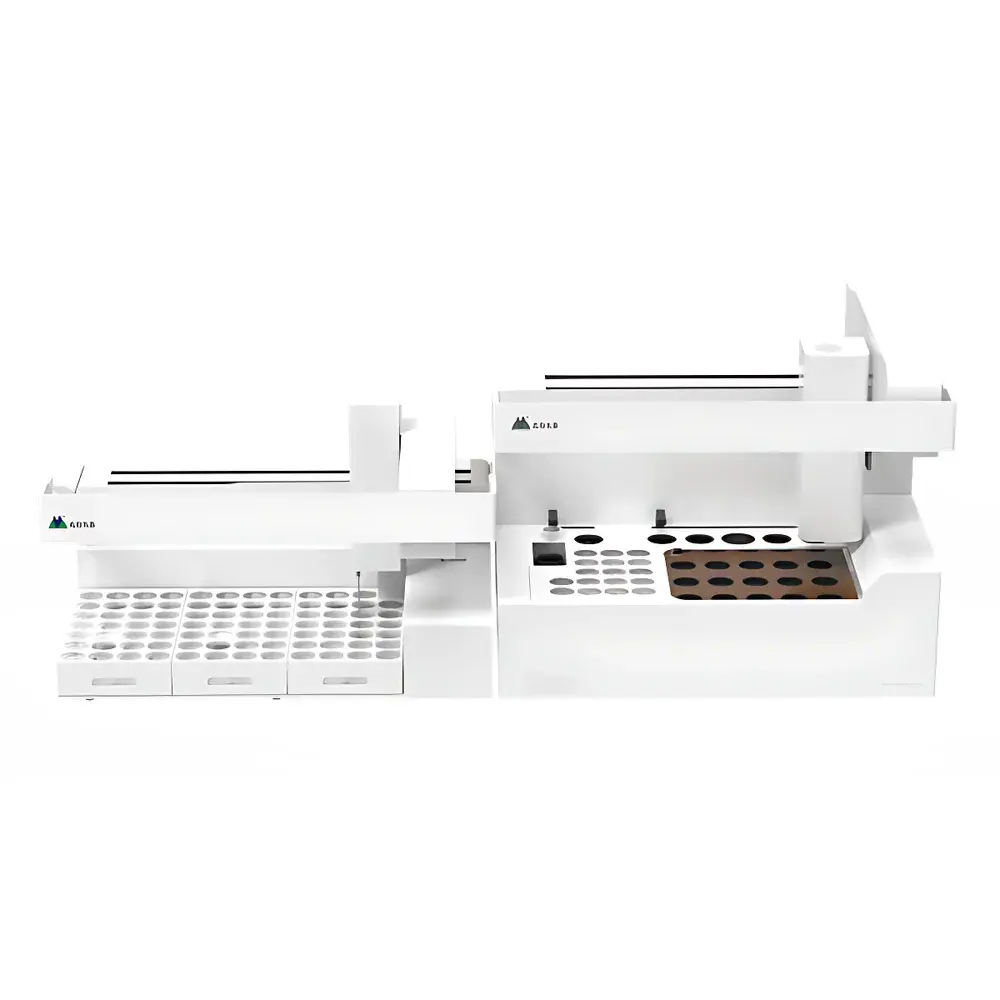
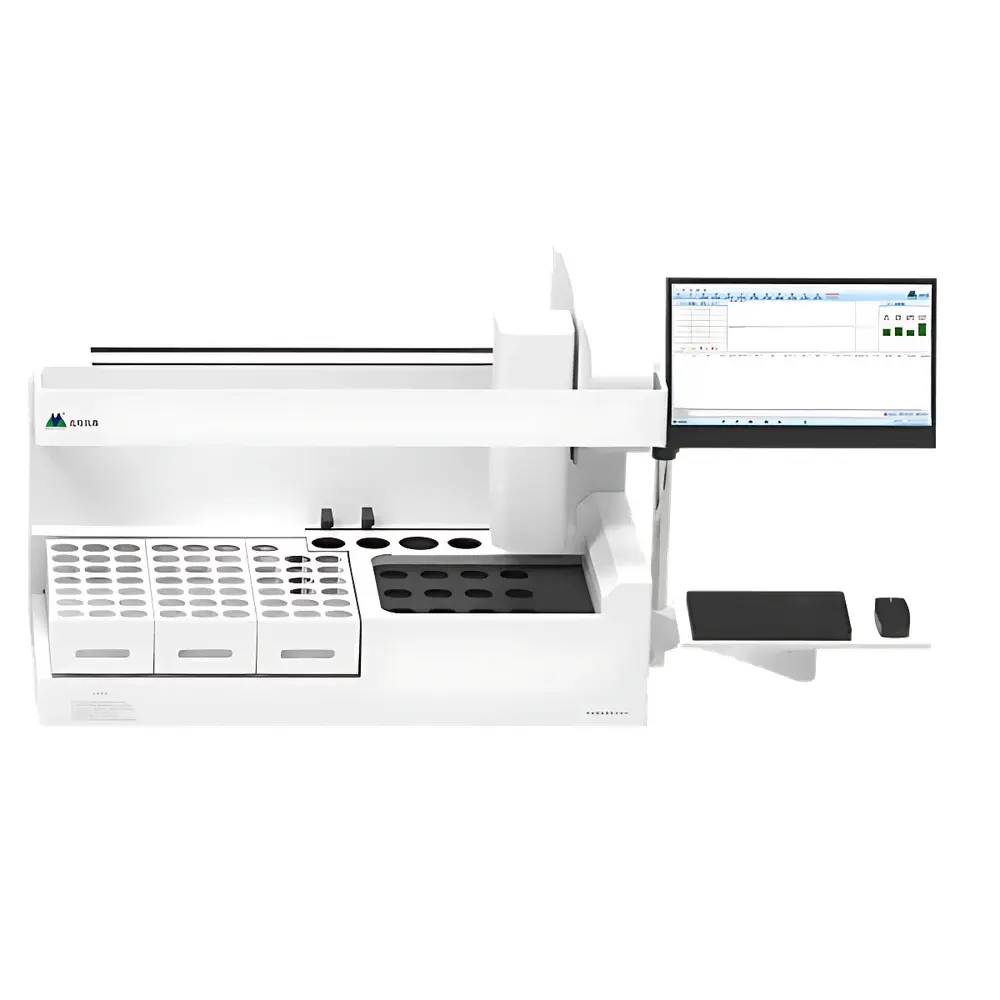
BEIYU CGM-206W Automated Permanganate Index Analyzer
| Brand | BEIYU TECHNOLOGIES |
|---|---|
| Origin | Shanghai, China |
| Manufacturer Type | Direct Manufacturer |
| Product Type | Laboratory Benchtop Analyzer |
| Model | CGM-206W |
| Instrument Category | Automated Water Quality Analyzer for Permanganate Index (COD<sub>Mn</sub>) |
| Compliance | GB/T 11892–1989, GB/T 5750.7–2023, GB/T 13025.7–2012, GB/T 5750.4–2023 |
| Automation Level | Fully Integrated Digestion–Titration System with Machine Vision Endpoint Detection |
| Sample Throughput | Up to 30 samples per batch |
| Titration Resolution | 0.02 mL |
| Minimum Titration Interval | 2 minutes |
Overview
The BEIYU CGM-206W Automated Permanganate Index Analyzer is a laboratory-grade, fully integrated analytical platform engineered for precise, standardized determination of the permanganate index (CODMn) in surface water, groundwater, drinking water, and saline matrices. It operates on the classical titrimetric principle defined in ISO 8467 and national standards including GB/T 11892–1989 and GB/T 5750.7–2023 — employing controlled potassium permanganate oxidation under acidic or alkaline conditions, followed by back-titration with standardized sodium oxalate solution. Unlike semi-automated systems, the CGM-206W embeds a proprietary robotic sample handling architecture coupled with high-resolution machine vision for real-time colorimetric endpoint detection. This eliminates subjective visual interpretation while maintaining strict method fidelity to manual protocols. The system’s thermal management employs a precision water bath with constant-flow preheated replenishment, ensuring ±0.3 °C temperature stability throughout the 30-minute digestion phase — a critical requirement for reproducible oxidation kinetics.
Key Features
- Fully automated digestion–titration workflow: Robotic arm handles sample cup loading/unloading, reagent dispensing, bath immersion, cooling, and titration — eliminating manual intervention after batch initiation.
- Patented machine vision endpoint recognition: CMOS-based optical sensor captures RGB intensity dynamics during titration; adaptive thresholding compensates for turbidity-induced baseline drift, enabling reliable endpoint detection even in highly colored or suspended-solid-laden samples (up to 500 NTU).
- Dual-channel burette system with 0.02 mL minimum dispensing resolution and programmable flow rates; supports parallel titration of up to two samples or sequential high-precision dosing within a single assay.
- Chloride ion discrimination module: Conductometric sensing prior to digestion automatically selects acidic (for Cl− < 300 mg/L) or alkaline (for Cl− ≥ 300 mg/L) methodology per GB/T 11892–1989 Annex A.
- Integrated auto-dilution capability: Programmable 1:2 to 1:100 dilution ratios with gravimetric verification; compensates for out-of-range CODMn values without manual re-preparation.
- Modular waste segregation: Separate collection paths for acidic digestate, titrant residuals, and rinse effluent — compliant with laboratory chemical waste handling protocols.
- LIMS-ready interface: Native support for ASTM E1384-compliant data export; configurable API endpoints and bidirectional RS232/USB communication for integration into GLP/GMP-aligned laboratory informatics environments.
Sample Compatibility & Compliance
The CGM-206W is validated for use with raw and treated water matrices, including potable water, river/lake water, seawater-influenced estuarine samples, and iodized salt solutions. Its chloride-adaptive method selection ensures adherence to GB/T 11892–1989’s stipulated correction procedures. For iodide quantification in salt (GB/T 13025.7–2012), the instrument executes a modified cerimetric titration protocol with stoichiometric endpoint validation. All operational parameters — digestion time, temperature ramp profiles, titrant concentration tolerances, and endpoint sensitivity thresholds — are pre-configured to satisfy audit requirements under CNAS-CL01:2018 and ISO/IEC 17025:2017. Firmware logs include full traceability of calibration events, reagent lot numbers, operator IDs, and environmental chamber readings — supporting FDA 21 CFR Part 11-compliant electronic records when deployed with optional digital signature modules.
Software & Data Management
The embedded Linux-based control software provides role-based access control (RBAC), audit-trail-enabled operation logging, and real-time graphical display of titration curves (absorbance vs. volume). Method templates are locked per standard reference — users may configure custom sequences only within predefined parameter boundaries (e.g., digestion temperature range: 98–100 °C; maximum titration volume: 15.00 mL). Data export formats include CSV (with ISO 8601 timestamps), PDF analytical reports (including uncertainty estimates per GUM), and XML structured for LIMS ingestion. Remote diagnostics and firmware updates are supported via secure HTTPS channel with TLS 1.2 encryption. All data storage complies with GDPR Article 32 technical safeguards when hosted on customer-controlled infrastructure.
Applications
- Regulatory compliance testing for municipal water utilities under China’s “Water Ten Plan” and Ministry of Ecology and Environment (MEE) monitoring programs.
- Quality control of desalinated water and brackish groundwater where chloride interference necessitates method switching.
- Research applications in limnology and marine chemistry requiring high-throughput CODMn screening across seasonal sample sets.
- Iodine fortification verification in food-grade salt manufacturing per GB 14880–2012.
- Validation of advanced oxidation process (AOP) efficiency in wastewater treatment pilot studies.
- Integration into unmanned laboratory ecosystems via OPC UA or MQTT protocol gateways for Industry 4.0-aligned environmental analytics hubs.
FAQ
Does the CGM-206W comply with US EPA or ISO methods for permanganate index?
It implements the core reaction chemistry and procedural logic of ISO 8467 but is calibrated and validated exclusively against Chinese national standards (GB series). Cross-method correlation studies are documented in the Instrument Validation Report (IVR-206W-2023 Rev.2).
Can the system handle samples with suspended solids above 200 mg/L?
Yes — the machine vision algorithm applies dynamic background subtraction and multi-wavelength reflectance normalization to suppress interference from particulate scattering; filtration is not required unless specified by the applicable standard.
Is remote monitoring and control supported over Ethernet or Wi-Fi?
Ethernet (RJ45) is standard; Wi-Fi requires optional certified adapter module (part no. CGM-WF-01) meeting IEEE 802.11ac security requirements.
What maintenance intervals are recommended for the robotic arm and burette system?
Robotic gripper calibration every 6 months; burette piston seal replacement every 12 months or after 10,000 titrations — both tracked automatically in the maintenance scheduler.
How is data integrity ensured during power interruption?
Non-volatile flash memory preserves all active assay states and logs; upon reboot, the system resumes digestion/titration from last confirmed step without data loss.







