
English Product Name
| Origin | United Kingdom |
|---|---|
| Manufacturer Type | Authorized Distributor |
| Origin Category | Imported |
| Model | D1160 |
| Pricing | Available Upon Request |
Overview
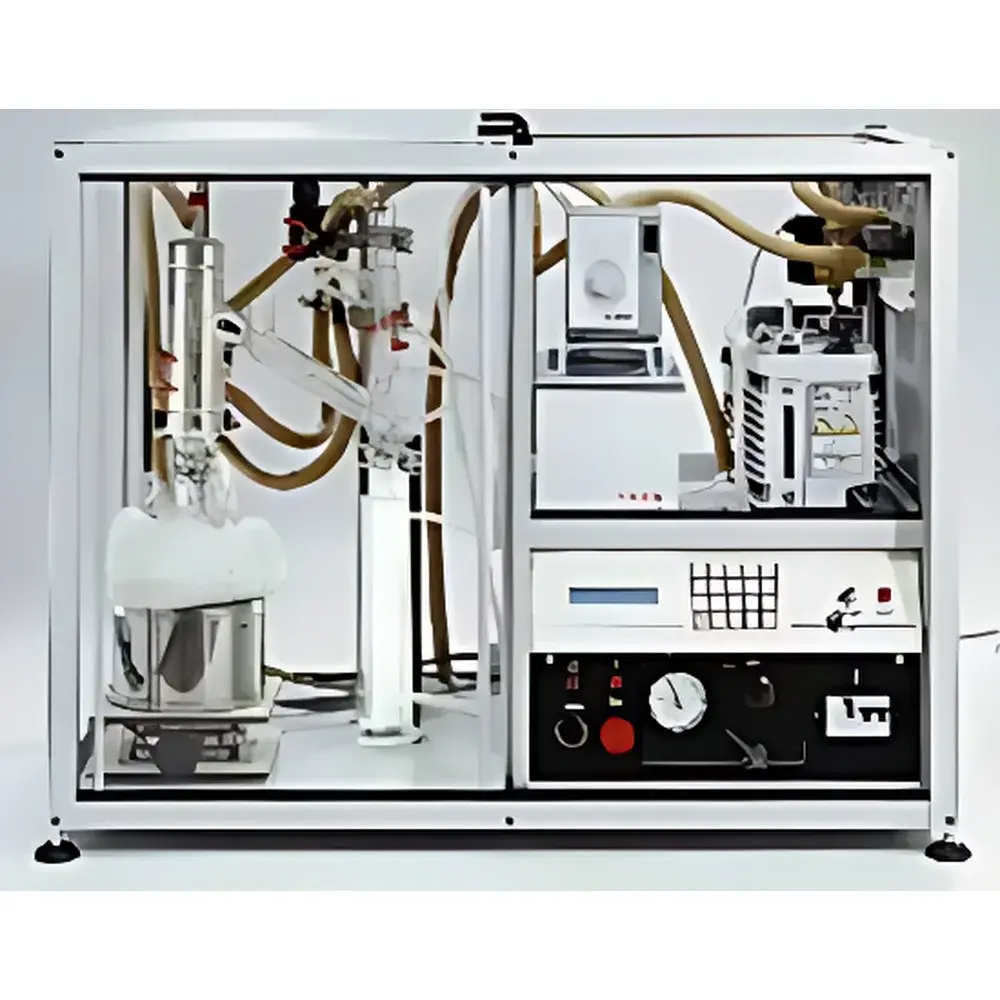
The Koehler K1160 is a precision-engineered semi-automatic vacuum distillation apparatus designed specifically for the determination of boiling point distributions of petroleum products under reduced pressure. It operates on the fundamental principle of vacuum fractional distillation—where vaporization occurs at lowered absolute pressures (0.133–6.55 kPa, equivalent to 1–50 mmHg) and elevated temperatures up to 400 °C—thereby minimizing thermal decomposition of thermally labile hydrocarbons. Fully compliant with ASTM D1160 (“Standard Test Method for Distillation of Petroleum Products at Reduced Pressure”) and ISO 6616 (“Petroleum Products — Determination of Distillation Characteristics at Reduced Pressure”), the instrument enables accurate measurement of atmospheric equivalent temperature (AET), initial boiling point (IBP), final boiling point (FBP), and recovery volume versus temperature profiles. Its integrated mechanical and thermal architecture ensures high reproducibility across repeated runs while maintaining strict adherence to regulatory test method constraints.
Key Features
- Modular, frame-mounted design for ergonomic access to all critical components—including condenser, receiver, heating mantle, vacuum manifold, and safety enclosure
- Real-time acquisition and automated logging of core process parameters: distillation temperature (via Pt100 sensor, ±0.1 °C accuracy), recovered volume (12 mL graduated receiver), absolute system pressure (digital vacuum transducer), AET calculation, and distillate flow rate
- Dual-stage safety system: transparent polycarbonate front shield with motorized sliding cover, plus emergency pressure-relief valve activated at preset overpressure thresholds
- Programmable nitrogen purge function—triggered either at end-of-test or at user-defined intervals—to inert the vapor path and mitigate fire/explosion risk during hot residue handling
- Integrated vacuum control module with digital pressure display, analog vacuum gauge, and dedicated vacuum pump interface; compatible with both oil-sealed and dry scroll vacuum pumps
- Heating system featuring 1000 W adjustable heating mantle with PID-controlled thermal regulation and independent overtemperature cutoff
- CE-marked construction meeting EN 61010-1 (Electrical Safety for Laboratory Equipment) and EN 61326-1 (EMC requirements)
Sample Compatibility & Compliance
The K1160 accommodates a broad range of petroleum distillates, including lubricating oil base stocks, vacuum gas oils, cracked feedstocks, and synthetic hydrocarbon blends—with sample volumes ranging from 100 mL to 500 mL. Its standardized glassware set (ASTM-compliant quartz boiling flask, fractionating column, double-jacketed condenser, and calibrated 12 mL receiver) ensures traceable geometry and thermal uniformity. All wetted parts are constructed from borosilicate glass (DIN/ISO 3585) or high-purity quartz (optional), minimizing catalytic surface effects and enabling full compliance with GLP audit requirements. The apparatus supports validation protocols aligned with ASTM D1160 Annex A1 (Precision Statement), ISO/IEC 17025 calibration traceability, and internal quality control procedures for refinery QC laboratories.
Software & Data Management
While the K1160 operates as a semi-automatic platform without embedded PC-based software, it provides fully documented analog and digital signal outputs for integration into LIMS or laboratory data management systems. Temperature (Pt100), pressure (4–20 mA output), and volume (pulse-counted receiver displacement) signals are accessible via terminal blocks for third-party DAQ hardware. All test records—including time-stamped AET curves, pressure stability logs, and operator-initiated annotations—are printed directly via built-in thermal printer (RS-232 interface optional). The system maintains complete audit trail capability per FDA 21 CFR Part 11 when paired with validated external software—supporting electronic signatures, user access controls, and immutable data archiving for GMP-regulated environments.
Applications
- Determination of vacuum distillation cut points in crude assay and vacuum tower optimization
- Characterization of thermal stability and volatility profiles of heavy fuel oils and residua
- Quality verification of lube base oil fractions prior to hydrotreating or dewaxing
- Research-grade boiling point distribution analysis for alternative jet fuels (ASTM D7566 Annex A5)
- Support of refinery process modeling (e.g., Petro-SIM™) through high-fidelity AET input data
- Compliance testing for international export specifications (e.g., ISO 8217, GB 17411)
FAQ
What vacuum level range does the K1160 support, and how is pressure stability maintained?
The instrument achieves and sustains absolute pressures between 0.133 kPa and 6.55 kPa (1–50 mmHg) using a feedback-controlled vacuum regulator and dual-stage vacuum pump interface. Pressure drift is limited to ≤±0.05 kPa over 30-minute distillation cycles.
Is the system compatible with external cooling water circulation?
Yes—the condenser accepts standard ½” NPT inlet/outlet connections for chilled water (5–15 °C) or glycol/water mixtures. Dry ice cooling (via optional Koehler K99597 chiller unit) is also supported for ultra-low endpoint detection.
How is temperature measurement calibrated and verified?
The Pt100 sensor is factory-calibrated to ITS-90 standards and supplied with NIST-traceable certificate. Users may perform field verification using certified reference thermometers per ASTM E77 and ISO 17025 procedures.
What consumables require routine replacement, and what is the recommended maintenance interval?
Critical consumables include O-rings (Cat.no.991301/991302), vacuum tubing (Cat.no.991303), and quartz boiling flasks (Cat.no.41609). Annual preventive maintenance—covering heater calibration, vacuum seal integrity, and sensor drift check—is advised for continuous compliance with ASTM D1160 repeatability criteria.





