
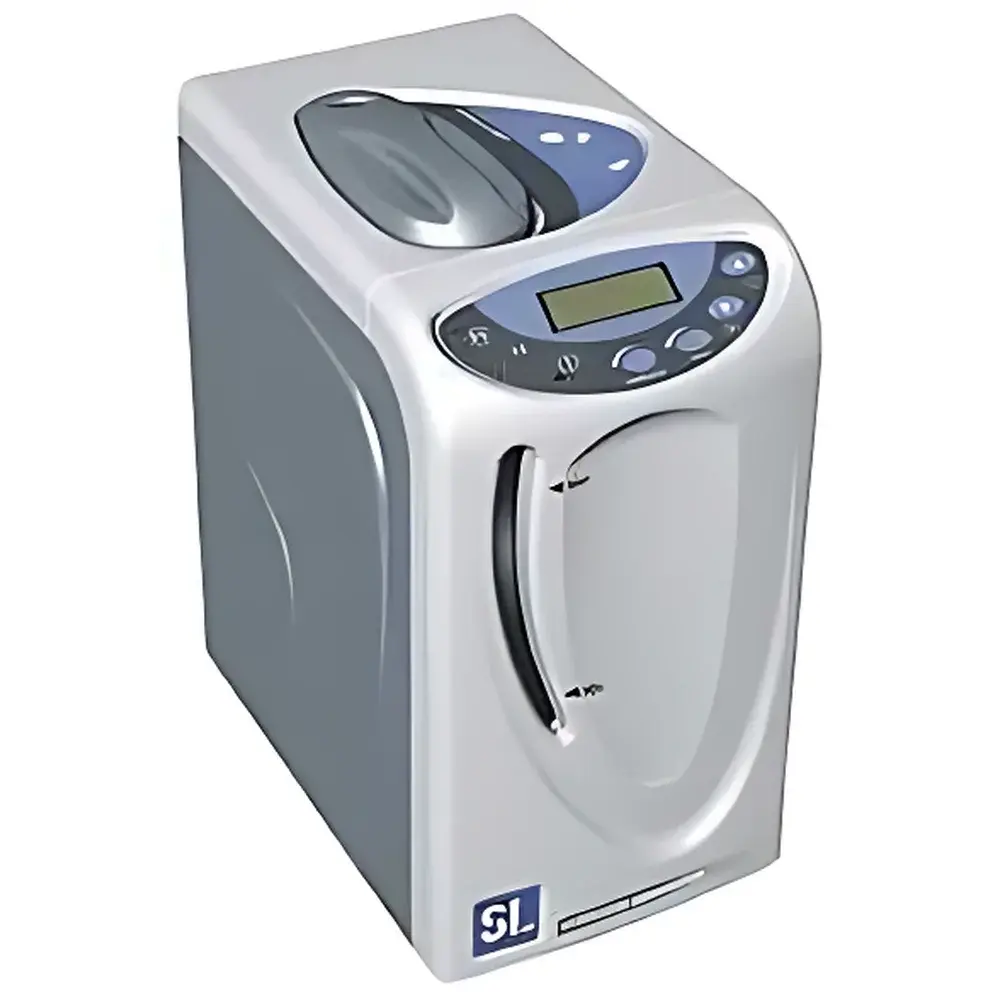
NMH2 Series Maintenance-Free High-Purity Hydrogen Generator
| Origin | Imported |
|---|---|
| Manufacturer Type | Authorized Distributor |
| Model | NMH2 Series |
| Output Flow Options | 100 / 160 / 250 / 500 mL/min |
| H₂ Purity | >99.9999% |
| Operating Pressure Range | 0.1–10.0 barg (1–155 psig) |
| Electrolyte | Solid-State Polymer Electrolyte Membrane |
| Dryer System | Patented Maintenance-Free Desiccant Column |
| Internal Gas Volume | <40 mL |
| Power Supply | 100–240 VAC, 50/60 Hz |
| Dimensions (W×D×H) | 230 × 350 × 420 mm |
| Weight | ~26 kg |
| Water Requirement | Ultrapure Water (Deionized or Distilled Water Acceptable) |
Overview
The NMH2 Series Maintenance-Free High-Purity Hydrogen Generator is an engineered solution for laboratories requiring continuous, ultra-high-purity hydrogen gas without chemical reagents or routine electrolyte maintenance. Utilizing solid-state polymer electrolyte membrane (PEM) electrolysis, the system splits ultrapure water (H₂O) into high-purity hydrogen (H₂) and oxygen (O₂) in a tightly controlled electrochemical process—eliminating the need for corrosive KOH or H₂SO₄ solutions. This fundamental design ensures intrinsic safety, long-term operational stability, and compliance with stringent analytical gas purity requirements. The generator delivers hydrogen at >99.9999% purity (6N), meeting or exceeding ASTM D1945, ISO 8573-1 Class 1 compressed air/gas specifications for particulate, moisture, and hydrocarbon content—critical for GC carrier gas, FID fuel, GC-MS ion source supply, and other trace-level analytical applications where background interference must be minimized.
Key Features
- Solid-state PEM electrolysis cell with integrated gel-type proton exchange membrane—no liquid electrolyte handling, no acid/alkali replenishment, and no risk of electrolyte carryover into the gas stream.
- Patented maintenance-free desiccant drying system featuring a self-regenerating, sealed desiccant column with real-time dew point stabilization—eliminates manual desiccant replacement and prevents moisture breakthrough even under variable flow conditions.
- Precision pressure regulation from 0.1 to 10.0 barg (1–155 psig), digitally adjustable via front-panel keypad and continuously monitored on a 128×34-pixel LCD display with status indicators (power, normal operation, fault).
- Four standardized output configurations: NMH2-100 (100 mL/min), NMH2-160 (160 mL/min), NMH2-250 (250 mL/min), and NMH2-500 (500 mL/min)—all supporting multi-instrument distribution via optional manifold kits.
- Inherent safety architecture: internal gas volume limited to <40 mL, automatic shutdown on overpressure, low-water detection, and thermal overload protection—fully compliant with IEC 61010-1 and CE machinery directive requirements.
- Modular I/O expansion capability: optional RS-232/RS-485 interface board supports remote monitoring, alarm relay outputs, and integration with LIMS or centralized lab automation platforms under GLP/GMP audit trails.
Sample Compatibility & Compliance
The NMH2 Series is validated for direct integration with gas chromatography systems (Agilent, Thermo Fisher, Shimadzu, PerkinElmer), flame ionization detectors (FID), pulsed discharge helium ionization detectors (PDHID), and mass spectrometry ion sources requiring ultra-dry, hydrocarbon-free hydrogen. Its consistent 6N purity meets USP , EP 2.4.24, and ICH Q5C specifications for residual solvent analysis. The absence of metal catalysts or volatile organic contaminants ensures compatibility with sensitive detector technologies—including electron capture detectors (ECD) and atomic emission detectors (AED). All models conform to ISO/IEC 17025 calibration traceability frameworks when paired with certified flow meters and dew point analyzers during installation qualification (IQ).
Software & Data Management
While the base unit operates autonomously via embedded firmware, the optional I/O board enables bidirectional communication with host PCs running Windows-based configuration software. This software provides real-time logging of operating parameters (flow rate, pressure, water level, temperature), configurable alarm thresholds, and exportable CSV reports for 21 CFR Part 11-compliant electronic records. Audit trail functionality captures user actions, parameter changes, and system events—supporting FDA inspection readiness and internal quality audits. No proprietary drivers are required; standard virtual COM port protocols ensure compatibility with LabVIEW, MATLAB, and third-party SCADA environments.
Applications
- GC carrier gas for capillary column separations requiring stable, pulse-free flow and zero baseline drift.
- FID and NPD fuel gas supply—enabling rapid flame ignition, minimal noise, and extended detector lifetime due to absence of sulfur or halogen impurities.
- Hydrogen supply for GC-MS ion sources (e.g., chemical ionization, CI), where trace oxygen or moisture can suppress ion formation efficiency.
- On-demand hydrogen for catalytic hydrogenation reactors, glovebox purging, and semiconductor annealing atmospheres requiring inert, reducing environments.
- Backup or primary hydrogen source in regulated pharmaceutical QC labs performing residual solvent testing per USP and ICH guidelines.
FAQ
What water quality is required for optimal operation?
Ultrapure water (resistivity ≥18.2 MΩ·cm, TOC <5 ppb) is recommended. Deionized or distilled water (≥1 MΩ·cm) may be used if ultrapure water is unavailable—but will reduce desiccant service life and increase frequency of water top-ups.
Can multiple instruments be supplied from one NMH2-500 unit?
Yes—NMH2-250 and NMH2-500 models support multi-port distribution manifolds rated for up to three simultaneous GC systems (total flow ≤90% of max rated output) with individual pressure regulators and particulate filters per outlet.
Is the oxygen byproduct vented safely?
Oxygen is separated from hydrogen via membrane diffusion and exhausted through a dedicated vent line to ambient air—no catalytic recombination or external scrubbing required. Venting must comply with local laboratory ventilation codes (e.g., ASHRAE 110).
How often does the desiccant column require servicing?
The patented desiccant column is designed for the full operational lifespan of the unit (≥5 years typical) under normal use with ultrapure water input. No scheduled replacement or regeneration is necessary.
Does the NMH2 series meet FDA 21 CFR Part 11 requirements?
When equipped with the optional I/O board and validated configuration software, the system supports electronic signatures, audit trails, and role-based access control—fulfilling predicate rule requirements for computerized system validation in GxP environments.



