
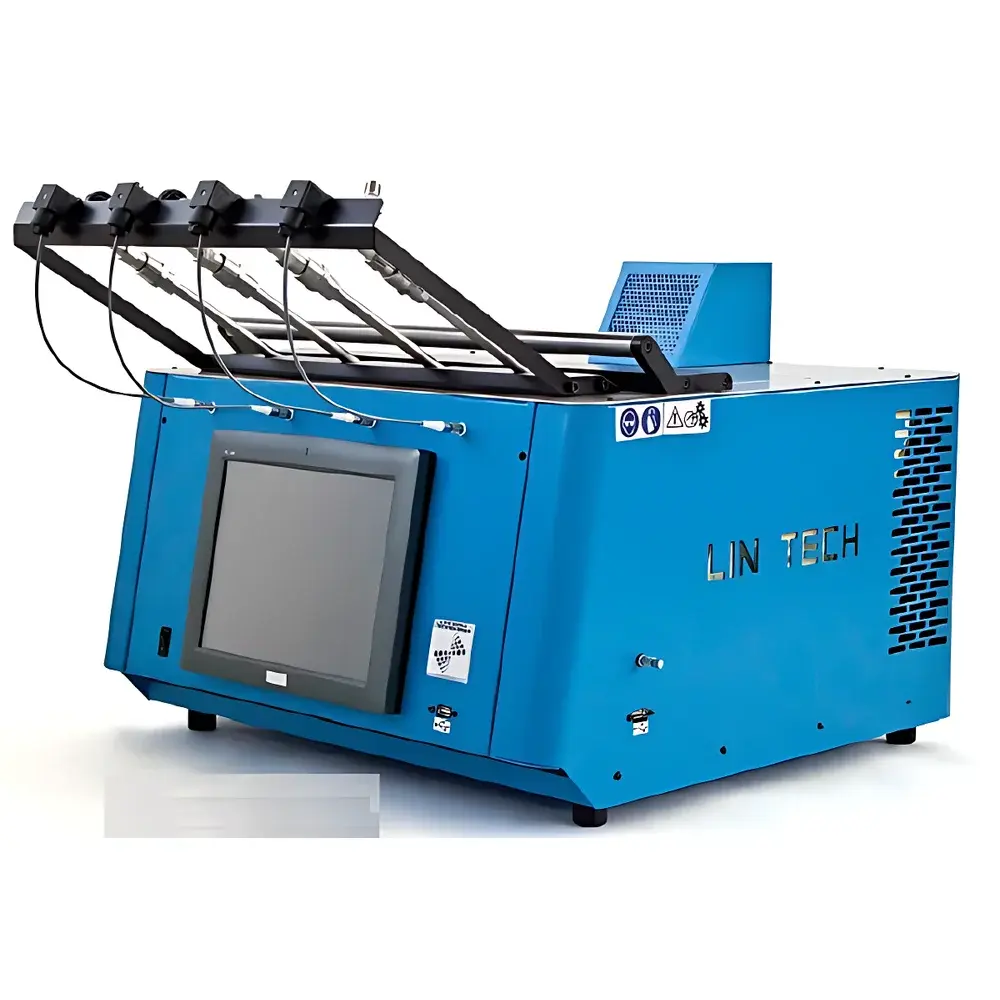
Linetechnic 570SA Automatic RBOT Rotating Bomb Oxidation Stability Analyzer
| Brand | Linetechnic |
|---|---|
| Origin | Switzerland |
| Model | 570SA |
| Standards Compliance | ASTM D2112, ASTM D2272, ASTM D4742, SH/T 0193 |
| Temperature Range | Ambient to 199 °C |
| Temperature Control Accuracy | ±0.1 °C (Pt100 sensor) |
| Bath Capacity | 30 L stainless steel oil bath |
| Configuration | Benchtop dual-bomb system with ceramic-coated stainless steel housing |
| Rotation Angle | 30° from horizontal |
| Oxygen Pressure | 620 kPa (90 psi) |
| Test Modes | RBOT and TFOUT |
Overview
The Linetechnic 570SA Automatic RBOT Rotating Bomb Oxidation Stability Analyzer is a precision-engineered benchtop instrument designed for quantitative assessment of oxidation resistance in petroleum-based lubricants and insulating oils. It implements the standardized rotating bomb oxidation test (RBOT) principle—based on accelerated oxidative aging under high-pressure oxygen in a controlled thermal environment. In this method, a representative sample is sealed with distilled water and a copper catalyst coil inside a borosilicate glass vessel, which is then loaded into a stainless steel pressure bomb. The bomb is pressurized to 620 kPa (90 psi) with pure oxygen and rotated at a fixed 30° inclination within a thermostatically regulated oil bath. Oxidation onset is detected by monitoring the inflection point in pressure decay over time, directly correlating to induction period—the primary metric for oxidative stability. This thermodynamic-kinetic approach delivers high reproducibility across batches and laboratories, making it indispensable for quality control, formulation development, and in-service oil condition monitoring in power generation, turbine maintenance, and transformer asset management.
Key Features
- Benchtop dual-bomb architecture supports simultaneous or sequential testing of two samples, improving laboratory throughput without compromising thermal uniformity.
- Ceramic-coated stainless steel exterior provides long-term corrosion resistance against hot oil vapors and cleaning agents, meeting stringent industrial hygiene requirements.
- 30 L capacity stainless steel oil bath with integrated electronic stirrer ensures axial and radial temperature homogeneity ≤±0.1 °C across the entire working volume—critical for ASTM D2272 compliance.
- Microprocessor-based temperature controller with Pt100 Class A sensor enables precise setpoint regulation from ambient to 199 °C, with digital display and real-time deviation logging.
- Dedicated firmware supports both RBOT (ASTM D2272) and TFOUT (ASTM D4742) protocols—including automated pressure ramping, rotation initiation, data acquisition intervals, and endpoint detection algorithms.
- Pressure monitoring system features calibrated digital transducers with automatic zero-drift compensation and NIST-traceable calibration documentation.
Sample Compatibility & Compliance
The 570SA accommodates standard 100 mL borosilicate glass sample vessels per ASTM D2272 specifications and accepts copper catalyst coils conforming to ASTM D2112 geometry and mass tolerances. It is validated for use with new and in-service turbine oils (mineral and synthetic), unused and reclaimed mineral insulating oils, and other hydrocarbon-based lubricants where oxidation resistance governs service life. All operational parameters—including pressure ramp rate, rotational speed, bath temperature ramp profile, and data sampling frequency—align with mandatory requirements of ASTM D2112 (general apparatus specification), ASTM D2272 (RBOT procedure), ASTM D4742 (TFOUT extension), and Chinese national standard SH/T 0193. The system architecture supports audit-ready operation under GLP and GMP frameworks, with optional timestamped event logs compatible with FDA 21 CFR Part 11-compliant data archiving systems.
Software & Data Management
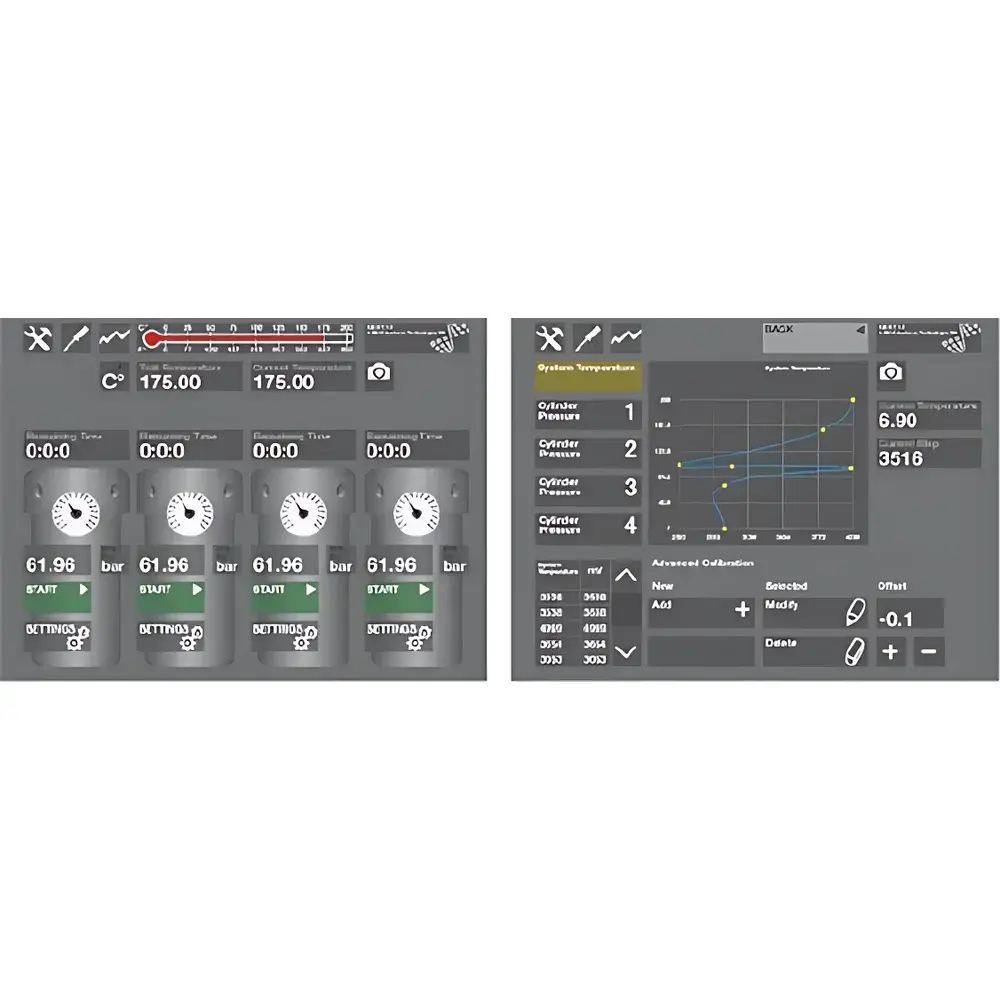
The embedded control interface provides guided workflow navigation, real-time pressure/temperature overlay plots, and automatic induction period calculation using first-derivative threshold detection. Raw test data (time, pressure, temperature) are exportable in CSV format via USB port. Optional PC-based software enables multi-instrument fleet management, statistical process control (SPC) charting, historical trend analysis, and report generation compliant with ISO/IEC 17025 documentation standards. Audit trails record all user actions—including method selection, parameter edits, calibration events, and result approvals—with immutable timestamps and operator ID tagging.
Applications
- Quality assurance of new turbine oils prior to commissioning in steam and gas turbine systems.
- Condition-based monitoring of in-service oils to determine remaining useful life and schedule proactive reconditioning or replacement.
- Comparative evaluation of antioxidant package efficacy during base oil or additive development.
- Regulatory conformance testing for transformer mineral oil per IEC 60296 and IEEE C57.106 specifications.
- Research into oxidation kinetics of alternative lubricants, including bio-based and low-SAPS formulations.
FAQ
What standards does the 570SA fully support?
ASTM D2112 (apparatus specification), ASTM D2272 (RBOT), ASTM D4742 (TFOUT), and SH/T 0193 (Chinese national standard for oxidation stability testing).
Can the instrument operate unattended overnight?
Yes—the system includes thermal runaway protection, pressure relief valves rated to 1.5× maximum operating pressure, and automatic shutdown upon test completion or anomaly detection.
Is calibration traceable to national metrology institutes?
All pressure and temperature sensors ship with individual calibration certificates traceable to PTB (Germany) or METAS (Switzerland), valid for 12 months under normal usage conditions.
What maintenance is required between tests?
Routine cleaning of the oil bath, visual inspection of O-rings and glass vessels, and quarterly verification of pressure transducer linearity using certified deadweight testers.
Does the 570SA integrate with LIMS platforms?
Via optional RS-232 or Ethernet module, supporting ASTM E1384 and ASTM E1467 message formats for seamless bidirectional data exchange with laboratory information management systems.
Related Products





