
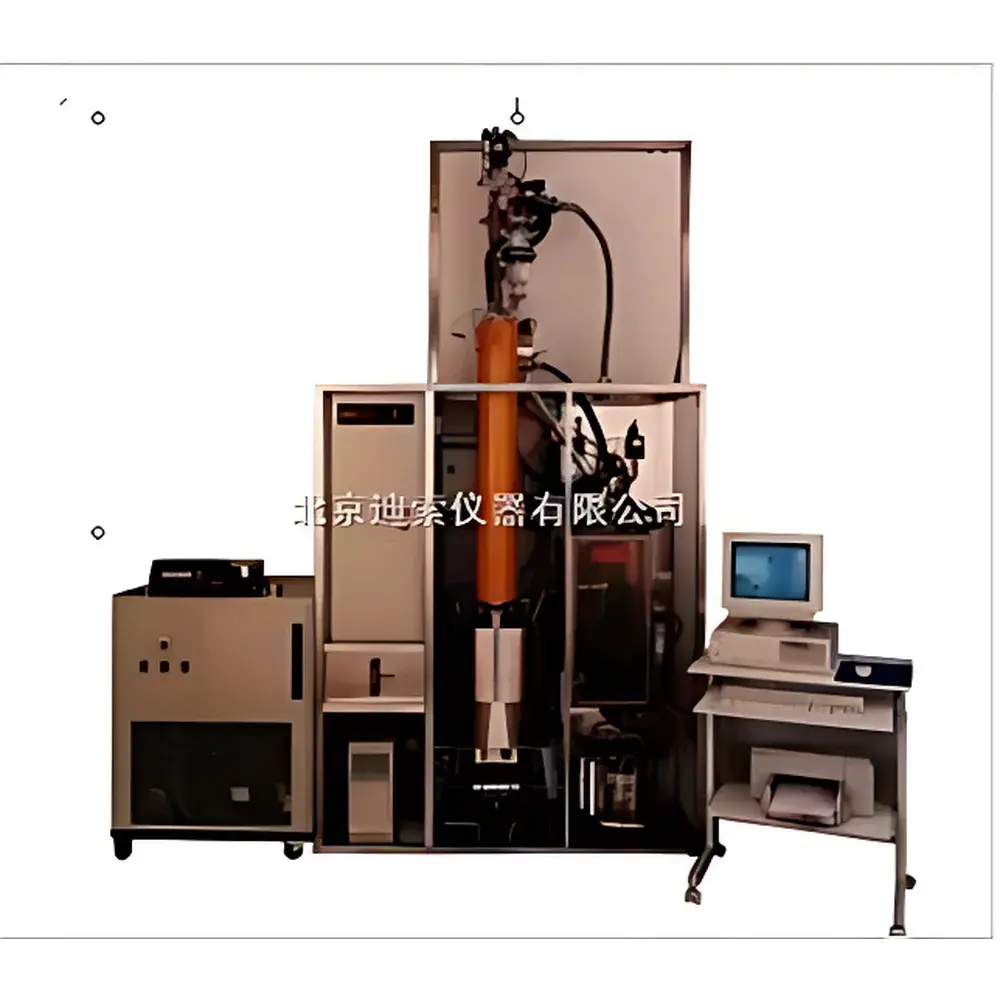
MINITOP T Crude Oil True Boiling Point (TBP) Distillation Apparatus
| Origin | Germany |
|---|---|
| Manufacturer Type | Authorized Distributor |
| Origin Category | Imported |
| Model | MINITOP T |
| Pricing | Upon Request |
| Compliance | ASTM D2892 (standard), ASTM D1160 & D5236 (optional) |
| Operating Pressure Range | Atmospheric, 100 mmHg, 2 mmHg (standard), down to 0.5 mmHg (vacuum limit) |
| Distillation Vessel Capacities | 3–100 L (selectable) |
| Effective Distillation Volume | 2–70 L (model-dependent) |
| Column Diameter Options | 25, 36, 50, SS80, SS100 mm |
| Fraction Collection | Up to 20 open-air funnel positions + cryogenic Dewar collection for light ends |
| Output Data | Temperature (°C), absolute volume (mL), % volume recovery (%V) |
| Typical Run Duration | ≥10 hours (sample-dependent, especially for thermally sensitive crudes) |
Overview
The MINITOP T Crude Oil True Boiling Point (TBP) Distillation Apparatus is a precision-engineered laboratory system designed for high-fidelity simulation of industrial fractional distillation under controlled pressure and temperature conditions. Based on the fundamental principles of equilibrium-stage vapor–liquid separation, the MINITOP T implements a rigorous batch-mode TBP distillation protocol aligned with ASTM D2892—the internationally recognized standard for crude oil characterization. Unlike simple ASTM D86 or D1078 methods, TBP analysis provides a continuous, high-resolution boiling point distribution (BPD) curve from initial boiling point (IBP) to final boiling point (FBP), enabling accurate hydrocarbon group-type allocation, assay reconciliation, and refinery process modeling. The apparatus operates across a broad pressure spectrum—from atmospheric to high vacuum (down to 0.5 mmHg)—to accommodate varying volatility profiles and minimize thermal cracking during extended distillations, particularly critical for heavy or paraffinic crudes.
Key Features
- Full compliance with ASTM D2892 as primary operational standard; optional configuration supports ASTM D1160 (high-boiling materials) and ASTM D5236 (wide-boiling petroleum fractions).
- Modular distillation vessel design with nine selectable capacities (3 L to 100 L), each matched to corresponding effective distillation volumes (2 L to 70 L) to maintain optimal liquid holdup and column efficiency.
- Five standardized column diameters (25 mm, 36 mm, 50 mm, SS80 mm, SS100 mm) fabricated from high-purity stainless steel (SS316), ensuring mechanical stability and corrosion resistance under aggressive sulfur- and acid-containing feedstocks.
- Automated fraction cutting driven by real-time temperature feedback and programmable volume thresholds; fractions recorded as absolute volume (mL), cumulative % volume (%V), and corresponding true boiling point (°C).
- Dual-collection architecture: 20-position open-air funnel carousel for mid-to-heavy cuts, plus integrated cryogenic Dewar interface for safe, low-temperature capture of light ends (e.g., C1–C4 hydrocarbons, H2S, mercaptans).
- Vacuum control system with digital pressure regulation and redundancy monitoring, capable of stable operation at 2 mmHg (standard) and extended down to 0.5 mmHg for ultra-high-boiling residue analysis.
Sample Compatibility & Compliance
The MINITOP T is validated for use with untreated and stabilized crude oils, synthetic crudes, bitumen-derived fractions, and refinery intermediate streams. Its robust thermal management and inert stainless-steel wetted path meet material compatibility requirements for high-sulfur, high-acid (TAN > 5 mg KOH/g), and high-metal (Ni/V > 100 ppm) feedstocks. All electronic controls, data acquisition modules, and user interfaces are designed to support GLP-compliant workflows, including audit-trail logging, user access levels, and electronic signature capability per FDA 21 CFR Part 11 when integrated with certified LIMS environments. Documentation packages include full IQ/OQ protocols and traceable calibration certificates for temperature sensors (±0.1 °C), pressure transducers (±0.01 mmHg), and volumetric receivers (Class A glassware or certified piston dispensers).
Software & Data Management
The system is operated via MINITOP ControlSuite™—a Windows-based application supporting fully automated method sequencing, real-time graphical monitoring of boil-up rate, reflux ratio, column temperature gradient, and pressure profile. Raw data files are exported in ASCII-delimited format (.csv) and structured XML for seamless import into refinery simulation platforms (e.g., Petro-SIM®, HYSYS®, AspenTech). Built-in calculation engines generate ASTM D2892–compliant TBP curves, volume-percent vs. temperature plots, and differential boiling point distributions (d%V/dT). Data integrity safeguards include automatic backup, checksum validation, and time-stamped version control. Optional integration with enterprise-grade LIMS enables direct result push, sample tracking, and regulatory reporting against ISO/IEC 17025 requirements.
Applications
- Crude assay development and feedstock evaluation for refinery planning and unit optimization.
- Blending component characterization for gasoline, diesel, and jet fuel pool modeling.
- Residue characterization and vacuum gas oil (VGO) cutpoint definition for FCC and hydrocracking feed design.
- Research into thermal stability, coking tendency, and distillation-induced compositional shifts.
- Regulatory submission support for EPA, API, and regional environmental agencies requiring detailed hydrocarbon speciation.
- Method transfer and validation between R&D labs, third-party testing facilities, and process engineering centers.
FAQ
What standards does the MINITOP T officially support?
ASTM D2892 is the core certified method; ASTM D1160 and D5236 configurations are available upon specification and require separate validation documentation.
Can the system be used for vacuum distillation of residua?
Yes—its vacuum capability down to 0.5 mmHg and high-temperature furnace design (up to 400 °C AET) enable reliable TBP analysis of atmospheric and vacuum residues.
Is remote operation or networked deployment supported?
The ControlSuite™ software supports TCP/IP-based remote monitoring and control within secure LAN environments; full cybersecurity hardening (TLS 1.2+, role-based firewall rules) is available under enterprise deployment contracts.
How is calibration traceability maintained?
All critical sensors ship with NIST-traceable calibration certificates; annual recalibration services include on-site verification, drift assessment, and updated uncertainty budgets per ISO/IEC 17025 Annex A.2.
What maintenance intervals are recommended for routine operation?
Preventive maintenance is scheduled every 500 operational hours or annually—whichever occurs first—and includes column packing inspection, vacuum pump oil replacement, gasket integrity verification, and firmware update validation.





