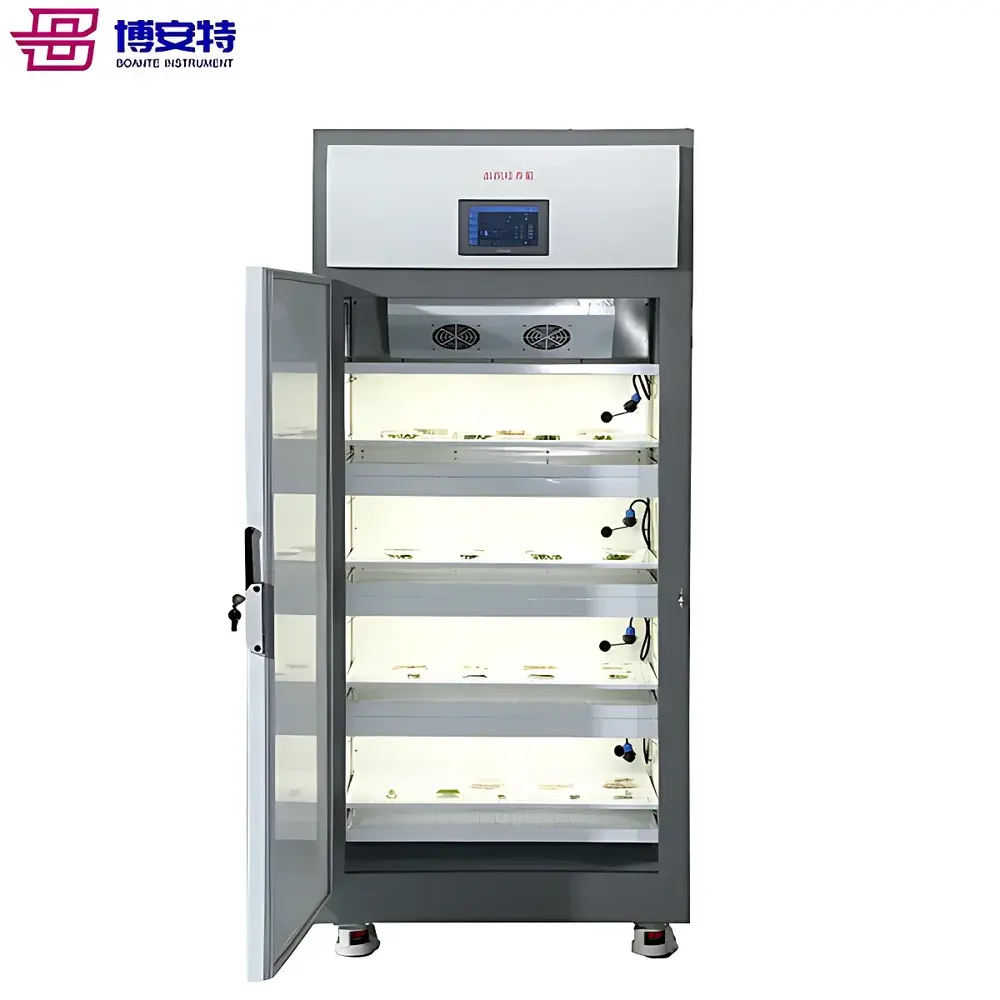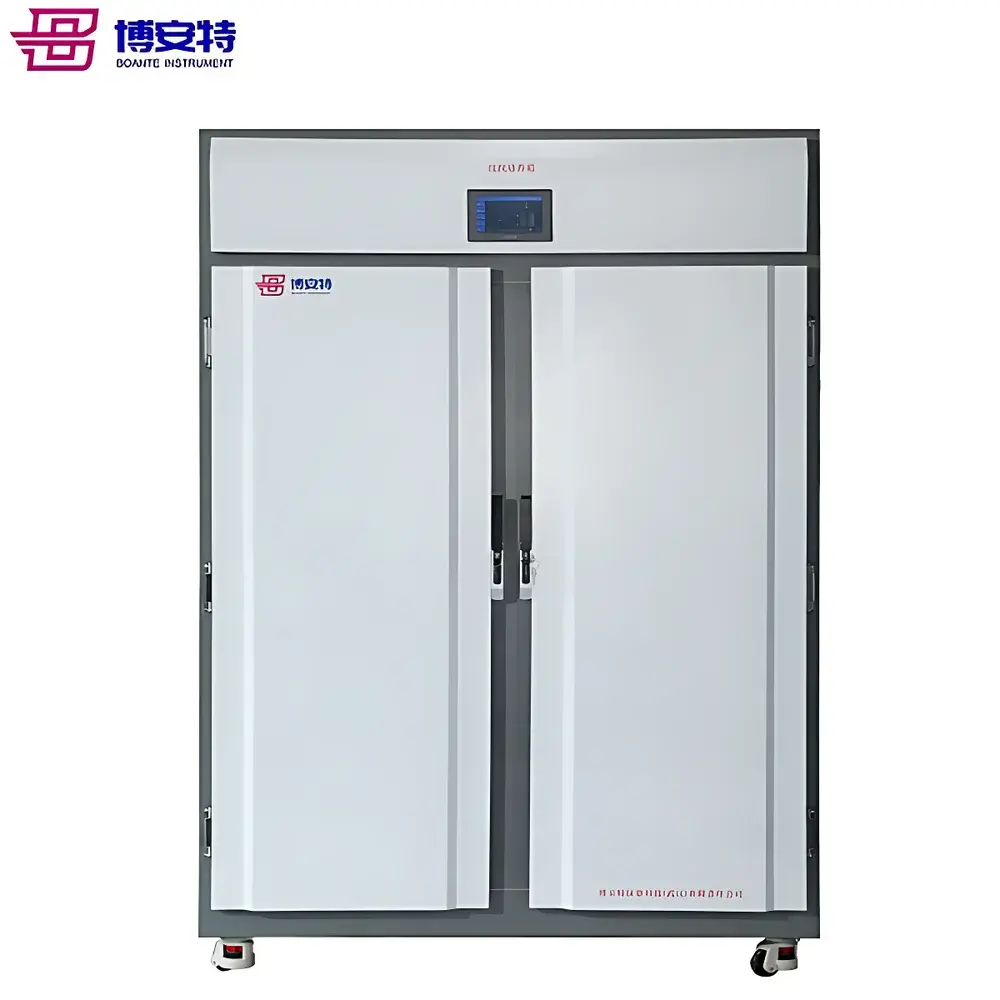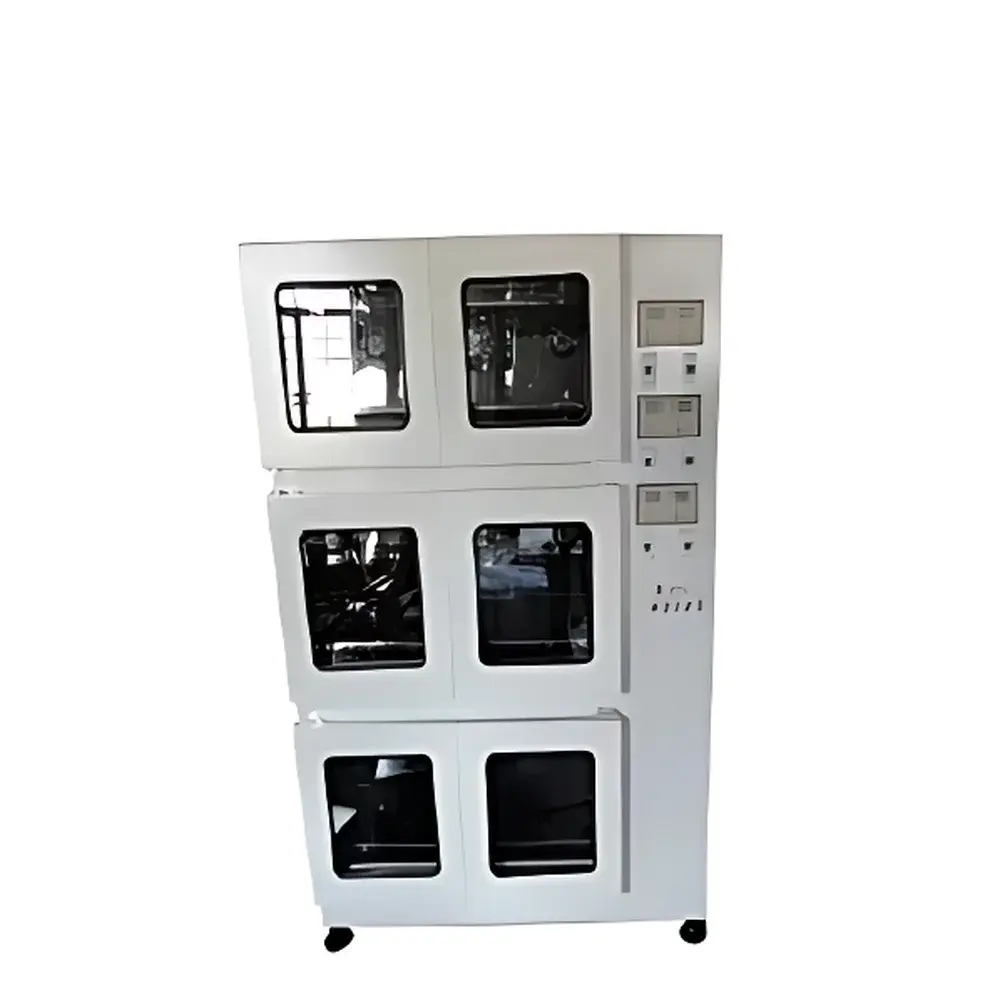
Chengmeng HYL-C Triple-Layer Independent-Controlled Temperature-Shaking Incubator
| Brand | Chengmeng |
|---|---|
| Origin | Jiangsu, China |
| Model | HYL-C Triple-Layer Multifunctional Shaker |
| Timer Range | 0–999 min |
| Oscillation Frequency | 40–280 rpm |
| Amplitude Options | 26 mm, 35 mm, or 50 mm (user-selectable) |
| Temperature Control Range | 0–60 °C |
| Number of Shaking Platforms | 3 |
| Power Supply | 220 V, 50 Hz |
| Total Power Consumption | 3000 W |
| Dimensions (W×D×H) | 1300 × 750 × 1800 mm |
| Capacity per Platform | 18 × 1000 mL flasks |
| Interior Material | Polished Stainless Steel with LED Illumination |
| Exterior Finish | Cold-Rolled Steel with Electrostatic Powder Coating |
| Door Configuration | Dual Front Doors |
Overview
The Chengmeng HYL-C Triple-Layer Independent-Controlled Temperature-Shaking Incubator is an engineered solution for high-throughput biological and biochemical applications requiring simultaneous yet independent environmental control across multiple sample tiers. Unlike conventional stacked shakers relying on shared thermal or mechanical systems, the HYL-C employs three physically isolated incubation chambers—each equipped with its own PID-controlled heating system, brushless DC motor-driven oscillation mechanism, and dedicated digital interface. This architecture enables true parallel experimentation: one layer may maintain E. coli cultures at 37 °C with vigorous shaking (220 rpm, 50 mm amplitude), while another supports yeast fermentation at 30 °C under gentle agitation (80 rpm, 26 mm), and a third accommodates low-temperature protein expression at 15 °C without cross-chamber thermal interference. The device operates on the principle of orbital shaking—generating uniform, laminar fluid motion ideal for aerobic cell growth, suspension culture maintenance, and reagent mixing—while integrating precise thermoregulation via forced-air convection and high-stability platinum resistance temperature sensors (PT100).
Key Features
- Three Independently Controlled Shaking Platforms: Each layer features separate temperature setpoint, oscillation speed, amplitude selection, and timer activation—eliminating experimental coupling and enabling multi-condition screening in a single footprint.
- User-Selectable Amplitude Options: Mechanical eccentric drive system supports 26 mm, 35 mm, or 50 mm horizontal orbital displacement—configurable per platform to match viscosity, vessel geometry, and oxygen transfer requirements.
- Precision Temperature Regulation: Range from 0 °C to 60 °C with ±0.3 °C accuracy (at 37 °C) and ≤0.5 °C uniformity across each chamber; refrigeration-free design utilizes optimized heat dissipation and dual-speed centrifugal fans.
- Robust Mechanical Architecture: Heavy-duty stainless steel inner chamber with seamless welds and anti-corrosion electropolished finish; external enclosure constructed from 1.2 mm cold-rolled steel with epoxy-polyester powder coating for chemical resistance and structural rigidity.
- Modular Physical Design: Fully separable into three standalone units (each 1300 × 750 × 530 mm) for flexible lab reconfiguration or future scalability; integrated casters and leveling feet ensure stability during operation at maximum load.
- Enhanced Operational Safety: Over-temperature cut-off, motor overcurrent protection, door-open safety interlock, and real-time fault diagnostics displayed via high-contrast LCD interface with multilingual menu support (English, Chinese, Spanish).
Sample Compatibility & Compliance
The HYL-C accommodates standard laboratory vessels—including Erlenmeyer flasks (up to 1000 mL), culture bottles, deep-well plates, and custom bioreactor sleeves—across all three platforms simultaneously. Each platform supports universal clamping systems compatible with rubber, silicone, and stainless-steel flask holders. The unit complies with IEC 61010-1:2010 for electrical safety in laboratory equipment and meets EMC directive 2014/30/EU. While not certified for GMP manufacturing environments, its design supports GLP-aligned workflows through traceable parameter logging, user-accessible calibration routines, and audit-ready event history (power-on cycles, temperature excursions, timer activations). For regulated QC/QA labs, optional RS-485 Modbus RTU output enables integration into LIMS or SCADA systems for 21 CFR Part 11–compliant data archiving when paired with validated third-party software.
Software & Data Management
The embedded microcontroller firmware provides local parameter storage (100 programmable protocols), real-time graphing of temperature and speed profiles on the 5.7″ TFT display, and USB export of CSV-formatted session logs (timestamp, setpoint, actual temp/rpm, alarm status). No proprietary PC software is required for basic operation; however, optional Ethernet-enabled gateway modules (sold separately) allow remote monitoring via HTTP API or MQTT protocol—supporting integration with LabArchives, Benchling, or custom Python-based automation pipelines. All firmware updates are delivered via signed binary files with SHA-256 checksum verification to ensure integrity and version traceability.
Applications
- Microbial growth kinetics studies across temperature gradients and agitation intensities
- High-yield recombinant protein expression in E. coli, Pichia pastoris, and mammalian suspension cells
- Enzyme activity assays requiring strict thermal and mixing consistency
- Biochemical oxygen demand (BOD) testing per ASTM D5210–18
- Cell line expansion and cryopreservation media equilibration
- Antibiotic susceptibility testing using broth microdilution formats
- Environmental microbiology sampling preparation under controlled incubation
FAQ
Can the three layers operate at different temperatures simultaneously?
Yes—each layer has an independent heating system and temperature sensor, allowing concurrent operation at any combination within the 0–60 °C range.
Is refrigeration capability available?
No—the HYL-C is a heating-only system; sub-ambient operation requires external cooling integration or alternative models with compressor-based cooling.
What is the maximum load per platform?
Each platform supports up to 18 × 1000 mL Erlenmeyer flasks (total mass ≤25 kg) at 280 rpm with 50 mm amplitude, verified per ISO 16269-6 vibration endurance testing.
Does the device support validation documentation (IQ/OQ/PQ)?
Factory-issued calibration certificates for temperature and speed are provided; full IQ/OQ/PQ protocols must be executed on-site by qualified personnel using NIST-traceable standards.
How is cleaning and maintenance performed between experiments?
The stainless steel interior is autoclavable up to 121 °C for 15 minutes; fan filters are accessible via front-panel service doors and require quarterly replacement under normal use conditions.