
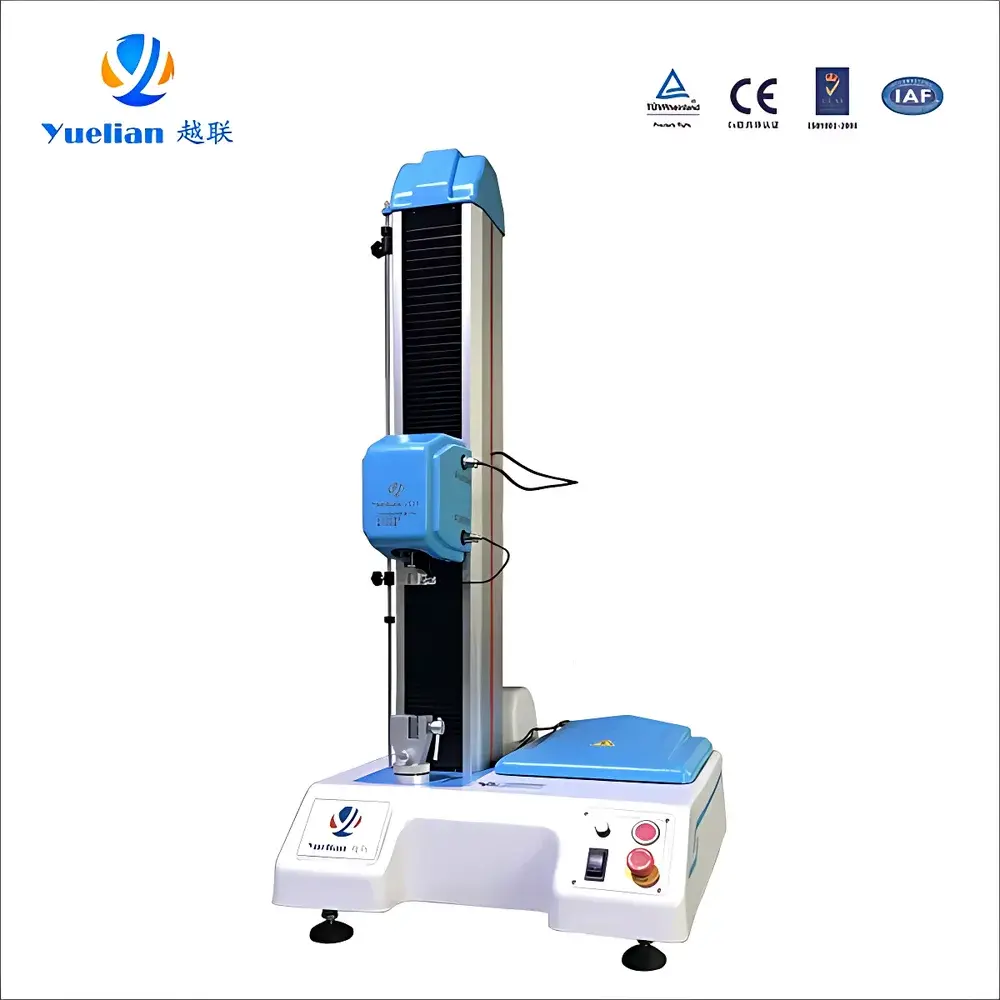
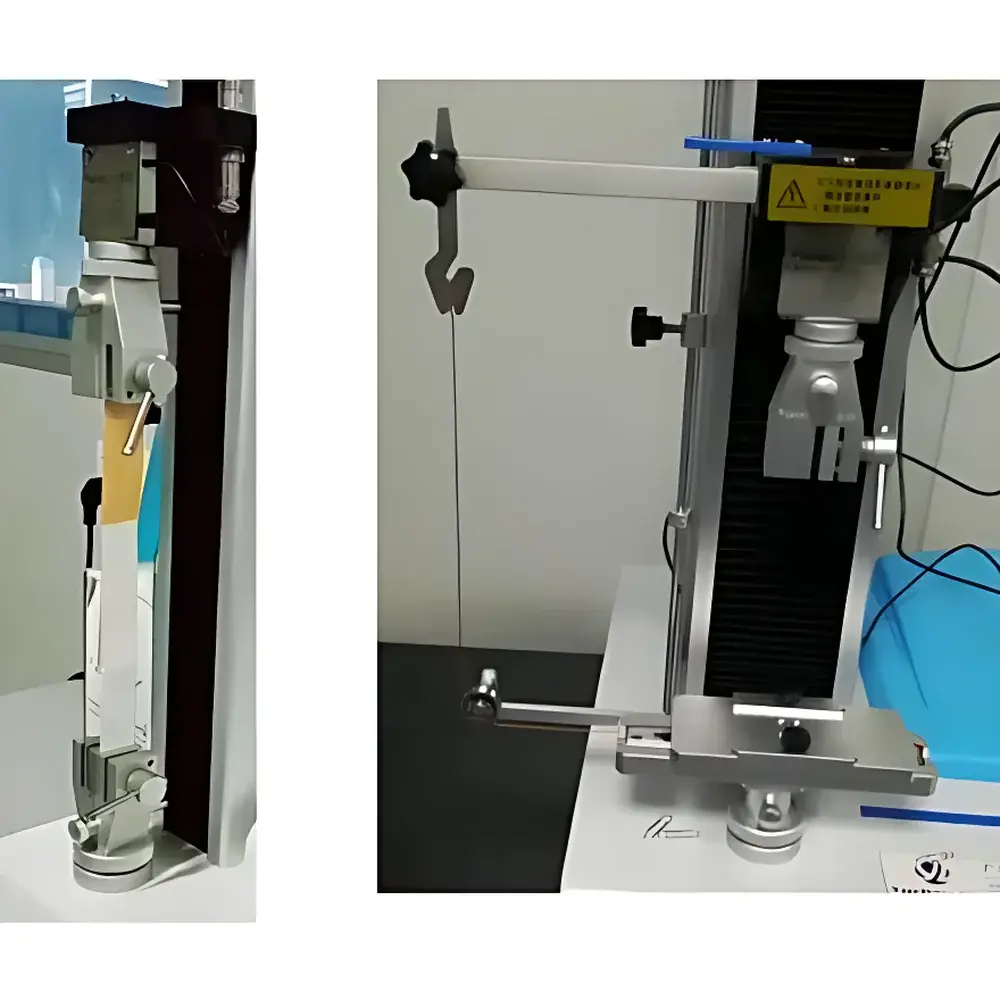
Yuelian YL-S70 Advanced Electronic Tensile Testing Machine
| Brand | Yuelian |
|---|---|
| Origin | Guangdong, China |
| Manufacturer Type | Authorized Distributor |
| Country of Origin | China |
| Model | YL-S70 |
| Instrument Type | Electronic Tensile Testing Machine |
| Maximum Test Load | 5 kN |
| Force Measurement Range | 10 N – 5 kN |
| Force Accuracy | Better than Class 0.5 |
| Test Stroke | 450 mm |
| Displacement Resolution | 1/500,000 mm |
| Control Mode | Full PC-Based Closed-Loop Control |
| Sampling Rate | 50 Hz |
| Effective Travel | 450 mm |
| Speed Range | 0.01–500 mm/min (customizable) |
| Power Supply | 220 V, 50–60 Hz |
| Net Weight | 45 kg |
| Dimensions (W×D×H) | 520 × 590 × 1061 mm |
| Interface | USB & RS-232 |
| Software Included | Yes |
| Optional Accessories | Extensometers, Custom Fixtures, PC |
Overview
The Yuelian YL-S70 is a high-precision, PC-controlled electronic tensile testing machine engineered for rigorous mechanical property evaluation of films, foils, adhesives, laminates, polymers, elastomers, composites, and finished components. Designed in accordance with ISO 527, ASTM D882, ASTM D3330, ISO 8510-2, and GB/T 2790 (peel adhesion), the system employs a servo-motor-driven ball-screw actuation mechanism to deliver stable, repeatable force application across its full 5 kN capacity range. Its core measurement architecture integrates a high-stability load cell with dual-directional force sensing capability—enabling seamless transition between tensile, compression, peel, shear, and puncture modes without recalibration. The YL-S70 is particularly optimized for quantitative peel force analysis of release liners, silicone-coated PET films, fluoropolymer-based离型膜 (release liners), and pressure-sensitive adhesive (PSA) systems used in electronics, medical device packaging, and automotive assembly.
Key Features
- Class 0.5 force accuracy per ISO 7500-1, validated across 0.4%–100% of full scale (10 N–5 kN)
- Ultra-high displacement resolution of 1/500,000 mm (0.002 µm), supporting precise elongation and deformation tracking
- Programmable multi-step control: constant rate of extension (CRE), constant load, constant strain, constant stress rate, and closed-loop strain control
- Dual-mode operation: sensor polarity reversal allows direct measurement of both tensile and compressive forces using identical hardware configuration
- Integrated safety architecture: over-travel limit switches, overload cutoff, emergency stop button, and programmable upper/lower stroke boundaries
- Modular fixture interface with quick-release couplings—enabling sub-60-second transitions between peel jigs, tensile grips, bend fixtures, and puncture anvils
- Real-time multi-curve display: simultaneous visualization of Force–Displacement, Force–Time, Displacement–Time, and Stress–Strain plots with dynamic zoom, pan, crosshair cursor, and point extraction
Sample Compatibility & Compliance
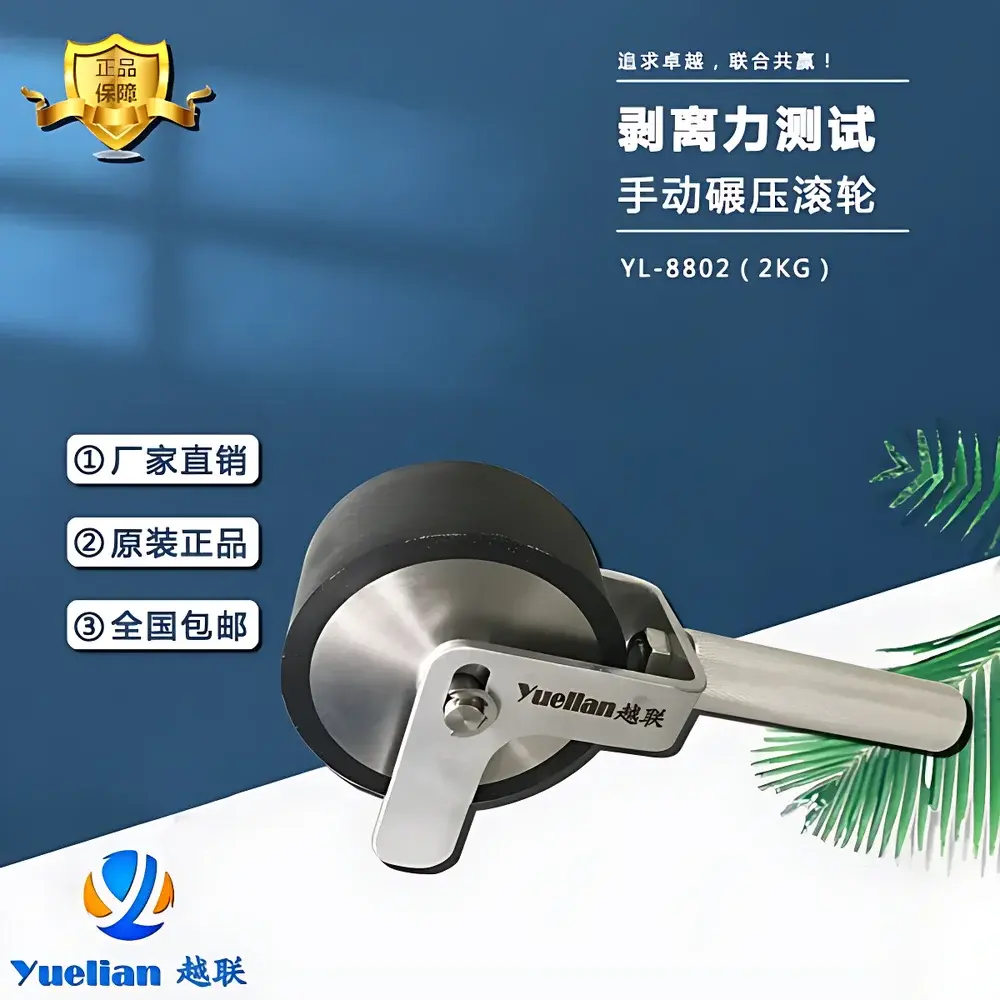
The YL-S70 accommodates standard and custom specimen geometries per ISO 37, ASTM D638, ASTM D1876 (T-peel), ASTM D903 (180° peel), and ISO 8510-1. It supports peel testing of release liners with widths up to 140 mm and thicknesses from 25 µm to 250 µm. Fixture options include pneumatic side-action grips (for low-force film handling), roller-type peel fixtures (for 90° and 180° configurations), and adjustable-angle mandrels for curved-surface adhesion assessment. All test methods comply with GLP documentation requirements—including audit-trail-enabled software logging, user access control, electronic signatures, and data immutability per FDA 21 CFR Part 11 guidelines when paired with validated software configuration.
Software & Data Management
The bundled Yuelian TestMaster v4.x software provides full IEC 62304-compliant test method definition, execution, and reporting. Users can define up to seven independent test segments within a single protocol—for example: pre-load dwell → ramp to 2 N → hold for 30 s → ramp to 500 N at 100 mm/min → automatic fracture detection → return to origin. Statistical post-processing includes mean, median, standard deviation, Cp/Cpk indices, outlier rejection (Dixon’s Q-test), and Weibull modulus calculation. Export formats include CSV, PDF (with embedded metadata), XML (for LIMS integration), and image-based reports with annotated curve overlays. Historical datasets are indexed by operator ID, timestamp, material batch, and environmental conditions (optional temperature/humidity input).
Applications
- Quantitative peel strength measurement of silicone release liners used in label stock and flexible circuit manufacturing
- Adhesion performance validation of transfer tapes under controlled peel angle and speed per ISTA 3A and TL-9000
- Mechanical characterization of die-cut gasket materials: tensile strength, elongation at break, and compression set recovery
- Quality control of medical-grade backing films (e.g., polyolefin, polyester) for transdermal patches
- Cyclic fatigue testing of elastomeric sealing membranes under ISO 11607-2 accelerated aging protocols
- Static and dynamic compression testing of expanded polyethylene (EPE) and cross-linked polyethylene (XLPE) foam buffers
FAQ
What standards does the YL-S70 support for peel testing of release liners?
It complies with ASTM D3330 (180° peel), ISO 8510-2 (90° peel), and GB/T 2790 (adhesive bond strength), with optional calibration traceability to NIM (National Institute of Metrology, China).
Can the system perform automatic fracture detection during peel tests?
Yes—using real-time slope thresholding on the force–displacement curve, with user-definable sensitivity and hold time before auto-stop.
Is the software compliant with FDA 21 CFR Part 11 for regulated environments?
When deployed with password-protected user roles, electronic signature capture, and immutable audit logs enabled, it meets core Part 11 requirements for electronic records and signatures.
Does the YL-S70 support extensometry for strain measurement?
Yes—via optional clip-on or non-contact video extensometers (sold separately), compatible with ISO 9513-compliant strain resolution down to 1 µm.
What is the minimum resolvable force increment at 10 N full-scale range?
With 1/500,000 internal resolution and Class 0.5 accuracy, the system resolves down to 0.02 mN (0.00002 N) with repeatability better than ±0.1% of reading.



