
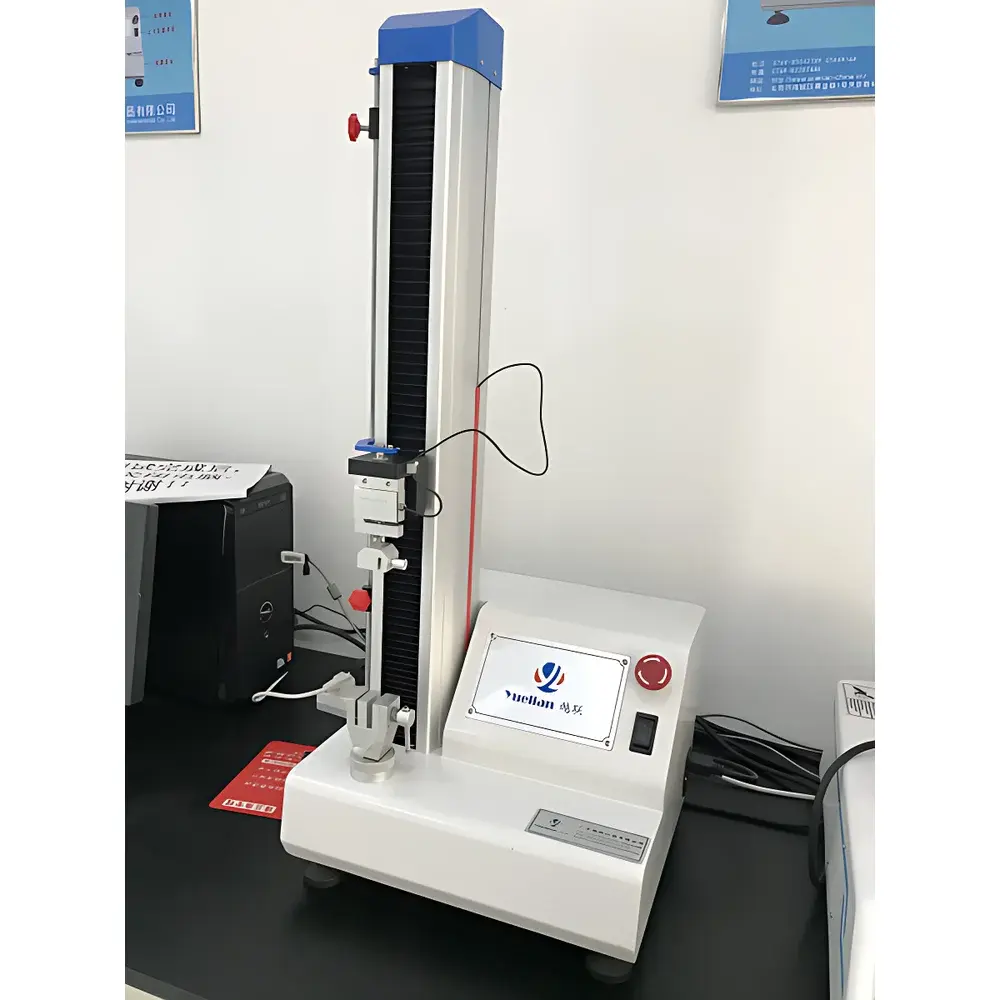
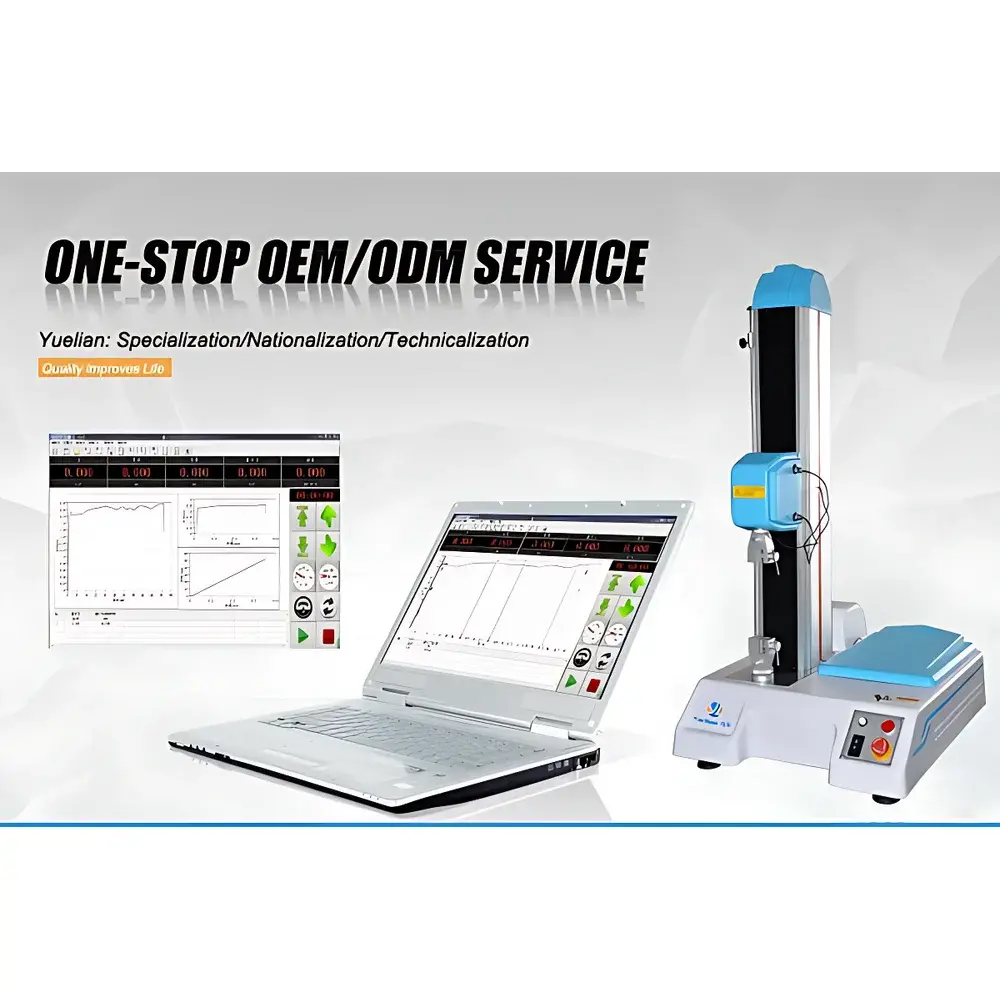
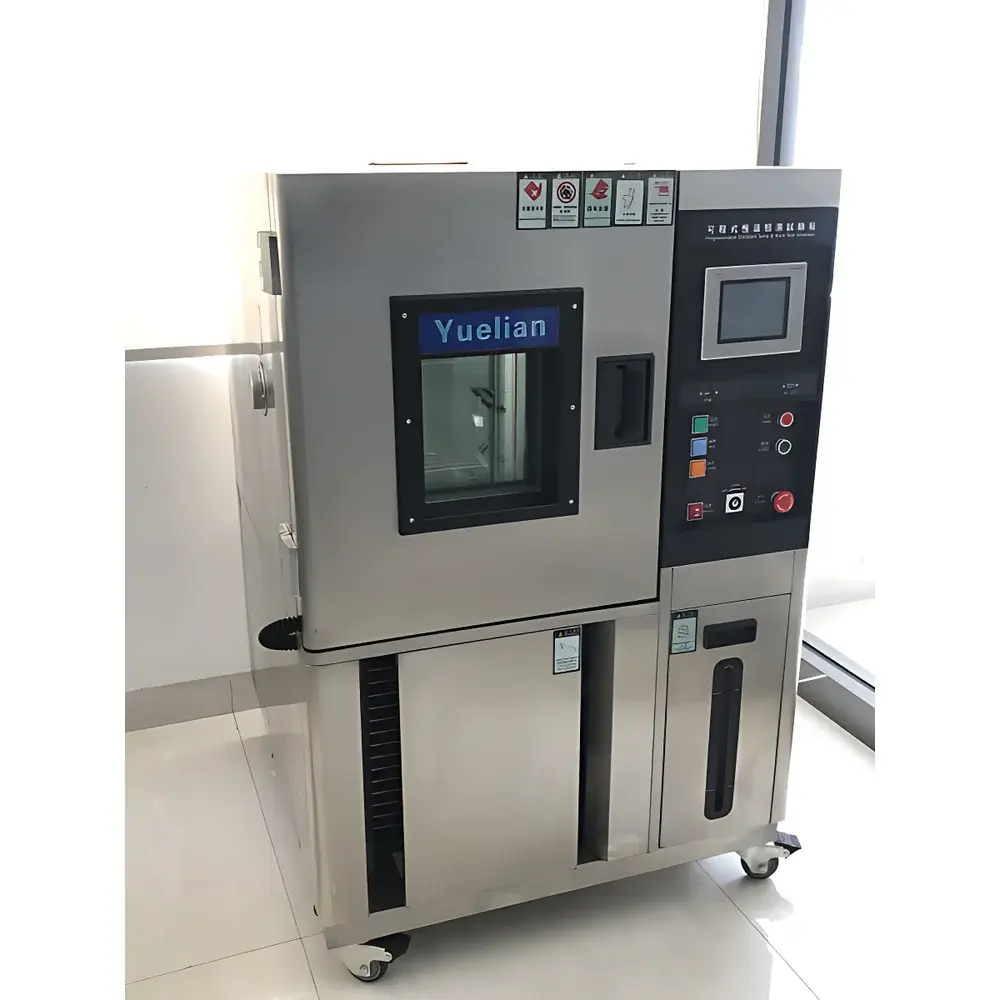
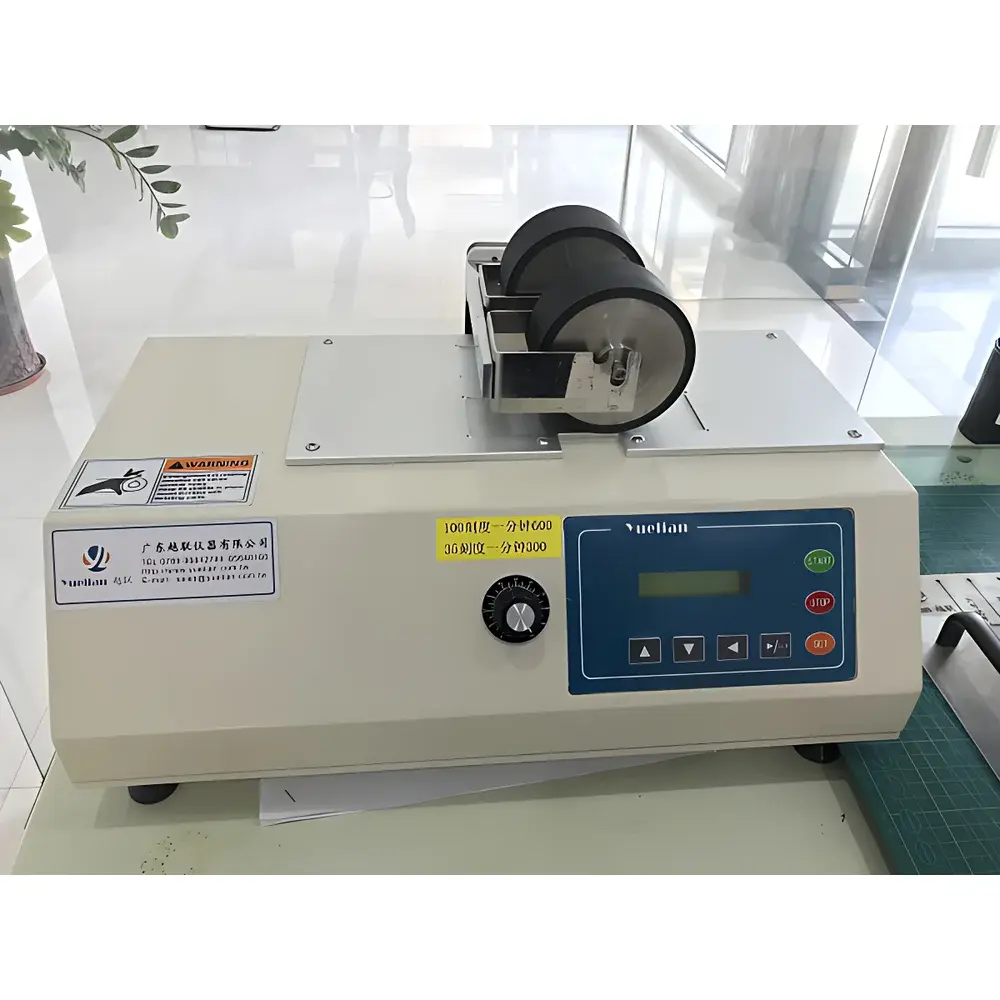
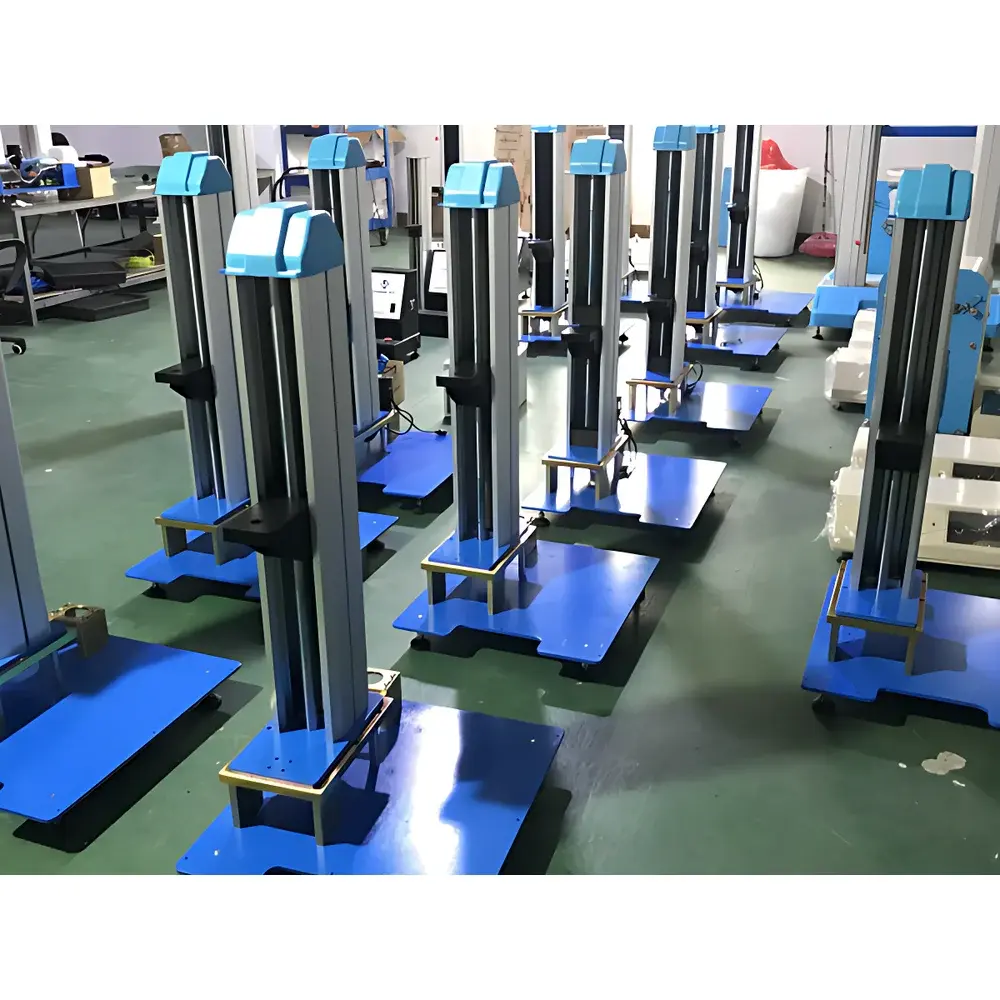
Yuelian YL-90 Universal Electronic Tensile Testing Machine
| Brand | Yuelian |
|---|---|
| Origin | Guangdong, China |
| Model | YL-90 |
| Maximum Test Force | 1 kN |
| Force Measurement Range | 100% FS |
| Force Accuracy | ±0.3% |
| Force Resolution | 1/500,000 |
| Stroke | 500 mm |
| Stroke Resolution | 0.001 mm |
| Test Speed Range | 0.5–600 mm/min (computer-controlled) |
| Test Width | 140 mm |
| Drive System | Stepper Motor + Precision Ball Screw |
| Power Supply | 220 V, 50/60 Hz, 10 A |
| Dimensions (W×D×H) | 400 × 300 × 920 mm |
| Weight | 28 kg |
| Compliance Standards | GB/T 2792, ASTM D3330, GB/T 12914, GB 13022, GB/T 1040, GB/T 14344, GB/T 2191, QB/T 2171 |
Overview
The Yuelian YL-90 Universal Electronic Tensile Testing Machine is an entry-level yet rigorously engineered mechanical testing system designed for static mechanical characterization of flexible and semi-rigid materials in quality control, R&D, and incoming inspection environments. It operates on the principle of controlled uniaxial force application via a high-efficiency stepper motor-driven ball screw actuation system, delivering precise displacement and load control across a broad speed range (0.5–600 mm/min). The instrument conforms to fundamental mechanical test methodologies defined in ISO 527, ASTM D638, ASTM D882, ASTM D3330 (peel adhesion), and GB/T standards for tensile, peel, tear, shear, and compression testing. Its modular architecture supports rapid fixture interchangeability and dual-mode operation—standalone via USB-connected PC or autonomous single-button execution—making it suitable for both routine production line verification and exploratory material behavior studies.
Key Features
- High-resolution force measurement with ±0.3% accuracy and 1/500,000 internal resolution, enabling reliable quantification of low-force phenomena such as initial peel adhesion and thin-film delamination.
- Precision ball screw transmission system with >85% mechanical efficiency, minimizing thermal drift and hysteresis during extended testing cycles.
- Computer-controlled speed profiling with real-time adjustment capability; fine-tuning switches allow manual positional correction of upper/lower grips before test initiation.
- Integrated automatic return-to-start function upon test completion or specimen failure, reducing operator intervention and improving throughput consistency.
- Quick-release grip interface compatible with standardized wedge, pneumatic, pin, and custom-designed fixtures—including peel-angle jigs per ASTM D3330 and ring-shear adapters per GB/T 2792.
- Dual-display capability: simultaneous real-time visualization of applied force (in N, kgf, lbf, g, ton, MPa) and displacement (mm) on host software interface.
- Comprehensive stop logic: overload cutoff, emergency stop button, programmable upper/lower displacement limits, and automatic halt on specimen rupture.
Sample Compatibility & Compliance
The YL-90 accommodates specimens up to 140 mm wide and 500 mm travel length, supporting diverse geometries including films, foils, laminates, textiles, nonwovens, elastomeric strips, paperboard, adhesive tapes, and composite laminates. It meets essential regulatory and industry-standard requirements for mechanical test instrumentation, including traceable calibration per ISO/IEC 17025 guidelines, data integrity compliance with GLP/GMP documentation practices, and alignment with ASTM E4 and ISO 7500-1 for verification of force-measuring systems. While not inherently 21 CFR Part 11 compliant in its base configuration, audit-ready data export (CSV, XLSX) and timestamped test logs support integration into validated laboratory information management systems (LIMS) when deployed under documented SOPs.
Software & Data Management
The included Windows-based control and analysis software provides full test method definition, parameter scripting, live curve plotting (force vs. displacement, stress vs. strain), and post-test statistical evaluation (mean, SD, CV%, max/min values). All raw data are stored with metadata—including operator ID, date/time stamp, environmental notes, and calibration status—ensuring full traceability. Export formats include CSV for third-party statistical packages (e.g., JMP, Minitab), PNG/SVG for report embedding, and XML for LIMS ingestion. USB 2.0 connectivity enables direct connection without additional interface cards; no proprietary drivers required. Optional API access allows programmatic control via Python or LabVIEW for automated multi-step protocols.
Applications
- Peel strength evaluation of pressure-sensitive adhesives (PSAs), medical tapes, and packaging laminates per ASTM D3330 and GB/T 2792.
- Tensile property determination (modulus, yield point, elongation at break) for thermoplastic films, synthetic fibers, and biodegradable substrates per ISO 527 and GB/T 1040.
- Compression testing of foam cushions, gasket materials, and corrugated board per ISO 8513 and GB/T 6543.
- Tear resistance assessment of fabrics and nonwovens using tongue or trapezoid methods per ASTM D5587 and GB/T 3917.
- Shear adhesion testing of structural bonding interfaces in automotive trim and electronics encapsulation assemblies.
- Ring initial adhesion measurement for hot-melt adhesives per QB/T 2171.
FAQ
What is the maximum specimen width supported by the YL-90?
The standard test width is 140 mm, accommodating most film, tape, and sheet-based samples used in packaging, medical device, and automotive component validation.
Does the system support pre-programmed test methods?
Yes—the software includes editable templates for common standards (e.g., ASTM D3330 Peel, ISO 527 Tensile), allowing users to save and recall method parameters including speed, gauge length, preload, and stop conditions.
Is calibration certification provided with shipment?
A factory calibration certificate traceable to national metrology institutes is included; users may perform periodic verification using certified reference load cells and displacement gauges per ISO 7500-1.
Can the YL-90 perform constant-load or constant-strain-rate tests?
It supports closed-loop control modes for constant crosshead speed, constant strain rate (via extensometer input), and load-hold (creep) testing when configured with optional digital extensometry.
What safety features are integrated into the machine?
Dual-channel emergency stop circuitry, hardware-limited travel endpoints, overload protection at 110% of rated capacity, and automatic deceleration on specimen rupture ensure operator and equipment safety per IEC 61000-6-2 EMC and ISO 13857 guarding principles.



