
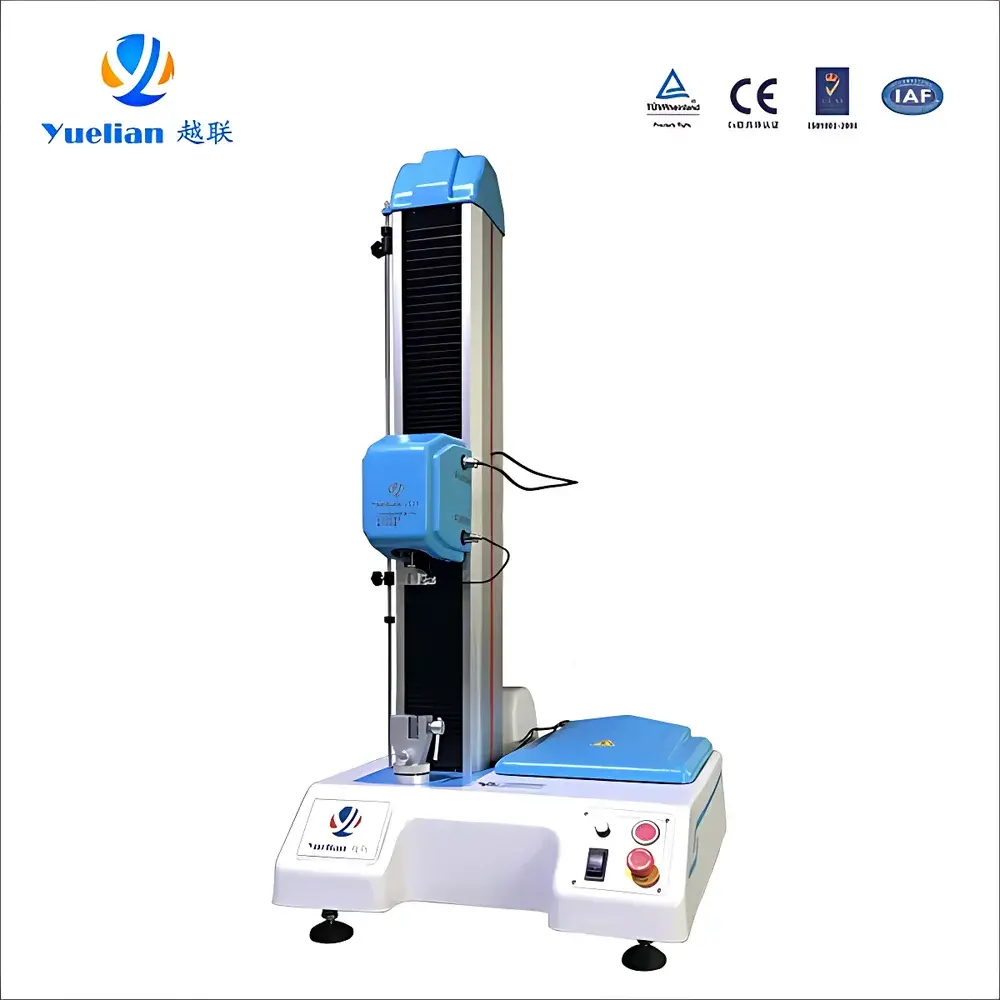
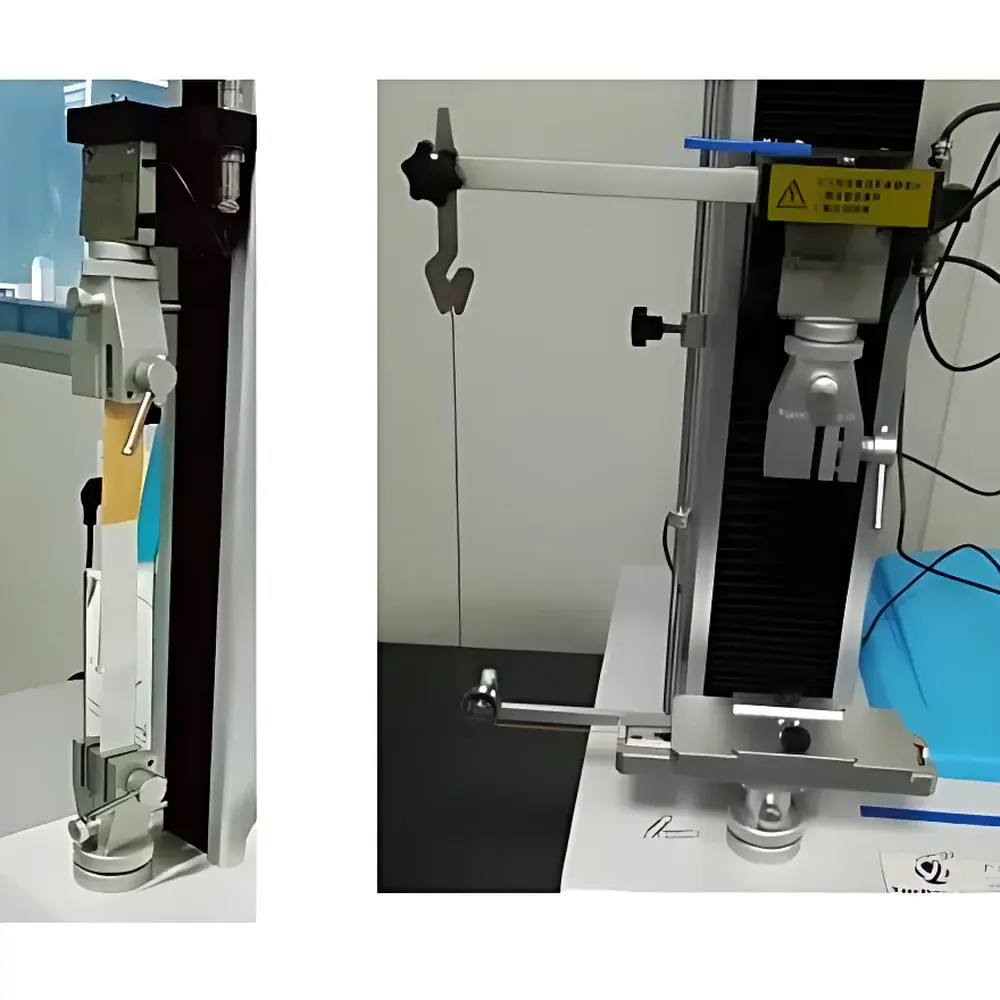
Yuelian YL-S71 Advanced Electronic Tensile Testing Machine
| Brand | Yuelian |
|---|---|
| Origin | Guangdong, China |
| Manufacturer Type | Authorized Distributor |
| Country of Origin | China |
| Model | YL-S71 |
| Instrument Type | Electronic Tensile Testing Machine |
| Max Test Load | 5 kN |
| Force Range | 10 N – 5 kN (Full Scale) |
| Force Accuracy | Better than Class 0.5 |
| Test Stroke | 450 mm |
| Displacement Resolution | 1/500,000 mm |
| Data Acquisition Rate | 50 Hz |
| Control Mode | Full PC-Based Closed-Loop Control |
| Load Cell Bidirectional Capability | Yes |
| Speed Range | 0.01 – 500 mm/min |
| Effective Test Width | 140 mm |
| Power Supply | 220 V, 50–60 Hz |
| Motor Type | AC Servo Motor |
| Transmission | Precision Ball Screw |
| Protection Features | Overload, Overtravel, Emergency Stop, Automatic Break Detection |
| Software Compliance | Supports ASTM D638, ISO 527, ISO 178, ISO 1184, GB/T 228.1, and USP <1043> for mechanical testing documentation integrity |
Overview
The Yuelian YL-S71 is a high-precision, PC-controlled electronic tensile testing machine engineered for rigorous mechanical property evaluation across R&D laboratories, QC departments, and contract testing facilities. Based on the fundamental principle of uniaxial force application under controlled displacement or load rate, the system applies calibrated tension, compression, bending, shear, tear, peel, puncture, and cyclic loading to specimens—enabling quantitative determination of ultimate tensile strength (UTS), yield strength, elongation at break, modulus of elasticity, Poisson’s ratio, and energy absorption characteristics. Its modular architecture integrates an AC servo motor drive, preloaded ball screw transmission, and high-resolution load cell with bidirectional sensing capability—ensuring stable force generation, minimal hysteresis, and high reproducibility across repeated test cycles. Designed to meet international mechanical testing standards, the YL-S71 supports full traceability and audit-ready operation in regulated environments.
Key Features
- Class 0.5 force accuracy per ISO 7500-1 and ASTM E4, validated across the full 10 N–5 kN range
- Displacement resolution of 1/500,000 mm (0.002 µm) enabled by optical encoder feedback and digital signal processing
- Real-time dual-curve display: simultaneous visualization of force–displacement, force–time, displacement–time, and stress–strain relationships
- Advanced closed-loop control modes: constant rate of extension (CRE), constant rate of force (CRF), constant stress, constant strain, stress/strain ramping, and multi-step nested sequences
- Integrated safety architecture: hardware-based overload cutoff, software-defined upper/lower limits, emergency stop button, automatic fracture detection, and programmable return-to-start
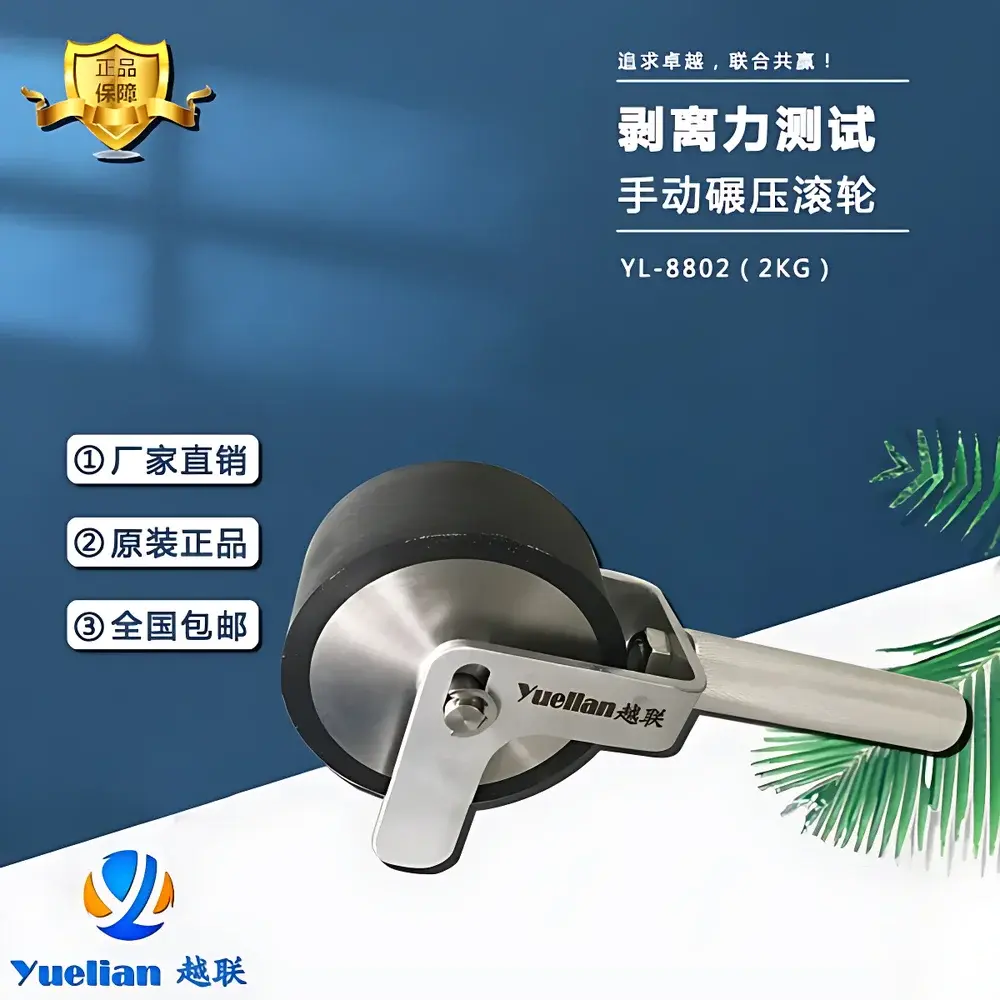
- Ergonomic quick-change fixture interface with standardized M6/M8 mounting, compatible with wedge, pneumatic, vise, and custom tooling systems
- Aluminum extrusion frame with sandblasted + anodized silver finish; ABS polymer housing with electrostatic powder coating for chemical and abrasion resistance
Sample Compatibility & Compliance
The YL-S71 accommodates a broad spectrum of specimen geometries and material classes—including polymers, elastomers, composites, metals (thin foils/sheets), textiles, paperboard, biomedical sutures, packaging films, adhesives, and footwear components. Standard test configurations comply with ASTM D638 (plastics tensile), ASTM D790 (flexural), ASTM D1876 (peel), ISO 179 (impact-modified plastics), ISO 1184 (tensile properties of textile fibers), and GB/T 228.1 (metallic materials). Optional extensometers (contact/non-contact) support strain measurement per ISO 9513 calibration requirements. All test data logs include timestamped metadata, operator ID, environmental conditions (if integrated sensors present), and instrument calibration status—facilitating GLP/GMP alignment and FDA 21 CFR Part 11 compliance when paired with validated software configurations.
Software & Data Management
The proprietary Windows-based control and analysis suite provides full IEC 62304-compliant architecture with role-based access control, electronic signature support, and configurable audit trails. Users define custom test methods using intuitive drag-and-drop sequence editors—supporting up to 7 segmented test intervals, 40 manual data points, and 120 auto-sampled points per curve. Statistical reporting includes mean, median, standard deviation, coefficient of variation (CV), Cp/Cpk indices, and outlier detection via Grubbs’ test. Export formats include CSV, XLSX, PDF reports with embedded graphs, and XML for LIMS integration. Raw data files are stored in binary format with SHA-256 checksums to ensure immutability and chain-of-custody integrity.
Applications
- Quality assurance of injection-molded plastic parts per ISO 20753
- Tensile characterization of medical device tubing (ISO 10993-12)
- Peel strength validation of pressure-sensitive adhesives (ASTM D3330)
- Cyclic fatigue testing of orthopedic implant coatings (ISO 14879)
- Compression testing of corrugated fiberboard (ISTA 7E, ASTM D642)
- Three-point flexural analysis of composite laminates (ASTM D7264)
- Puncture resistance of protective fabrics (EN 388:2016)
- Spring force–deflection profiling for automotive NVH components
FAQ
Does the YL-S71 support ASTM E4 calibration verification?
Yes—the system includes built-in calibration routines aligned with ASTM E4 Annex A3 for force verification using certified reference load cells.
Can the software generate 21 CFR Part 11-compliant electronic records?
When deployed with validated user authentication, audit trail logging, and digital signature modules, the software meets predicate rule requirements for regulated submissions.
Is third-party calibration certification available?
Yuelian provides factory calibration certificates traceable to NIM (China National Institute of Metrology); optional UKAS-accredited calibration services are available through authorized partners.
What is the maximum recommended test speed for high-accuracy modulus measurement?
For elastic modulus determination per ISO 527-1, a speed of ≤50 mm/min is recommended to minimize inertial effects and ensure quasi-static loading conditions.
Are environmental chamber interfaces supported?
The YL-S71 features analog and digital I/O ports compatible with temperature/humidity chambers (e.g., ESPEC, Weiss), enabling synchronized environmental conditioning during mechanical testing.



