
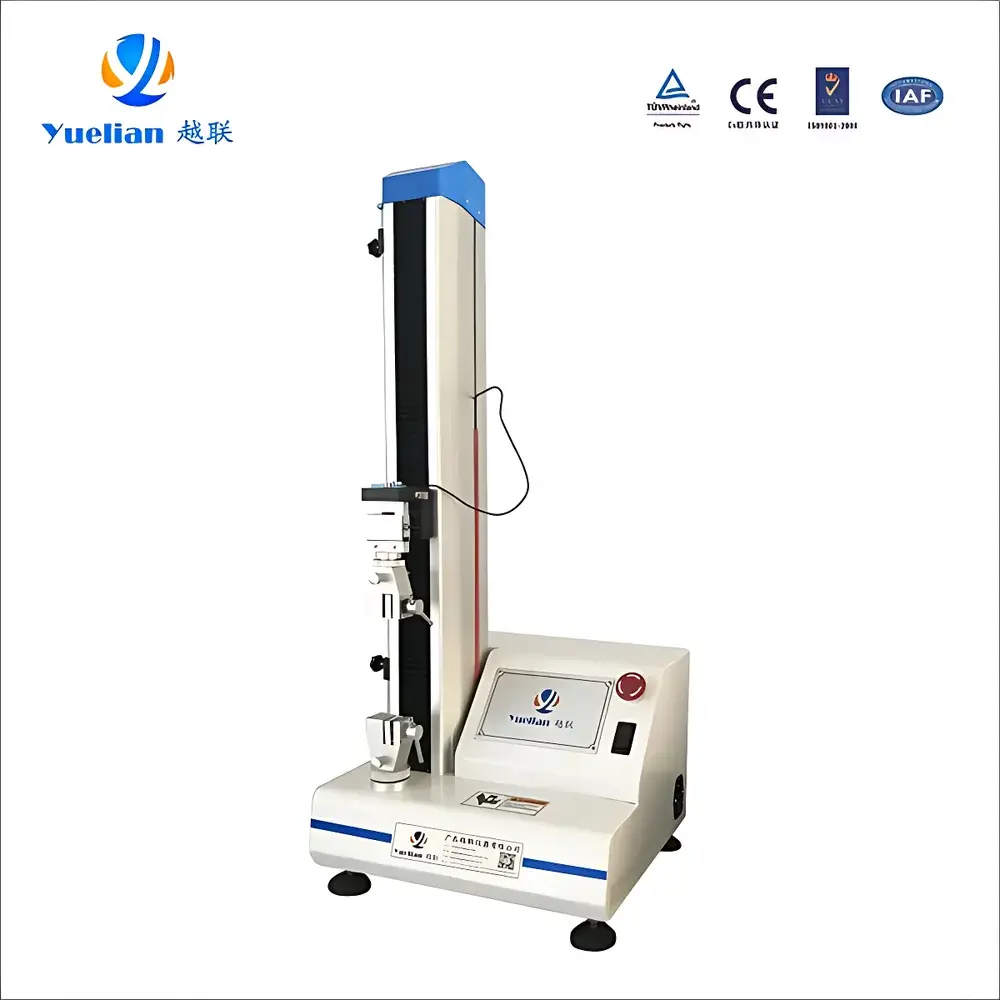
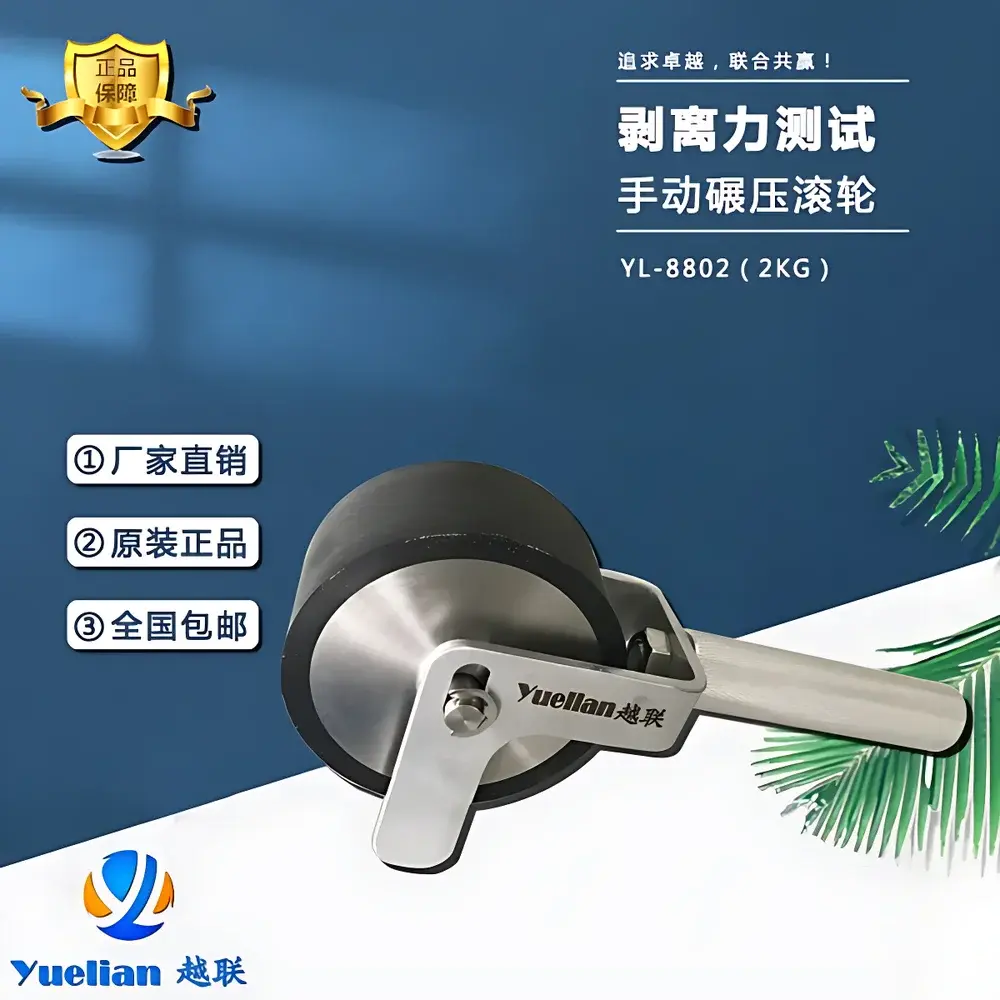
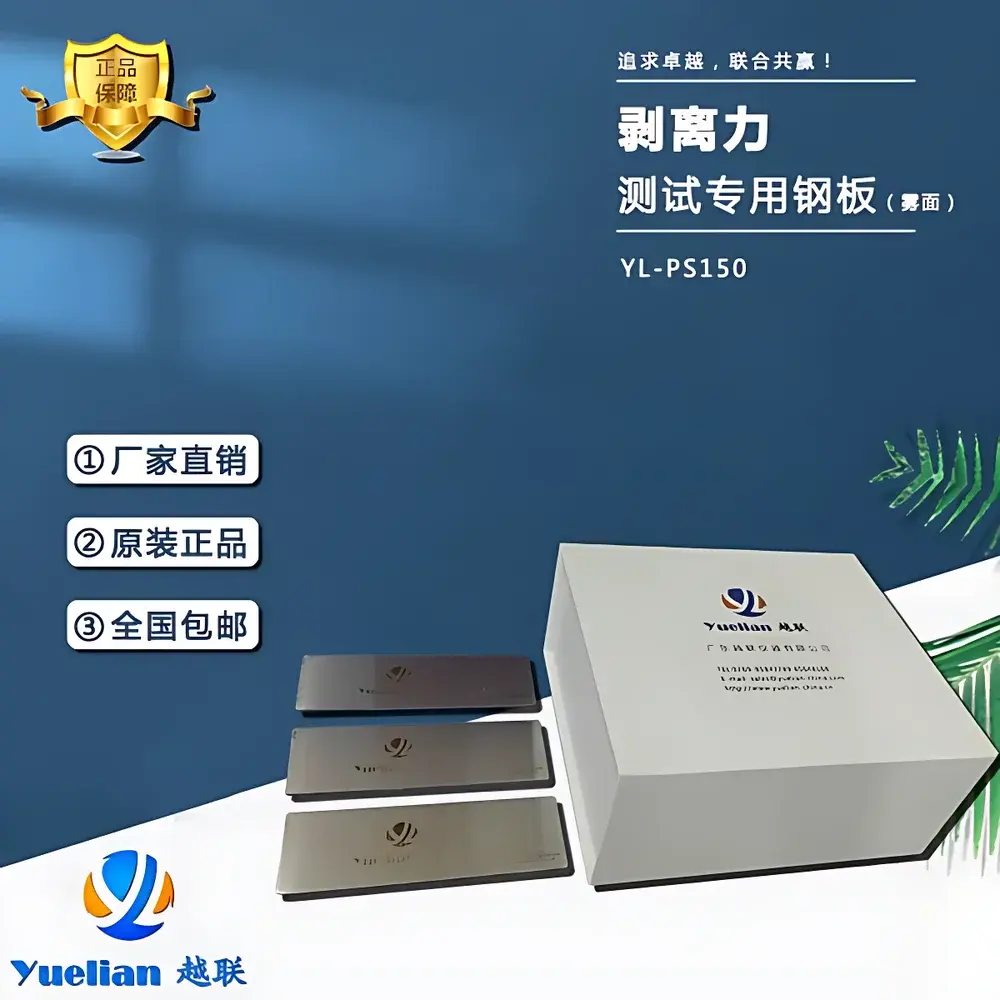
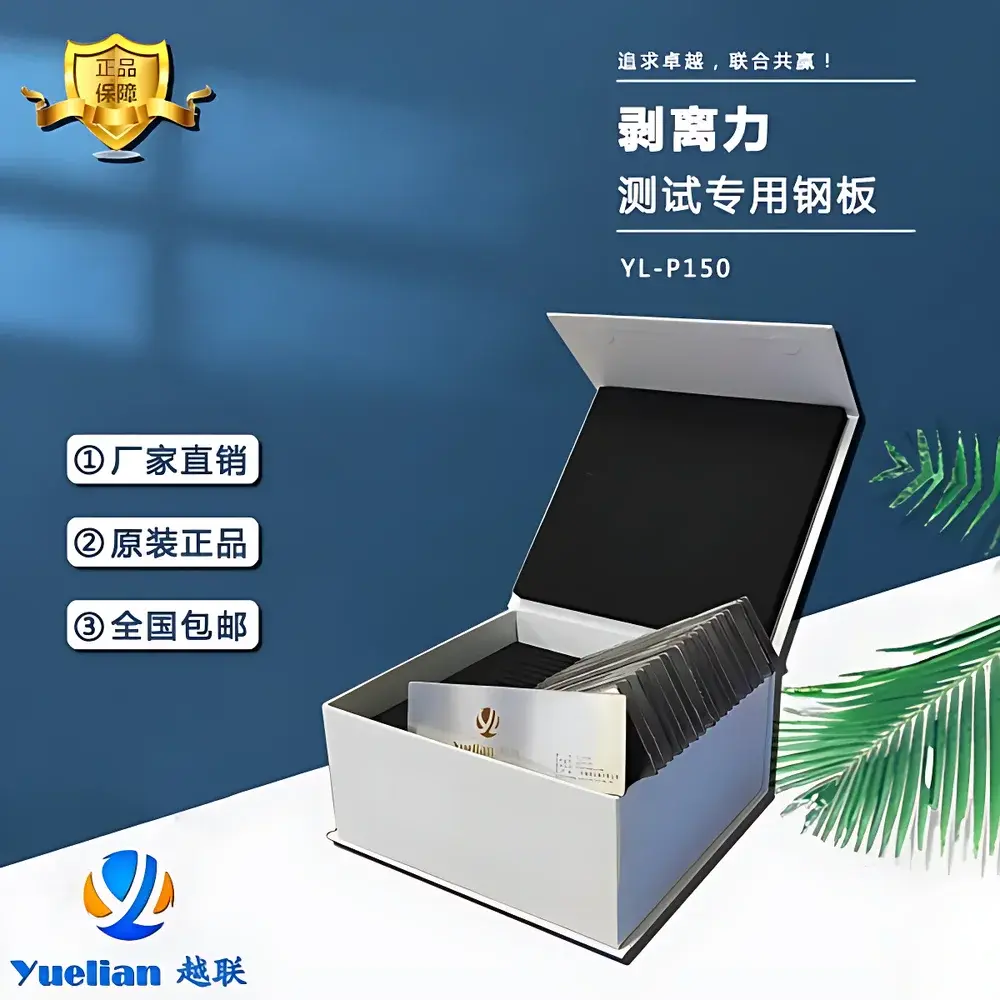
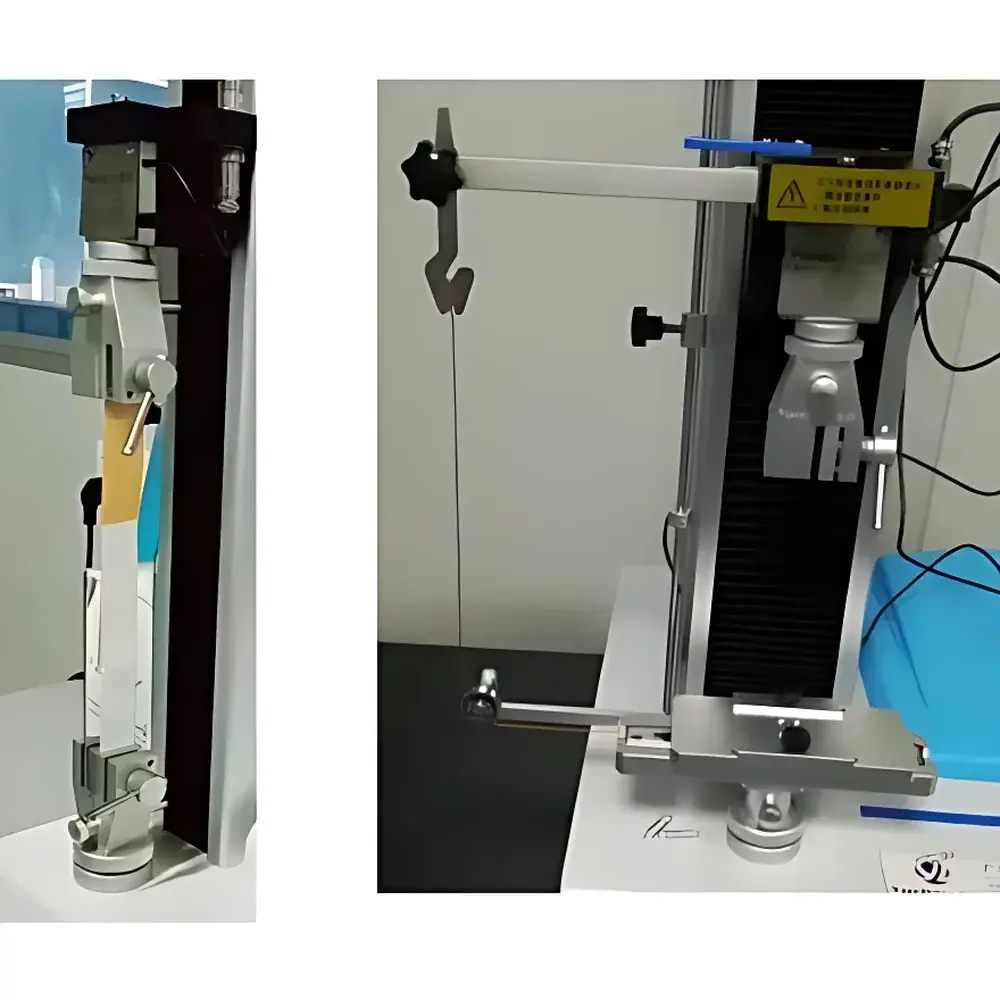
Yuelian YL-S91 Electronic Tensile Testing Machine for Glass Fiber Reinforced Composites
| Brand | Yuelian |
|---|---|
| Origin | Guangdong, China |
| Model | YL-S91 |
| Instrument Type | Electronic Tensile Testing Machine |
| Maximum Test Load | 1 kN |
| Force Measurement Range | 10 N to 1 kN |
| Force Accuracy | ±0.30% of full scale |
| Test Stroke | 4500 mm |
| Displacement Resolution | 1/500,000 mm |
| Drive System | Stepper Motor + Precision Ball Screw |
| Control Interface | PC-based with USB/RS-232 |
| Compliance Standards | GB/T 2792, ASTM D3330, GB/T 12914–1991, GB 13022–91, GB/T 1040–92, GB/T 14344–9, GB/T 2191–95, QB/T 2171–95, GB/T 10003–2008 |
Overview
The Yuelian YL-S91 Electronic Tensile Testing Machine is a high-precision, microprocessor-controlled universal testing system engineered for the mechanical characterization of fiber-reinforced composites—particularly glass fiber tapes, rovings, mats, and laminates—under uniaxial tensile loading. It operates on the principle of controlled displacement actuation via a stepper motor-driven precision ball screw mechanism, delivering repeatable force application and real-time measurement of load-displacement response. Designed in accordance with international standard test methodologies—including ASTM D3330 (peel adhesion), GB/T 1040 (plastics tensile properties), and GB/T 12914 (tensile strength of paper and board)—the YL-S91 supports both standalone operation and fully integrated PC-based data acquisition. Its extended 4500 mm stroke enables evaluation of elongation behavior across long-fiber architectures and prepreg tow systems, while its 1/500,000 resolution in both force and displacement domains ensures traceable quantification of modulus, yield point, ultimate tensile strength (UTS), and elongation at break per ISO 527 and ASTM D638 protocols.
Key Features
- High-resolution force measurement with ±0.30% FS accuracy across the full 10 N–1 kN range, calibrated to NIST-traceable standards
- Extended vertical travel of 4500 mm accommodates large-scale composite specimens and multi-layer laminate testing without repositioning
- Stepper motor + precision ball screw drive system achieves >85% mechanical transmission efficiency and eliminates backlash-induced hysteresis
- Programmable test speed from 0.1 to 500 mm/min, adjustable in real time via PC software or front-panel interface
- Auto-return function upon test completion; configurable stop conditions include overload, specimen rupture, upper/lower displacement limits, and emergency halt
- Quick-release modular fixture interface compatible with pneumatic, wedge, and hydraulic grips for fiber bundles, yarns, and sheet materials
- Dual-mode operation: stand-alone LCD control or full PC integration via USB/RS-232 with audit-ready data logging
Sample Compatibility & Compliance
The YL-S91 is validated for tensile evaluation of continuous and chopped glass fiber substrates—including E-glass, S-glass, and AR-glass reinforcements—as well as thermoset and thermoplastic matrix composites (e.g., epoxy, vinyl ester, PP, PA6). It supports standardized specimen geometries per ASTM D3039 (composite tensile), ISO 527-4 (fiber-reinforced plastics), and GB/T 3362 (carbon and glass fiber tensile properties). All firmware and data handling routines are structured to support GLP-compliant workflows: timestamped test records, user-access logs, electronic signatures, and exportable CSV/Excel files meet basic FDA 21 CFR Part 11 requirements for non-regulated R&D environments. The system conforms to electromagnetic compatibility (EMC) Class B and safety standards IEC 61000-6-3 and IEC 61010-1.
Software & Data Management
The included Windows-compatible software provides real-time graphical display of stress–strain curves, automatic peak detection, and post-test analysis modules for Young’s modulus, Poisson’s ratio estimation (with dual extensometer input support), and statistical reporting across batched samples. Raw data streams are stored with metadata including operator ID, environmental conditions (optional sensor integration), calibration certificate ID, and test parameter history. Export formats include CSV, PDF reports (with customizable templates), and XML for LIMS interoperability. Audit trails record all parameter modifications, test start/stop events, and calibration interventions—enabling full traceability during internal QA reviews or third-party accreditation audits (e.g., CNAS, A2LA).
Applications
- Tensile strength and elongation testing of glass fiber roving, woven fabric, and non-woven mats per ISO 1889 and ASTM D2256
- Interlaminar shear strength (ILSS) assessment via short-beam shear using custom fixtures
- Adhesion strength evaluation of sizing coatings on fiber surfaces (ASTM D3330 peel mode)
- Creep and stress-relaxation profiling under constant load (up to 24 h duration with temperature chamber integration)
- Quality control screening of incoming reinforcement materials in wind blade, automotive, and aerospace component manufacturing
- Research-grade mechanical mapping of hybrid composites (e.g., GF/CF blends) and nanomodified resins
FAQ
What standards does the YL-S91 support for glass fiber tensile testing?
It complies with ASTM D3039, ISO 527-4, GB/T 3362, and GB/T 14344 for fiber tensile properties, and includes preloaded test methods aligned with ASTM D3330 for interfacial adhesion assessment.
Can the system perform constant-rate-of-extension (CRE) and constant-rate-of-load (CRL) tests?
Yes—the firmware supports both CRE (displacement-controlled) and CRL (load-controlled) modes, with programmable ramp rates and hold segments for creep/stress relaxation studies.
Is the force transducer factory-calibrated and NIST-traceable?
Each unit ships with a calibration certificate traceable to national metrology institutes; recalibration intervals are recommended annually or after 5,000 cycles, whichever occurs first.
Does the software support multi-user permissions and electronic signatures?
Basic role-based access control (operator, supervisor, admin) is implemented; electronic signature functionality requires optional 21 CFR Part 11 add-on module for regulated environments.
What fixture options are available for testing single filaments or tows?
Standard configurations include pneumatic vise grips and self-tightening wedge clamps; optional micro-grips (0.1–5 mm jaw width) and filament alignment stages are available for sub-millimeter fiber bundles.



