
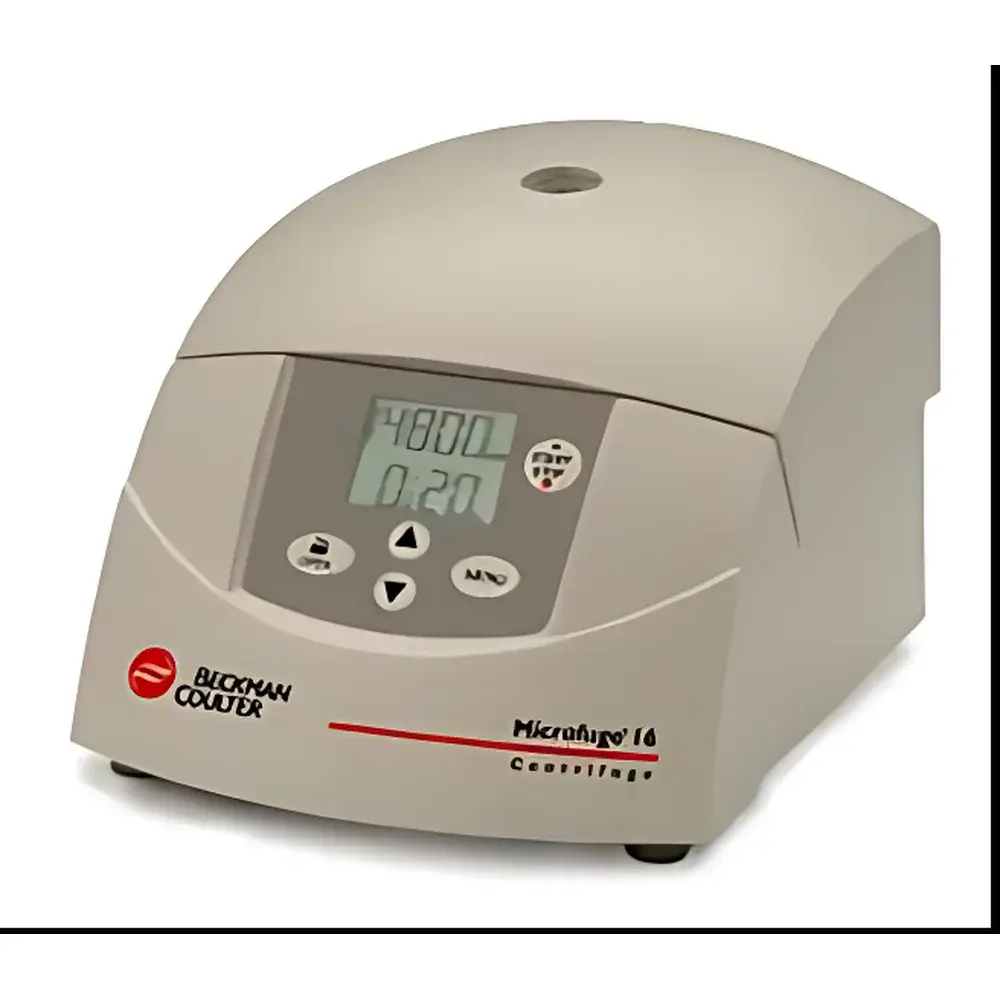
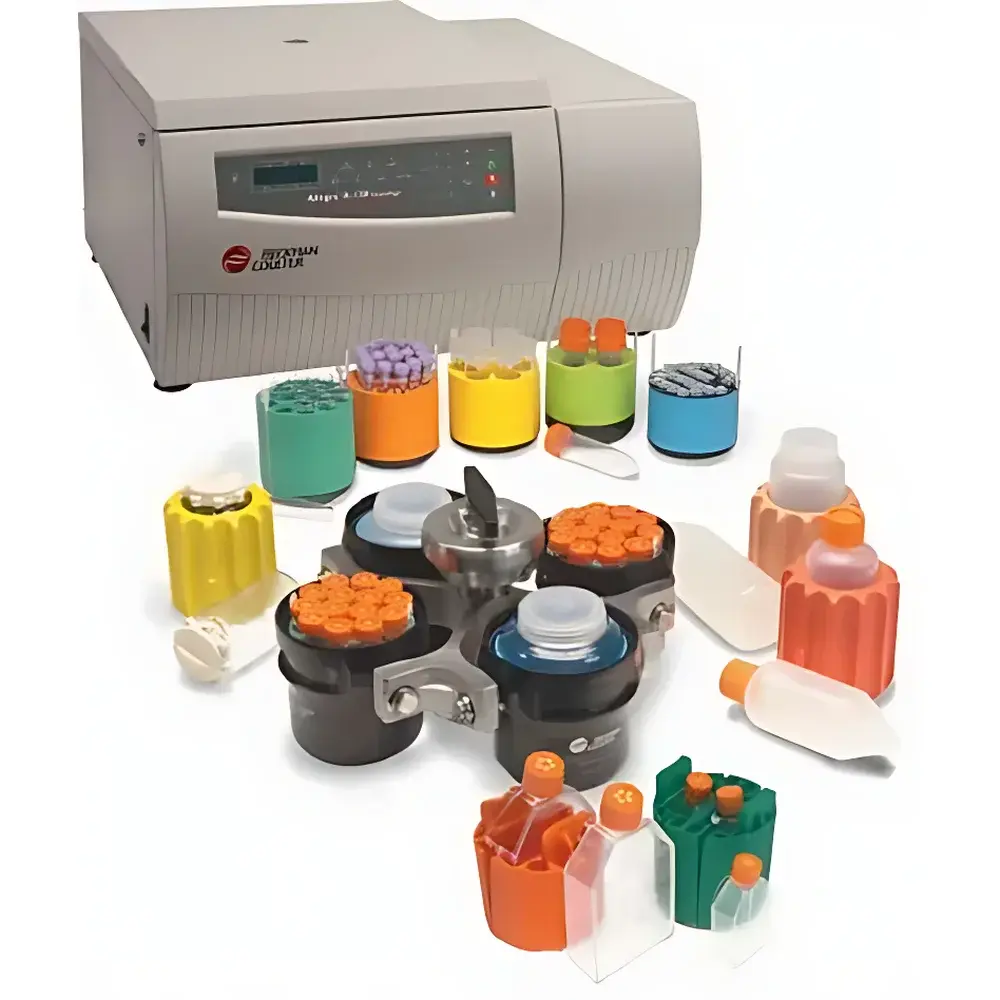
Beckman Coulter Microfuge 16 / 18 / 22R Benchtop Centrifuges
| Brand | Beckman Coulter |
|---|---|
| Origin | USA |
| Model | Microfuge 16 / Microfuge 18 / Microfuge 22R |
| Refrigeration | Yes (Microfuge 22R only) |
| Max RCF | 16,160 × g (Microfuge 16), 18,000 × g (Microfuge 18), 21,920 × g (Microfuge 22R) |
| Max Speed | 14,000 rpm (Microfuge 16), 14,800 rpm (Microfuge 18 & 22R) |
| Capacity | 3 × 1.5 mL (Microfuge 16), 24 × 1.5 mL (Microfuge 18 & 22R) |
| Temperature Range | –20 °C to +40 °C (Microfuge 22R) |
| Noise Level | ≤58 dBA |
| Acceleration/Deceleration Profiles | 10 selectable rates |
| Run Time | Up to 9 h 59 min continuous or short-spin mode |
| Balance Correction Range (ARIES) | ±50 g |
| Rotor Compatibility | 20 interchangeable rotors |
| Motor Type | Brushless DC drive |
Overview
The Beckman Coulter Microfuge series comprises three high-performance benchtop centrifuges—Microfuge 16, Microfuge 18, and Microfuge 22R—engineered for precision, reliability, and workflow flexibility in molecular biology, clinical diagnostics, and cell culture laboratories. These instruments operate on the principle of sedimentation under controlled centrifugal force, enabling rapid separation of biological particles based on size, density, and shape. The Microfuge 22R integrates a compressor-based refrigeration system that maintains sample integrity across a wide temperature range (–20 °C to +40 °C), critical for heat-sensitive nucleic acids, enzymes, and protein complexes. In contrast, the air-cooled Microfuge 16 and 18 deliver high-speed performance without active cooling—ideal for routine pelleting applications where thermal stability is less critical. All models employ brushless DC motors, ensuring consistent torque delivery, extended service life, and low operational noise (≤58 dBA), supporting shared lab environments where acoustic comfort and vibration control are essential.
Key Features
- ARIES™ Rotor Auto-Balancing Technology: Compensates for mass imbalances up to ±50 g without manual adjustment, reducing rotor wear and enhancing run reproducibility.
- Real-time dual-display readout: Simultaneous RPM and RCF values update continuously during acceleration, deceleration, and steady-state operation—enabling precise method transfer and validation.
- Programmable acceleration/deceleration profiles: Ten user-selectable ramp rates allow optimization for fragile samples (e.g., organelles, viral particles) or rapid turnaround protocols (e.g., serum separation).
- Biosafe sealed swinging-bucket rotors: Designed to contain aerosols and prevent operator exposure during high-risk biospecimen processing—compliant with BSL-2 containment best practices.
- Intuitive interface with memory for up to 99 user-defined protocols: Supports GLP-compliant documentation when paired with optional audit-trail-capable software modules.
- Universal rotor compatibility: Over 20 certified rotors—including fixed-angle, swinging-bucket, and PCR strip carriers—are mechanically and electronically interoperable across Microfuge and Allegra X-platform centrifuges.
Sample Compatibility & Compliance
The Microfuge platform accommodates a broad spectrum of laboratory consumables: microcentrifuge tubes (250 µL–2 mL), conical tubes (15 mL–50 mL), 18 mL centrifuge bottles, 96-well microplates, and T-75/T-175 cell culture flasks (with appropriate adapters). All rotors are certified to ISO 15195:2018 (calibration of centrifuges) and conform to IEC 61010-1:2012 safety standards for electrical equipment used in laboratory settings. The Microfuge 22R meets additional requirements for temperature-controlled instrumentation per ASTM E2500-13 (verification of pharmaceutical manufacturing systems) and supports 21 CFR Part 11 compliance when integrated with validated data acquisition software. Routine operation aligns with CLSI GP42-A4 guidelines for centrifugation in clinical laboratories.
Software & Data Management
While the Microfuge series operates as a stand-alone instrument via its front-panel keypad and LCD display, it supports seamless integration into networked lab environments through optional Beckman Coulter Centriware™ software (v5.0+). This application enables remote monitoring, protocol synchronization across multiple instruments, electronic signature capture, and automated generation of PDF reports containing timestamped run parameters, rotor ID, calibration history, and environmental logs. Audit trails record all user actions—including parameter edits, rotor changes, and emergency stops—with immutable timestamps and operator identifiers, satisfying GxP data integrity requirements. Export formats include CSV, XML, and LIMS-ready HL7 messages.
Applications
- Bacterial cell harvesting and lysate clarification prior to plasmid or genomic DNA isolation
- Protein precipitation using ammonium sulfate or organic solvents, followed by high-speed pelleting at ≥16,000 × g
- Subcellular fractionation workflows—including nuclear, mitochondrial, and microsomal isolations—using differential centrifugation protocols
- Clinical specimen processing: serum/plasma separation from whole blood (EDTA, heparin, or citrate tubes), PBMC isolation, and urinalysis sediment concentration
- Routine RNA extraction workflows requiring RNase-free conditions and temperature-stable rotor handling (Microfuge 22R)
- High-throughput plate-based assays requiring uniform pellet formation across 96-well formats
FAQ
What is the difference between Microfuge 16, 18, and 22R?
The Microfuge 16 is a compact, non-refrigerated model optimized for low-volume, high-RCF applications (16,160 × g). The Microfuge 18 offers higher speed (14,800 rpm) and identical capacity to the 16 but lacks cooling. The Microfuge 22R adds refrigeration (–20 °C to +40 °C), increased RCF (21,920 × g), and enhanced rotor versatility for temperature-sensitive workflows.
Are rotors interchangeable between Microfuge and Allegra centrifuges?
Yes—rotors designated for the Microfuge series are mechanically and electronically compatible with Beckman Coulter Allegra X-30, X-30R, and 64R systems, enabling standardized method development across benchtop and floor-standing platforms.
Does the Microfuge series support regulatory compliance for pharmaceutical labs?
When configured with Centriware™ software and operated under documented SOPs, the Microfuge 22R supports 21 CFR Part 11, EU Annex 11, and ISO/IEC 17025 requirements for instrument qualification, data traceability, and electronic records management.
How does ARIES technology improve centrifuge reliability?
ARIES dynamically adjusts motor torque during spin-up and spin-down to counteract load asymmetry, minimizing mechanical stress on bearings and spindle assemblies—extending mean time between failures and reducing maintenance frequency.
Can I use standard microcentrifuge tubes from third-party vendors?
Yes—Beckman Coulter validates performance with common polypropylene and polyethylene tubes meeting ISO 7218 and ASTM D4169 specifications; however, maximum rated speeds assume use of OEM-certified tubes rated for the specified RCF.



