
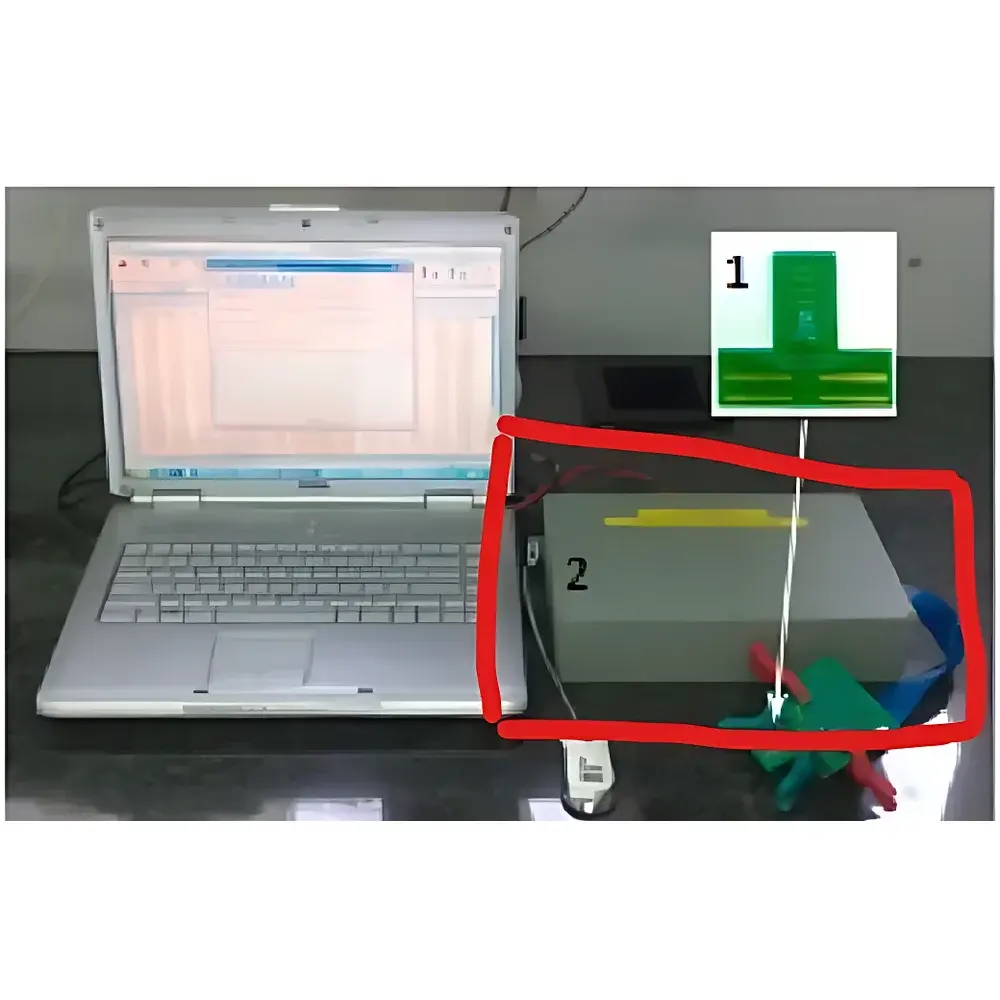
LABMAN 64-Channel Potentiostat System
| Brand | Labman |
|---|---|
| Origin | United Kingdom |
| Manufacturer Type | Authorized Distributor |
| Product Category | Imported Electrochemical Workstation |
| Model | LABMAN 64-Channel Potentiostat System |
| Channel Count | 64 independent electrochemical channels |
| Current Range | ±1 A per channel |
| Current Accuracy | ±1% of full scale |
| Potential Accuracy | ±1 mV (typical, referenced to internal calibration standard) |
| Potentiostatic Range | ±10 V vs. reference electrode |
| AC Impedance Frequency Range | 1 Hz – 1 MHz (per channel, with optional frequency extension modules) |
| Compliance | CE-marked, RoHS-compliant, designed for integration into GLP/GMP-regulated laboratory automation platforms |
Overview
The LABMAN 64-Channel Potentiostat System is a high-density, modular electrochemical instrumentation platform engineered for parallelized electrochemical characterization in research, quality control, and high-throughput screening environments. Unlike conventional single-channel potentiostats, this system implements synchronized, independently addressable potentiostatic control across 64 discrete working electrode interfaces—enabling true multi-sample electrochemical analysis under identical experimental conditions. Its architecture is grounded in galvanostatic/potentiostatic feedback control theory, utilizing precision analog front-ends, low-noise current-to-voltage conversion, and real-time digital signal processing to maintain stable polarization states during cyclic voltammetry (CV), chronoamperometry (CA), open-circuit potential (OCP) monitoring, and electrochemical impedance spectroscopy (EIS). Designed specifically for integration into custom laboratory automation workflows, the system supports deterministic timing synchronization (<10 µs inter-channel skew) and hardware-triggered acquisition—critical for time-resolved studies such as transient corrosion kinetics or redox-mediated biosensor response profiling.
Key Features
- 64 fully isolated, software-configurable electrochemical channels—each with independent WE/RE/CE connections and programmable compliance limits
- Simultaneous acquisition at up to 100 kS/s per channel (aggregate throughput >6 MS/s), with 24-bit ADC resolution and <10 nA input bias current
- Programmable potentiostatic range of ±10 V and current range of ±1 A per channel, with auto-ranging capability and dynamic range optimization
- Integrated EIS engine supporting frequency sweeps from 1 Hz to 1 MHz (standard); optional firmware upgrade enables extended low-frequency operation down to 10 mHz
- Rugged, rack-mountable 4U chassis with industrial-grade thermal management and electromagnetic shielding compliant with IEC 61326-1 for laboratory EMC environments
- Native support for TTL, LVDS, and optical trigger inputs—enabling precise temporal alignment with robotic liquid handlers, spectrometers, or environmental chambers
Sample Compatibility & Compliance
The system accommodates standard three-electrode electrochemical cells (working, counter, reference), microfluidic electrochemical flow cells, screen-printed electrode arrays (SPEs), and custom planar sensor substrates. It is compatible with aqueous, non-aqueous, and ionic liquid electrolytes, and supports temperature-controlled cell integration via external PID interfaces. From a regulatory perspective, the hardware and embedded firmware are CE-marked and RoHS-compliant. When deployed within validated laboratory automation systems, the potentiostat module meets functional requirements for data integrity under FDA 21 CFR Part 11 (when paired with Labman’s audit-trail-enabled control software), ISO/IEC 17025 traceability frameworks, and GLP-compliant electrochemical testing protocols. All analog signal paths undergo factory calibration against NIST-traceable voltage and current standards, with calibration certificates provided per unit.
Software & Data Management
Control and data acquisition are managed through Labman’s proprietary ElectroChem Suite v4.x—a Windows-based application built on .NET Framework with Python API bindings (via COM and RESTful endpoints). The software provides scriptable experiment sequencing, real-time visualization of multi-channel current/voltage transients, batch EIS fitting using equivalent circuit models (e.g., Randles, transmission line), and automated report generation in PDF/XLSX formats. Raw data are stored in HDF5 format with embedded metadata (timestamp, channel ID, parameter set, user annotations), ensuring FAIR (Findable, Accessible, Interoperable, Reusable) data principles. Audit trails record all parameter changes, user logins, and file exports; electronic signatures are supported for SOP-driven workflows in regulated environments.
Applications
This system is routinely deployed in academic and industrial settings requiring statistical robustness in electrochemical measurement: corrosion inhibitor screening across alloy libraries; high-throughput evaluation of battery electrode materials (anodes/cathodes) under identical cycling protocols; multiplexed detection of nucleic acid hybridization events on electrochemical DNA biosensor arrays; real-time monitoring of enzymatic activity in immobilized biocatalyst reactors; and accelerated stability testing of electrochromic coatings. Its design aligns with ASTM G59 (potentiodynamic polarization), ASTM G106 (electrochemical noise analysis), and ISO 16773-2 (EIS for protective coatings) methodologies.
FAQ
Is the 64-channel architecture truly parallel—or does it use time-multiplexing?
All 64 channels operate simultaneously with independent DAC/ADC paths and dedicated control loops—no time-division multiplexing is employed.
Can individual channels be configured with different electrochemical techniques during the same experiment?
Yes. Each channel accepts unique technique definitions (e.g., CV on Ch1–Ch8, EIS on Ch9–Ch32, CA on Ch33–Ch64) within a single synchronized run.
What level of technical support is provided for system integration?
Labman offers engineering-level integration support—including mechanical mounting drawings, electrical interface schematics, EtherCAT/Modbus TCP protocol documentation, and on-site commissioning for turnkey automation deployments.
Are firmware updates and calibration services available post-purchase?
Yes. Firmware releases are distributed quarterly via secure customer portal; annual recalibration services include NIST-traceable verification and certificate issuance.
Does the system support third-party electrode materials or custom cell geometries?
The hardware imposes no material restrictions; compatibility is determined by electrical interface (e.g., BNC/SMA/LEMO) and physical mounting—custom adapters and cell holders are available upon request.
Related Products




