
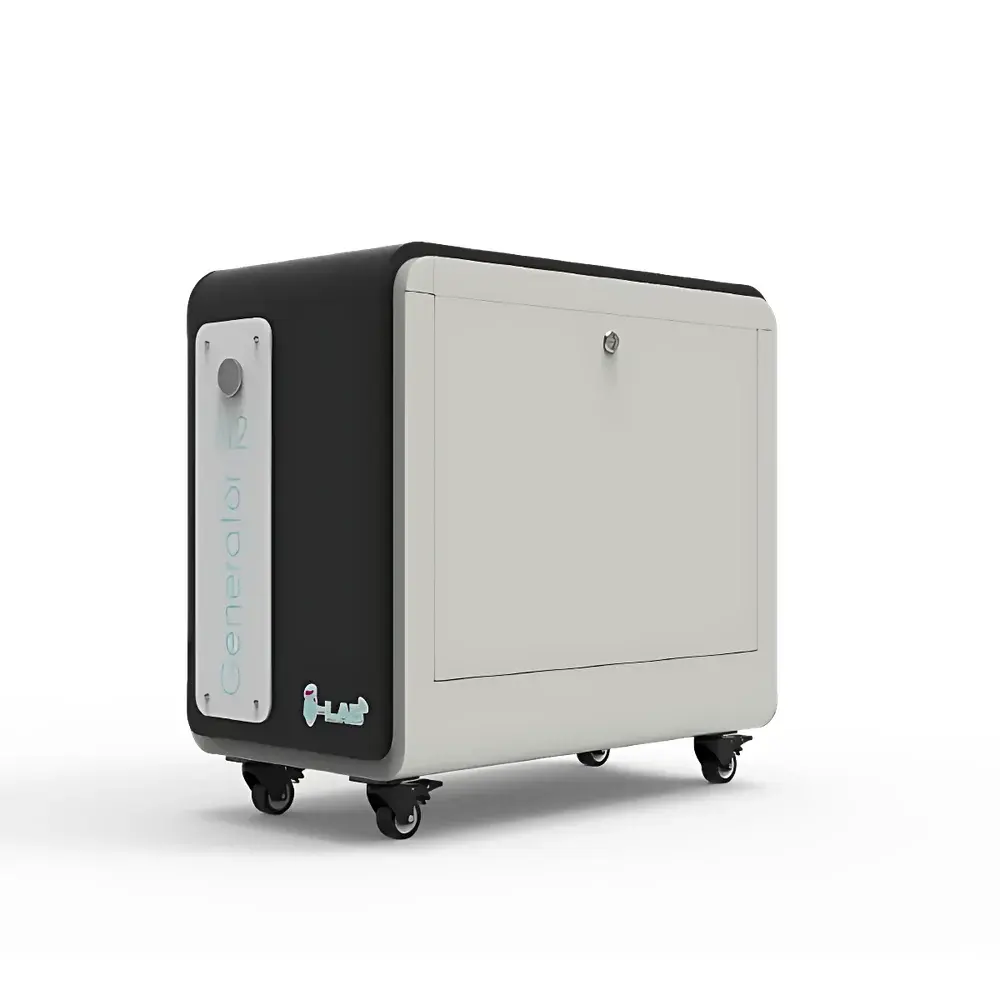
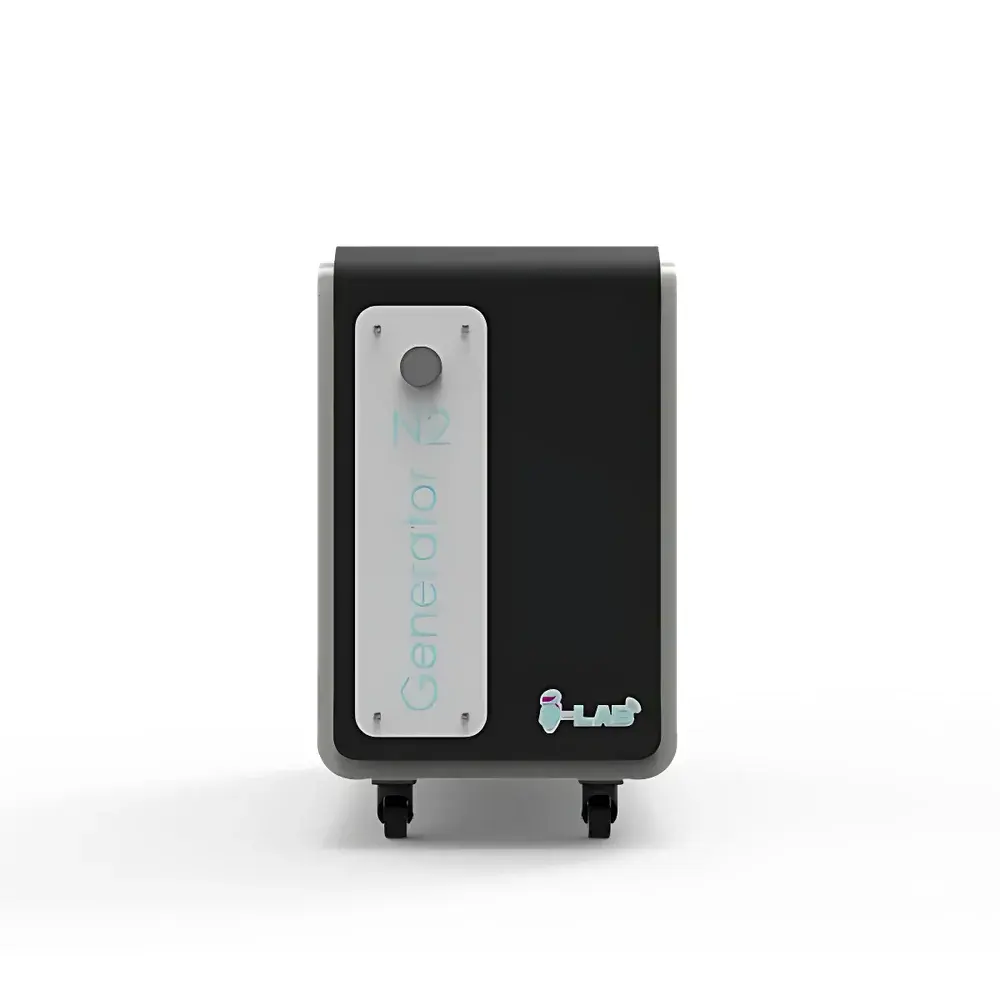
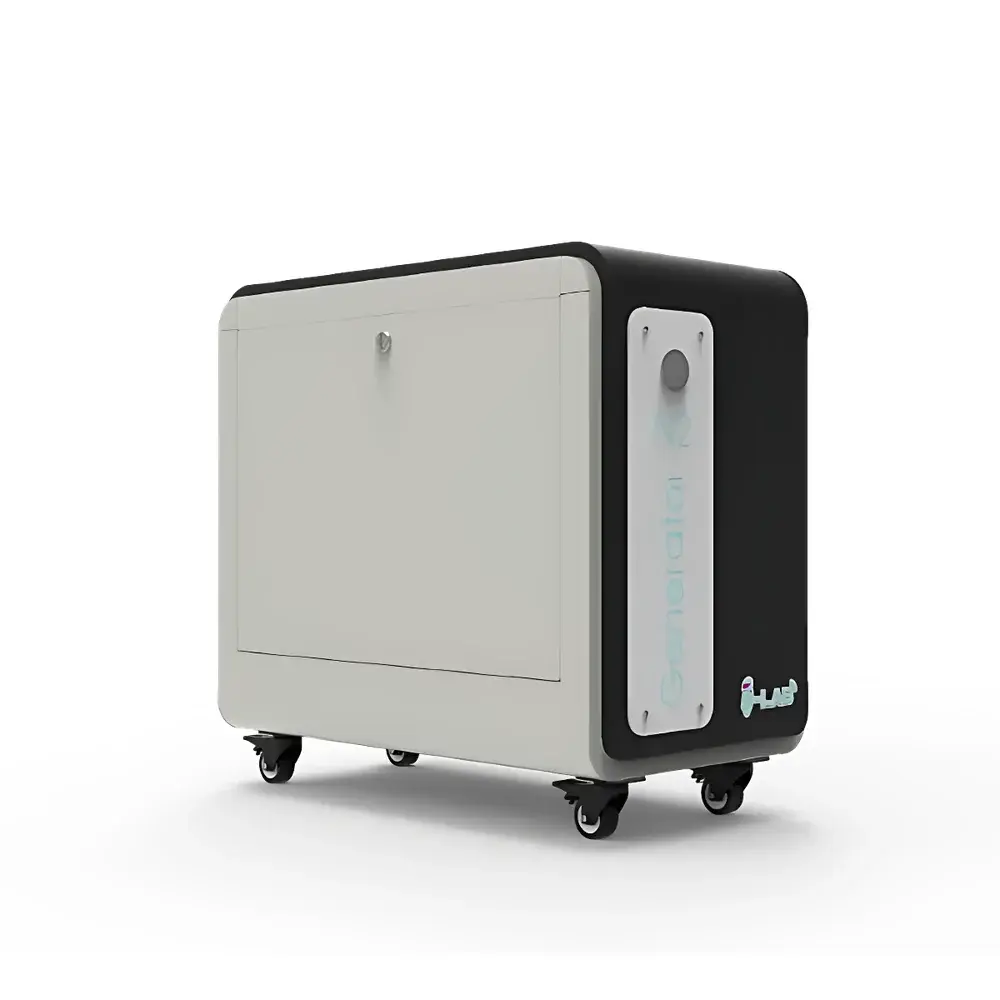
i-Lab KL20-1 Nitrogen Generator
| Brand | i-Lab |
|---|---|
| Origin | Shanghai, China |
| Manufacturer Type | Direct Manufacturer |
| Instrument Type | Nitrogen Generator |
| Nitrogen Generation Principle | Hollow Fiber Membrane Separation |
| Output Flow Rate | 20 L/min |
| Output Pressure | 0–7 bar (adjustable) |
| Nitrogen Purity | ≥99.9% |
| Noise Level | ≤50 dB(A) |
| Integrated Air Compressor | Yes |
| Filtration Stages | Multi-stage (water, hydrocarbon, particulate removal) |
| Application Focus | LC-MS ion source cooling, desolvation, and nitrogen blow-down |
Overview
The i-Lab KL20-1 Nitrogen Generator is an engineered solution for laboratories requiring high-purity, on-demand nitrogen gas in liquid chromatography–mass spectrometry (LC-MS) environments. It employs hollow fiber membrane separation technology—a pressure-driven physical process that selectively permeates oxygen, water vapor, and other trace gases through semi-permeable polymeric membranes—while retaining nitrogen molecules to achieve ≥99.9% purity. Unlike cryogenic or PSA-based systems, this membrane architecture delivers continuous, pulse-free nitrogen without adsorbent regeneration cycles or moving valves, ensuring exceptional long-term stability and minimal maintenance. Designed specifically for integration with Thermo Fisher, Agilent, and SCIEX LC-MS platforms, the KL20-1 addresses critical operational requirements: consistent flow (20 L/min), adjustable delivery pressure (0–7 bar), and ultra-low particulate/hydrocarbon contamination—key parameters influencing ion source stability, signal-to-noise ratio, and quantitative reproducibility in high-sensitivity applications such as targeted metabolomics or residue screening.
Key Features
- Optimized hollow fiber membrane module with spiral-wound configuration for enhanced surface-area-to-volume ratio and improved O2/N2 selectivity.
- Integrated multi-stage purification train: coalescing pre-filter, activated carbon trap (hydrocarbon removal), and ultrafine particulate filter (<0.01 µm), all housed within a sealed, leak-tested manifold.
- Onboard oil-free air compressor with anti-vibration mounting and acoustic enclosure—ensures noise level ≤50 dB(A) under continuous operation.
- Intelligent pressure regulation system with PID-controlled back-pressure valve and internal buffer tank (3 L volume) to dampen transient flow fluctuations and maintain stable delivery during rapid instrument demand changes.
- Front-panel digital interface with real-time display of output pressure, flow rate, and system status; supports analog 4–20 mA output for external monitoring and PLC integration.
- Modular design enables field-replaceable filtration cartridges and membrane bundles, supporting scheduled maintenance per ISO/IEC 17025-aligned laboratory quality management protocols.
Sample Compatibility & Compliance
The KL20-1 meets essential performance criteria for regulated analytical workflows. Its nitrogen output complies with ASTM D6866-22 (for biobased content verification where nitrogen is used as carrier gas) and satisfies the ambient air quality specifications outlined in USP for non-sterile pharmaceutical analysis. While not certified to ISO 8573-1 Class 0 for compressed air, its final nitrogen stream achieves Class 1 particulate (≤0.1 µm), Class 2 water (dew point ≤−40 °C), and Class 1 oil (≤0.01 mg/m³) equivalency—sufficient for ESI and APCI source operation per ICH Q2(R2) method validation guidance. The unit’s firmware includes audit-trail-capable event logging (power cycles, filter life alerts, pressure excursions), supporting GLP/GMP documentation requirements when deployed in QC labs subject to FDA 21 CFR Part 11 compliance frameworks.
Software & Data Management
The KL20-1 operates autonomously without proprietary software dependency. All operational parameters are accessible via local HMI with password-protected administrator mode. For networked lab environments, optional RS-485 Modbus RTU interface enables integration into centralized facility monitoring systems (e.g., LabVantage, STARLIMS). Event logs—including cumulative runtime, filter replacement timestamps, and pressure deviation history—are stored in non-volatile memory and exportable via USB port in CSV format. No cloud connectivity or remote telemetry is implemented, preserving data sovereignty and aligning with institutional IT security policies common in academic and government research facilities.
Applications
- LC-MS ion source cooling and desolvation gas supply—replacing high-pressure nitrogen cylinders to eliminate dew-point drift and cylinder-change-induced baseline instability.
- Nitrogen blow-down for sample concentration in environmental pesticide residue analysis (EPA Method 525.3), pharmaceutical impurity profiling (ICH Q3B), and food contaminant testing (AOAC 2012.01).
- Gas supply for GC-QTOF systems requiring stable make-up gas flow during high-resolution scanning.
- Non-analytical uses including inert blanketing during solvent evaporation, electronic component handling (ESD-safe dry nitrogen), and modified-atmosphere packaging R&D in food science laboratories.
FAQ
What is the expected service life of the hollow fiber membrane module under continuous operation?
With proper inlet air quality (ISO 8573-1 Class 3:4:4) and adherence to scheduled filter replacements, the membrane bundle maintains ≥99.9% purity for ≥15,000 operating hours—equivalent to ~3 years at 16 h/day usage.
Does the KL20-1 require external compressed air?
No. It features a built-in oil-free scroll compressor rated for continuous duty at 20 L/min free air delivery, eliminating dependency on central plant air systems.
Can output pressure be regulated independently of flow demand?
Yes. The integrated PID-controlled pressure regulator maintains setpoint accuracy within ±0.1 bar across the full 0–20 L/min dynamic range, verified per EN 61000-6-3 electromagnetic compatibility standards.
Is the unit compatible with LC-MS systems requiring ultra-high-purity nitrogen (e.g., >99.99%)?
The KL20-1 delivers ≥99.9% N2, suitable for ESI/APCI sources but not recommended for specialized applications requiring 99.999% purity (e.g., certain HRAM workflows); for those, supplemental catalytic purifiers may be added downstream.
How often must filters be replaced?
Pre-filters: every 2,000 hours; activated carbon and particulate filters: every 4,000 hours—alerts are triggered on the HMI and logged internally.



