
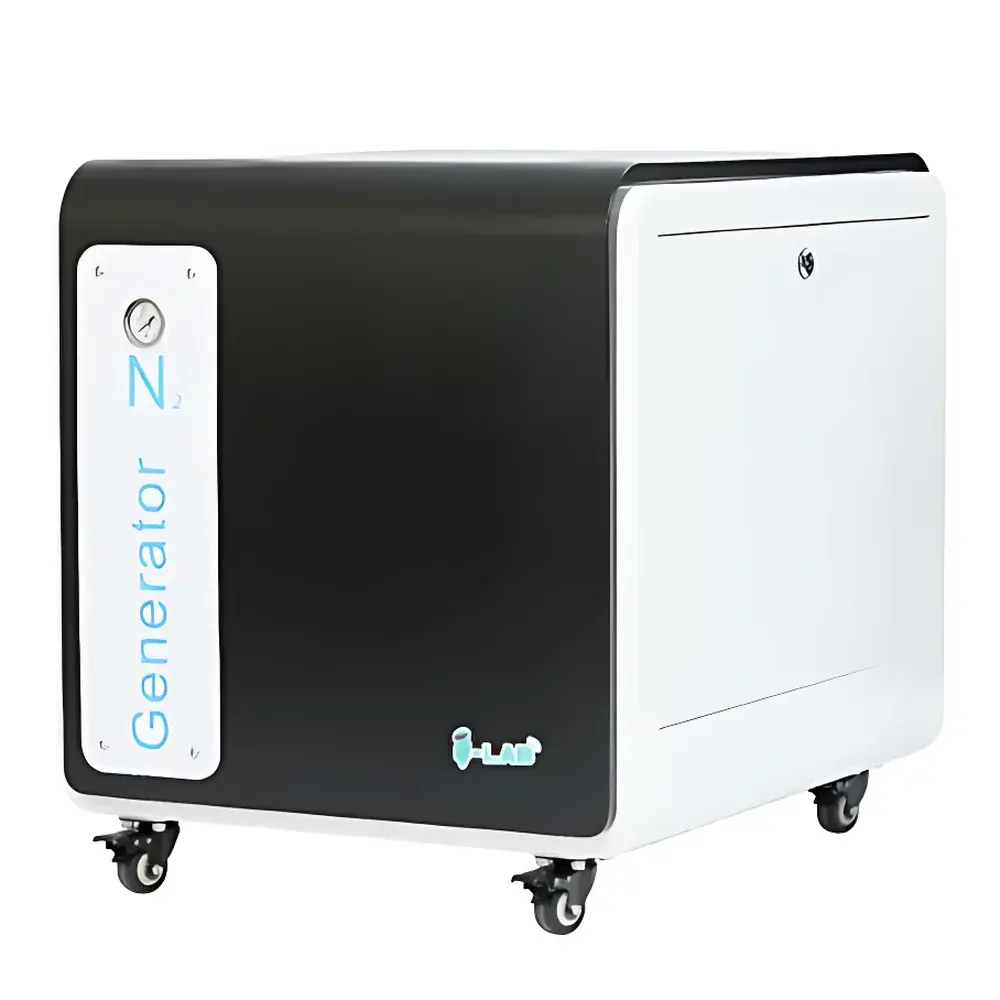
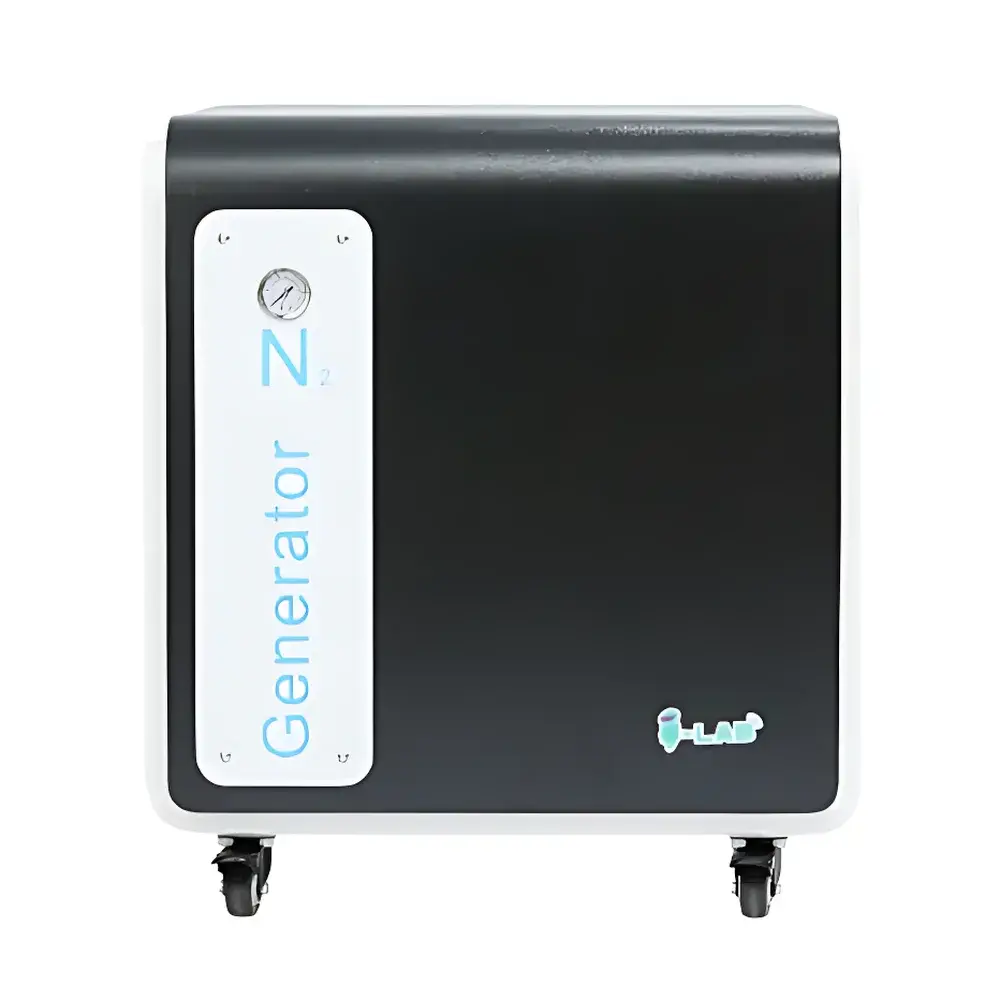
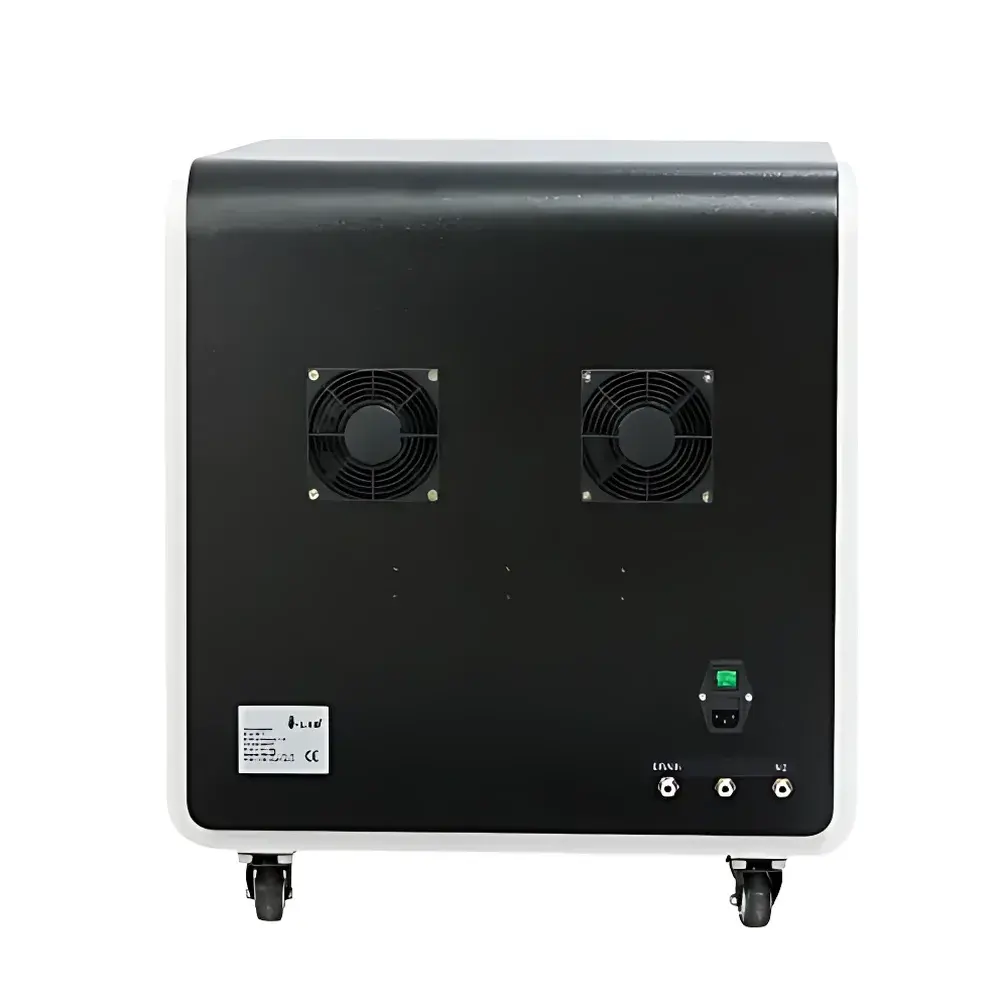
i-Lab KL35-1A Nitrogen Generator
| Brand | i-Lab |
|---|---|
| Origin | Shanghai, China |
| Manufacturer Type | Direct Manufacturer |
| Region of Origin | Domestic (China) |
| Model | KL35-1A |
| Instrument Type | Nitrogen Generator |
| Nitrogen Generation Principle | Hollow Fiber Membrane Separation |
| Nitrogen Output Flow Rate | 45 L/min (N₂: 10 L/min + Zero-Air: 35 L/min) |
| Output Pressure Range | 0–7 bar |
| Nitrogen Purity | 99.9% |
| Air Supply Configuration | Dual Zero-Air Streams |
Overview
The i-Lab KL35-1A Nitrogen Generator is an engineered gas supply solution specifically designed to meet the stringent and dynamic gas requirements of SCIEX AB Sciex API-based liquid chromatography–mass spectrometry (LC-MS) systems. It operates on the principle of hollow fiber membrane separation—a pressure-driven, physical gas separation process that selectively permeates oxygen, water vapor, and carbon dioxide through polymeric membranes while retaining nitrogen molecules. This technology enables continuous, oil-free, and maintenance-light nitrogen generation without cryogenic or chemical processes. The KL35-1A delivers two distinct, independently regulated gas streams: a high-purity nitrogen stream (≥99.9% N₂) for ion source desolvation and collision gas applications, and dual zero-air outputs (≤0.01 ppm hydrocarbons, ≤10 ppb CO, ≤10 ppb CO₂, ≤10 ppb NOₓ, dew point ≤−40 °C) for electrospray ionization (ESI), atmospheric pressure chemical ionization (APCI), and other API source configurations. Its modular architecture supports seamless integration with SCIEX Triple Quad™, QTRAP®, and X500R™ platforms, eliminating reliance on high-pressure cylinders and reducing operational risk associated with gas logistics.
Key Features
- SCIEX-optimized gas delivery architecture with pre-calibrated flow and pressure profiles aligned to API source specifications (e.g., Turbo V™, IonDrive™)
- Hollow fiber membrane module with integrated coalescing and activated carbon filtration—ensuring consistent 99.9% nitrogen purity across variable load conditions
- Dual independent zero-air channels, each equipped with catalytic hydrocarbon removal, heated desiccant drying, and sub-ppb-level trace gas scrubbing
- Intelligent pressure regulation system maintaining stable output from 0 to 7 bar (gauge), with real-time feedback control and overpressure protection
- Modular front-panel interface with digital flow meters, pressure gauges, and status LEDs for nitrogen purity, membrane health, and filter service intervals
- Low power consumption (<850 W), silent operation (<52 dB[A]), and compact footprint (W480 × D520 × H620 mm) suitable for benchtop LC-MS integration
Sample Compatibility & Compliance
The KL35-1A is validated for use with all SCIEX LC-MS instruments requiring ≥99.9% nitrogen at flow rates up to 10 L/min and zero-air at up to 35 L/min per channel. It complies with ISO 8573-1:2010 Class 1.2.1 for compressed air quality (particulates, water, oil), and meets ASTM D6352–20 standards for hydrocarbon-free air in analytical instrumentation. All internal wetted materials are FDA-compliant 316L stainless steel and EPDM-free fluoropolymer elastomers. The system supports GLP/GMP environments via optional audit-trail logging (via RS-485/Modbus RTU), and its gas purity certification documentation aligns with USP and ICH Q5C guidelines for analytical gas qualification.
Software & Data Management
While the KL35-1A operates as a standalone hardware unit, it includes analog 0–10 V and 4–20 mA output interfaces for integration into centralized lab monitoring systems (e.g., LabVantage, Thermo Fisher SampleManager). Optional firmware upgrade enables Modbus TCP communication for remote parameter readout—including real-time nitrogen purity estimation (based on differential pressure decay modeling), cumulative membrane runtime, and filter saturation indicators. All calibration and service records are stored locally in non-volatile memory and exportable as CSV for regulatory review. No proprietary cloud platform or subscription is required; data sovereignty remains fully under laboratory control.
Applications
- Primary LC-MS gas supply for SCIEX ESI, APCI, and APPI sources—enabling stable spray current, reduced adduct formation, and improved signal-to-noise ratios
- Nitrogen-assisted sample preparation: programmable flow-controlled nitrogen blow-down (0–35 L/min) for solvent evaporation in multi-well plates and GC vials
- Controlled-atmosphere packaging validation in food safety labs requiring inert gas blanketing during volatile compound analysis
- Support for semiconductor metrology tools requiring ultra-dry, hydrocarbon-free purge gas during wafer surface characterization
- Backup or primary gas source for FTIR purge lines, glovebox inerting, and plasma cleaning systems where cylinder dependency must be minimized
FAQ
Is the KL35-1A compatible with non-SCIEX LC-MS platforms?
Yes—while optimized for SCIEX API source pressure and flow setpoints, its adjustable output range (0–7 bar, 0–10 L/min N₂) and dual zero-air capability make it suitable for Waters, Agilent, and Thermo Fisher LC-MS systems with appropriate inlet adapters and flow calibration.
What is the expected service life of the hollow fiber membrane module?
Under typical lab conditions (ambient temperature 15–30 °C, inlet air dew point ≤10 °C), the membrane module maintains ≥99.9% purity for ≥15,000 operating hours; replacement is recommended after 2 years or upon documented purity drift >0.05% (verified via onboard O₂ sensor calibration).
Does the KL35-1A require external cooling or ventilation?
No—its thermally balanced heat exchanger and low-power compressor design enable passive convection cooling; no external exhaust ducting or chilled water connection is needed.
Can the zero-air outputs be used interchangeably with the nitrogen stream?
No—zero-air and nitrogen paths are physically isolated and functionally distinct; zero-air channels include catalytic converters and heated dryers not present in the nitrogen path, and cross-use may compromise source performance or void warranty.
How is nitrogen purity verified during routine operation?
The system employs a factory-calibrated electrochemical O₂ sensor (range 0–100 ppm) downstream of the membrane stack, with automatic drift compensation and user-accessible calibration port per ISO 17025 traceability requirements.



