
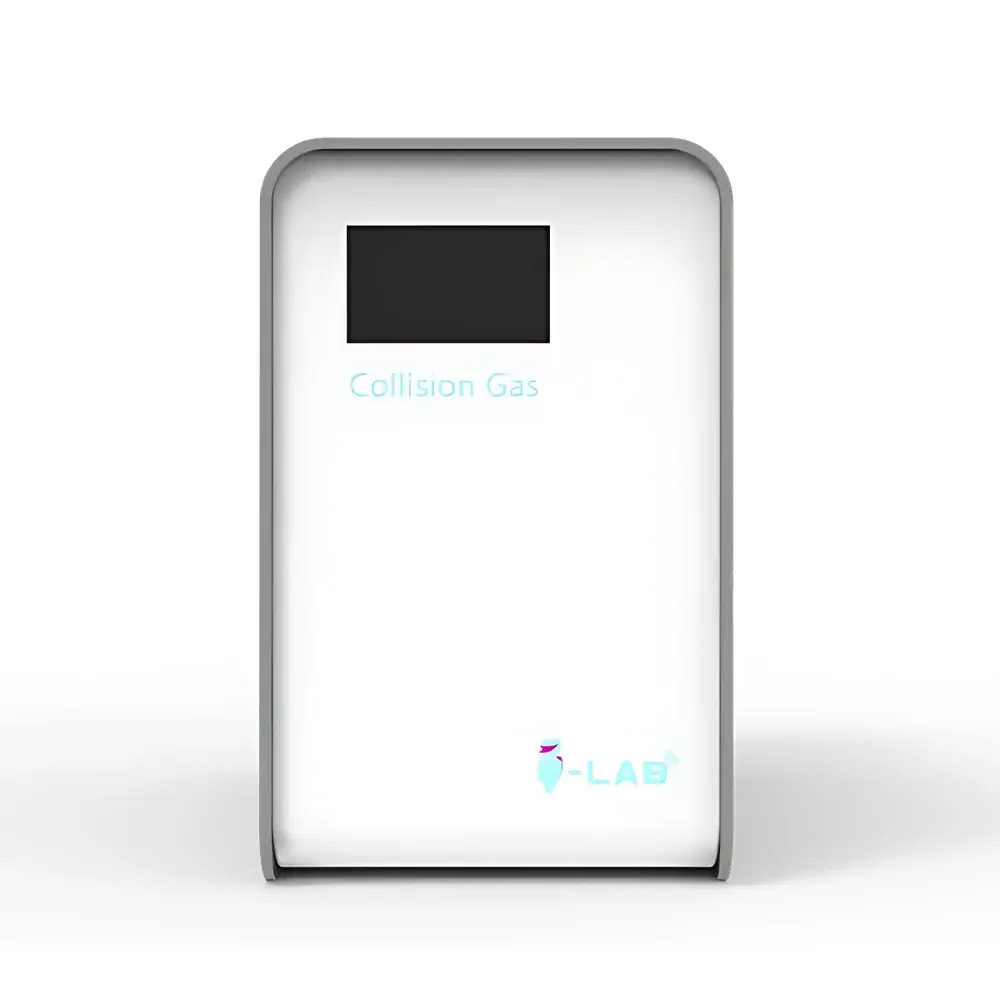
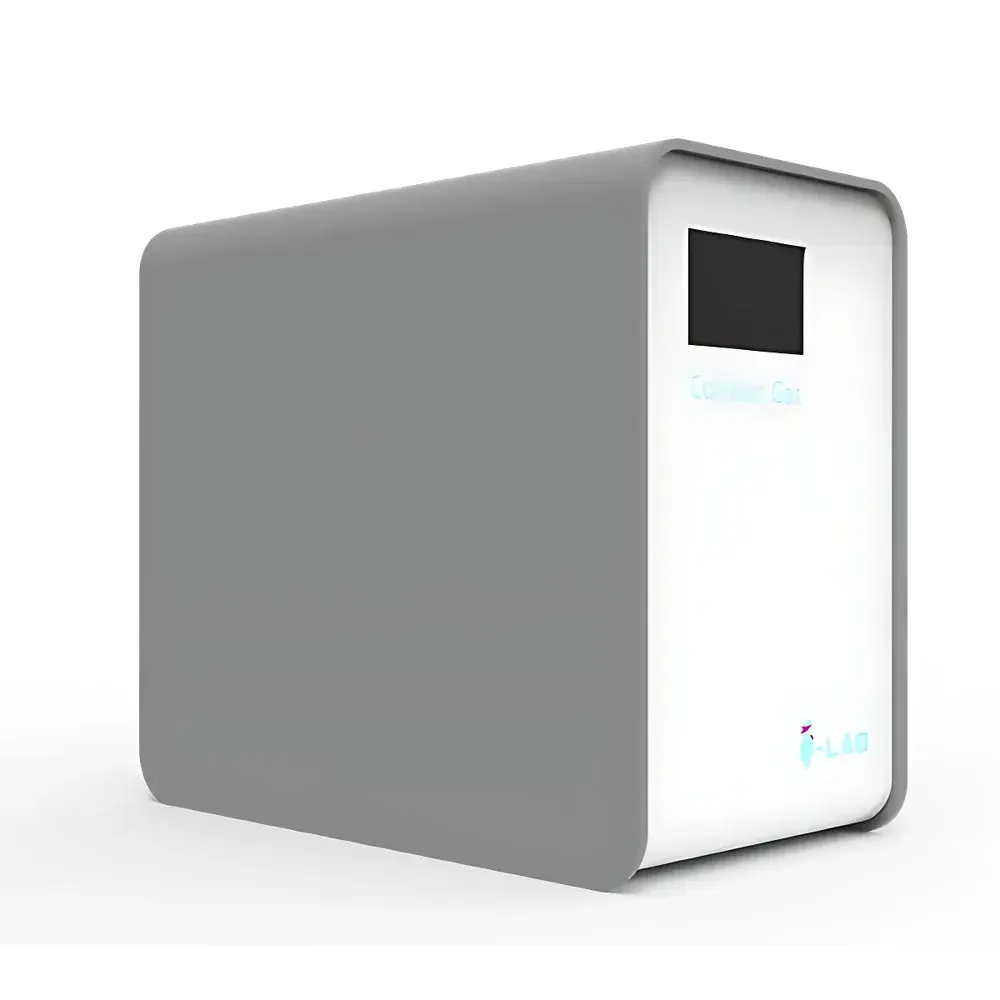
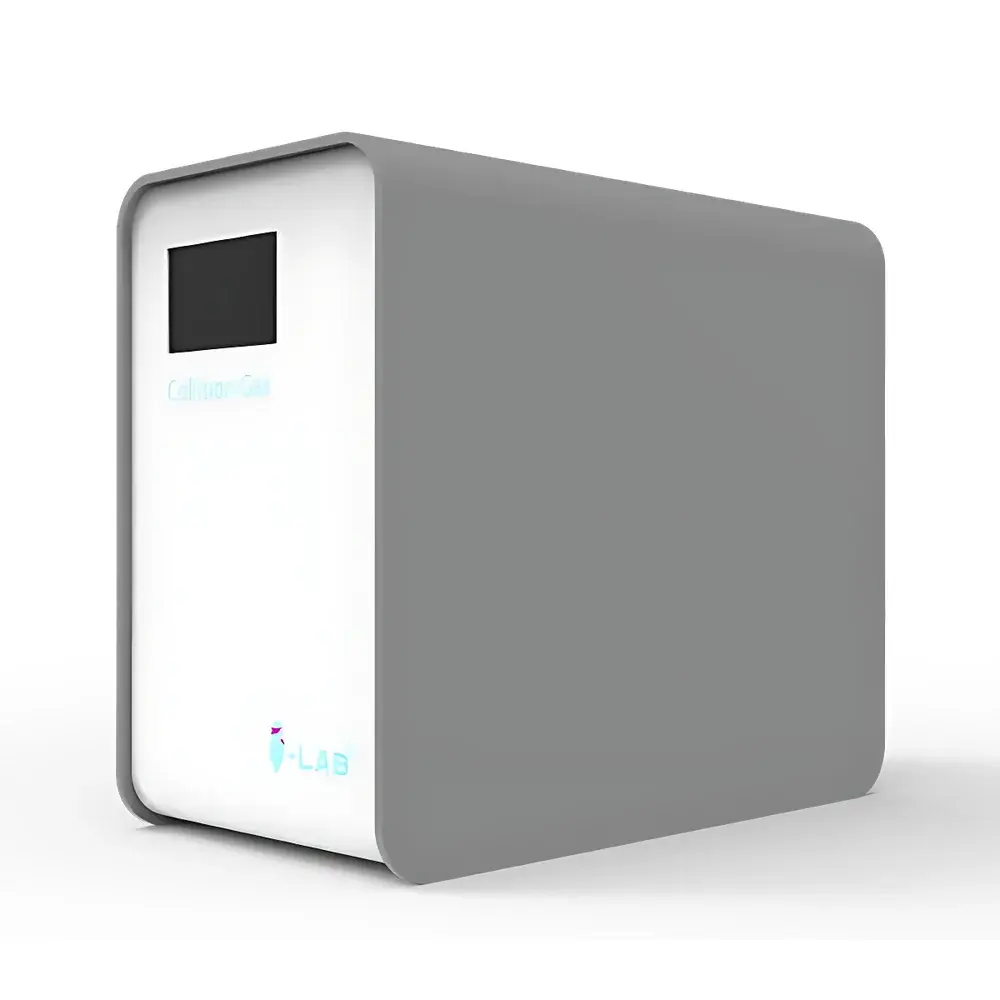
i-Lab CG100-0 High-Purity Nitrogen Generator for Collision Gas Applications
| Brand | i-Lab |
|---|---|
| Origin | Shanghai, China |
| Manufacturer Type | Direct Manufacturer |
| Instrument Type | Nitrogen Generator |
| Nitrogen Generation Principle | Hollow Fiber Membrane Separation + SFP Split Flow Purification |
| Output Flow Rate | 0–100 mL/min |
| Output Pressure | 0–4 bar |
| Nitrogen Purity | 99.999% |
| Oxygen Content | <3 ppm |
| Dew Point | ≤−60 °C |
| Flow Stability | ±0.5% |
| Noise Level | <45 dB(A) |
| Power Consumption | 100 W |
| Operating Environment | 5–35 °C, 5–80% RH |
| Interface | Modular External Gas Inlet (Air or 99.9% N₂) |
Overview
The i-Lab CG100-0 is a high-purity nitrogen generator engineered specifically for collision gas applications in mass spectrometry (MS), including electrospray ionization (ESI), atmospheric pressure chemical ionization (APCI), and collision-induced dissociation (CID) workflows. Unlike conventional nitrogen generators relying solely on pressure swing adsorption (PSA) or cryogenic separation, the CG100-0 integrates hollow fiber membrane separation with i-Lab’s proprietary Split Flow Purification (SFP) technology — a thermodynamically optimized variant of PSA that enhances molecular sieve utilization efficiency and reduces regeneration cycle stress. This hybrid architecture enables rapid startup (<90 seconds to full-spec output), stable 99.999% nitrogen purity, and sub-ppm oxygen residuals (<3 ppm) essential for low-background MS operation. Designed as a modular, external-gas-fed system, it accepts either compressed air or pre-purified 99.9% nitrogen as input, eliminating the need for an integrated compressor and minimizing vibration transmission and heat load in sensitive analytical environments.
Key Features
- SFP Split Flow Purification Core: Patented dual-path flow routing improves adsorbent bed kinetics, reducing startup time by 40% and extending molecular sieve service life by 50% compared to standard PSA configurations.
- Triple-Stage Catalytic Purification: Combines membrane pre-separation, catalytic deoxygenation, and ultra-low dew point desiccation (≤−60 °C) to meet stringent MS-grade specifications for oxygen content and moisture.
- Precision Flow Control: Digital mass flow control ensures linear, repeatable output across 0–100 mL/min with stability better than ±0.5% — critical for consistent collision gas stoichiometry in tandem MS (MS/MS) experiments.
- Low-Noise, Low-Power Architecture: Acoustically damped enclosure and optimized thermal management deliver <45 dB(A) operational noise and only 100 W power draw — compliant with ISO 14644-1 Class 7 cleanroom ambient requirements and suitable for shared lab spaces.
- Intelligent IoT-Enabled Interface: Full-color capacitive touchscreen provides real-time visualization of pressure, purity (via internal O₂ sensor), flow rate, and system health; supports remote monitoring via Ethernet/Wi-Fi and auto-alerting for maintenance events or parameter deviation.
Sample Compatibility & Compliance
The CG100-0 is compatible with all major benchtop and high-end mass spectrometers requiring ultra-high-purity collision gas, including Thermo Fisher Orbitrap, Waters Xevo, Agilent Q-TOF, and Shimadzu LCMS-8060 platforms. Its output meets ASTM D852-22 specifications for laboratory-grade nitrogen and aligns with ICH Q5C guidance on inert gas quality for analytical instrumentation. The system supports GLP/GMP-aligned audit trails through timestamped event logging and configurable user access levels. While not FDA 21 CFR Part 11 certified out-of-the-box, its data export functionality (CSV/JSON over USB or network) enables integration into validated LIMS or ELN systems meeting regulatory documentation requirements.
Software & Data Management
The embedded firmware supports local data logging at 1 Hz resolution for pressure, flow, and O₂ concentration, stored onboard for up to 30 days. Export is supported via USB drive or secure HTTP API endpoints. Optional i-Lab Cloud Connect subscription enables centralized fleet monitoring, predictive maintenance alerts (based on cumulative runtime and sensor drift trends), and automated calibration scheduling. All configuration changes are logged with user ID, timestamp, and parameter delta — fulfilling traceability needs for ISO/IEC 17025-accredited laboratories.
Applications
- Collision gas supply for quadrupole, ion trap, and Orbitrap-based mass spectrometers
- Make-up gas and nebulizer gas in LC-MS interfaces
- Carrier and purge gas in GC-MS systems where ultra-low oxygen is required to prevent column oxidation
- Blank gas for background subtraction in high-sensitivity elemental analysis (e.g., ICP-MS auxiliary gas)
- Controlled-atmosphere glove box purging in material science labs requiring inert, dry nitrogen
FAQ
Does the CG100-0 require an internal air compressor?
No — it is designed as an external-gas-fed module. It accepts either oil-free compressed air (≥7 bar, ISO 8573-1 Class 1,3,1) or commercial 99.9% nitrogen cylinders as input.
Can multiple instruments be supplied simultaneously from one CG100-0 unit?
Yes — the 0–100 mL/min flow range and 0–4 bar pressure adjustability support parallel connection to up to three low-flow MS interfaces using calibrated T-fittings and individual needle valves.
What maintenance intervals are recommended?
Pre-filter replacement every 6 months; catalytic cartridge every 12 months under continuous operation; annual verification of O₂ sensor calibration using certified reference gas (10 ppm O₂ in N₂).
Is the output purity verified in real time?
Yes — an electrochemical O₂ sensor continuously monitors residual oxygen downstream of the final purification stage, with values displayed on-screen and logged alongside flow and pressure data.
How does SFP differ from conventional PSA?
SFP dynamically splits inlet flow between adsorption and regeneration beds, maintaining near-constant outlet purity during transition cycles — eliminating the transient purity dip typical of sequential PSA designs.



