
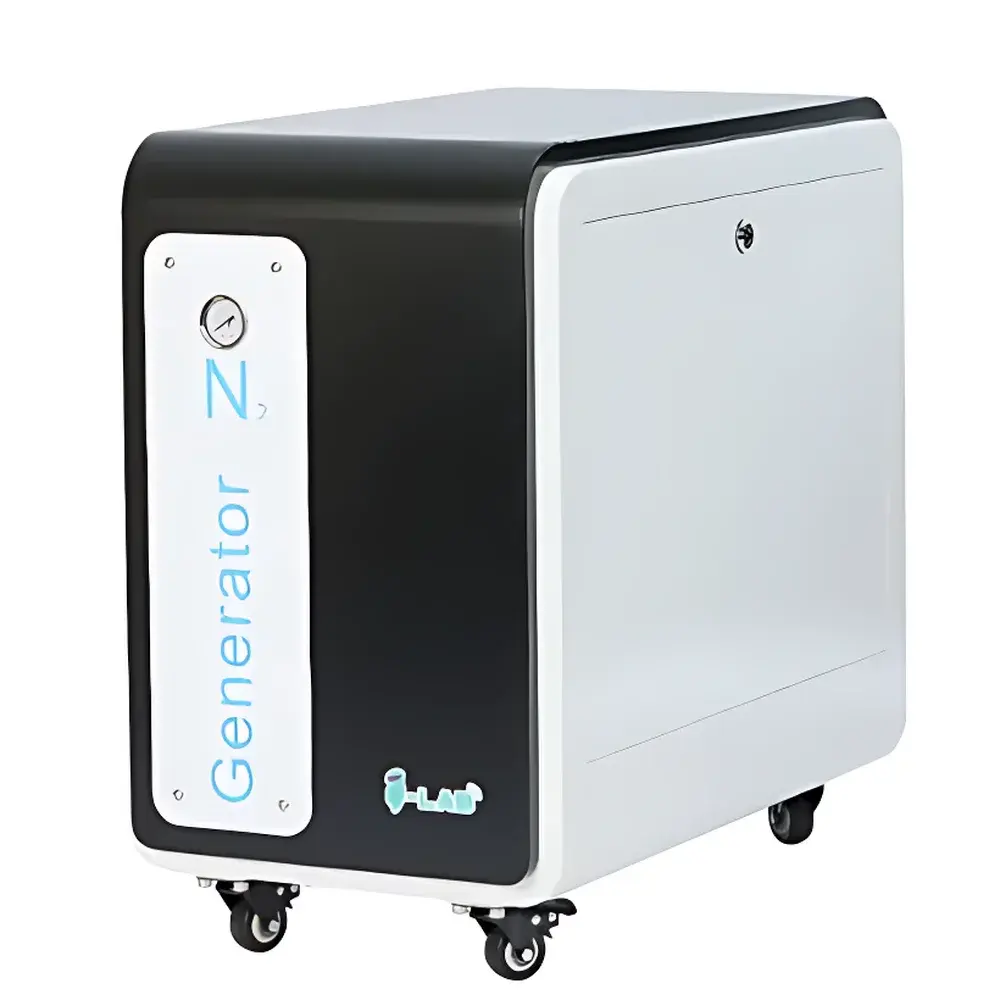
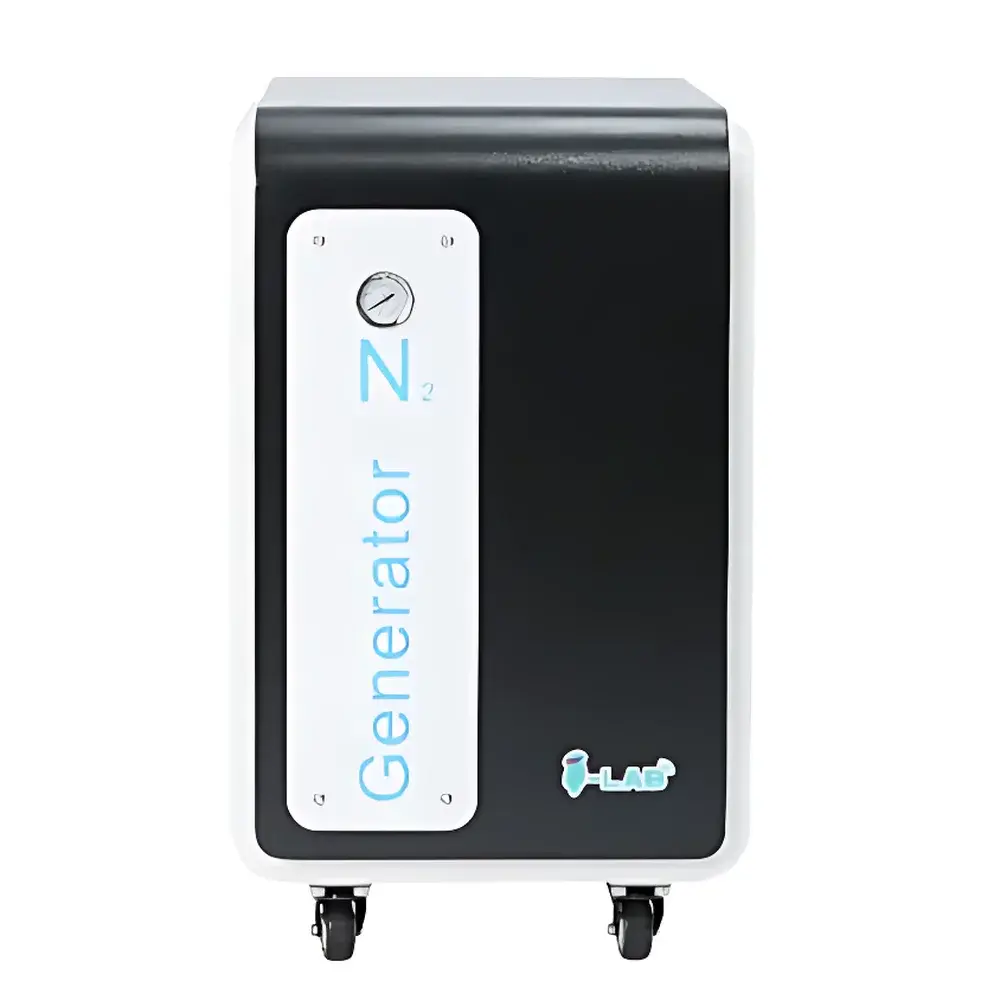
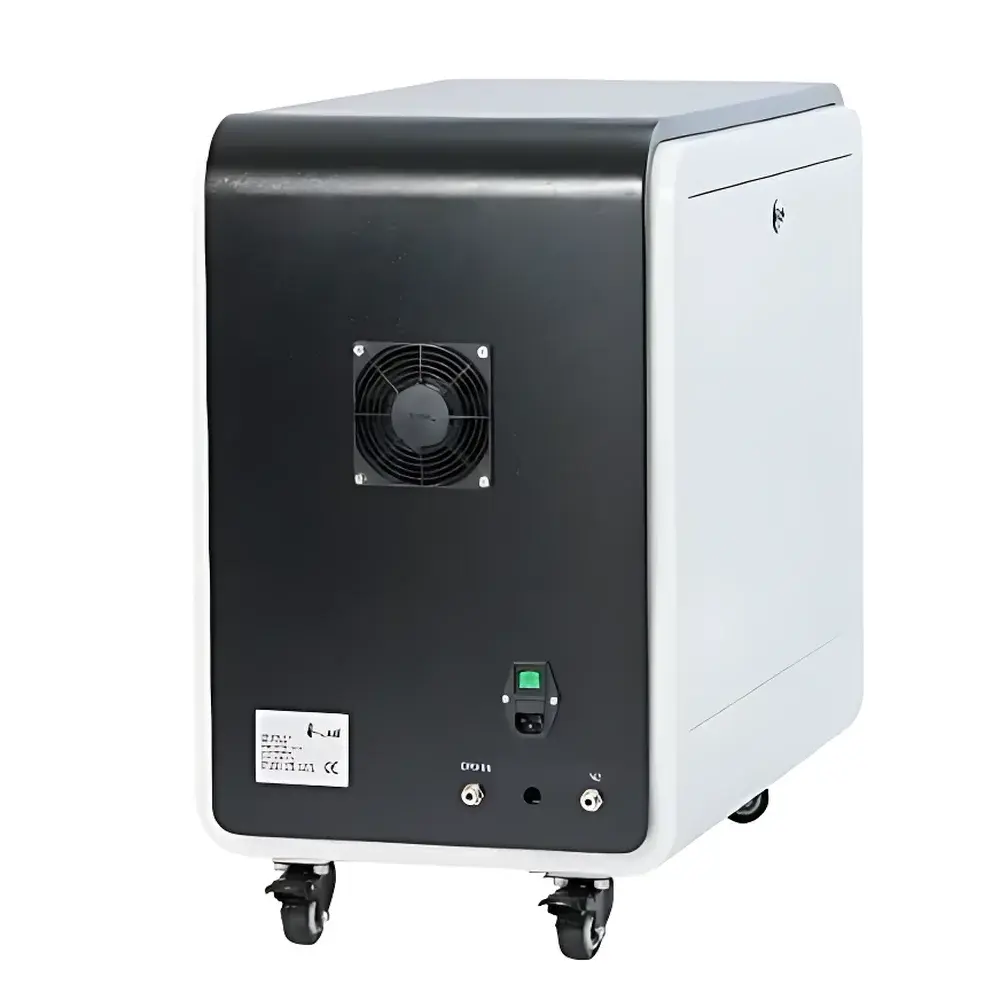
i-Lab KL12-1 Nitrogen Generator
| Brand | i-Lab |
|---|---|
| Origin | Shanghai, China |
| Manufacturer Type | Direct Manufacturer |
| Product Category | Domestic |
| Model | KL12-1 |
| Instrument Type | Nitrogen Generator |
| Nitrogen Generation Principle | Hollow Fiber Membrane Separation |
| Output Flow Rate | 12 L/min |
| Output Pressure | 0–6 bar |
| Nitrogen Purity | 99.9% |
Overview
The i-Lab KL12-1 Nitrogen Generator is an engineered solution for laboratories requiring a continuous, on-demand supply of high-purity nitrogen gas (99.9%) at stable flow and pressure conditions. Utilizing hollow fiber membrane separation technology, the system selectively permeates oxygen, water vapor, and other trace gases through semi-permeable polymeric membranes, while retaining nitrogen molecules due to their lower diffusion rate and larger kinetic diameter. This physical separation method eliminates the need for consumables such as catalysts or desiccants, offering inherent reliability and long-term operational consistency. Designed specifically to support analytical instrumentation—including Charged Aerosol Detectors (CAD), Evaporative Light Scattering Detectors (ELSD), and high-resolution mass spectrometry systems like GC-QTOF—the KL12-1 delivers precise gas conditioning essential for ion source cooling, nebulizer drying, and mobile phase sparging. Its compact footprint, integrated air compression module, and built-in moisture and hydrocarbon removal stages ensure compliance with stringent analytical gas quality requirements across regulated environments.
Key Features
- Stable output of 12 L/min nitrogen at adjustable pressure (0–6 bar), optimized for CAD/ELSD aerosol generation and GC-QTOF source temperature control.
- Hollow fiber membrane core with proprietary polymer composition, delivering consistent 99.9% nitrogen purity without secondary purification stages or regeneration cycles.
- Integrated air compressor with anti-vibration mounting and acoustic enclosure, achieving <55 dB(A) operational noise—suitable for shared laboratory spaces.
- Onboard buffer tank and multi-stage filtration (coalescing pre-filter, activated carbon, and ultra-fine particulate filter) ensuring low dew point (<−40 °C) and hydrocarbon content <0.1 ppmv.
- Modular architecture enables rapid component replacement; membrane modules are field-serviceable with no specialized tools required.
- Intuitive front-panel interface with real-time display of flow rate, outlet pressure, and system status indicators—no external software needed for basic operation.
Sample Compatibility & Compliance
The KL12-1 is compatible with all standard 1/4″ and 3/8″ stainless steel or PTFE gas lines used in analytical laboratories. It meets ISO 8573-1:2010 Class 2:2:2 for compressed air quality upstream of the membrane module and delivers nitrogen meeting ASTM D6349-20 specifications for instrumental analysis-grade nitrogen. The system supports GLP/GMP workflows through passive logging capability (via optional analog 4–20 mA output) and is designed to align with FDA 21 CFR Part 11 requirements when integrated into validated instrument networks using third-party data acquisition platforms. No hazardous materials are employed in operation, and the unit complies with CE electromagnetic compatibility (EMC) Directive 2014/30/EU and Low Voltage Directive 2014/35/EU.
Software & Data Management
While the KL12-1 operates autonomously via its embedded microcontroller, it provides analog outputs (0–10 VDC or 4–20 mA) for integration into centralized lab monitoring systems (e.g., LabVantage, Thermo Fisher SampleManager, or custom SCADA). Optional RS-485 Modbus RTU communication allows remote parameter readout—including runtime hours, inlet pressure, and membrane differential pressure—for preventive maintenance scheduling. Audit trails are maintained externally via connected supervisory systems; the generator itself does not store historical data but supports timestamped event logging when interfaced with compliant software platforms.
Applications
- Charged Aerosol Detection (CAD): Stable nitrogen flow ensures reproducible droplet evaporation kinetics and uniform analyte response across gradient HPLC methods.
- Evaporative Light Scattering Detection (ELSD): Consistent drying gas minimizes baseline drift and improves signal-to-noise ratio during volatile mobile phase elution.
- GC-QTOF Ion Source Cooling: Precise thermal management of the electrospray or APCI interface extends source lifetime and reduces downtime from contamination buildup.
- Blank solvent sparging and inert atmosphere purging in sample preparation workstations for trace-level elemental or organic analysis.
- Low-pressure inerting in electronics manufacturing processes such as reflow soldering, where oxygen exclusion below 100 ppm is critical for solder joint integrity.
FAQ
What is the expected service life of the hollow fiber membrane module?
Under typical laboratory operating conditions (8 h/day, ambient temperature ≤30 °C, inlet air dew point <−20 °C), the membrane module maintains specified performance for ≥15,000 hours before scheduled replacement.
Does the KL12-1 require external compressed air?
No—it integrates a maintenance-free oil-free scroll compressor and requires only a standard 230 V AC power supply.
Can the nitrogen purity be verified in situ?
Yes; the unit includes a dedicated sampling port compliant with ISO 8573-7 for connection to portable electrochemical or paramagnetic oxygen analyzers (recommended calibration interval: annually).
Is the KL12-1 suitable for use with LC-MS systems requiring >99.99% N₂?
No; for applications demanding ultra-high purity (e.g., >99.99%), a PSA-based or cryogenic nitrogen generator is recommended. The KL12-1 is validated for 99.9% purity, appropriate for CAD, ELSD, and QTOF source cooling per manufacturer specifications.
How often does the pre-filtration system require maintenance?
Coalescing and activated carbon filters should be replaced every 6,000 operating hours or annually—whichever occurs first—based on inlet air quality and ambient particulate load.
Related Products



