
Universal Shock and Impact Testing System
| Brand | OEM / Third-Party Manufacturer |
|---|---|
| Origin | Imported |
| Supplier Type | Authorized Distributor |
| Price | USD 16,500 (FOB) |
| Compliance | ISO 2247, ASTM D880, ISTA 3A, MIL-STD-810H Shock Methods |
Overview
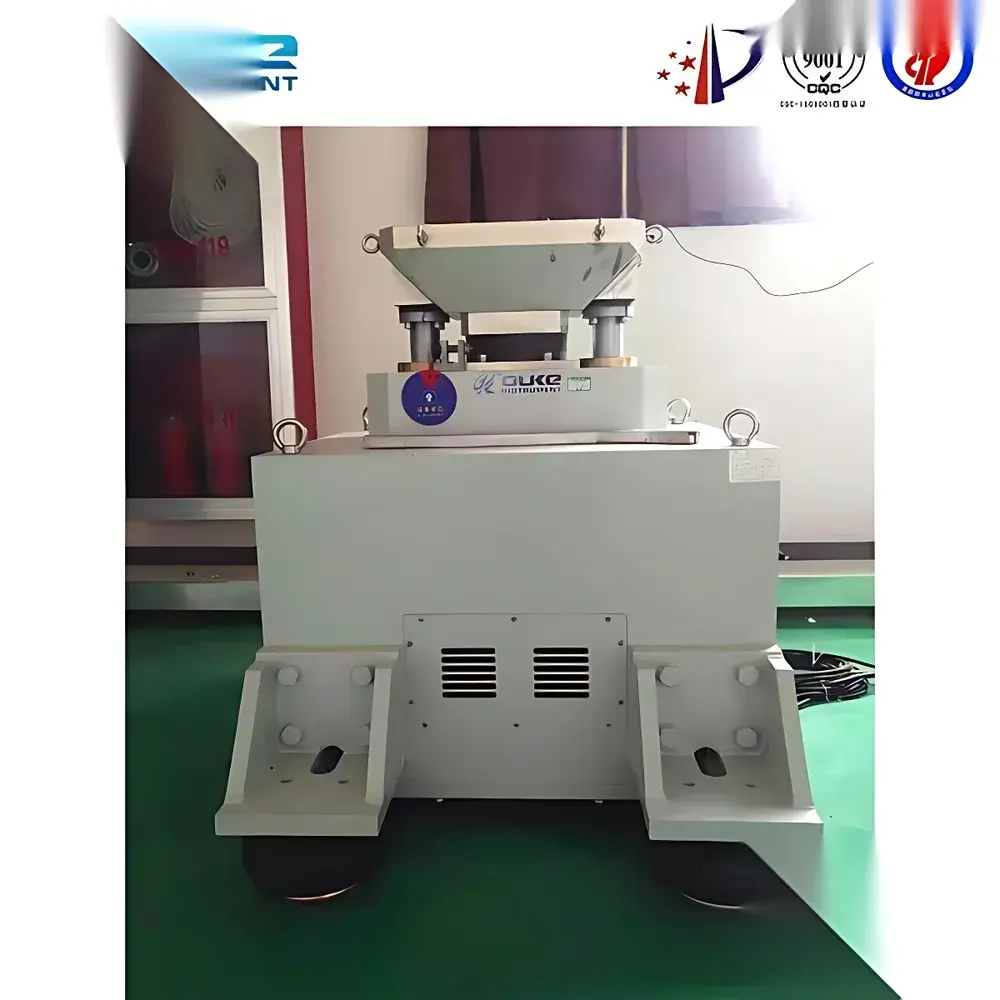
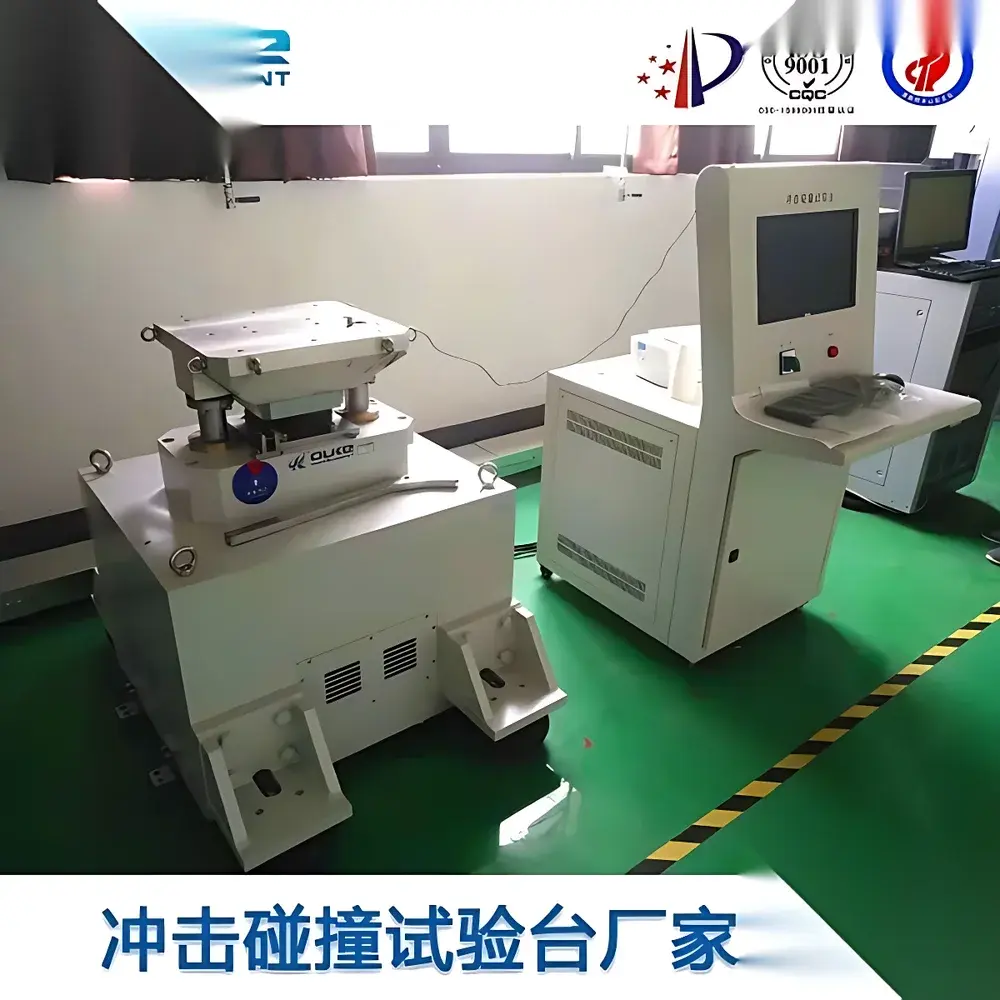
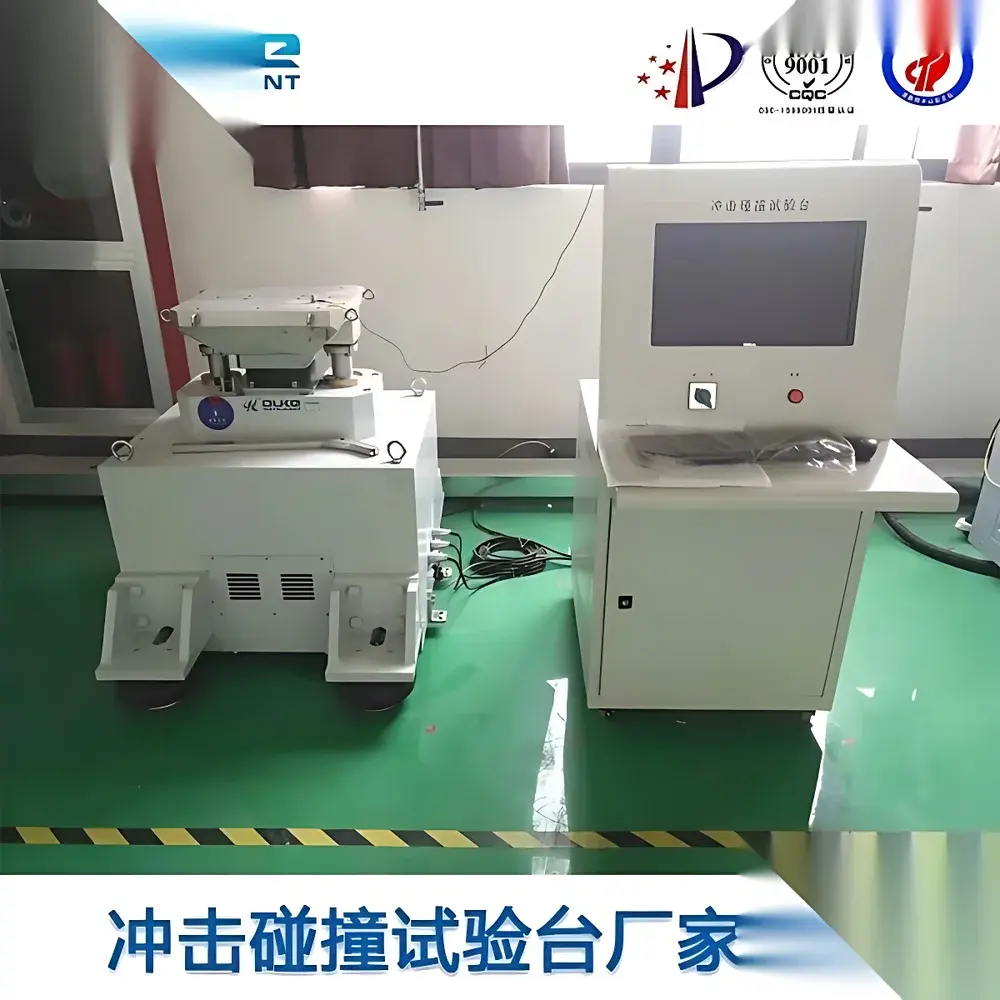
The Universal Shock and Impact Testing System is an electromechanical shock test table engineered for precise, repeatable simulation of mechanical shock events encountered during transportation, handling, and operational service life. Based on the principle of controlled free-fall impact combined with pneumatic retraction and hydraulic/pneumatic braking, the system delivers calibrated shock pulses—including half-sine, trapezoidal, and terminal-peak sawtooth waveforms—to evaluate structural integrity, packaging performance, and component-level robustness. Designed to meet international standard requirements for shock testing (e.g., ISO 2247 for packaged goods, ASTM D880 for brittle product evaluation, and MIL-STD-810H Method 516.8), this system enables laboratories to quantify peak acceleration (g-level), pulse duration (ms), and velocity change (Δv) under reproducible boundary conditions. Its rigid aluminum test surface—mounted on four hardened, chrome-plated guide columns—ensures minimal parasitic rotation and lateral deviation, directly supporting measurement fidelity and test repeatability across thousands of cycles.
Key Features
- High-strength anodized aluminum test platform (600 × 600 mm standard) with ±0.02 mm flatness tolerance over full surface area
- Four precision-ground, chrome-plated linear guide shafts with low-friction polymer composite bearings for extended service life (>500,000 cycles)
- Integrated safety lock mechanism on each guide column to secure platform during sample mounting or anvil pad replacement
- SS-series pneumatic-hydraulic brake assembly featuring gas-boosted actuation; achieves sub-5 ms response time and eliminates post-impact rebound or brake lag
- Proportional high-frequency pneumatic lift system with closed-loop position feedback via integrated linear displacement transducers (resolution: 0.01 mm)
- Dual-directional damping base with large-volume air cushions and adjustable viscous dampers to isolate floor-borne vibration and limit transmitted force to <5% of peak shock load
- Interchangeable waveform generators (mechanical anvil inserts) for standardized half-sine (ISO 2247), trapezoidal (ASTM D880), and terminal-peak sawtooth (ISTA 3A) pulse profiles
Sample Compatibility & Compliance
The system accommodates specimens up to 50 kg and 600 × 600 × 300 mm (L×W×H), including finished consumer electronics, medical device enclosures, military hardware housings, and transport-packaged assemblies. Mounting interfaces comply with ISO 13372:2012 for shock test fixture design. All shock profiles are traceable to NIST-calibrated accelerometers (PCB Piezotronics 352C33 or equivalent) and validated per ISO/IEC 17025-accredited procedures. The system supports audit-ready documentation required under GLP and GMP environments, including electronic signature-capable test logs, calibration history tracking, and CFR 21 Part 11–compliant data archiving when paired with optional validation packages.
Software & Data Management
Control and analysis are executed via a Windows-based real-time control suite integrating MIS02-compatible measurement firmware. The interface provides synchronized acquisition of triaxial accelerometer data (up to 200 kS/s), real-time waveform visualization, automated pass/fail evaluation against user-defined thresholds, and export of ASCII, CSV, and MATLAB-compatible .mat files. Calibration certificates, test reports, and raw time-history datasets are stored in a hierarchical database with role-based access control and immutable audit trails. Optional add-ons include remote monitoring via Ethernet/IP, integration with LIMS platforms (e.g., LabWare, Thermo Fisher SampleManager), and IQ/OQ/PQ protocol templates aligned with FDA and EU Annex 11 expectations.
Applications
- Qualification testing of shipping containers and unit loads per ISTA 3A, 3E, and 3H protocols
- Evaluation of electronic enclosure fracture resistance under drop-induced shock (IEC 60068-2-27)
- Verification of aerospace component survivability during launch-stage transient loading
- Design validation of automotive infotainment modules subjected to road-induced shock bursts
- Material-level assessment of solder joint fatigue initiation using controlled shock cycling
- Regulatory submission support for FDA 510(k) and CE Marking technical files requiring mechanical stress evidence
FAQ
What shock pulse types does the system generate natively?
The system supports half-sine, trapezoidal, and terminal-peak sawtooth waveforms through mechanically interchangeable anvil inserts—each certified to replicate defined ISO, ASTM, and MIL-STD pulse envelopes.
Is the test platform height adjustable in fine increments?
Yes. The pilot-operated high-frequency pneumatic lift system enables 0.1 mm resolution positioning from 25 mm to 250 mm drop height, with repeatability of ±0.05 mm across 10,000 cycles.
Can the system be integrated into an existing lab automation network?
Absolutely. It features native TCP/IP and Modbus TCP communication protocols, enabling bidirectional command/control and data streaming to SCADA, MES, or centralized test management systems.
Does the system meet requirements for FDA-regulated product testing?
When configured with the optional 21 CFR Part 11 compliance package—including electronic signatures, audit trail logging, and secure user authentication—it satisfies FDA expectations for computerized system validation in regulated environments.



