
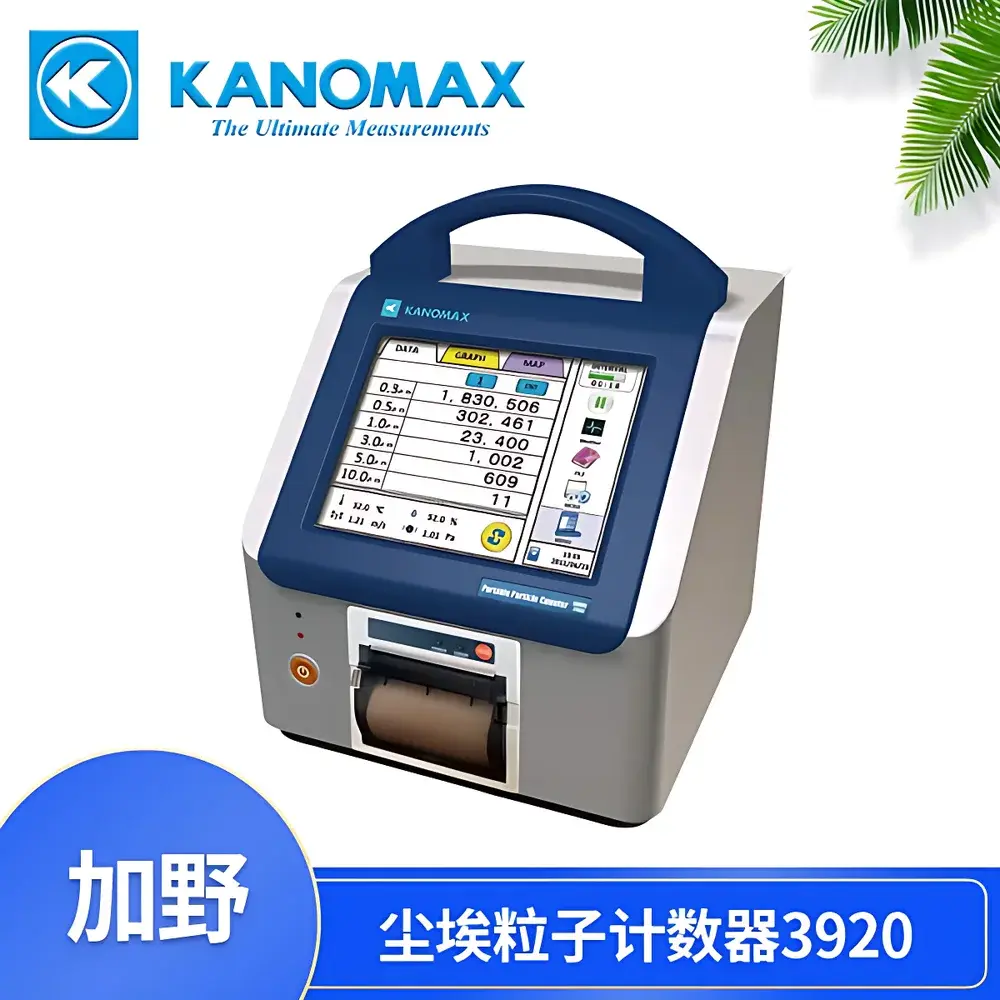
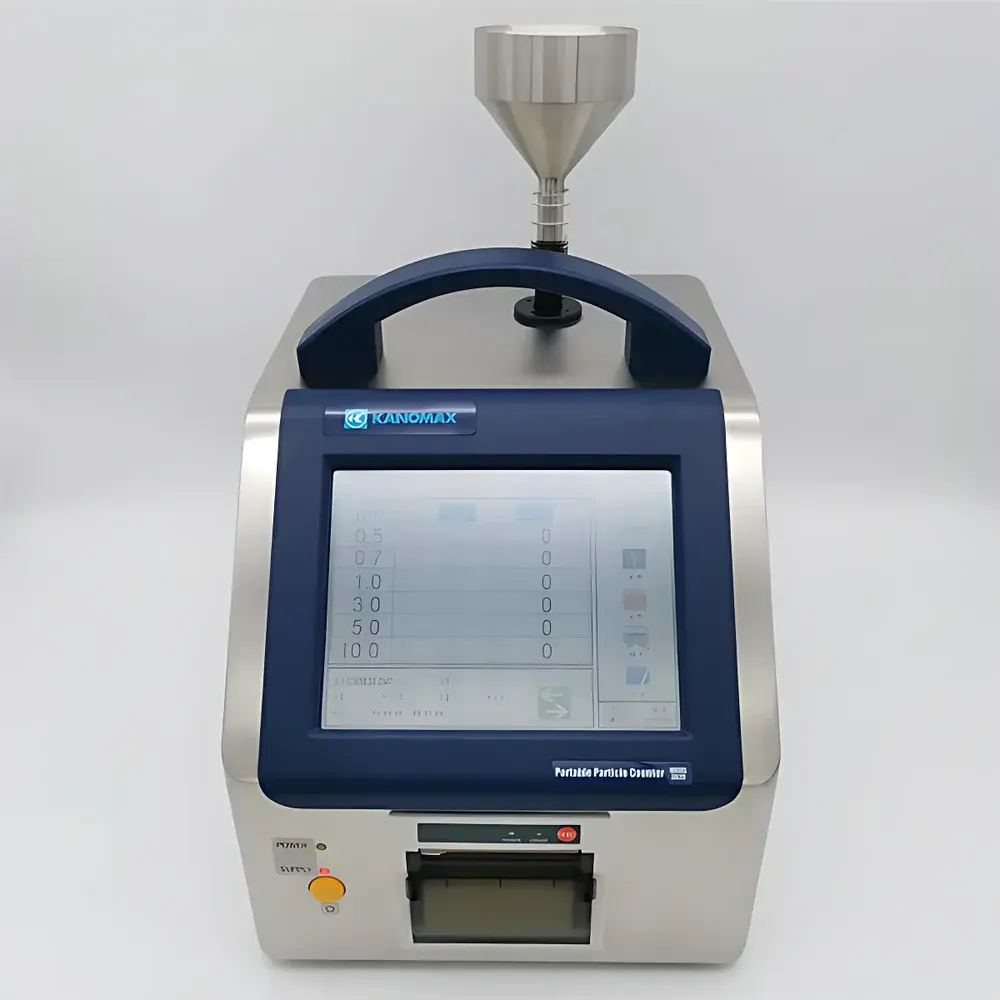
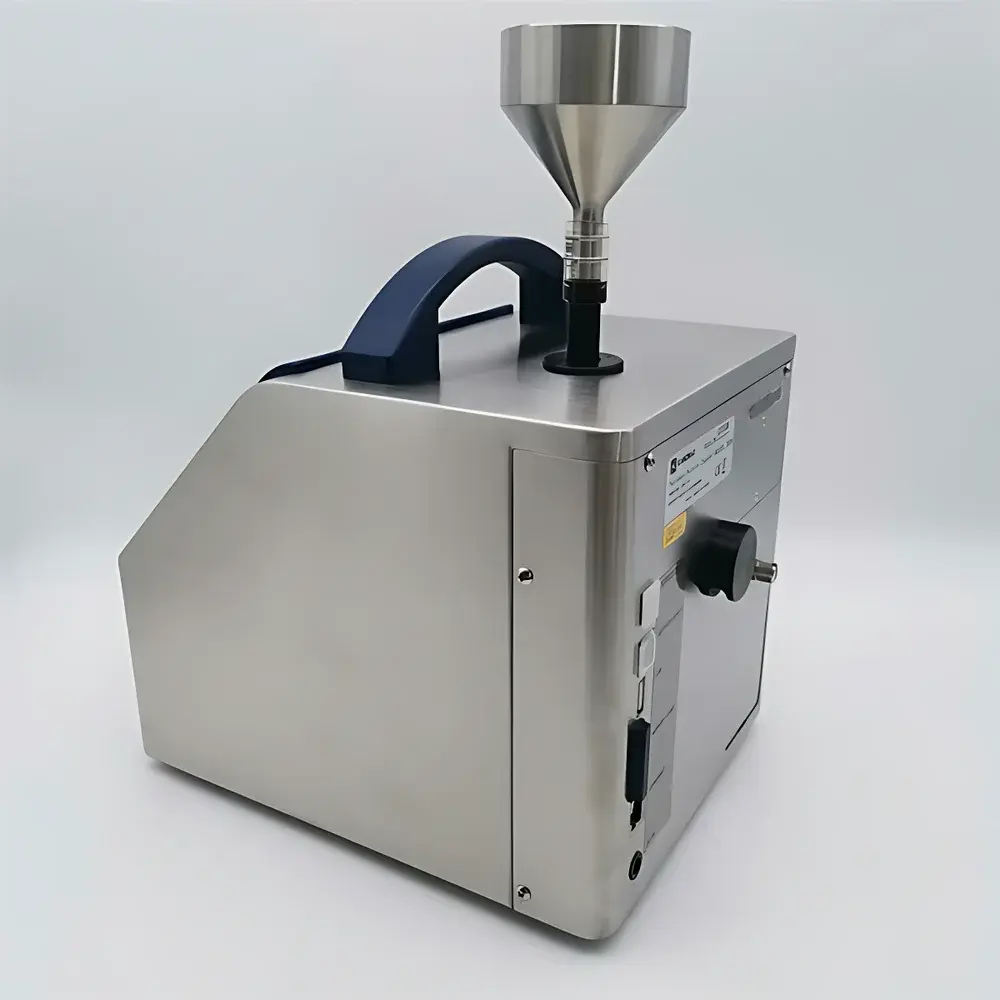
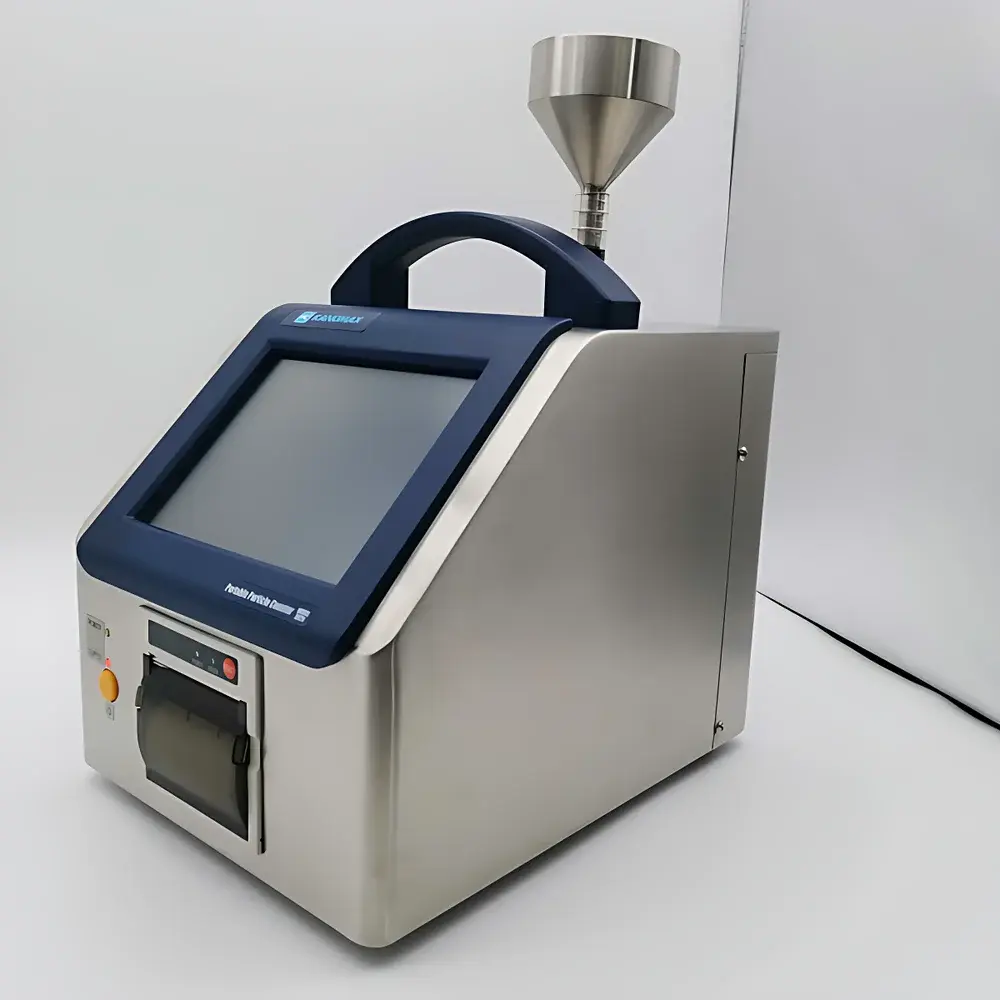
Kanomax Model 3920 High-Flow Cleanroom Particle Counter for Pharmaceutical Applications
| Brand | Kanomax |
|---|---|
| Origin | Japan |
| Model | 3920 |
| Flow Rate | 100 L/min |
| Particle Size Channels | 0.5, 0.7, 1.0, 3.0, 5.0, 10.0 µm |
| Counting Efficiency | ≥50% ±20% at 0.5 µm (ISO 21501-4 compliant) |
| Maximum Concentration | 300,000 particles/ft³ |
| Repeatability | ≤±10% FS |
| Flow Accuracy | <1 particle deviation per 5 min |
| Timing Accuracy | <±30% FS |
| Size Distribution Error | ≤±30% |
| Indication Error | <±30% FS |
| Data Storage | 10,000 measurement sets with geotagging (map coding) |
| Compliance | ISO 14644-1:2015, ISO 14644-2:2015, EU GMP Annex 1, USP <788>, FDA 21 CFR Part 11 (audit trail & electronic signature support), GB/T 16292–2010, GB 50333–2013, British Standard BS EN ISO 14644, Federal Standard 209E (repealed but referenced) |
Overview
The Kanomax Model 3920 is a high-flow, portable laser diode-based optical particle counter engineered for rigorous airborne particulate monitoring in regulated pharmaceutical cleanrooms and controlled environments. Operating on the principle of light scattering—where individual particles passing through a focused 650 nm laser beam generate scattered photons detected by a high-sensitivity photodiode—the instrument delivers real-time, multi-channel concentration data across six user-selectable size bins (standard: 0.5, 0.7, 1.0, 3.0, 5.0, and 10.0 µm). With a nominal sampling flow rate of 100 L/min, the Model 3920 significantly reduces statistical uncertainty in low-concentration Class A/B environments (ISO 5–ISO 7 per ISO 14644-1:2015), enabling rapid qualification of critical zones such as aseptic filling lines, isolators, and RABS. Its design adheres to the metrological requirements of ISO 21501-4 for calibration traceability, including specified counting efficiency, false count rate (<0.2 particles/ft³), zero-count performance (per JIS B 9921), and size resolution (<15% at 0.5 µm). The unit is certified for use in GxP-regulated workflows where data integrity, instrument qualification (IQ/OQ/PQ), and long-term stability are mandatory.
Key Features
- High-flow sampling at 100 L/min ensures statistically robust measurements in low-particle environments—critical for ISO Class 5 (≤3,520 particles/m³ @ 0.5 µm) verification.
- Six independent optical detection channels with selectable sizing thresholds (0.5–10.0 µm range), supporting both standard and custom bin configurations per EU GMP Annex 1 and USP requirements.
- Integrated thermal printer enables immediate hard-copy documentation of test results—including timestamp, location map code, operator ID, and pass/fail status—supporting ALCOA+ principles.
- 6.4-inch full-color capacitive touchscreen with intuitive GUI; supports seamless language switching between English and Chinese without firmware reload.
- Dual hot-swappable Li-ion battery modules provide >4 hours continuous operation (typical); AC adapter (100–240 V, 50–60 Hz) included for benchtop or fixed-location use.
- Stainless steel housing (IP54-rated) ensures durability against disinfectants (e.g., vaporized hydrogen peroxide, isopropyl alcohol) and mechanical stress during routine cleanroom audits.
- Onboard Ethernet and USB 2.0 interfaces enable remote control, live data streaming, and secure file export via encrypted protocols—compatible with LIMS and MES integration.
Sample Compatibility & Compliance
The Model 3920 is validated for use in non-viable particle monitoring across ISO Classes 3–8 (ISO 14644-1:2015), with particular emphasis on pharmaceutical Grade A (ISO 4.8) and Grade B (ISO 5) zones. It meets the physical and metrological criteria of ISO 21501-4:2018 for optical particle counters, including stated counting efficiency, false count limits, and coincidence loss correction (≤5% up to 150,000 particles/ft³; ≤10% above). Regulatory alignment extends to FDA 21 CFR Part 11 (with configurable audit trail, electronic signatures, and role-based access control), EU Annex 1 (2022 revision) for dynamic monitoring strategies, and Chinese GMP (2010) Annex 1. Optional environmental sensors (differential pressure, temperature, relative humidity, air velocity) allow simultaneous contextual parameter logging—essential for root cause analysis during excursion investigations.
Software & Data Management
Kanomax’s proprietary Cleanroom Manager software (v4.x) provides full lifecycle data handling: instrument configuration, automated test scheduling, statistical trend analysis (e.g., UCL calculation per ISO 14644-2), and PDF report generation compliant with GLP/GMP documentation standards. All stored datasets (up to 10,000 entries) include embedded metadata: GPS-derived map coding (0–999 zone IDs), operator credentials, calibration certificate reference, and environmental sensor readings. Data encryption (AES-256) and digital signature validation ensure compliance with FDA 21 CFR Part 11 Subpart C. External storage via USB mass storage mode supports offline archiving and third-party analytics (e.g., JMP, Python Pandas) without proprietary format dependencies.
Applications
- Pharmaceutical aseptic processing: HEPA filter leak testing (scan mode), unidirectional airflow mapping, and routine environmental monitoring per EU Annex 1 §5.62–5.68.
- Biotechnology cleanrooms: Monitoring of fill-finish suites, clean steam systems, and barrier isolators during media fill campaigns.
- Medical device manufacturing: Verification of ISO 13485-compliant clean areas used for Class II/III device assembly.
- Hospital pharmacy compounding: USP and compliance for sterile hazardous drug preparation rooms.
- Electronics and aerospace: Contamination control in photolithography labs and clean assembly bays requiring sub-0.3 µm sensitivity extensions (via optional upgrade kits).
FAQ
Does the Model 3920 support 21 CFR Part 11-compliant electronic records?
Yes—when used with Cleanroom Manager software v4.2+, it provides full audit trail, electronic signature capability, and role-based user authentication required under Subpart C.
What is the maximum allowable particle concentration before coincidence error invalidates data?
The instrument maintains ≤10% coincidence loss up to 300,000 particles/ft³ (≈10.6 million/m³), verified per ISO 21501-4 Annex B.
Can the device perform sequential scanning of HEPA filters?
Yes—using the optional scanning probe and motorized traverse rig, it executes ISO 14644-3 Annex B-compliant leak tests at 5 cm/s with positional logging.
Is external calibration traceable to NIST or PTB standards?
Calibration certificates are issued with traceability to JCSS-accredited laboratories (Japan); NIST-traceable PSL standards available upon request.
How is data integrity preserved during power interruption?
Non-volatile flash memory retains all active measurements and settings; battery backup preserves real-time clock and ongoing sampling state.
Related Products







