
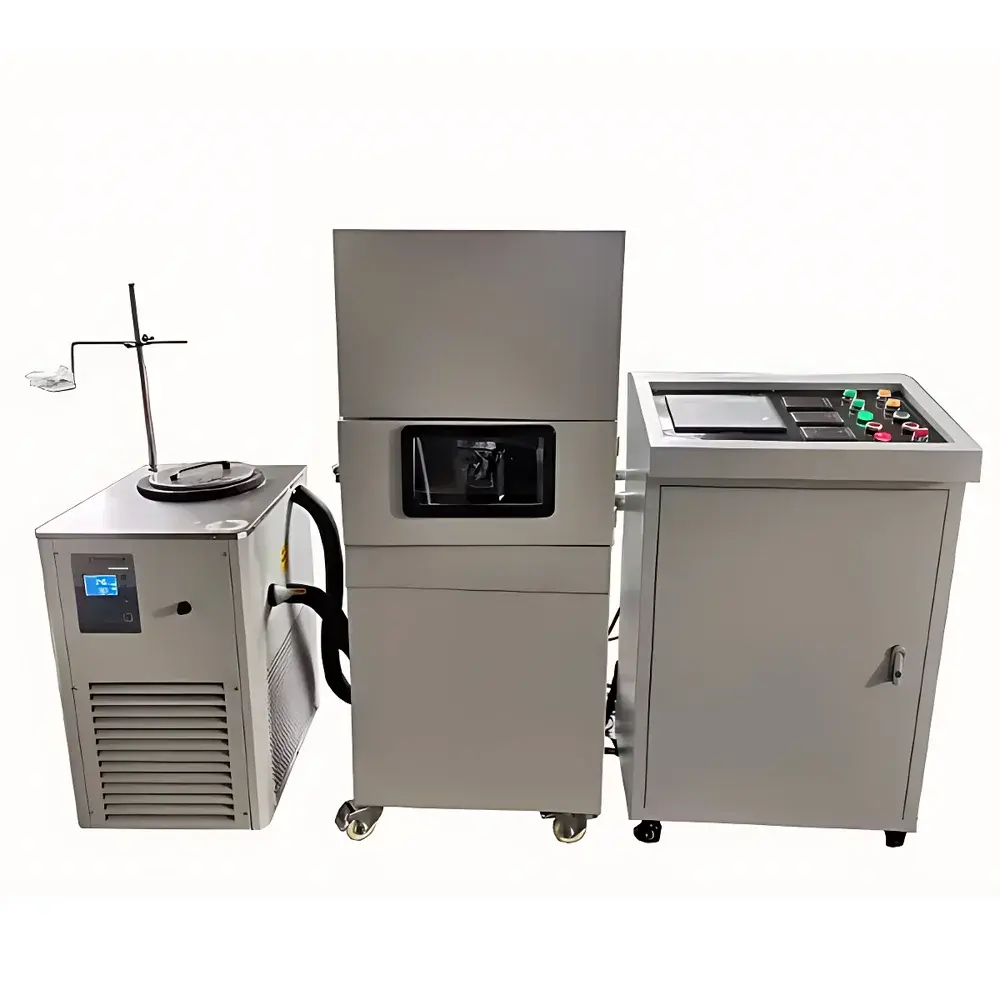
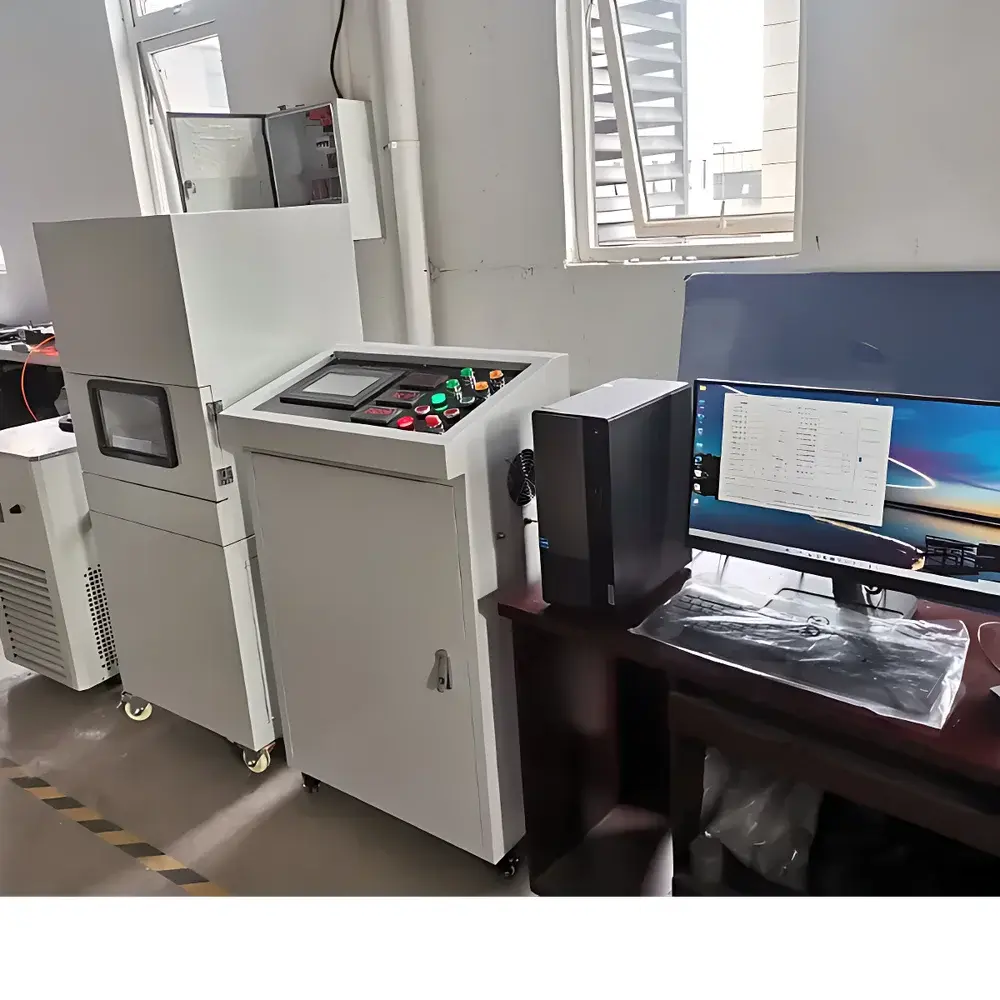
ZHENHUAFENXI HDRX-RL03 High-Temperature Thermal Conductivity Analyzer (Heat Flow Meter Method)
| Brand | ZHENHUAFENXI |
|---|---|
| Origin | Hunan, China |
| Model | HDRX-RL03 |
| Measurement Principle | Heat Flow Meter (HFM) Method |
| Thermal Conductivity Range | 0.001–5 W/(m·K) |
| Accuracy | ±3% |
| Repeatability | ≤3% |
| Temperature Range | RT to 1000 °C |
| Sample Thickness Range | 0.5–60 mm |
| Thickness Resolution | 1 µm |
| Thickness Accuracy | ±0.01 mm |
| Applied Pressure Range | 0–3.0 MPa |
| Pressure Accuracy | <0.5% FS |
| Cold-Side Cooling | 10 L Precision Circulating Bath (−5 to 80 °C, 0.01 °C resolution) |
| Hot-Side Control | PID-regulated heating with multi-point real-time temperature monitoring |
| Compliance Standards | ASTM C518, ASTM E1530, ISO 22007-2 |
| Data Acquisition | 32-bit high-resolution ADC, modular architecture supporting specific heat and thermal diffusivity expansion modules |
Overview
The ZHENHUAFENXI HDRX-RL03 High-Temperature Thermal Conductivity Analyzer is a precision-engineered heat flow meter (HFM) system designed for reliable, standardized measurement of thermal conductivity in solid and quasi-solid materials under controlled steady-state conditions. Based on the fundamental principle of Fourier’s law—where thermal conductivity (λ) is derived from the ratio of applied heat flux (q) to the resulting temperature gradient (dT/dx)—the HDRX-RL03 employs dual-plate geometry with actively regulated hot and cold surfaces to establish a unidirectional, one-dimensional heat flow across a flat, homogeneous sample. This configuration ensures high reproducibility and compliance with internationally recognized test standards including ASTM C518 (Standard Test Method for Steady-State Thermal Transmission Properties by Means of the Heat Flow Meter Apparatus), ASTM E1530 (Standard Test Method for Evaluating the Resistance of Materials to the Passage of Heat Using the Heat Flow Meter Technique), and ISO 22007-2 (Plastics — Determination of Thermal Conductivity and Thermal Diffusivity — Part 2: Heat Flow Meter Method). The instrument supports operation from ambient temperature up to 1000 °C, enabling characterization of refractory ceramics, high-performance insulation composites, advanced polymers, and inorganic non-metals used in aerospace, energy, and electronics applications.
Key Features
- Modular platform architecture with optional expansion for specific heat capacity (Cp) and thermal diffusivity (α) testing via integrated pulse-heating or differential scanning calorimetry (DSC)-compatible modules;
- Automated pressure control system with servo-driven loading mechanism, programmable pressure setpoints (0–3.0 MPa), and real-time digital readout (<0.5% full-scale accuracy);
- High-precision sample thickness measurement subsystem with 1 µm resolution and ±0.01 mm absolute accuracy, eliminating manual caliper dependency and ensuring traceable dimensional input for λ calculation;
- Dual-zone thermal regulation: hot-side PID-controlled heating with multi-point thermocouple feedback (±0.5 °C stability), and cold-side active cooling using a 10 L high-stability circulating bath (−5 to 80 °C, 0.01 °C resolution);
- Calibrated heat flux sensors (U.S.-sourced) with sensitivity better than 0.47 µV·W/m² and linear response over 50–3000 W/m² range;
- 32-bit analog-to-digital conversion for low-noise, high-fidelity thermal signal acquisition and long-term baseline stability;
- Software-enabled auto-ranging capability for thermal conductivity measurements spanning 0.001–5 W/(m·K), with optional extended range (0.1–50 W/(m·K)) available through sensor recalibration protocols.
Sample Compatibility & Compliance
The HDRX-RL03 accommodates cylindrical or cuboidal specimens with thicknesses between 0.5 mm and 60 mm. Standard test configurations require flat, parallel, and void-free surfaces; thin films may be evaluated via stacked-layer methodology to generate thermal resistance profiles and extract effective conductivity values. The system complies with GLP-aligned data integrity requirements: all calibration events, pressure/temperature setpoints, and measurement timestamps are logged with immutable audit trails. Instrument validation includes pre-delivery performance verification using NIST-traceable reference materials (e.g., certified Pyroceram® and SRM 1470), with full documentation provided per ISO/IEC 17025 and FDA 21 CFR Part 11 readiness guidelines. Environmental operating specifications require ambient conditions of −20 to 40 °C and relative humidity below 40% RH to maintain sensor linearity and thermal chamber uniformity.
Software & Data Management
ZHENHUAFENXI ThermalSuite™ v4.2 software provides full instrument orchestration—including automated test sequence definition, real-time thermal profile visualization, and concurrent acquisition of temperature, pressure, and heat flux signals. All raw data are stored in vendor-neutral CSV and HDF5 formats, supporting third-party analysis in MATLAB®, Python (NumPy/Pandas), or commercial statistical platforms. Reporting modules generate PDF/Excel outputs compliant with internal QA workflows and external regulatory submissions, featuring embedded metadata (operator ID, calibration due date, environmental logs). Audit trail functionality records user actions, parameter modifications, and report generation events with time-stamped, non-erasable entries—meeting requirements for ISO 9001, ISO 17025, and GMP-compliant laboratories.
Applications
- Thermal barrier coating (TBC) evaluation for gas turbine components;
- Quality control of ceramic matrix composites (CMCs) and aerogel-based insulation;
- Development and validation of flame-retardant polymer formulations;
- Thermal interface material (TIM) screening under compressive load;
- Research-grade characterization of geological samples, nuclear fuel matrices, and additive-manufactured metal-ceramic hybrids;
- Multi-parameter thermal property modeling (λ, α, Cp) for finite element thermal simulation inputs.
FAQ
What international standards does the HDRX-RL03 comply with for thermal conductivity testing?
ASTM C518, ASTM E1530, and ISO 22007-2 are natively supported through built-in test protocols and calibration traceability.
Can the system measure specific heat capacity without hardware modification?
Yes—when equipped with the optional specific heat module, the platform performs modulated temperature DSC-style measurements synchronized with thermal conductivity runs.
Is the 1000 °C upper temperature limit achievable with standard configuration?
The base system operates up to 300 °C; extension to 1000 °C requires high-temperature furnace assembly, specialized thermocouples (Type C), and vacuum/inert-gas purge options—available as factory-configured variants.
How is pressure applied during testing, and is it independently controllable?
Pressure is applied via a servo-controlled hydraulic actuator with fully programmable ramp/hold profiles and real-time digital feedback—decoupled from thermal control loops.
Does the instrument support automated calibration verification between tests?
Yes—software-guided daily verification routines use onboard reference standards and log results against predefined acceptance criteria, generating ISO 17025-compliant calibration status reports.



