
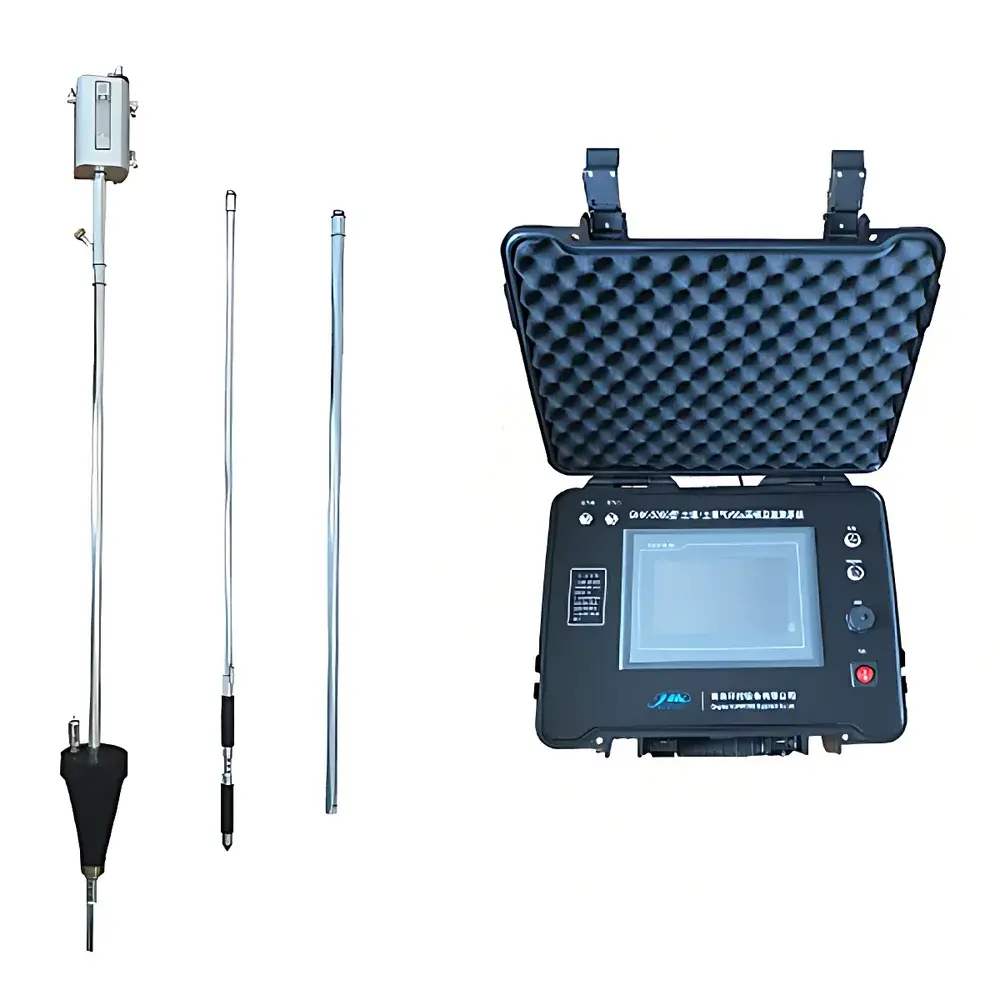
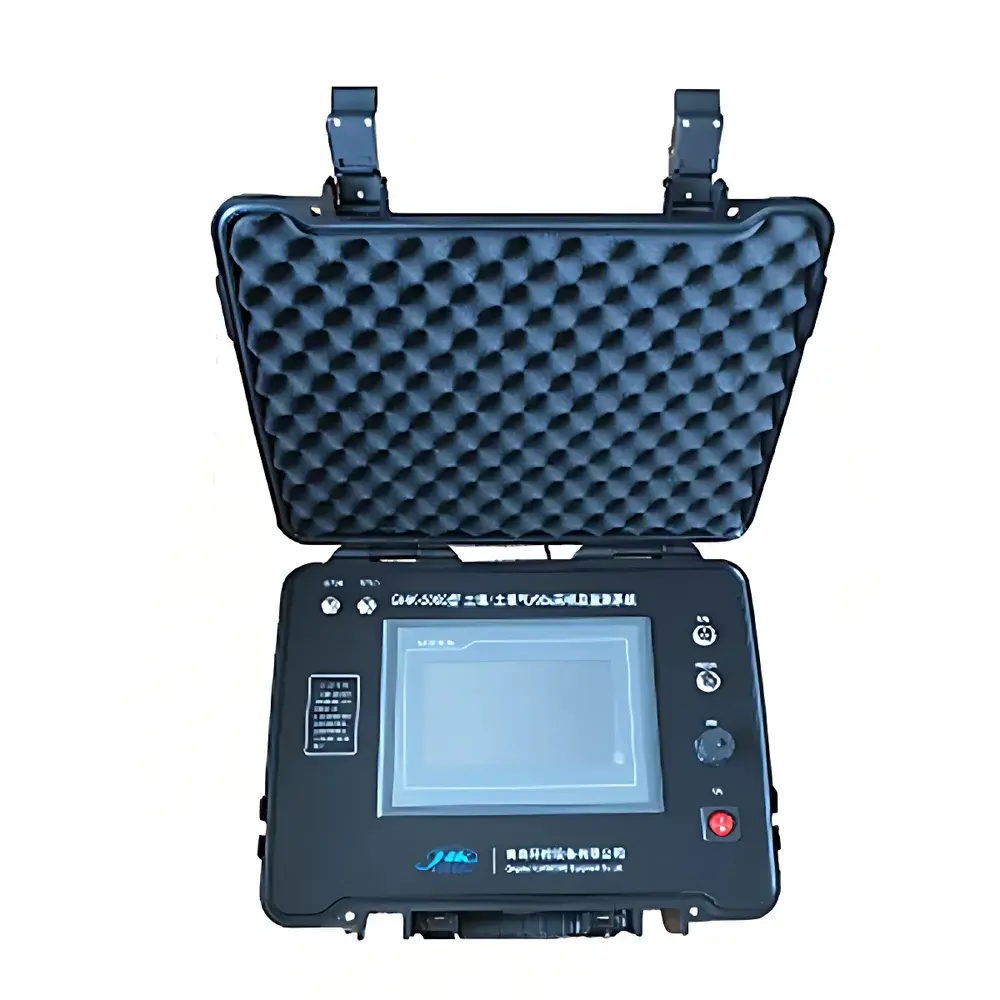
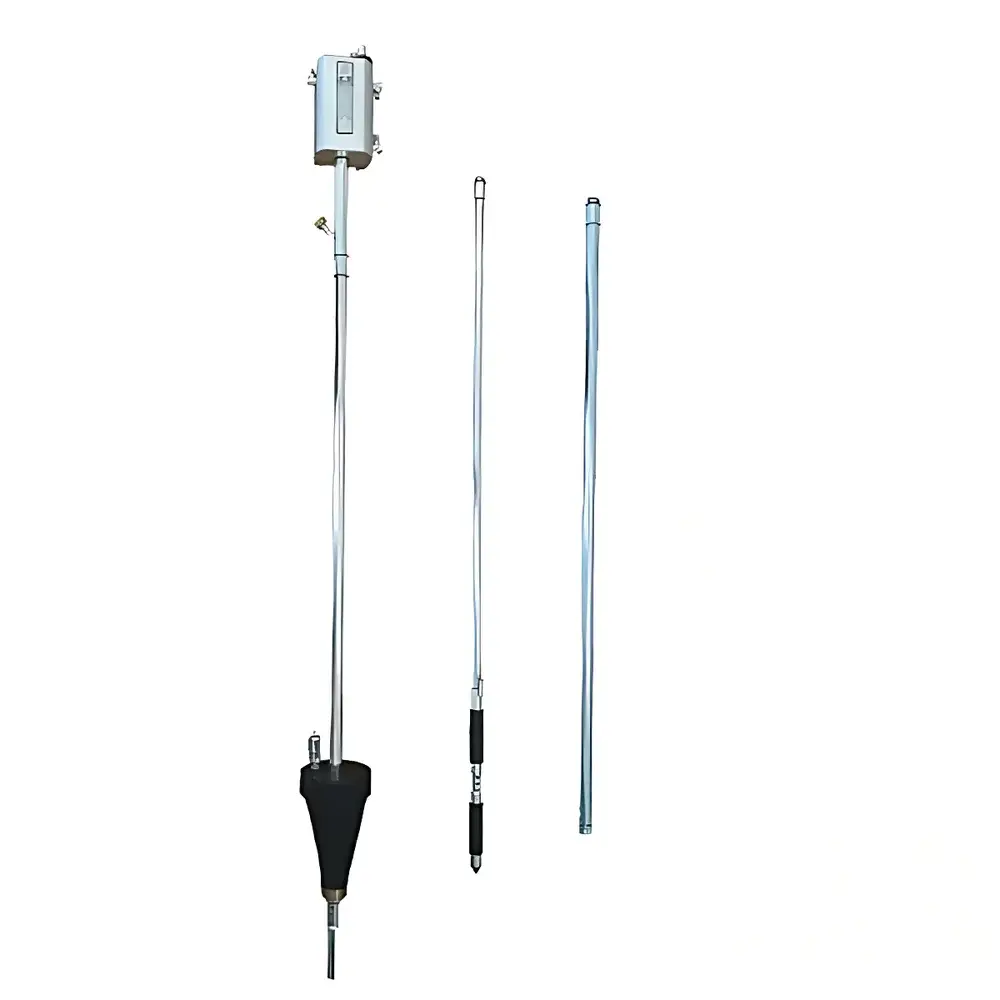
HUANKONG GHK-5060 Portable Soil Gas VOCs Sampling and Multi-Gas Monitoring System
| Brand | HUANKONG |
|---|---|
| Origin | Shandong, China |
| Manufacturer Type | Direct Manufacturer |
| Country of Origin | China |
| Model | GHK-5060 |
| Instrument Category | Contaminant Analyzer |
| CO₂ Range & Resolution | 0–5000 ppm (standard configuration) |
| Sampling Depth | up to 16 m (pump-assisted) |
| Probe Adjustment | continuous profiling from surface to 2 m depth |
| Power Supply | rechargeable lithium battery |
| Sampling Methods | sorbent tube, headspace vial, direct-pump aspiration |
| Compliance | GB/T 36198–2018 Soil Quality — Guidelines for Soil Gas Sampling |
Overview
The HUANKONG GHK-5060 is a field-deployable, integrated soil gas sampling and multi-parameter monitoring system engineered for in situ volatile organic compound (VOC) screening and permanent gas analysis in unsaturated zone environments. It operates on a dual-function architecture: (1) mechanical soil penetration and stratified gas extraction via a calibrated, sealable probe assembly; and (2) real-time electrochemical and NDIR-based gas detection of O₂, CO₂, H₂S, CH₄, and total VOCs (TVOCs). The system adheres to the physical sampling principles defined in GB/T 36198–2018—specifically addressing probe insertion integrity, minimal soil disturbance during aspiration, and representative equilibrium-phase gas capture. Unlike passive diffusion samplers, the GHK-5060 employs active, pressure-controlled aspiration with adjustable flow rates (typically 100–500 mL/min), ensuring consistent mass transfer across variable soil textures (sand, loam, clay) and moisture contents. Its design targets regulatory pre-screening workflows, site characterization surveys, and post-remediation verification where rapid, spatially resolved gas data are required prior to laboratory confirmation.
Key Features
- Modular stratified sampling probe with dual-seal configuration: nylon-tipped standard probe and inflatable rubber cone for heterogeneous or low-permeability soils—enabling repeatable, depth-specific (0–2 m) gas extraction without cross-layer contamination.
- High-capacity diaphragm pump rated for continuous operation at suction depths up to 16 meters, supporting both shallow-profile screening and deep-well interface monitoring.
- Field-configurable gas detection modules: factory-calibrated electrochemical sensors for O₂, H₂S, and CH₄; non-dispersive infrared (NDIR) sensor for CO₂ (0–5000 ppm, ±3% FS accuracy); photoionization detector (PID) for TVOCs (0–2000 ppm isobutylene equivalent, 10 ppb resolution).
- Integrated data logging with timestamped, GPS-tagged records—including optional meteorological five-parameter input (temperature, humidity, barometric pressure, wind speed, solar radiation) for environmental normalization.
- Self-contained power architecture: 14.8 V/8.8 Ah lithium-ion battery pack providing ≥8 hours of continuous operation under mixed sampling/detection duty cycles—no external generator or AC source required.
- Ergonomic, single-operator deployment: total system weight <12 kg (excluding optional deep-drill motor); tool-free probe coupling; intuitive touchscreen interface with on-device curve visualization (e.g., CO₂ concentration vs. time).
Sample Compatibility & Compliance
The GHK-5060 accommodates multiple sample collection formats per ASTM D5267 and ISO 16017-1: sorbent tubes (Tenax TA, Carbopack B), 20-mL evacuated headspace vials, and direct-pump-to-analyzer configurations. Its probe geometry and sealing mechanism comply with GB/T 36198–2018 requirements for minimally invasive insertion, annular sealing verification, and purge volume validation. All sensor modules undergo quarterly traceable calibration against NIST-traceable standards; full calibration logs are stored internally and exportable in CSV format. The system supports GLP-aligned field documentation—each sampling event generates a unique ID, operator signature (digital), location metadata, and raw sensor output files compliant with EPA Method TO-15 and EU EN 14662 prerequisites for subsequent lab validation.
Software & Data Management
Data acquisition and visualization are managed through the embedded GHK-Connect firmware (v3.2+), featuring configurable alarm thresholds, auto-zero routines, and real-time trend plotting. Export options include USB-C dump, Bluetooth 5.0 wireless sync to Android/iOS tablets, and optional cloud upload via LTE module (add-on). All datasets embed audit trail metadata: sensor serial numbers, calibration dates, battery voltage history, and ambient condition stamps. For regulated environments, optional 21 CFR Part 11-compliant user authentication, electronic signatures, and immutable log archiving are available via licensed software extension.
Applications
- Preliminary site assessment for chlorinated solvents, petroleum hydrocarbons, and emerging contaminants (e.g., PFAS precursors) in vadose zone gas plumes.
- Monitoring biogenic gas dynamics (CH₄/O₂ ratios) during enhanced aerobic or anaerobic bioremediation.
- Validation of soil vapor extraction (SVE) system performance through time-series concentration mapping across treatment zones.
- Landfill cover integrity testing via perimeter soil gas surveys.
- Academic research on soil respiration fluxes, carbon sequestration indicators, and microbial redox zonation.
FAQ
Does the GHK-5060 meet international VOC sampling standards beyond GB/T 36198–2018?
Yes—it supports methodologically equivalent workflows aligned with ASTM D5267 (soil gas sampling) and ISO 16017-1 (VOC analysis in soil gas), though final analytical confirmation requires accredited laboratory analysis per EPA TO-15 or ISO 16017-2.
Can the system perform quantitative VOC analysis, or is it limited to screening?
It provides semi-quantitative TVOC readings using PID response factors; definitive compound identification and quantification require GC-MS or GC-FID follow-up per regulatory protocols.
Is probe sterilization or decontamination supported between sampling locations?
The stainless-steel probe body and removable seals permit ethanol wipe-down and hot-air drying; full thermal decon (200°C) is possible with optional high-temp probe variant.
What maintenance intervals are recommended for field durability?
Pump diaphragms and O-rings require replacement every 500 operational hours; sensor modules undergo functional check before each deployment and full recalibration every 90 days or after exposure to >1000 ppm H₂S/Cl₂.
Is third-party calibration certification available?
Yes—certified calibration reports traceable to NIST or CNAS-accredited labs can be provided upon request, including uncertainty budgets per ISO/IEC 17025.
Related Products







