
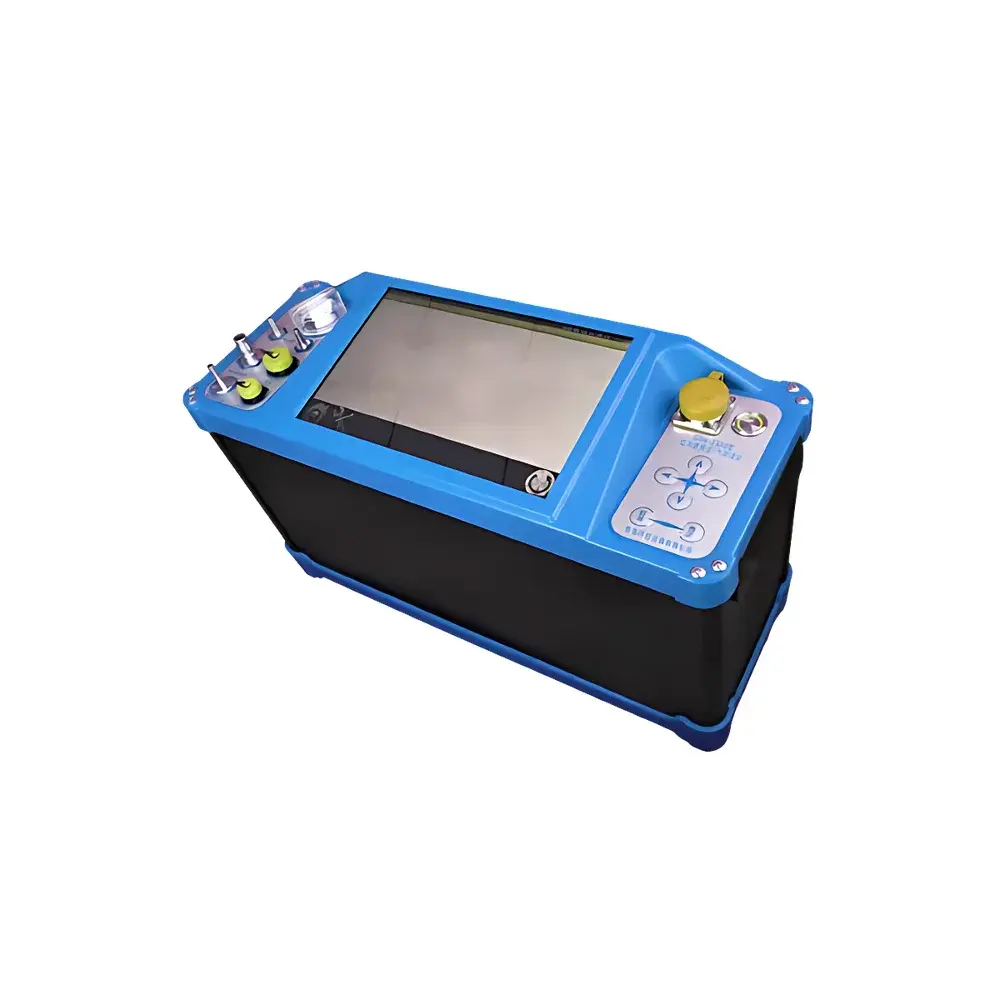
HUANKONG GHK-2100 Low-Concentration Particulate and Flue Gas Analyzer
| Brand | HUANKONG |
|---|---|
| Origin | Shandong, China |
| Manufacturer Type | OEM Manufacturer |
| Country of Origin | China |
| Model | GHK-2100 |
| Instrument Type | Flue Gas and Particulate Sampler |
| Sampled Gases | O₂, SO₂, NO, NO₂, CO, H₂S, CO₂ (configurable) |
| Sampling Flow Rate | 0–100 L/min |
| Flow Accuracy | ≤ ±2.5% FS |
| Flue Gas Velocity Range | 1–45 m/s |
Overview
The HUANKONG GHK-2100 Low-Concentration Particulate and Flue Gas Analyzer is an integrated, field-deployable instrument engineered for regulatory-compliant sampling and analysis of flue gas emissions from stationary sources. It implements ISO/IEC 17025-aligned measurement principles—including Pitot-static parallel isokinetic sampling for particulate matter (PM), gravimetric determination via filter-based collection (in accordance with HJ 836–2017), and electrochemical detection of gaseous pollutants (SO₂, NO, NO₂, CO, H₂S) per HJ 57–2017, HJ 693–2014, and HJ 973–2018. For CO₂ quantification, the system supports optional NDIR (Non-Dispersive Infrared) or UV-DOAS (Ultraviolet Differential Optical Absorption Spectroscopy) modules—enabling trace-level detection in low-concentration regimes typical of modern low-emission combustion systems. The analyzer meets the metrological and functional requirements specified in JJG 680–2007, JJG 695–2003, and JJG 968–2002, and is validated for use under GB/T 16157–1996 and HJ/T 48–1999.
Key Features
- Isokinetic sampling control with real-time electronic flow regulation (0–100 L/min), featuring automatic temperature- and pressure-compensated flow tracking (up to 40 L/min isokinetic mode)
- Dual-input human-machine interface: high-brightness color touchscreen + tactile keypad, designed to prevent misoperation in industrial environments
- Integrated multi-parameter probe: combines Pitot tube, thermocouple (0–500 °C), capacitive-resistive humidity sensor, and gas sampling ports in a single titanium alloy sampling tube (corrosion- and heat-resistant, <1.8 kg)
- Four-in-one cable assembly: integrates thermocouple signal, RS232/RS485 communication, power supply, and gas conduit with quick-connect fittings
- On-tube display: enables independent monitoring of flue gas velocity, static/dynamic pressure, temperature, and relative humidity at the sampling point
- Cross-interference compensation algorithm embedded in electrochemical sensor firmware, minimizing signal drift due to co-existing gases
- Industrial-grade embedded controller with ESD-hardened architecture, supporting continuous operation under ambient temperatures of −20 °C to +50 °C
- Automatic leak-check function with real-time vacuum decay diagnostics and pass/fail reporting
- Anti-backflow valve and integrated buffer chamber to eliminate post-sampling particulate re-entrainment
- Internal rechargeable Li-ion battery option (8 h runtime) and universal AC input (80–260 VAC, with overvoltage/overcurrent protection)
Sample Compatibility & Compliance
The GHK-2100 accommodates both quartz fiber filter tubes (for PM mass determination per HJ 836–2017) and PTFE membrane filters (for low-loading applications). It supports dual-mode particulate capture: standard filter-tube sampling for medium-to-high concentration exhausts (>10 mg/m³), and dilution-assisted low-concentration sampling (≤10 mg/m³) with heated sampling lines and inert surface treatment. Gas analysis modules comply with EPA Method 6C (SO₂), Method 7E (NOₓ), and ISO 4226 (CO). All firmware and data handling routines are structured to support GLP/GMP audit trails, including timestamped calibration logs, operator ID tagging, and immutable event records. The device satisfies electromagnetic compatibility (EMC) per IEC 61326-1 and safety requirements per IEC 61010-1.
Software & Data Management
Data acquisition and instrument control are managed via proprietary embedded firmware with dual-layer security: user-accessible operational mode and technician-level calibration/service mode. Measurement data—including isokinetic flow profiles, gas concentration time series, and environmental parameters—are stored in non-volatile memory (≥100,000 records). Export is supported via USB 2.0 (FAT32-formatted U-disk) in CSV format compliant with ISO/IEC 19794-5 metadata standards. Optional Bluetooth 5.0 module enables direct printing to certified thermal printers (e.g., Zebra ZQ520) without intermediary PCs. An IoT-ready firmware variant supports MQTT-based telemetry to cloud platforms (AWS IoT Core, Azure IoT Hub) with TLS 1.2 encryption and configurable upload intervals (1–300 s). Audit log entries include firmware version, sensor zero/span dates, and battery health metrics.
Applications
The GHK-2100 is deployed across municipal waste incinerators, coal- and biomass-fired boilers, cement kilns, and catalytic cracking units where low-concentration PM and multi-component gas profiling are mandated by national emission standards (e.g., China’s GB 13223–2011, EU BREF LCP). Its ability to perform simultaneous dust/gas/humidity/velocity measurements eliminates sequential probe swaps—reducing field deployment time by >40% compared to legacy single-function samplers. The titanium sampling train ensures long-term stability in acidic flue streams (pH < 2), while the heated line option (up to 180 °C) prevents condensation-induced bias in wet-stack applications. Regulatory laboratories use the GHK-2100 for method validation studies, QA/QC audits, and stack testing certification under CNAS accreditation scopes.
FAQ
Does the GHK-2100 meet US EPA or EN standards for stack testing?
It complies with core physical sampling principles referenced in EPA Methods 1–5 and EN 13284-1, though formal EPA/EN certification requires third-party verification under local regulatory frameworks.
Can the instrument store calibration curves for multiple gas sensors?
Yes—up to 8 unique electrochemical sensor calibrations can be stored onboard, each with date-stamped zero/span values and sensitivity coefficients.
Is remote firmware update supported?
Firmware updates are performed via USB or secure OTA (Over-The-Air) using signed binary packages; no internet connectivity is required for basic field updates.
What particulate size fraction does the GHK-2100 measure?
It collects total suspended particulate (TSP) as defined in HJ 836–2017; PM₁₀ and PM₂.₅ separation requires optional cyclone pre-separators (not included standard).
How is data integrity ensured during power interruption?
The system implements atomic write operations and journaling file system (JFFS2); all active sampling sessions resume automatically with preserved timestamps and flow integrals upon power restoration.
Related Products







