
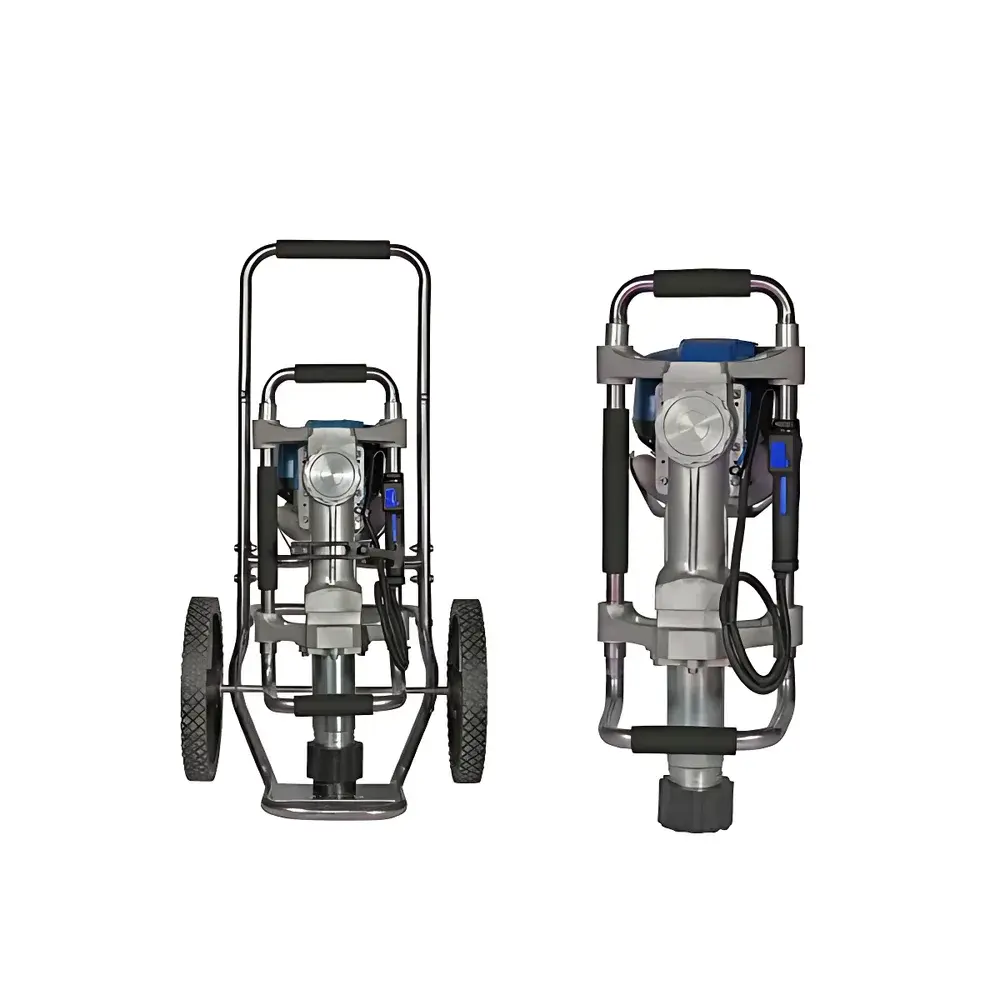
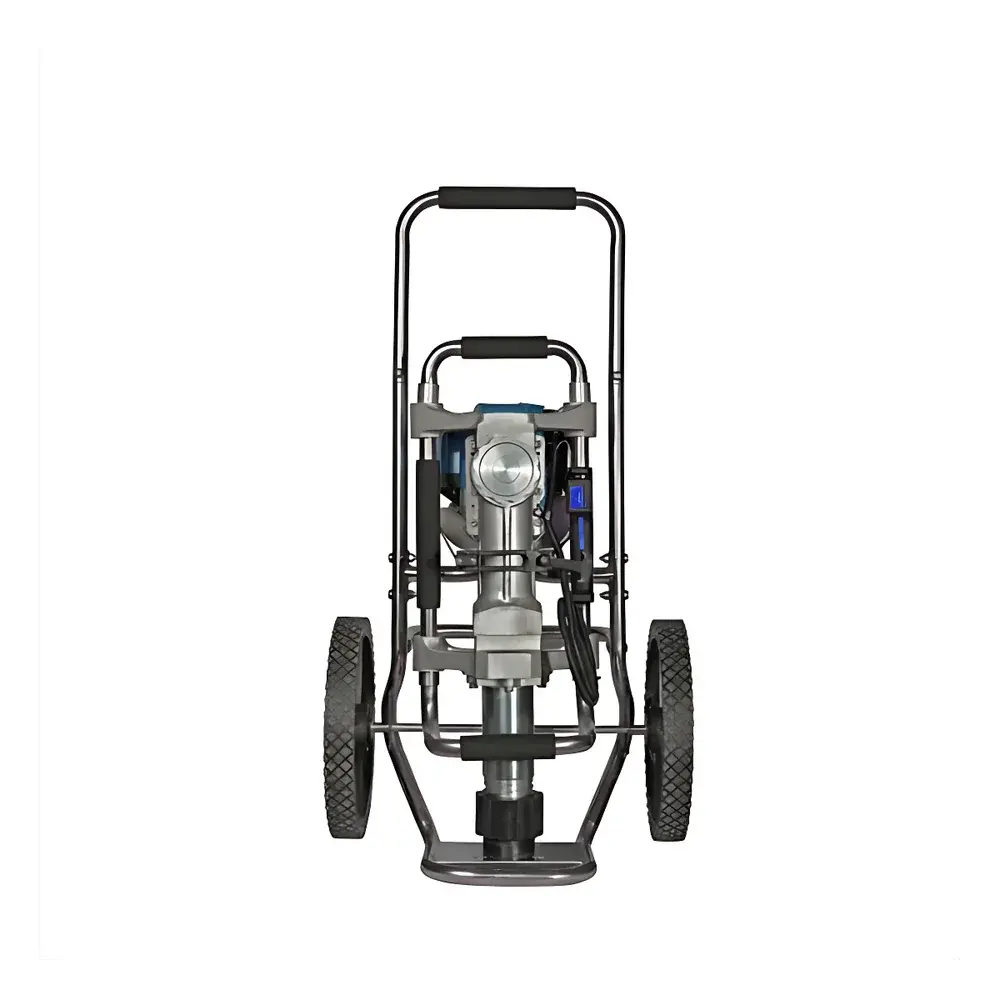
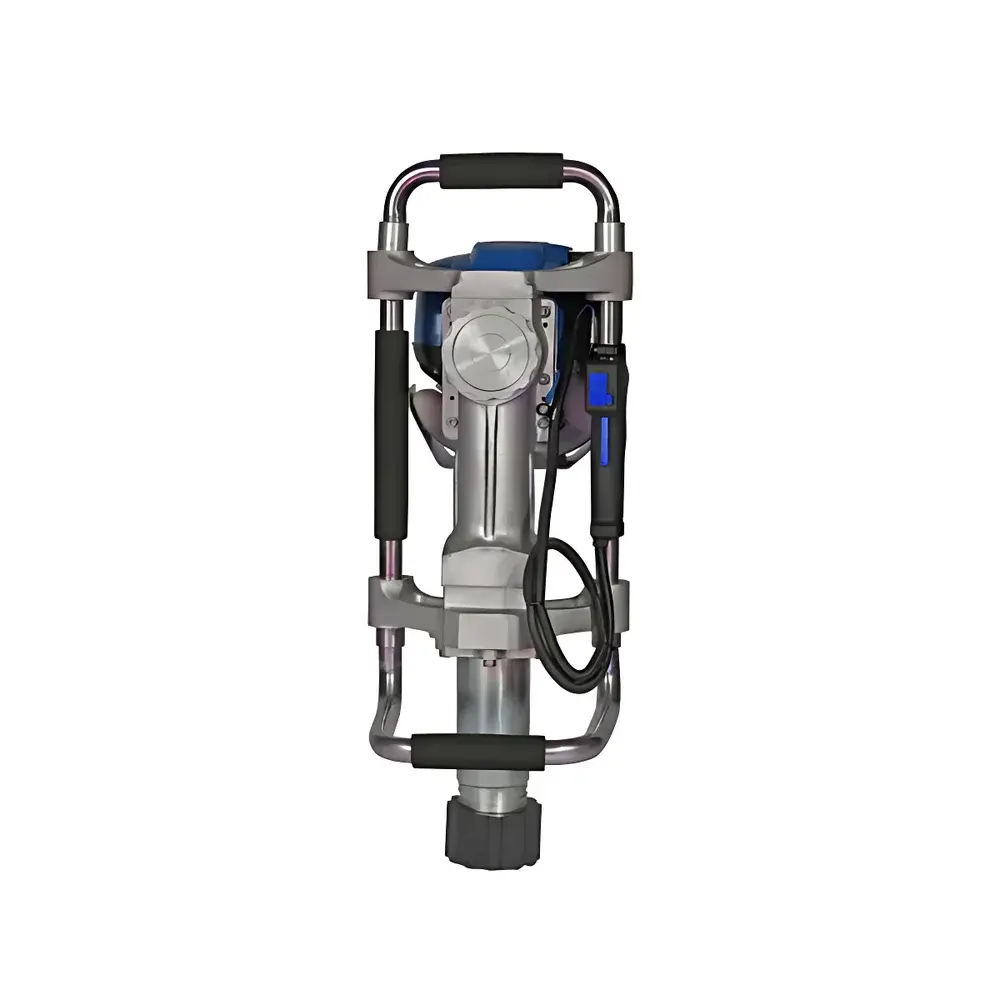
HUANKONG GHD-CY100Q Gas-Powered Soil Sampler
| Brand | HUANKONG |
|---|---|
| Origin | Shandong, China |
| Manufacturer Type | Direct Manufacturer |
| Country of Origin | China |
| Model | GHD-CY100Q |
| Pricing | Upon Request |
Overview
The HUANKONG GHD-CY100Q is a gasoline-powered, percussion-driven soil sampler engineered for high-integrity, undisturbed (intact) columnar sampling in field-based environmental and geotechnical investigations. It operates on the principle of dynamic impact penetration—utilizing controlled mechanical hammering to drive a hollow, single-action coring tube into the ground without rotational torque or fluid injection. This method preserves natural soil stratification, minimizes sample compression and disturbance, and eliminates the need for drilling mud or water lubrication—critical for moisture-sensitive, cohesive, or low-permeability soils. Designed for rapid deployment in variable terrain, the system achieves consistent penetration rates up to 1.1 meters per minute in typical loam, clay, and silt profiles, with verified operational depth capability of 5 m in standard consolidated soils and up to 10 m in loose, unconsolidated deposits such as recent alluvium or aeolian sand.
Key Features
- Gasoline-powered percussion mechanism ensures high-energy, repeatable impact force without external power sources or compressed air infrastructure.
- Single-action inner liner tube design enables clean, non-contaminated retrieval of continuous, vertically aligned soil columns—preserving in-situ layer boundaries, root structures, and horizon differentiation.
- Columnar core retention system utilizes rigid, removable polymeric liners (standard 100 mm diameter × 1000 mm length) compatible with ASTM D1586 and ISO 22475-1 sampling protocols for laboratory analysis.
- Integrated mobile cart platform with pneumatic tires, adjustable handlebars, and locking casters enhances operator mobility across uneven or remote field sites—reducing manual handling fatigue and improving setup repeatability.
- Dry sampling operation (no water or slurry required) maintains native soil water content and pore structure integrity—essential for subsequent geotechnical index testing (e.g., Atterberg limits, bulk density), contaminant migration studies, and microbial community profiling.
Sample Compatibility & Compliance
The GHD-CY100Q is validated for sampling across a broad range of soil types including clays, silts, loams, sandy gravels, and weathered residual soils—excluding highly cemented or boulder-rich strata where percussion energy may be insufficient. Core recovery rates exceed 95% in soils with N-values (SPT) ≤ 30. Liner compatibility supports standard 100 mm OD × 1000 mm L PVC or HDPE sample tubes conforming to ASTM D3550 and US EPA Method SW-846 5035A requirements. The instrument’s mechanical design aligns with ISO 22475-1:2017 (Geotechnical investigation and testing — Sampling methods and equipment) for Class 2 (undisturbed) sampling applications. All structural components meet CE machinery directive (2006/42/EC) safety thresholds for handheld and mobile powered equipment.
Software & Data Management
While the GHD-CY100Q is a field-deployed mechanical instrument without embedded digital controls, it integrates seamlessly into modern environmental data workflows via companion documentation tools. Field operators record real-time metadata—including GPS coordinates (via paired GNSS device), depth intervals, soil description (USDA texture class, color, consistency), and liner identification codes—using standardized digital forms compliant with ISO 17025-accredited lab submission templates. Optional integration with LIMS platforms (e.g., LabWare, Thermo Fisher SampleManager) is supported through CSV/Excel export of structured field logs. Audit trails for sample chain-of-custody are maintained per EPA 533 and EU Regulation (EU) 2017/1125 requirements.
Applications
- Environmental site assessment (ESA) and Phase II investigations under ASTM E1527-21, supporting vapor intrusion modeling and contaminant plume delineation.
- Agricultural soil health monitoring—enabling vertical profiling of organic carbon, nutrient gradients, compaction layers, and pesticide residue distribution.
- Archaeological stratigraphic excavation support, preserving context-sensitive cultural horizons and paleosol sequences.
- Geotechnical characterization for foundation design, landfill liner verification, and slope stability analysis per Eurocode 7 and ASCE 7-22.
- Long-term ecological research (LTER) network sampling, including chronosequence studies and climate change impact assessments on soil carbon sequestration.
FAQ
Does the GHD-CY100Q require drilling fluid or water during operation?
No. It is a dry percussion sampler; water or slurry is neither required nor recommended, ensuring preservation of native moisture conditions.
What is the maximum recommended sampling depth in cohesive soils?
5 meters for routine undisturbed sampling in medium-to-high plasticity clays and silts; deeper penetration (up to 10 m) is feasible only in low-density, saturated sands or uncompacted fills.
Are replacement liners and maintenance kits available internationally?
Yes—standardized 100 mm OD × 1000 mm liners, O-rings, hammer anvil assemblies, and fuel system filters are stocked globally through authorized HUANKONG distribution partners.
Can the unit be used in confined or urban settings?
Its compact cart footprint (1.2 m × 0.7 m) and directional percussion head allow operation in gated yards, utility corridors, and green spaces—though local noise ordinances and emissions regulations must be observed.
Is operator certification required for regulatory compliance?
While no universal license is mandated, personnel should complete site-specific training per ISO/IEC 17025 Clause 6.2.5 and hold documented competency in ASTM D1586 procedures prior to conducting legally defensible sampling.







