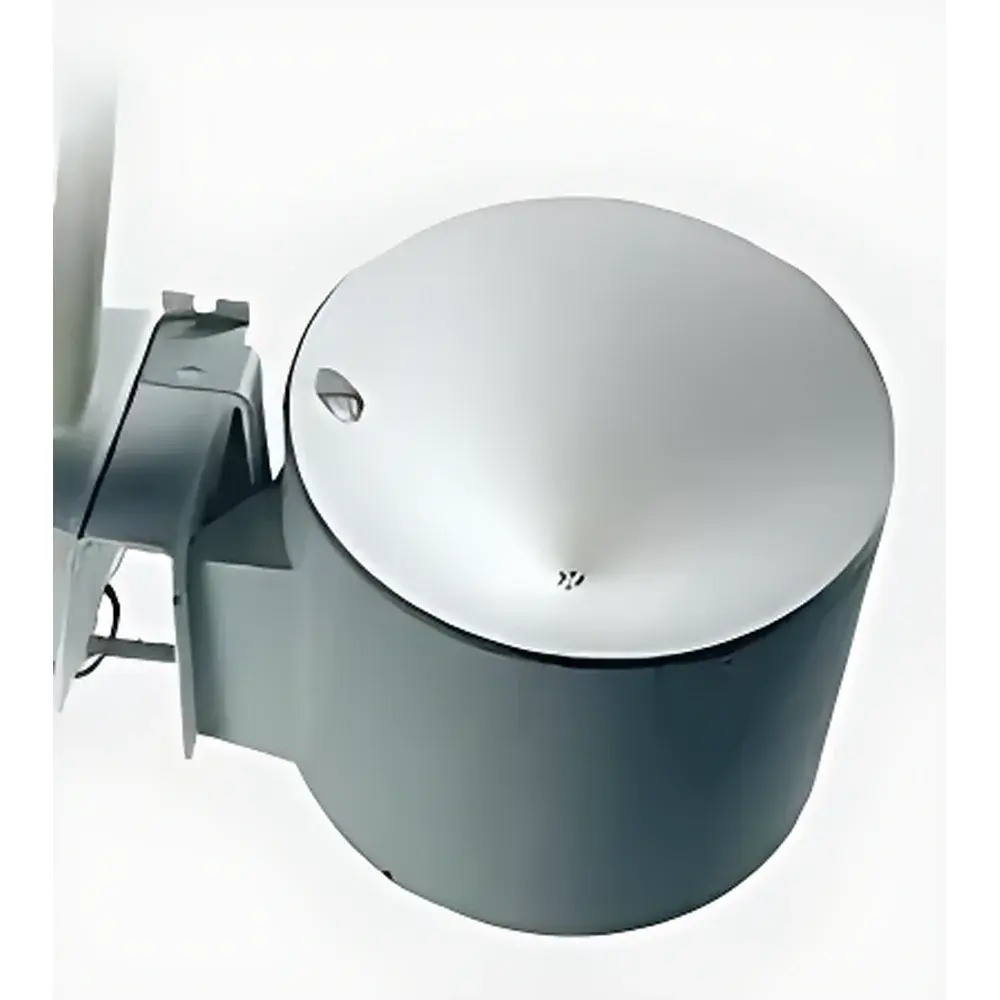
METER ECRN-100 High-Precision Tipping Bucket Rain Gauge
| Brand | METER |
|---|---|
| Origin | USA |
| Manufacturer | METER Group, Inc. (formerly Decagon Devices) |
| Model | ECRN-100 |
| Resolution | 0.2 mm |
| Sensor Type | Dual tipping bucket |
| Housing Material | UV-stabilized, waterproof, frost-resistant ABS plastic |
| Operating Temperature | 0–60 °C |
| Cable Length | 5 m |
| Interface | 3.5 mm stereo audio jack (pulse output) |
| Dimensions | 17 cm × 14.2 cm |
| Data Logger Compatibility | METER ZL6, EM50/EM60, ProCheck (sold separately) |
| Certification Compliance | Designed for long-term field deployment in accordance with WMO Guide to Instruments and Methods of Observation (CIMO Guide), ISO 9060:2018 Class B recommendations for precipitation measurement |
Overview
The METER ECRN-100 High-Precision Tipping Bucket Rain Gauge is an engineered solution for quantitative precipitation measurement in environmental monitoring, hydrological research, agricultural meteorology, and climate observatory networks. It operates on the proven mechanical tipping bucket principle: accumulated rainfall enters a calibrated collector funnel and fills one of two precision-machined aluminum buckets mounted on a low-friction pivot. When the bucket reaches its nominal capacity—corresponding to 0.2 mm of rainfall—it tips under gravity, emptying its contents and actuating a reed switch that generates a digital pulse. The counterweight mechanism then shifts the second bucket into position, ensuring continuous, uninterrupted measurement. This dual-bucket architecture minimizes undercatch during high-intensity rainfall events and improves temporal resolution compared to single-bucket designs. The sensor’s mechanical design eliminates reliance on batteries or internal electronics, enhancing long-term reliability and reducing maintenance requirements in remote or unattended deployments.
Key Features
- High-resolution measurement at 0.2 mm per tip—enabling detection of light drizzle and accurate accumulation across sub-hourly intervals
- Dual tipping bucket mechanism with balanced counterweight system for reduced inertia and improved response fidelity during rapid rainfall onset
- UV-stabilized, frost-resistant ABS housing engineered for structural integrity and dimensional stability across diurnal thermal cycles (0–60 °C operating range)
- Integrated collector funnel with optimized geometry to minimize wind-induced undercatch and splash error—validated against WMO-recommended rain gauge siting guidelines
- Standard 3.5 mm stereo audio jack interface delivering clean, isolated TTL-compatible pulse signals compatible with industry-standard data loggers
- 5-meter shielded cable with molded strain relief and IP67-rated connector for reliable signal transmission in humid, corrosive, or dusty environments
Sample Compatibility & Compliance
The ECRN-100 is designed for outdoor installation on stable, level surfaces—typically mounted on a tripod, pole, or dedicated rain gauge stand at a height of 1–2 meters above ground, per WMO CIMO Guide Chapter 5. Its mechanical operation ensures compatibility with all standard meteorological data acquisition systems supporting pulse counting inputs. The sensor meets functional performance criteria aligned with ISO 9060:2018 Class B specifications for precipitation gauges, including threshold sensitivity, linearity over expected rainfall intensities (0.01–10 mm/h), and repeatability under repeated calibration checks. While not certified to IEC 61326 or UL standards as a standalone electrical device (due to its passive pulse-output architecture), it complies with electromagnetic compatibility requirements when integrated into METER’s ZL6 or EM50/EM60 data logging ecosystems—systems validated for GLP-compliant environmental data collection.
Software & Data Management
Raw pulse counts from the ECRN-100 are ingested by compatible METER data loggers (ZL6, EM50/EM60, ProCheck), where firmware applies configurable scaling factors (e.g., 0.2 mm per pulse) and time-stamped accumulation algorithms. Data are stored internally with timestamped event logging and transmitted via SD card, cellular, or LoRaWAN depending on the host logger configuration. METER’s cloud platform, ZENTRA Cloud, supports automated ingestion, unit conversion (mm, inches, mm/h), gap-filling interpolation (with user-defined thresholds), and export in CSV, NetCDF, or JSON formats. Audit trails—including sensor ID, firmware version, calibration date, and metadata tags—are preserved to support traceability requirements under ISO/IEC 17025-accredited laboratory practices and long-term climate data stewardship protocols.
Applications
- Long-term watershed-scale hydrologic modeling requiring sub-daily precipitation inputs
- Validation of satellite-based rainfall estimates (e.g., GPM IMERG, CHIRPS) in ground-truth networks
- Irrigation scheduling and evapotranspiration modeling in precision agriculture trials
- Urban stormwater runoff calibration and sewer overflow prediction systems
- Ecological studies linking phenological responses to cumulative rainfall thresholds
- Calibration reference for optical disdrometers and weighing-type gauges in intercomparison campaigns
FAQ
What is the recommended calibration interval for the ECRN-100?
METER recommends annual verification using a NIST-traceable volumetric calibrator; field recalibration is possible via adjustable bucket pivot tension and funnel alignment checks per the user manual.
Can the ECRN-100 be used in freezing conditions?
Yes—the housing and internal mechanics are rated for operation down to 0 °C; however, snow accumulation or rime ice may affect accuracy. Use with a heated rain gauge enclosure (e.g., METER RH-100) is advised for sustained sub-zero deployments.
Does the sensor require power?
No—the ECRN-100 is entirely passive; only the connected data logger requires power.
Is the 3.5 mm audio jack compatible with Campbell Scientific or Onset HOBO loggers?
Yes—with appropriate wiring adapters and pulse-counting channel configuration; METER provides pinout documentation and integration notes for third-party logger compatibility.
How does the dual-bucket design reduce measurement error?
It eliminates dead time between tips, minimizes turbulence-induced oscillation errors, and improves linearity at rainfall rates exceeding 5 mm/h—particularly relevant during convective storm events.