
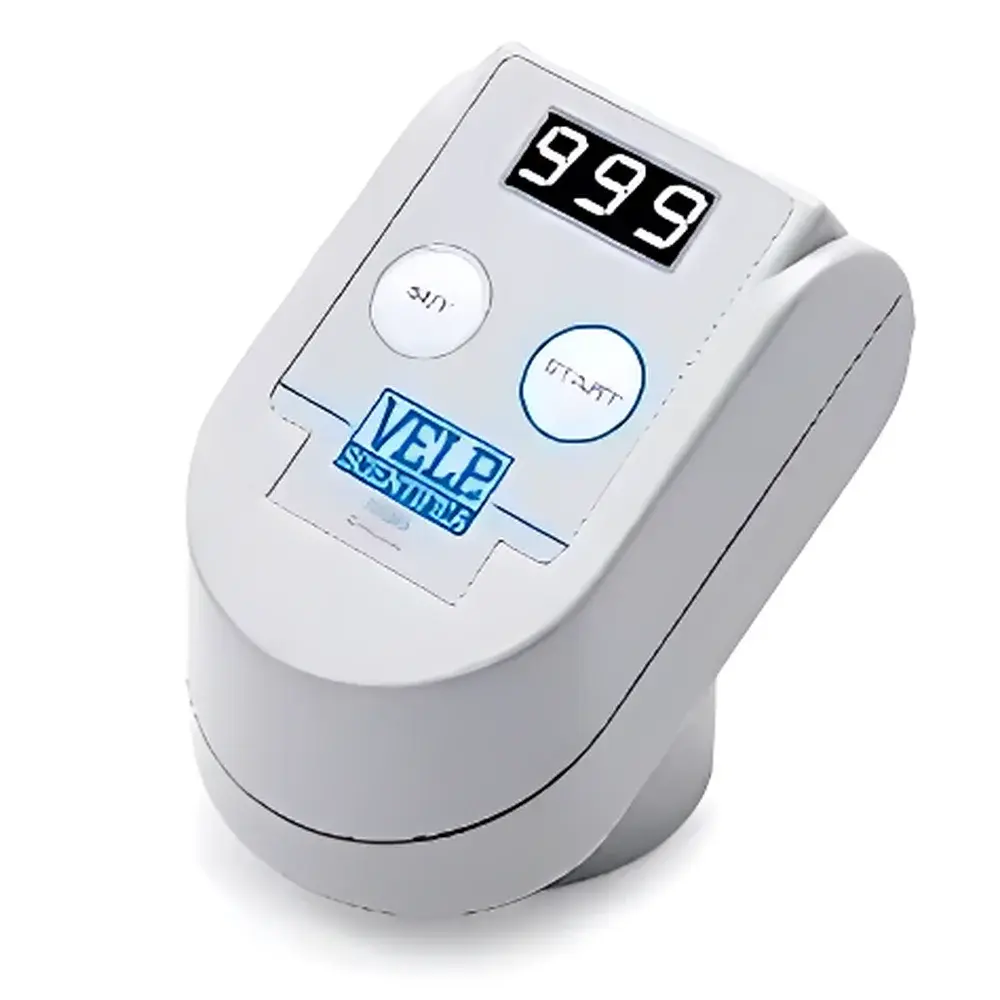
VELP RESPIROMETRIC Sensor System for BOD and Respiratory Activity Measurement
| Brand | VELP |
|---|---|
| Origin | Italy |
| Model | RESPIROMETRIC |
| Instrument Type | Laboratory BOD Analyzer |
| Principle | Manometric (Pressure-Difference) Method |
| Measurement Range | 90–999 mg/L O₂ demand |
| Detection Limit | 90 mg/L |
| Accuracy | ±1 mg/L |
| Single-Sample Measurement Time | 1 min |
| Repeatability | ±1% |
| Pressure Sensing Range | 500–2000 mbar |
| Sample Throughput | Up to 48 vessels simultaneously |
| Data Transmission | Wireless (via DataBox™) |
| Software Integration | RESPIROSOFT™ |
| Optional Cloud Platform | Ermes™ |
| Compliance | Designed for ASTM D5210, ISO 10707, ISO 11734, ISO 14852, and OECD 301 series testing protocols |
Overview
The VELP RESPIROMETRIC Sensor System is a manometric respirometry platform engineered for precise, real-time quantification of biochemical oxygen demand (BOD) and respiratory activity in environmental and biodegradability studies. Operating on the pressure-difference principle, the system continuously monitors minute changes in headspace gas pressure within sealed reaction vessels—directly correlating pressure differentials to oxygen consumption (aerobic) or gas production (anaerobic), without requiring chemical titration or dissolved oxygen probes. This physical measurement approach eliminates interference from colored, turbid, or toxic samples, ensuring high reproducibility across heterogeneous matrices such as wastewater, soil slurries, compost leachates, and synthetic polymer suspensions. The system’s architecture supports both static and dynamic respirometric modes, enabling compliance with standardized test methods including ASTM D5210 (BOD5), ISO 10707 (BOD), ISO 11734 (anaerobic biodegradability), ISO 14852 (aerobic aquatic biodegradation), and OECD 301 series (ready biodegradability screening).
Key Features
- Manometric sensing core with high-stability piezoresistive transducers calibrated for 500–2000 mbar range, delivering sub-millibar resolution for low-rate respiration detection
- Intuitive two-button interface with four-digit LED display—designed for glove-compatible operation in laboratory and field-deployable settings
- Wireless synchronization via integrated DataBox™ module, enabling automatic timestamped data streaming to RESPIROSOFT™ without physical cabling
- Parallel analysis capacity for up to 48 sample vessels per run, each independently monitored with dedicated pressure channels and thermal compensation
- Battery-powered operation with >12 months typical standby life (CR123A cells), supporting unattended long-term incubations (e.g., 28-day OECD tests)
- Modular hardware configuration: interchangeable vessel adapters accommodate standard BOD bottles (300 mL), serum vials (120 mL), and custom anaerobic reactors
- Optional Ermes™ cloud gateway for remote device monitoring, multi-user access control, audit-trail generation, and 21 CFR Part 11–compliant electronic signatures
Sample Compatibility & Compliance
The RESPIROMETRIC system accommodates diverse sample types without pretreatment: raw or treated wastewater, activated sludge supernatants, soil homogenates, compost extracts, microplastic suspensions in synthetic freshwater/marine media, and anaerobic digestate inocula. Its pressure-based detection mechanism remains unaffected by sample color, suspended solids, redox-active compounds, or heavy metal content—common limitations of optical or electrochemical BOD methods. The platform meets methodological requirements for regulatory and research-grade applications, including GLP-compliant biodegradability reporting under REACH Annex IX/X, EPA Method 5210B validation, and ISO/IEC 17025-accredited laboratory workflows. All firmware and software modules undergo annual verification against NIST-traceable pressure standards.
Software & Data Management
RESPIROSOFT™ is a Windows-based application providing real-time visualization of pressure kinetics, automatic BOD calculation (mg O₂/L), kinetic modeling (e.g., first-order decay, Gompertz fitting), and export to CSV, PDF, or LIMS-ready XML formats. The software enforces ALCOA+ data integrity principles: attributable, legible, contemporaneous, original, and accurate records—with full audit trail logging of user actions, parameter edits, and calibration events. When paired with Ermes™, data are encrypted in transit (TLS 1.2+) and at rest (AES-256), with role-based permissions, automated backup scheduling, and integration with enterprise SSO systems. Raw pressure time-series data retain native millisecond timestamps, supporting retrospective reprocessing using updated kinetic algorithms.
Applications
- Aerobic assessment: Standard 5-day BOD5, extended BOD20, nitrification-inhibited BOD, and disinfectant impact studies on microbial activity
- Biodegradability screening: OECD 301A–F, ISO 14851/14852 for plastics, ISO 17556 for soil biodegradation, and ASTM D6691 for marine environments
- Anaerobic characterization: Biochemical Methane Potential (BMP) assays per ISO 11734 and BMP-2022 guidelines; denitrification rate quantification via N2O/N2 evolution
- Ecotoxicity endpoints: Respiration inhibition testing (ISO 8192) using activated sludge as test inoculum
- Process optimization: Monitoring aerobic/anaerobic digestion efficiency in pilot-scale bioreactors and landfill leachate treatment systems
FAQ
How does the manometric principle differ from traditional Winkler or probe-based BOD methods?
It measures cumulative O2 consumption indirectly via pressure drop in a closed headspace—eliminating need for sample withdrawal, reagent addition, or electrode maintenance.
Can the system distinguish between O2 uptake and CO2 production in aerobic tests?
Yes—by incorporating NaOH or KOH absorbent in the headspace, CO2 is chemically sequestered, making pressure change directly proportional to O2 consumed.
Is calibration traceable to international standards?
All pressure sensors are factory-calibrated against NIST-traceable deadweight testers; user-performed zero/span checks are supported via certified reference gases.
What is the maximum incubation duration supported?
Unlimited—battery life and memory capacity permit continuous recording for >60 days at 1-minute intervals per channel.
Does RESPIROSOFT™ support statistical comparison across multiple test series?
Yes—built-in ANOVA, Tukey HSD, and regression tools enable inter-laboratory validation and ISO 5725-based precision analysis.







