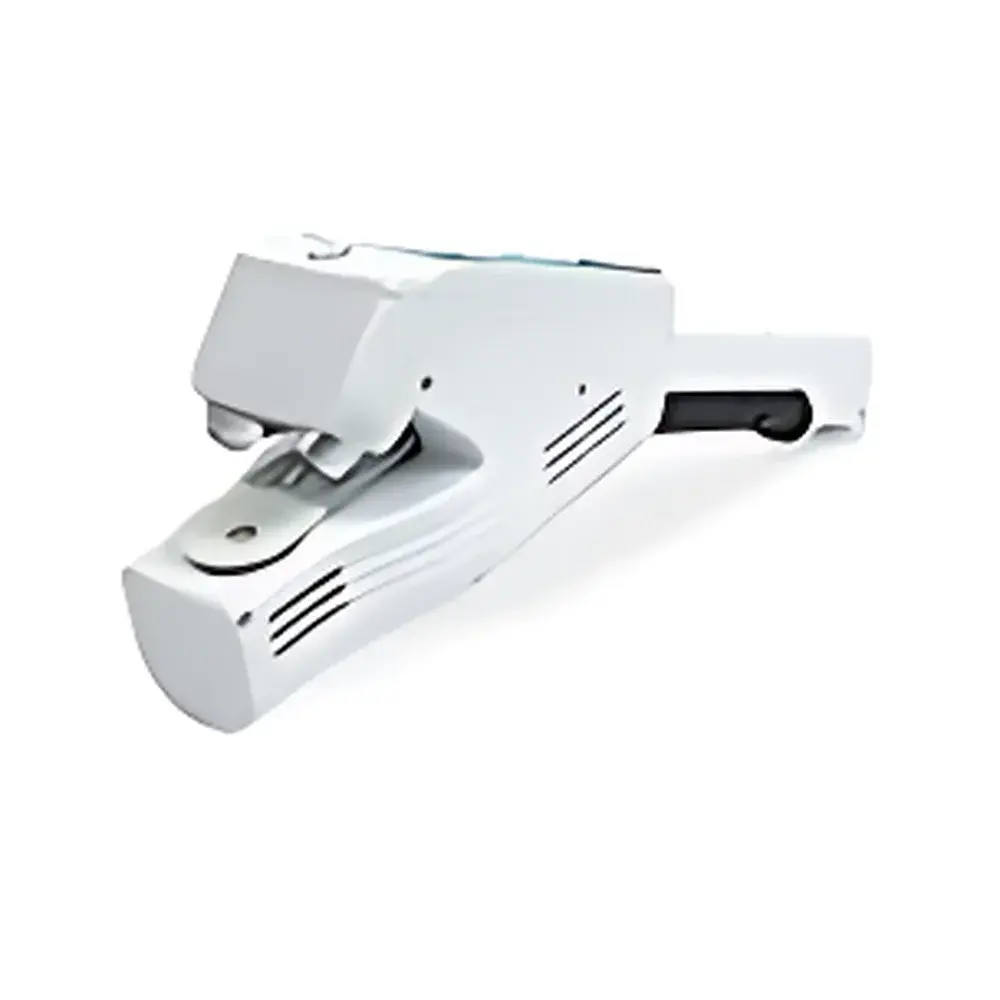
LI-COR LI-600 Fluorescence and Stomatal Conductance Meter
| Brand | LI-COR |
|---|---|
| Origin | USA |
| Model | LI-600 |
| Weight | 0.73 kg (with fluorometer) |
| Dimensions | 32.4 × 16.9 × 6.2 cm (L × W × H) |
| Operating Temperature | 0–50 °C |
| Atmospheric Pressure Range | 50–110 kPa |
| Relative Humidity Range | 0–85 %RH (non-condensing) |
| GPS Accuracy | 2.5 m CEP |
| Display | 6.8 cm diagonal, 400 × 240 pixels, sunlight-readable monochrome LCD |
| Battery | Rechargeable Li-ion, 5200 mAh, 8 h typical operation |
| Charging | Micro-USB with Qualcomm® Quick Charge™ 2.0/3.0 (full charge in ~3.5 h, fast charge in ~2 h) |
| Data Storage | 128 MB internal |
| USB Interface | Micro-USB for data transfer and charging |
| Bar Code Scanner | 1D/2D (Code 39, Code 128, PDF417, UPC, Data Matrix, QR) |
| PAR Sensor | Quantum sensor calibrated to ±10 % of reading (NIST-traceable), cosine-corrected to 60° incidence |
| Leaf Temperature Sensor | IR-based, ±0.5 °C accuracy |
| RH Sensor | ±2 %RH accuracy, auto-matching capability |
| Gaseous Flow Rates | Low: 75 µmol/s, Medium: 115 µmol/s, High: 150 µmol/s |
| Stomatal Conductance Measurement Time | 5–15 s (species- and condition-dependent) |
| Chlorophyll Fluorescence Measurement Time | 1 s |
| Measured Parameters | g<sub>sw</sub>, g<sub>bw</sub>, g<sub>tw</sub>, E, VPD<sub>leaf</sub>, VP<sub>cham</sub>, VP<sub>ref</sub>, VP<sub>leaf</sub>, H<sub>2</sub>O<sub>ref</sub>, H<sub>2</sub>O<sub>samp</sub>, H<sub>2</sub>O<sub>leaf</sub>, F<sub>o</sub>, F<sub>m</sub>, F<sub>v</sub>/F<sub>m</sub>, F, F<sub>s</sub>, F<sub>o</sub>′, F<sub>m</sub>′, φPSII, ETR, F<sub>v</sub>′/F<sub>m</sub>′, qP (F<sub>q</sub>′/F<sub>v</sub>′), NPQ, qN, qE, qI, qL |
| Compliance | IEC 62471:2006 (Exempt Group LED safety) |
Overview
The LI-COR LI-600 Fluorescence and Stomatal Conductance Meter is a field-deployable, integrated instrument engineered for simultaneous, co-located measurement of stomatal conductance (gsw) and pulse-amplitude modulated (PAM) chlorophyll fluorescence on the same leaf area. It operates on dual physical principles: (1) open-path infrared gas exchange to quantify water vapor flux and calculate conductance parameters via diffusion-driven mass balance, and (2) PAM fluorometry using precisely timed red LED excitation (625 nm) and saturation pulses to resolve photosystem II (PSII) photochemical efficiency dynamics. Designed for ecophysiological fieldwork, the LI-600 enables rapid (<15 s per leaf) assessment of plant functional responses—including transpiration rate (E), leaf-level water use efficiency, and PSII quantum yield—under ambient environmental conditions. Its compact architecture, real-time environmental compensation (via integrated PAR, leaf temperature, and relative humidity sensing), and autonomous stabilization logic eliminate manual equilibration delays common in traditional porometers or standalone fluorometers.
Key Features
- Co-registered dual-mode measurement: Stomatal conductance and PAM fluorescence acquired from identical leaf surface coordinates—ensuring physiological parameter congruence without spatial interpolation error.
- Sunlight-optimized monochrome display (400 × 240 px) with high contrast and low power consumption, enabling reliable operation under full solar irradiance.
- Integrated environmental sensors: NIST-traceable quantum sensor (PPFD, µmol m−2 s−1), contactless infrared leaf temperature probe (±0.5 °C), and auto-matching relative humidity sensor (±2 %RH).
- Onboard inertial measurement unit (IMU): Combines 3-axis accelerometer and magnetometer to compute leaf inclination angle—critical for accurate PAR interception modeling and sun-angle normalization.
- GPS geotagging (2.5 m CEP) synchronized with each measurement record, supporting spatially explicit analysis across heterogeneous landscapes.
- Barcode scanning capability (1D/2D) for sample ID automation, minimizing transcription errors during high-throughput field campaigns.
- Ergonomic handheld form factor (0.73 kg total), balanced weight distribution, and tactile 5-button interface optimized for gloved operation in variable terrain.
- Rechargeable lithium-ion battery (5200 mAh) supporting ≥8 h continuous operation; compatible with Qualcomm® Quick Charge™ 2.0/3.0 for field-efficient recharging.
Sample Compatibility & Compliance
The LI-600 accommodates a broad range of leaf morphologies—including broadleaf angiosperms, conifer needles, and grasses—via its flexible, low-compliance leaf chamber with soft silicone gasketing that ensures minimal edge leakage and maintains laminar flow integrity. Its low-flow design (75–150 µmol/s) minimizes perturbation to natural leaf boundary layer conditions while maintaining sufficient signal-to-noise ratio for robust gsw derivation. All optical components comply with IEC 62471:2006 photobiological safety standards (Exempt Group), confirming zero risk of retinal or skin photodamage during routine operation. The instrument meets GLP-aligned data integrity requirements: timestamped records include audit trail metadata (operator ID, GPS coordinates, IMU orientation, sensor diagnostics), and raw outputs are stored in immutable CSV format with no proprietary binary encoding.
Software & Data Management
The LI-600 is supported by cross-platform desktop software (Windows® and macOS® compatible) that provides configuration, real-time visualization, barcode generation, and post-acquisition analysis. The application exports fully annotated datasets—including all derived biophysical parameters (e.g., φPSII, ETR, qP, NPQ), raw sensor time series, and diagnostic flags (e.g., leak detection status, flow stability index)—in plain-text CSV format. This ensures seamless integration with third-party statistical environments (R, Python/Pandas, MATLAB) and laboratory information management systems (LIMS). Data files contain embedded calibration traceability identifiers (e.g., PAR sensor serial number, factory calibration date), satisfying ISO/IEC 17025 documentation requirements for accredited plant physiology laboratories. No cloud dependency or vendor-locked subscription is required for basic functionality or long-term archival.
Applications
- Field-based drought stress phenotyping: Quantify dynamic shifts in gsw and Fv/Fm across irrigation gradients or natural soil moisture gradients.
- Climate change impact studies: Monitor diurnal and seasonal acclimation of stomatal regulation and PSII photochemical efficiency in native and invasive species.
- Crop improvement trials: Screen breeding populations for coordinated improvements in water use efficiency (WUE = A/gsw) and photoprotective capacity (NPQ kinetics).
- Ecological restoration monitoring: Assess physiological recovery trajectories of planted seedlings under varying light, moisture, and nutrient regimes.
- Urban tree health assessment: Diagnose subclinical stress in street trees exposed to heat island effects, air pollutants, and restricted rooting volumes.
- Education and training: Serve as a pedagogical platform for teaching plant-environment interactions, gas exchange theory, and non-invasive fluorescence bioimaging principles.
FAQ
Can the LI-600 measure net photosynthesis (An)?
No—the LI-600 does not measure CO2 assimilation. It is purpose-built for stomatal conductance and chlorophyll fluorescence. For combined An/gsw/fluorescence, consider the LI-6800 Portable Photosynthesis System.
Is the leaf chamber interchangeable or user-replaceable?
Yes—the chamber assembly is modular and field-serviceable. Replacement gaskets and calibration verification protocols are documented in the service manual.
Does the instrument support automated logging at user-defined intervals?
Yes—programmable measurement schedules (e.g., every 5 min over 8 h) are configurable via the desktop software; data are time-stamped and GPS-georeferenced.
How is leaf temperature measured, and what is its role in conductance calculation?
Leaf temperature is measured non-contact via an integrated infrared sensor. It is used to compute saturated water vapor pressure (es) at the leaf surface, a critical input for deriving VPDleaf and thus gsw from vapor flux.
Can data be exported directly to spreadsheet software without proprietary conversion?
Yes—all measurements export natively as UTF-8 encoded CSV files with header rows describing units, parameter definitions, and metadata—requiring no intermediate translation or license-dependent tools.