
Custom-Built High-Low Temperature Aging Test Chamber
| Key Features | Microprocessor-based color touchscreen controller with EN/CN language switch |
|---|---|
| Temperature range options | 0 to 150°C, −20 to 150°C, −40 to 150°C, or −70 to 150°C |
| Humidity range | 20–98% RH (optional: 5–98% RH) |
| Temp. uniformity | ±0.5°C |
| Humidity uniformity | ±2.5% RH |
| Temp. fluctuation | ±2°C |
| Humidity fluctuation | +2–3% RH |
| Resolution | 0.1°C / 0.1% RH |
| Heating rate | ~4.0°C/min |
| Cooling rate | ~1.0°C/min |
| Standard accessories | Two-tier SUS#304 shelves, four casters + four leveling feet, 2.5 m AC380 V±5%, 50 Hz±0.5 Hz, 3-phase 5-wire power cable |
Overview
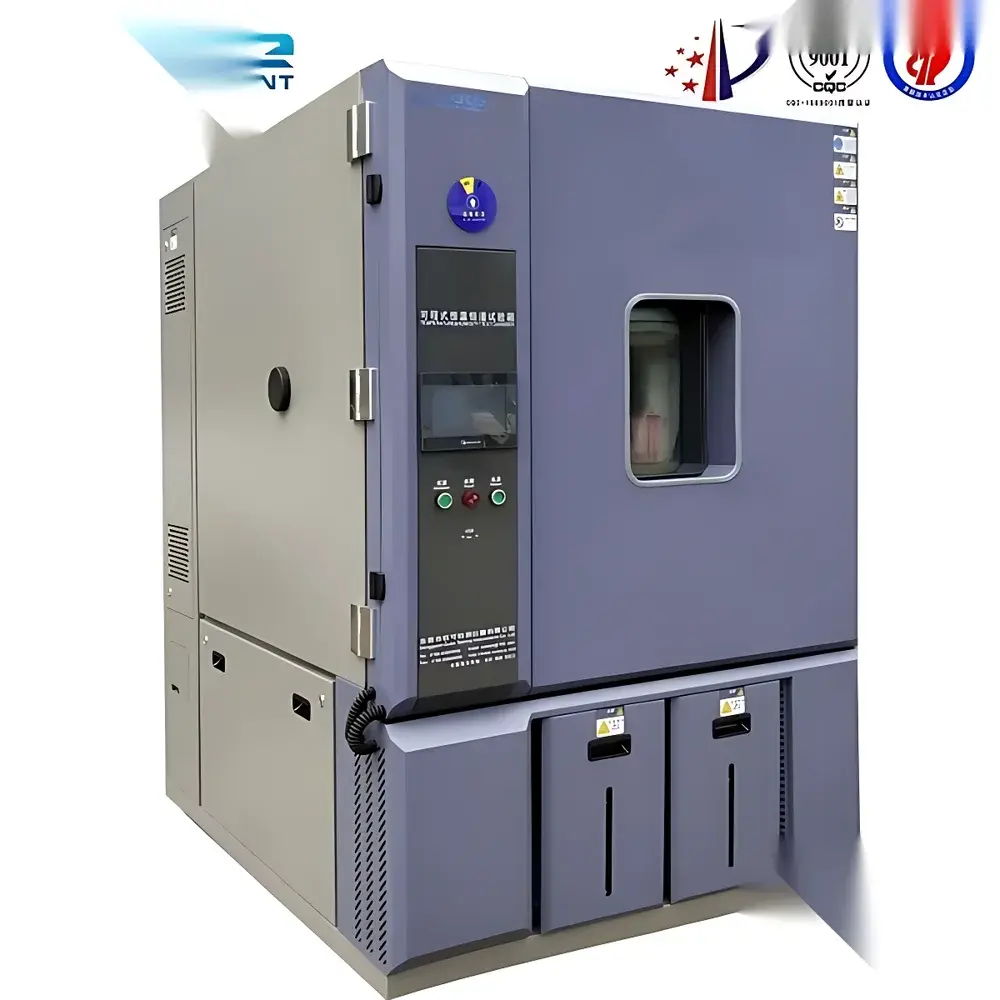
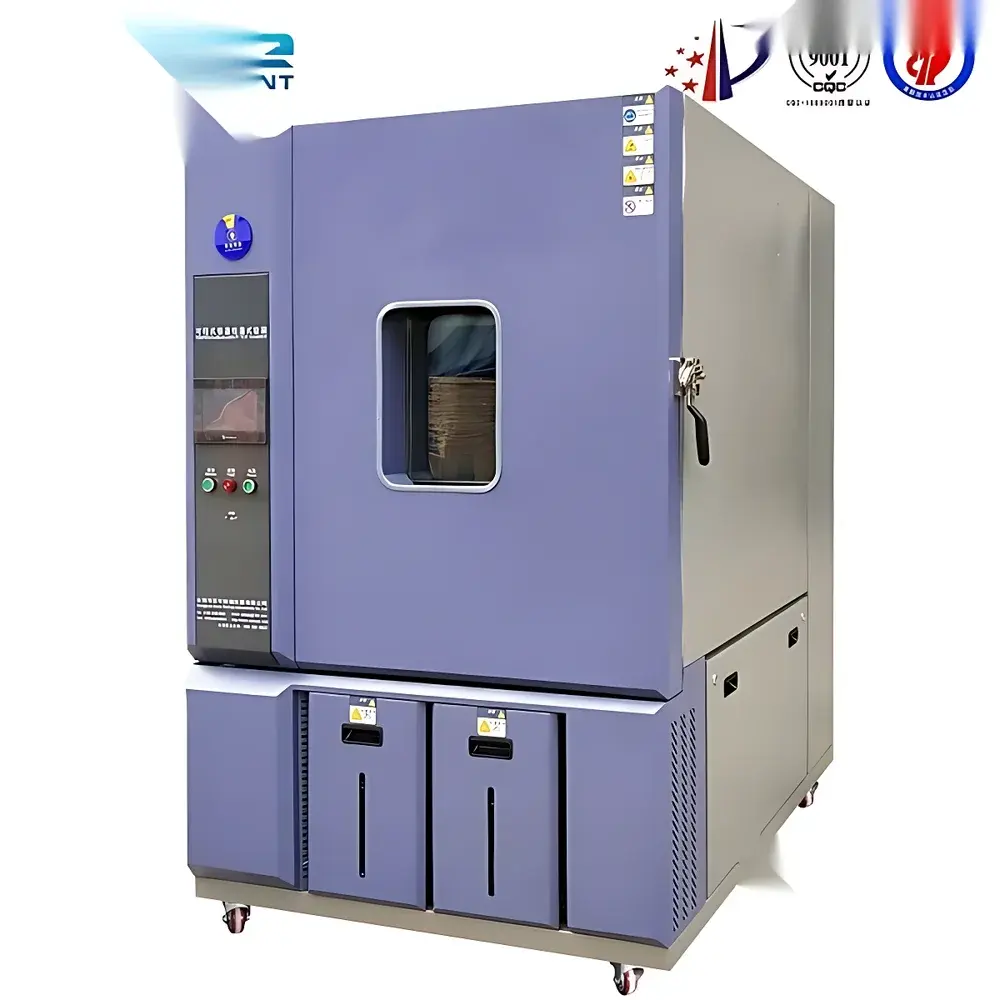
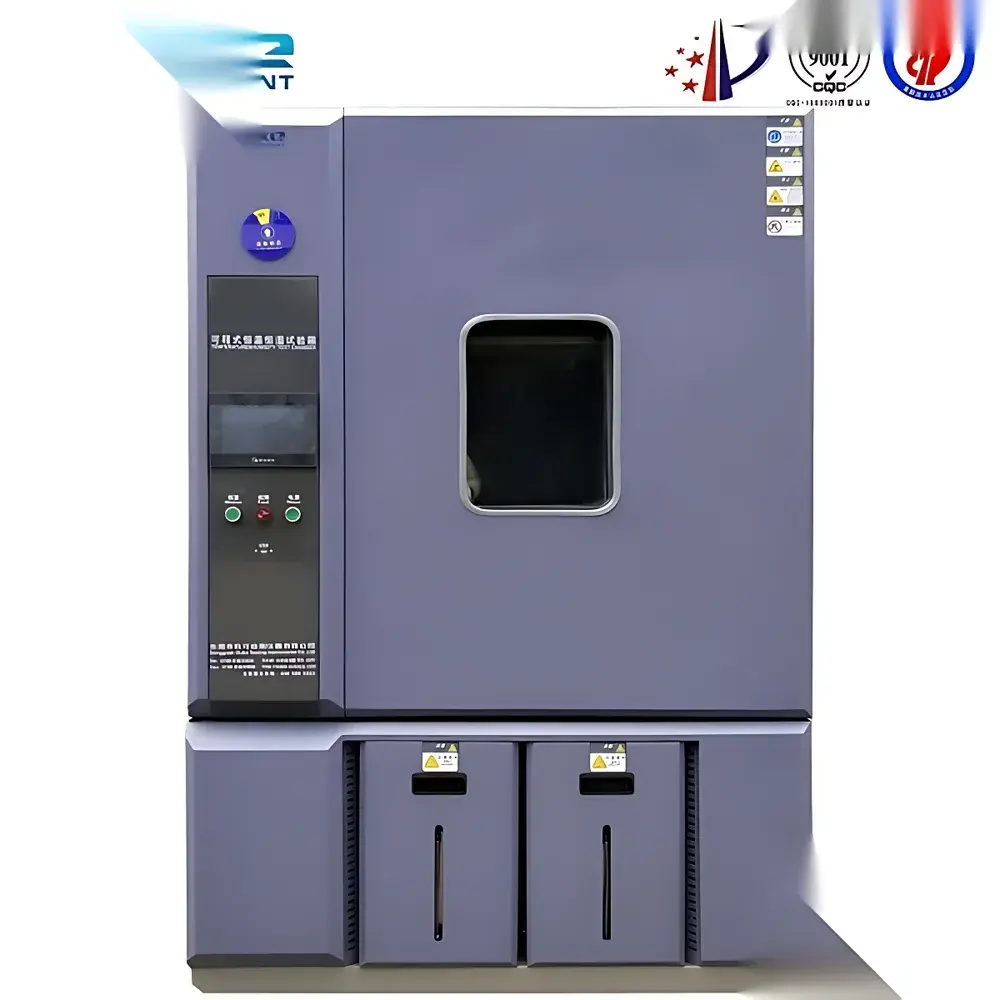
The Custom-Built High-Low Temperature Aging Test Chamber is an engineered environmental simulation platform designed to replicate extreme thermal and hygrothermal stress conditions for accelerated aging, reliability validation, and performance qualification of materials and electronic components. Based on the principles of forced-air convection and precision vapor compression refrigeration, this chamber delivers controlled, repeatable temperature and humidity profiles across a wide operational envelope—from deep sub-zero cold soak to high-temperature dry bake—enabling rigorous assessment of thermal expansion, polymer degradation, solder joint integrity, sealant adhesion, and insulation resistance under defined climatic stresses.
Key Features
- Microprocessor-driven color touchscreen controller with intuitive graphical interface and seamless English/Chinese language switching—designed for multilingual lab environments and international compliance documentation.
- Dual-stage, fully sealed low-noise compressor system utilizing environmentally compliant refrigerants (R404A for primary stage, R23 for ultra-low subcooling), ensuring stable operation down to −70°C without mechanical vibration interference in sensitive test setups.
- Double-layer high-tensile silicone door gasket and seamless SUS#304 stainless steel construction (interior and exterior) provide exceptional corrosion resistance, long-term dimensional stability, and Class 1 cleanroom-compatible surface finish.
- Multi-layer laminated tempered observation window with integrated conductive film eliminates condensation and enables real-time visual monitoring under all operating conditions—including high-humidity cycling—without optical distortion or thermal bridging.
- Integrated 50 mm diameter test port on the left chamber wall allows external signal routing, power feedthrough, or sensor cabling while maintaining chamber integrity; sealed with removable silicone plug when not in use.
- Comprehensive safety architecture includes over-temperature, over-humidity, compressor high-pressure, phase-loss, and door-open interlocks—all triggering immediate visual alarm on screen and hardware-level power disconnection per IEC 61000-6-2 EMC immunity requirements.
Sample Compatibility & Compliance
This chamber accommodates a broad spectrum of physical specimens—from printed circuit assemblies (PCBAs) and automotive ECUs to aerospace composites, medical device housings, and polymer-coated substrates—within customizable internal volumes ranging from 80 L to 1000 L. Its design conforms to core military and industrial environmental test standards, including MIL-STD-810G Method 501.6 (High Temperature), Method 502.6 (Low Temperature), and Method 507.6 (Humidity); as well as IEC 60068-2-1 (Test A: Cold), IEC 60068-2-2 (Test B: Dry Heat), IEC 60068-2-78 (Test Cab: Damp Heat, Steady State), and IEC 60068-2-30 (Test Db: Damp Heat, Cycling). All control algorithms and data logging functions support traceability requirements aligned with ISO/IEC 17025 and GLP/GMP laboratory practices.
Software & Data Management
The embedded controller supports real-time parameter logging at user-defined intervals (1 s to 60 min resolution), with timestamped CSV export via USB 2.0 interface. Optional Ethernet connectivity enables remote monitoring, alarm notification via SMTP, and integration into centralized test management systems (e.g., LabWare LIMS or Siemens Desigo CC). Audit trail functionality records all operator actions—including setpoint changes, profile uploads, and manual overrides—with immutable timestamps and user ID attribution, satisfying FDA 21 CFR Part 11 electronic record and signature requirements when paired with appropriate system validation protocols.
Applications
- Accelerated life testing of lithium-ion battery modules under thermal cycling (−40°C ↔ 85°C) to evaluate electrolyte decomposition and SEI layer growth kinetics.
- Qualification of conformal coatings and potting compounds per IPC-CC-830B, including thermal shock exposure followed by insulation resistance measurement.
- Pre-conditioning of optical sensors and MEMS devices prior to photometric calibration, ensuring thermal stabilization before measurement.
- Validation of packaging barrier performance for sterile medical devices under ASTM F1980 accelerated aging conditions (e.g., 55°C/60% RH for shelf-life prediction).
- Environmental stress screening (ESS) of avionics line-replaceable units (LRUs) per RTCA DO-160 Section 4 (Temperature), Section 5 (Altitude), and Section 6 (Humidity).
FAQ
Can this chamber be validated for IQ/OQ/PQ protocols?
Yes—the controller’s deterministic timing, calibrated sensor inputs, and full audit trail capability enable formal installation, operational, and performance qualification per GAMP 5 guidelines. Calibration certificates for temperature and humidity sensors are available upon request.
Is remote firmware update supported?
Firmware updates require local USB connection and administrative password authentication; no cloud-based OTA updates are implemented to maintain air-gapped security in regulated labs.
What is the maximum allowable load mass for thermal stability?
Maximum thermal mass load depends on chamber volume and selected temperature range; for example, the OK-TH-408 model maintains ±0.5°C uniformity with up to 15 kg of aluminum-equivalent thermal mass at steady-state 150°C.
Are custom internal configurations (e.g., additional shelves, mounting rails) available?
All structural modifications—including non-standard shelf spacing, DIN-rail integration, and internal cable management channels—are included in the non-standard customization scope.
Does the system comply with RoHS and REACH directives?
Yes—both housing materials (SUS#304) and refrigerants (R404A/R23) meet EU Directive 2011/65/EU (RoHS 2) and Regulation (EC) No 1907/2006 (REACH) substance restrictions. Full material declarations are provided with delivery documentation.



