
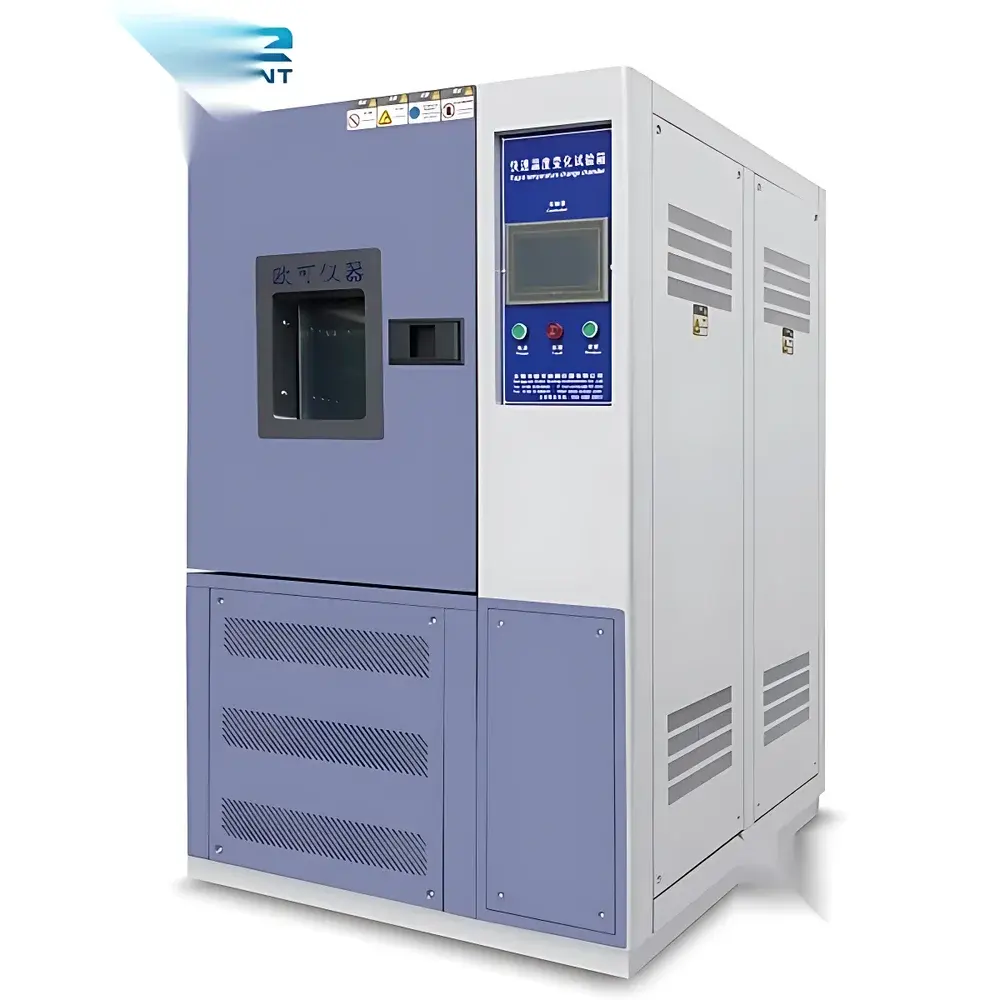
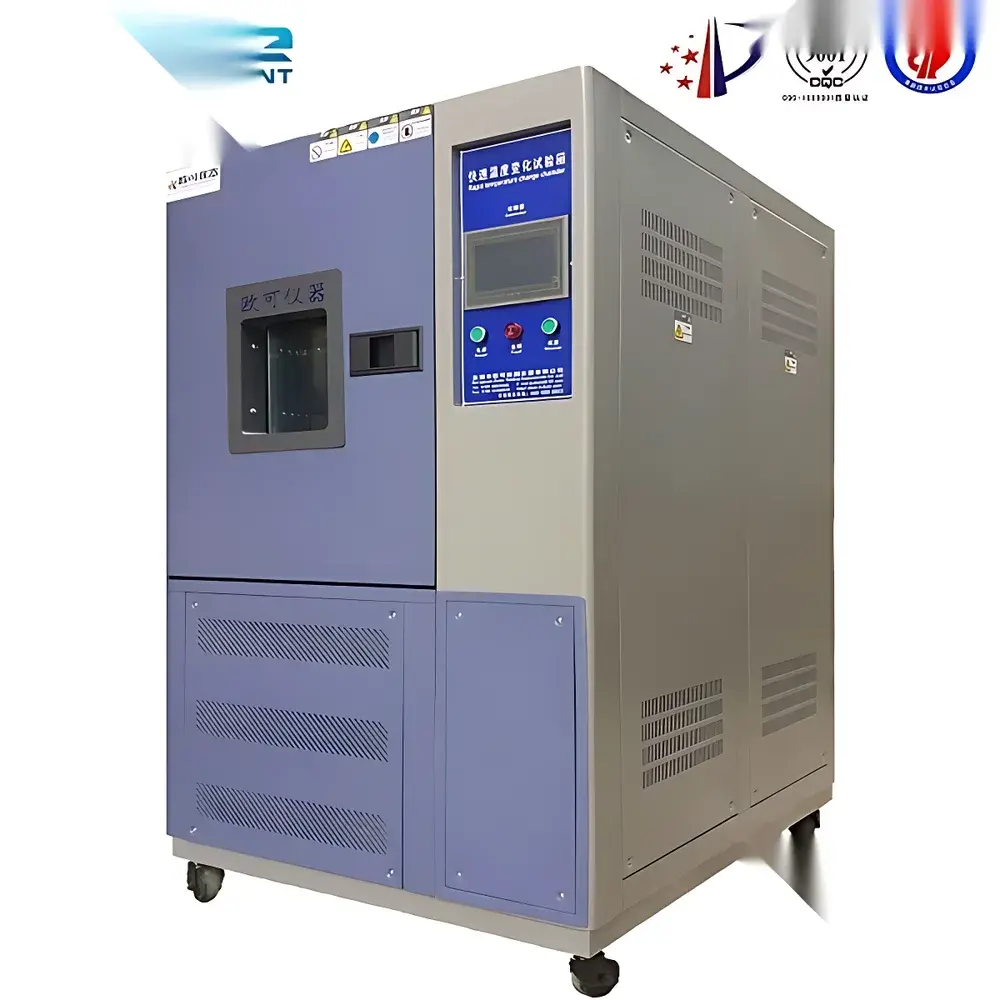
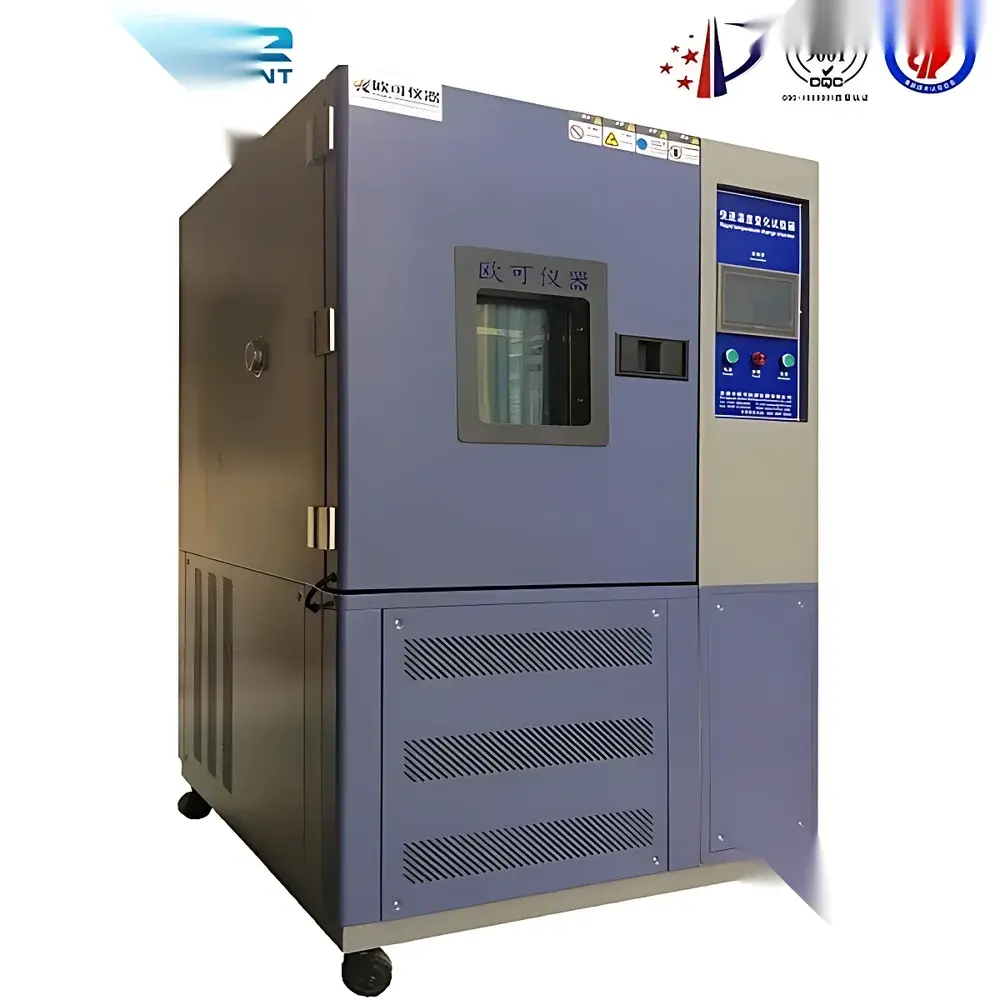
High-Temperature Accelerated Aging Test Chamber
| Brand | OEM |
|---|---|
| Origin | Imported |
| Manufacturer Type | Authorized Distributor |
| Cooling Configuration | Single-Stage or Cascade Refrigeration System (R404A/R23/R14) |
| Temperature Range | -70°C to +180°C (configurable) |
| Humidity Range | 20–98% RH |
| Controller | TEMI880 Programmable Touchscreen PID Controller with RS485 Communication |
| Compliance | GB/T 2423.1–2001, GB/T 2423.2–2001, GB/T 2423.3–1993, GB 10586–2006, GB 10589–2006, GB 10592–2006, GB 11158–2006, GB/T 5170.2–1996, GB/T 5170.5–1996 |
Overview
The High-Temperature Accelerated Aging Test Chamber is an engineered environmental simulation system designed for controlled thermal and hygrothermal stress testing of materials, components, and finished products. It operates on the principle of accelerated degradation through precisely regulated temperature cycling and humidity exposure—enabling laboratories and quality assurance teams to replicate years of field aging in compressed timeframes. The chamber supports both static and dynamic test profiles, including high-temperature dwell, rapid thermal transition, and combined high-humidity/heat conditioning. Its architecture integrates a dual-circuit refrigeration subsystem (single-stage or cascade configuration), a high-efficiency air circulation system with laminar flow optimization, and a robust stainless-steel inner chamber resistant to oxidation and condensation corrosion. This platform meets the physical and metrological requirements defined in key national standards for environmental test equipment, serving as a foundational tool for reliability validation in electronics, automotive, aerospace, polymer, and packaging industries.
Key Features
- Programmable temperature range from –70 °C to +180 °C, with optional extended high-temperature capability up to +200 °C upon request
- Humidity control from 20% to 98% RH at temperatures ≥+10 °C, compliant with GB/T 2423.3–1993 for constant damp heat testing
- Cascade refrigeration system utilizing environmentally compliant refrigerants (R404A, R23, R14), enabling stable sub-zero operation with minimal thermal overshoot
- TEMI880 programmable controller featuring 7-inch color LCD touchscreen, 120-segment ramp-soak profile programming, real-time data logging, and RS485 Modbus RTU communication for integration into centralized lab networks
- Double-wall insulated construction with polyurethane foam (≥100 mm thickness) and vacuum-sealed door gasket to ensure thermal uniformity ≤±1.0 °C (at 100 L load volume)
- Modular cooling interface supporting both air-cooled and water-cooled condenser configurations for flexible site installation
- Comprehensive safety architecture including over-temperature cut-off, refrigerant pressure monitoring, door interlock, and independent humidity over-limit protection
Sample Compatibility & Compliance
This chamber accommodates standard test specimens up to 500 mm × 500 mm × 500 mm (W×D×H) and supports non-reactive sample mounting via adjustable stainless-steel shelves. It is compatible with ISO/IEC 17025-accredited calibration protocols and provides traceable performance verification per GB/T 5170.2–1996 (temperature) and GB/T 5170.5–1996 (humidity). All operational parameters—including chamber setpoint accuracy, temperature stability, and humidity recovery time—are validated against the referenced GB standards during factory acceptance testing. The unit is suitable for use in GLP-compliant environments when paired with audit-ready software extensions that support electronic signatures and 21 CFR Part 11–compliant data integrity features.
Software & Data Management
While the embedded TEMI880 controller delivers standalone functionality, optional PC-based software enables advanced data management: automated report generation (PDF/CSV), multi-chamber synchronization, remote monitoring via Ethernet/Wi-Fi, and alarm event correlation with environmental logs. Data export conforms to ASTM E2911–21 for environmental test documentation and supports metadata tagging for full traceability in regulatory submissions. Audit trails record all parameter changes, user logins, and calibration interventions—ensuring alignment with ISO 9001:2015 and IATF 16949 quality management system requirements.
Applications
- Accelerated life testing of PCB assemblies, conformal coatings, and encapsulated semiconductors under thermal cycling and humidity bias
- Validation of thermal expansion coefficients and dimensional stability in polymer composites and elastomers
- Pre-qualification screening of lithium-ion battery cells and modules under elevated temperature and humidity stress
- Corrosion resistance evaluation of metallic finishes and protective coatings per ISO 9227 salt spray correlation protocols
- Stability assessment of pharmaceutical packaging under ICH Q1A(R2) long-term and accelerated storage conditions
- Material compatibility testing for automotive interior trim under SAE J2412 UV/heat/humidity exposure sequences
FAQ
What is the typical temperature uniformity specification across the working volume?
Uniformity is verified per GB/T 5170.2–1996 and typically achieves ±0.8 °C at 25 °C, ±1.2 °C at –40 °C, and ±1.5 °C at +150 °C under no-load conditions.
Can this chamber be integrated into a central laboratory monitoring system?
Yes—RS485 Modbus RTU interface allows seamless integration with SCADA, LIMS, or custom MES platforms using standard protocol mapping.
Is third-party calibration certification available prior to shipment?
Factory calibration with NIST-traceable reference sensors is included; UKAS or CNAS-accredited calibration certificates are available as optional add-ons.
Does the system support humidity control below 0 °C?
No—humidification is disabled below +10 °C to prevent frost formation on the humidifier and sensor elements, in accordance with GB/T 2423.3–1993 operational limits.
What maintenance intervals are recommended for the refrigeration system?
Compressor oil and filter dryer replacement is advised every 24 months under continuous operation; annual inspection of refrigerant charge and condenser cleanliness is required for optimal efficiency.



