
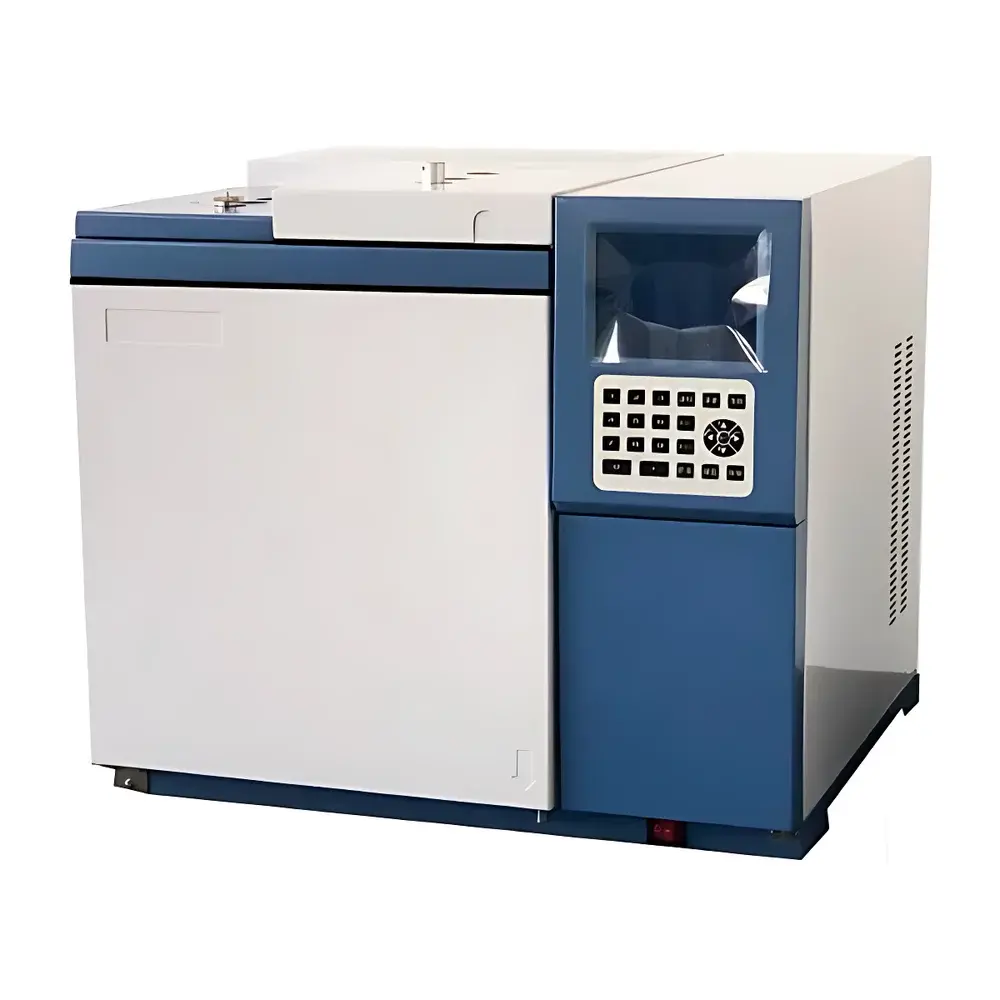
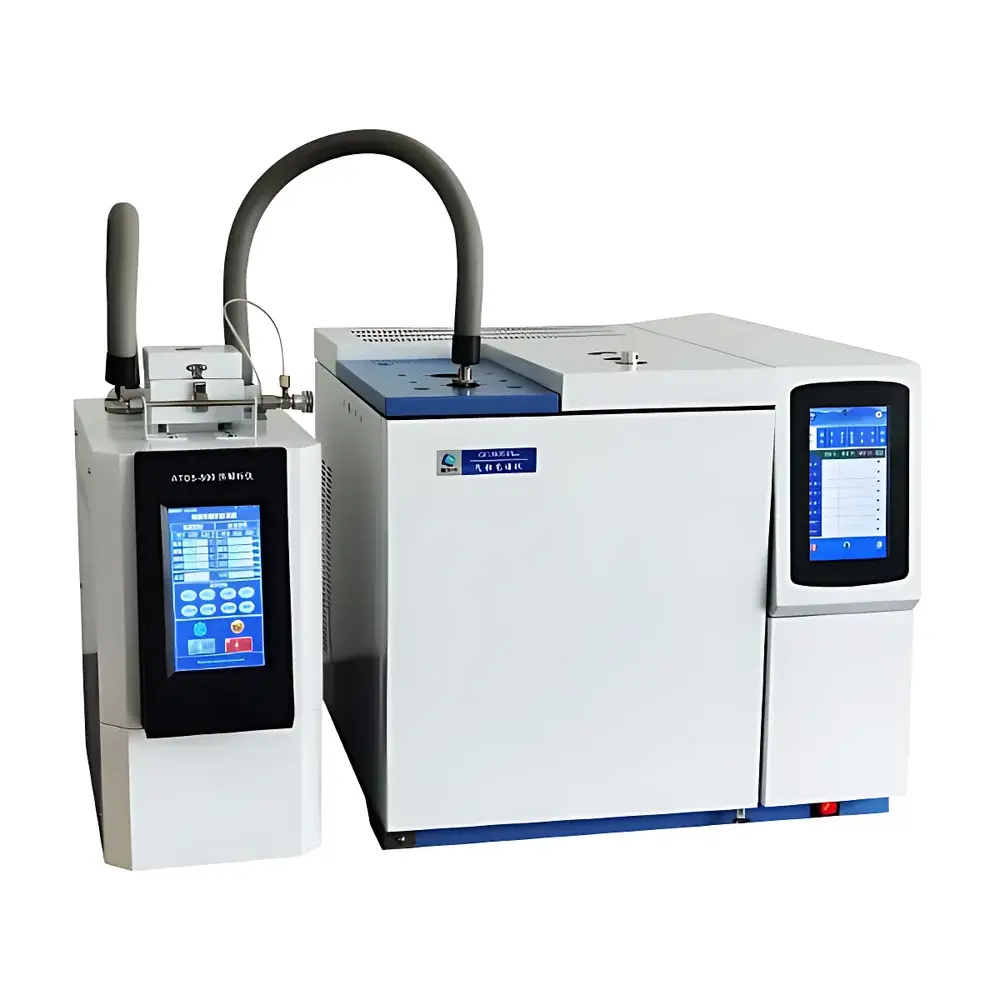
Luchuang GC-9870 TVOC Gas Chromatograph
| Brand | Luchuang |
|---|---|
| Origin | Shandong, China |
| Manufacturer Type | Direct Manufacturer |
| Instrument Type | Laboratory Gas Chromatograph |
| Model | GC-9870 TVOC |
| Temperature Control Range | 25–450 °C |
| Maximum Ramp Rate | 60 °C/min |
| Cooling Rate | 1 °C/min |
| Carrier Gas Flow Range & Control | 0–1200 mL/min |
| Carrier Gas Pressure Range & Control | 0–1000 kPa |
| Injector Maximum Operating Temperature | 450 °C |
| Injector Pressure Setting Range | 0–1000 kPa |
| Injector Total Flow Setting Range | 0–1200 mL/min |
Overview
The Luchuang GC-9870 TVOC Gas Chromatograph is a dedicated laboratory-scale analytical instrument engineered for precise separation, identification, and quantification of volatile organic compounds (VOCs) and total volatile organic compounds (TVOCs) in complex matrices. Based on capillary gas chromatography with flame ionization detection (FID), the system adheres to core principles of differential partitioning in a temperature-programmed column under controlled carrier gas flow. Designed specifically for petrochemical, environmental monitoring, and industrial hygiene laboratories, it complies with ASTM D6196, ISO 16000-6, and EPA TO-17 methodologies for indoor air and workplace vapor analysis. Its column oven delivers high thermal uniformity and stability (±0.02 °C at setpoint), enabling reproducible retention time alignment across repeated injections—critical for regulatory-compliant reporting and long-term method validation.
Key Features
- Thermally optimized column oven with operating range from ambient +4 °C to 450 °C, supporting up to 20 programmable temperature ramps per run (configurable via software)
- Eight independent temperature zones: column oven, FID, TCD, FPD, ECD, NPD, two injectors, and auxiliary heater—each with real-time monitoring and overtemperature cutoff
- Digital carrier gas pressure and flow control (0–1200 mL/min; 0–1000 kPa), ensuring consistent linear velocity and retention time precision
- Fully computer-controlled detectors: FID with auto-ignition, flame-out detection, and re-ignition; TCD with constant-current mode (up to 220 mA); optional FPD, ECD, and NPD modules
- Integrated GC workstation software embedded in host controller, supporting dual-direction communication (instrument ↔ PC), audit-trail-enabled method storage, and GLP-compliant data handling
- Modular architecture with reserved interface for future GC-MS coupling (e.g., quadrupole or single-quadrupole mass spectrometer integration)
Sample Compatibility & Compliance
The GC-9870 TVOC accommodates both capillary and packed columns, including standard 30 m × 0.32 mm ID fused-silica columns with 1.0 µm film thickness (e.g., DB-5, HP-5, or equivalent). It accepts liquid, gaseous, and thermally desorbed samples via split/splitless injectors, cold-on-column (COC), or headspace autosampler interfaces (optional). The system meets essential requirements for ISO/IEC 17025-accredited testing laboratories and supports documentation traceability aligned with FDA 21 CFR Part 11 when used with validated software configurations. All detector performance metrics—including FID sensitivity (≤1 × 10⁻¹² g/s for n-hexadecane), baseline noise (<2 × 10⁻¹⁴ A), and drift (<2 × 10⁻¹³ A/30 min)—are verified per IUPAC-recommended calibration protocols.
Software & Data Management
The proprietary GC workstation operates in task-based and method-driven modes, allowing users to define injection sequences, temperature programs, detector parameters, and integration settings within a unified interface. Raw chromatograms are stored in vendor-neutral .cdf format (compatible with OpenChrom and Chromeleon). Software features include automatic peak detection, library search (NIST MS Search optional), multi-point calibration curve generation, and customizable report templates compliant with ISO 17025 clause 7.8. Audit trails record all user actions, parameter changes, and data modifications with timestamps and operator IDs—enabling full traceability during internal audits or regulatory inspections.
Applications
This instrument is routinely deployed for: VOC profiling in refinery effluents and process streams; formaldehyde and benzene group quantification in indoor air per ISO 16000-6; residual solvent analysis in polymer manufacturing (per USP ); odorant screening in natural gas distribution systems; and quality control of cleaning agents, adhesives, and coatings in compliance with EU REACH Annex XVII restrictions. Its dual-injector capability supports simultaneous analysis of polar and non-polar analytes using different column chemistries without hardware reconfiguration.
FAQ
Does the GC-9870 TVOC support method transfer from legacy Agilent or Shimadzu systems?
Yes—retention index mapping and linear velocity normalization tools enable cross-platform method portability when using equivalent stationary phases and column dimensions.
Is remote monitoring and control available via Ethernet or Wi-Fi?
The system includes a built-in Ethernet port and supports TCP/IP-based remote access through secure LAN environments; Wi-Fi requires external bridge configuration.
What is the maximum number of samples per unattended sequence?
With an optional 108-position autosampler, up to 108 injections can be queued, including calibration standards, blanks, and replicates.
Can the software generate 21 CFR Part 11-compliant electronic records?
When deployed with password-protected user roles, digital signatures, and enabled audit trail logging, the workstation satisfies foundational Part 11 requirements for electronic records and signatures.
Are consumables such as septa, liners, and ferrules included in the standard package?
No—these are supplied separately; however, a recommended starter kit (PN-LC-GC-KIT-01) is available with OEM-certified components for optimal system performance and longevity.
Related Products






