Cole-Parmer 05627-71/05627-73 Modular Multi-Parameter Process Controller
| Brand | Cole-Parmer |
|---|---|
| Origin | USA |
| Model | 05627-71 (85–264 VAC, 50–60 Hz), 05627-73 (12–24 VDC ±10%) |
| I/O Capacity | Up to 6 input modules, 2 relay cards (4 relays total), 1 dual-channel analog output card (4–20 mA / 0–5 V / 0–10 V), optional RS-232 communication card |
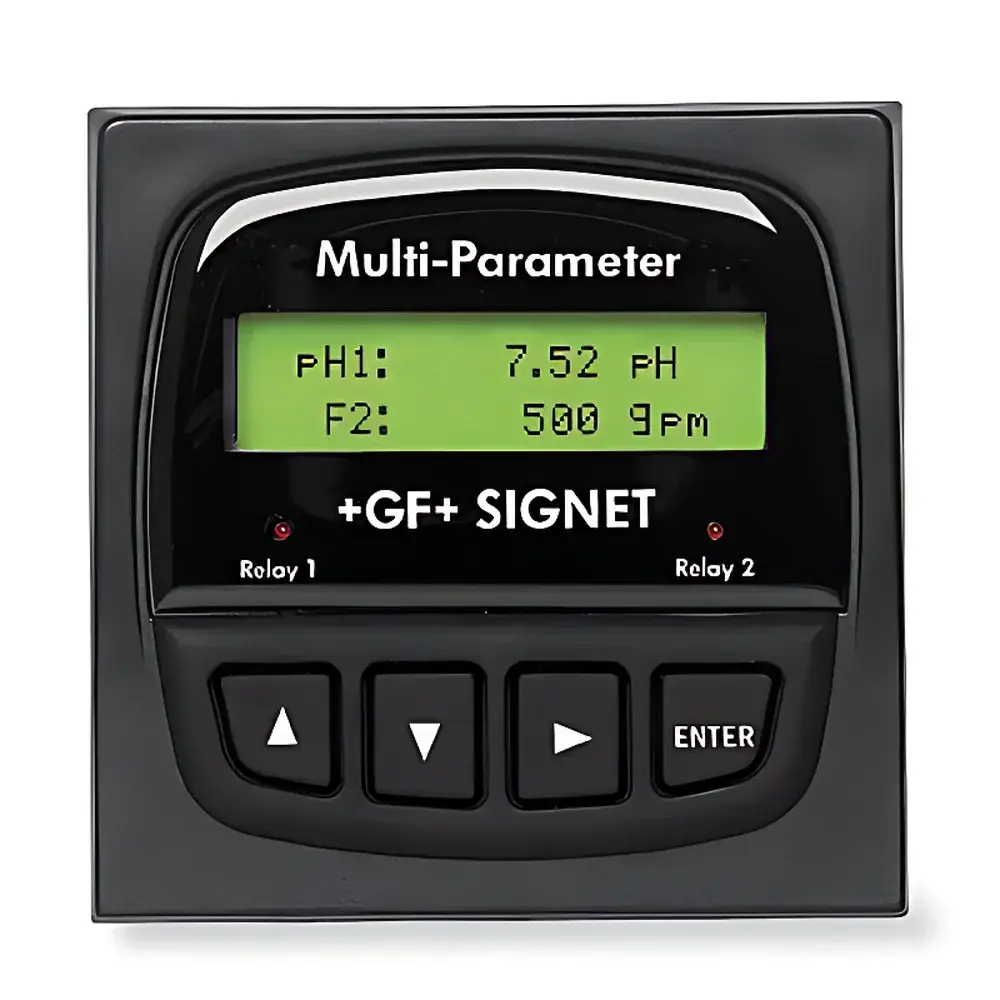
| Display | Dual-line, 16-character alphanumeric backlit LCD |
| Units | 30 built-in engineering units (flow, pressure, level, volume, pH, ORP, conductivity) |
| Accumulation | Resettable and non-resettable flow totalizers |
| Programming | Front-panel 4-button keypad |
| Compliance | CE-marked |
Overview
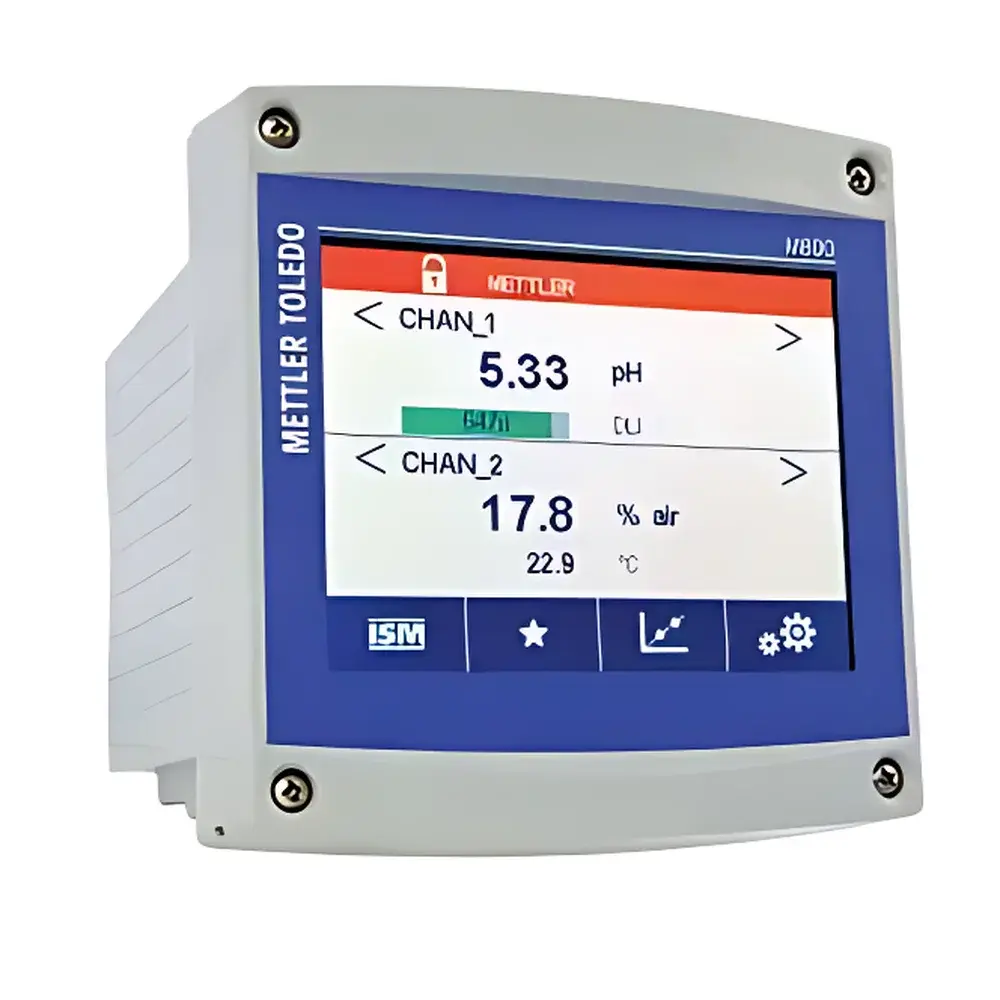
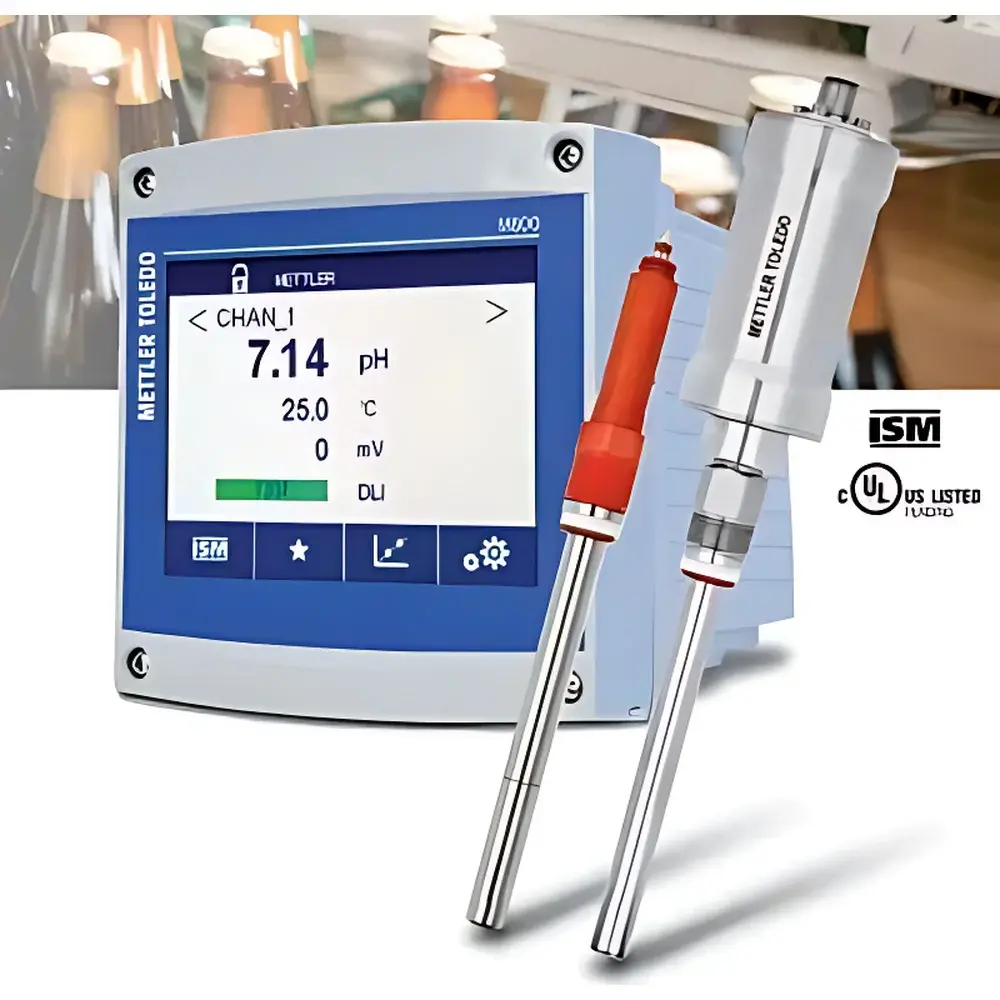
The Cole-Parmer 05627-71 and 05627-73 are modular, DIN-rail mountable multi-parameter process controllers engineered for flexibility and long-term reliability in industrial automation and laboratory process monitoring applications. Unlike fixed-function controllers, these units implement a slot-based architecture centered on a base unit with integrated power supply and system logic, enabling scalable configuration through interchangeable I/O modules. The controller processes analog (4–20 mA, 0–5 V, 0–10 V), frequency/pulse, and digital sensor inputs—supporting common industrial transducers for flow, pressure, liquid level, tank volume, pH, oxidation-reduction potential (ORP), and conductivity measurements. Signal conditioning is performed onboard or via optional signal conditioners (e.g., for thermocouple or RTD inputs). Both models feature identical functional capabilities but differ only in power input specifications: the 05627-71 accepts universal AC line voltage (85–264 VAC, 50–60 Hz), while the 05627-73 operates from a regulated DC source (12–24 VDC ±10%), making it suitable for battery-backed or low-voltage control panels.
Key Features
- Modular I/O expansion: Base unit supports up to six hot-swappable input modules—including frequency/pulse counters and 4–20 mA analog inputs (with optional signal converters for mV, thermocouple, or RTD signals)
- Dual-line, 16-character backlit LCD display with intuitive menu navigation via four front-panel membrane keys
- 30 preconfigured engineering units covering fluid dynamics (L/min, GPM, m³/h), hydrostatics (psi, bar, kPa), electrochemistry (pH, mV, µS/cm), and volumetric accumulation (L, gal, m³)
- User-definable derived units with custom label support (e.g., “Tank % Full”, “Batch Cycle Count”) for application-specific visualization
- Flow totalization with both resettable and non-resettable accumulators—retaining cumulative values across power cycles when configured with non-volatile memory
- Configurable output options: up to two relay cards (4 SPDT relays total), one dual-channel analog output card (4–20 mA / 0–5 V / 0–10 V), or RS-232 serial communication module for SCADA integration
- Full local programming capability—no PC required—enabling field commissioning, calibration adjustments, alarm thresholds, hysteresis settings, and scaling parameters
Sample Compatibility & Compliance
The 05627 series interfaces directly with industry-standard sensors and transmitters compliant with NAMUR NE43, IEC 61000-6-2, and IEC 61000-6-4. Input modules accept passive and active 4–20 mA current loops, pulse outputs from turbine or paddlewheel flowmeters, and frequency signals from ultrasonic or magnetic flow sensors. For electrochemical measurements, pH and ORP electrodes connected via shielded coaxial cables are supported when used with appropriate high-impedance input modules. Conductivity probes with 4–20 mA transmitters or direct frequency-output cells integrate seamlessly. All configurations meet CE requirements for electromagnetic compatibility and safety in industrial environments. While not certified for SIL or hazardous area use (e.g., ATEX, IECEx), the controller is routinely deployed in Class 1 Div 2 and Zone 2-rated enclosures when housed per NEC Article 500 guidelines.
Software & Data Management
Operation and configuration occur entirely through the embedded firmware interface—no external software or driver installation is required. The controller stores all setup parameters, scaling coefficients, alarm states, and accumulated totals in non-volatile memory, ensuring data integrity during power loss. Event logging includes timestamped relay state changes and alarm activations (high/low, deviation, rate-of-change), though continuous data streaming requires integration via RS-232 into third-party SCADA or historian systems (e.g., Ignition, WinCC, or custom Python-based polling scripts). Configuration files cannot be exported/imported; however, standardized setup procedures allow replication across multiple units using documented parameter tables. Audit trails are not natively supported, but relay actuation timestamps and manual reset logs provide traceability sufficient for general industrial QA/QC workflows—not FDA 21 CFR Part 11-compliant environments.
Applications
These controllers serve as central monitoring and control nodes in diverse process environments: chemical dosing systems where pH and conductivity must be coordinated with flow rate; water treatment plants requiring simultaneous level, pressure, and turbidity supervision; bioreactor feed control integrating mass flow and temperature-compensated volume calculation; and pilot-scale food processing lines managing batch fill volume, CIP cycle timing, and sanitizer concentration. Their modularity supports hybrid installations—for example, a single base unit may monitor inlet flow (pulse input), outlet conductivity (4–20 mA), and tank level (4–20 mA), while triggering two relays for pump control and one analog output for proportional valve modulation. The absence of proprietary communication protocols simplifies integration into legacy DCS infrastructures using standard Modbus RTU over RS-232 (when equipped with optional card).
FAQ
Can the controller accept thermocouple or RTD inputs directly?
No—thermocouple and RTD inputs require optional signal conditioner modules (sold separately) to convert mV or resistance signals into compatible 4–20 mA or frequency outputs.
Is remote configuration possible without RS-232?
No—local front-panel programming is the only configuration method unless the RS-232 option card is installed and interfaced with a host system.
What is the maximum update rate for displayed values?
The display refreshes at approximately 1 Hz for primary process variables; accumulator updates occur on each valid pulse or scan cycle, typically ≤10 Hz depending on input type and filtering settings.
Are alarm setpoints password-protected?
Yes—user-configurable access levels include operator (view-only), technician (alarm and scaling edits), and engineer (full configuration including I/O mapping and relay logic).
Does the unit support Modbus TCP or Ethernet connectivity?
No—only RS-232 serial communication is available; Ethernet or Modbus TCP requires an external protocol converter or gateway device.