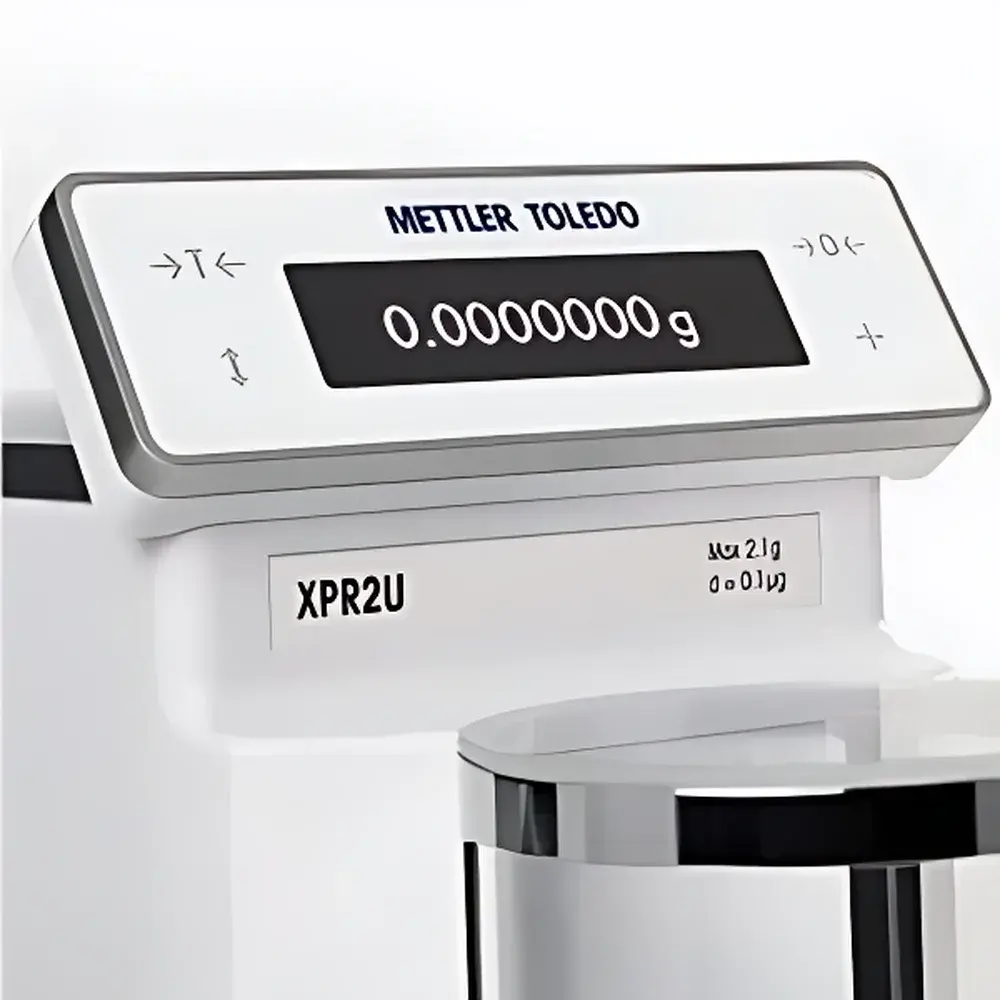
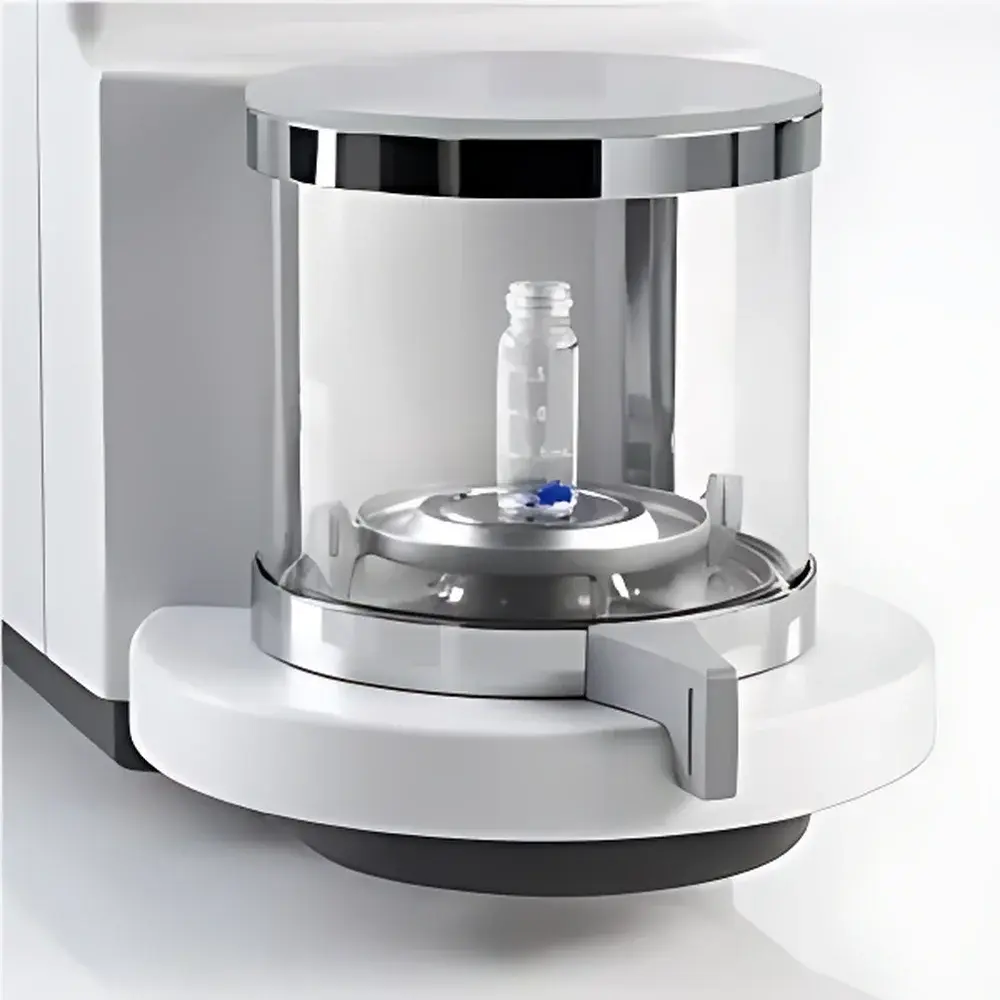
METTLER TOLEDO XPR10 Ultra-Micro Balance
| Brand | METTLER TOLEDO |
|---|---|
| Origin | Switzerland |
| Model | XPR10 |
| Type | Ultra-Micro Balance |
| Maximum Capacity | 10.1 g |
| Readability | 0.001 mg (1 µg) |
| Repeatability (at 5% load) | 0.0004 mg |
| Minimum Weight (k=2, U=1.0%) | 0.082 mg |
| USP Minimum Weight (k=2, U=0.10%) | 0.82 mg |
| Stabilization Time | < 8 s |
| Calibration | Fully Automatic |
| Environmental Control | Active Temperature Control (ATC™) |
| Compliance | GWP® Verified, USP <41>, <1251>, Euramet cg-18, ISO/IEC 17025, FDA 21 CFR Part 11 (with LabX software) |
Overview
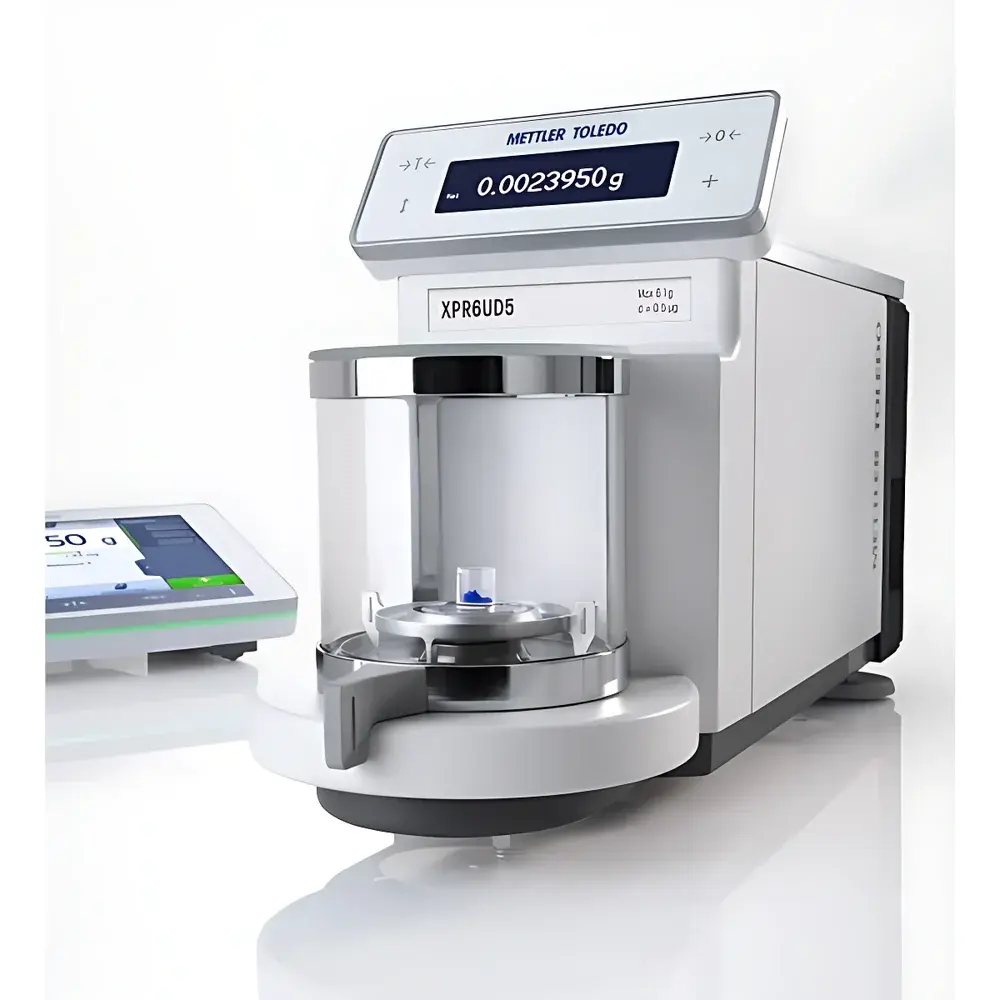
The METTLER TOLEDO XPR10 Ultra-Micro Balance is an engineered solution for laboratories demanding the highest metrological integrity in sub-milligram mass measurement. Operating on electromagnetic force compensation (EMFC) principle with advanced digital signal processing, the XPR10 achieves a readability of 0.001 mg (1 µg) and repeatability of 0.0004 mg at 5% load—enabling reliable quantification of samples as low as 82 µg under standard GWP® verification conditions (k=2, U=1.0%). Its compact footprint and dual-terminal architecture are purpose-built for integration into fume hoods, isolators, and gloveboxes where space, operator safety, and contamination control are critical. The balance incorporates Active Temperature Control (ATC™), which thermally stabilizes internal electronics to minimize drift caused by ambient fluctuations—a key factor in achieving consistent ultra-micro performance across variable lab environments.
Key Features
- Active Temperature Control (ATC™): Continuously monitors and regulates thermal gradients within the weighing cell housing, reducing temperature-induced drift by up to 60% compared to passive designs.
- GWP® Verification Integration: Real-time status monitoring against globally recognized weighing uncertainty models (USP , , Euramet cg-18); visual indicators confirm whether current conditions support valid measurements.
- Dual-Terminal Operation: Primary capacitive touchscreen terminal (LabX-ready) located outside containment; secondary SmartView™ display with tactile function keys mounted directly on the balance housing for glove-compatible operation.
- SmartSens™ Infrared Door Control: Non-contact infrared sensors enable hands-free opening/closing of the draft shield—eliminating surface contact and minimizing cross-contamination risk during hazardous substance handling.
- Modular Draft Shield Design: Seamless, corner-free interior geometry with tool-free disassembly; all components—including glass panels, base plate, and draft shield frame—can be removed, cleaned, and reinstalled in under 90 seconds without recalibration.
- Automatic Internal Calibration & Adjustment: Built-in motorized calibration mass and dynamic linearity adjustment ensure long-term accuracy traceable to SI units, compliant with ISO/IEC 17025 requirements for accredited testing laboratories.
Sample Compatibility & Compliance
The XPR10 supports a broad spectrum of sample types including active pharmaceutical ingredients (APIs), reference standards, catalysts, nanomaterials, and radioactive tracers—provided they fall within its 10.1 g maximum capacity and do not exceed permissible static charge or volatility limits. Its design conforms to IEC 61326-1 (EMC), IEC 61010-1 (safety), and meets essential requirements for use in GLP/GMP-regulated environments. When paired with METTLER TOLEDO’s LabX software, the system satisfies FDA 21 CFR Part 11 requirements for electronic records and signatures—including full audit trail, user access controls, and immutable data archiving. All measurement events—including calibration logs, environmental metadata (temperature/humidity), and GWP® verification reports—are time-stamped and digitally signed.
Software & Data Management
LabX software provides centralized method management, automated report generation, and seamless integration with LIMS and ERP systems via ODBC, OPC UA, or RESTful APIs. Preconfigured SOP templates align with USP guidelines for analytical balance qualification. Each weighing event captures contextual parameters: ambient temperature, relative humidity, draft shield status, operator ID, and method version. Raw data export formats include CSV, PDF/A-2, and XML—fully compliant with ALCOA+ principles (Attributable, Legible, Contemporaneous, Original, Accurate, Complete, Consistent, Enduring, Available). Optional electronic signature workflows support multi-level review and approval cycles required in regulated QC/QA settings.
Applications
- Primary standard preparation and dilution in pharmaceutical reference labs
- Weighing of cytotoxic compounds in oncology R&D under ISO 14644-1 Class 5 containment
- Formulation development requiring precise mass ratios below 1 mg per component
- Calibration of pipette gravimetric verification systems (ISO 8655-6)
- Stability-indicating assay development where microgram-level deviations impact degradation kinetics modeling
- Material science applications involving rare-earth dopants, quantum dots, or MOF precursors
FAQ
What is the minimum weight that can be reliably measured on the XPR10?
The verified minimum weight is 0.082 mg (82 µg) under GWP® Standard conditions (k=2, U=1.0%). For USP compliance, the minimum weight is 0.82 mg (k=2, U=0.10%).
Does the XPR10 require external vibration isolation?
While not mandatory, optimal performance is achieved on a granite slab or active vibration isolation table when operating near the readability limit—especially in facilities with HVAC-induced floor resonance or nearby centrifuge activity.
Can the XPR10 be validated according to ISO/IEC 17025 requirements?
Yes. Its built-in diagnostics, ATC™ stability metrics, GWP® verification output, and LabX-integrated uncertainty calculation engine fully support method validation, equipment qualification (IQ/OQ/PQ), and ongoing performance monitoring per ISO/IEC 17025:2017 Clause 6.4.1.
Is the SmartView™ display compatible with gloved operation in biosafety cabinets?
Yes. The SmartView™ interface uses large, high-contrast icons and physical membrane keys designed for tactile feedback—even with nitrile or latex gloves—ensuring unambiguous command execution without visual dependency.
How does ATC™ improve measurement robustness compared to conventional temperature compensation?
Unlike passive thermal drift correction algorithms, ATC™ actively cools critical analog circuitry using Peltier elements, maintaining junction temperatures within ±0.1 °C regardless of ambient shifts between 18–25 °C—directly improving short-term repeatability and long-term linearity stability.