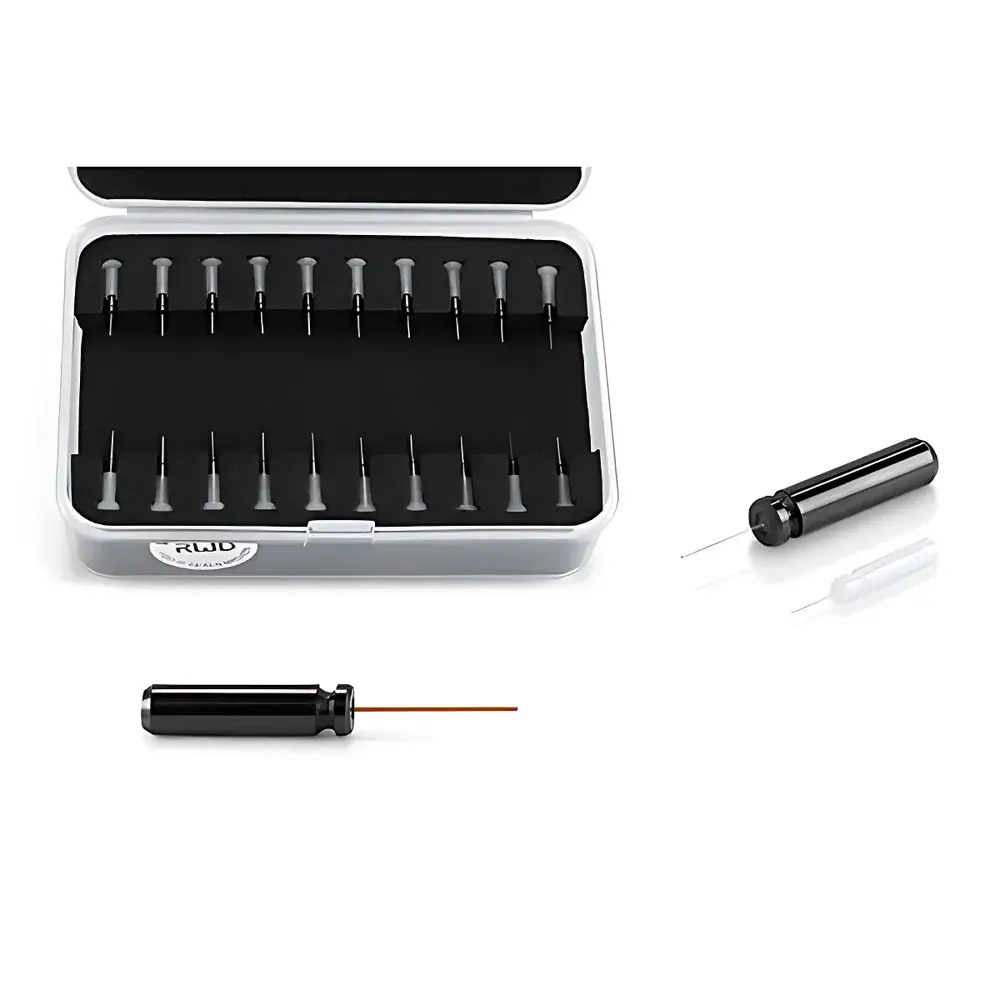
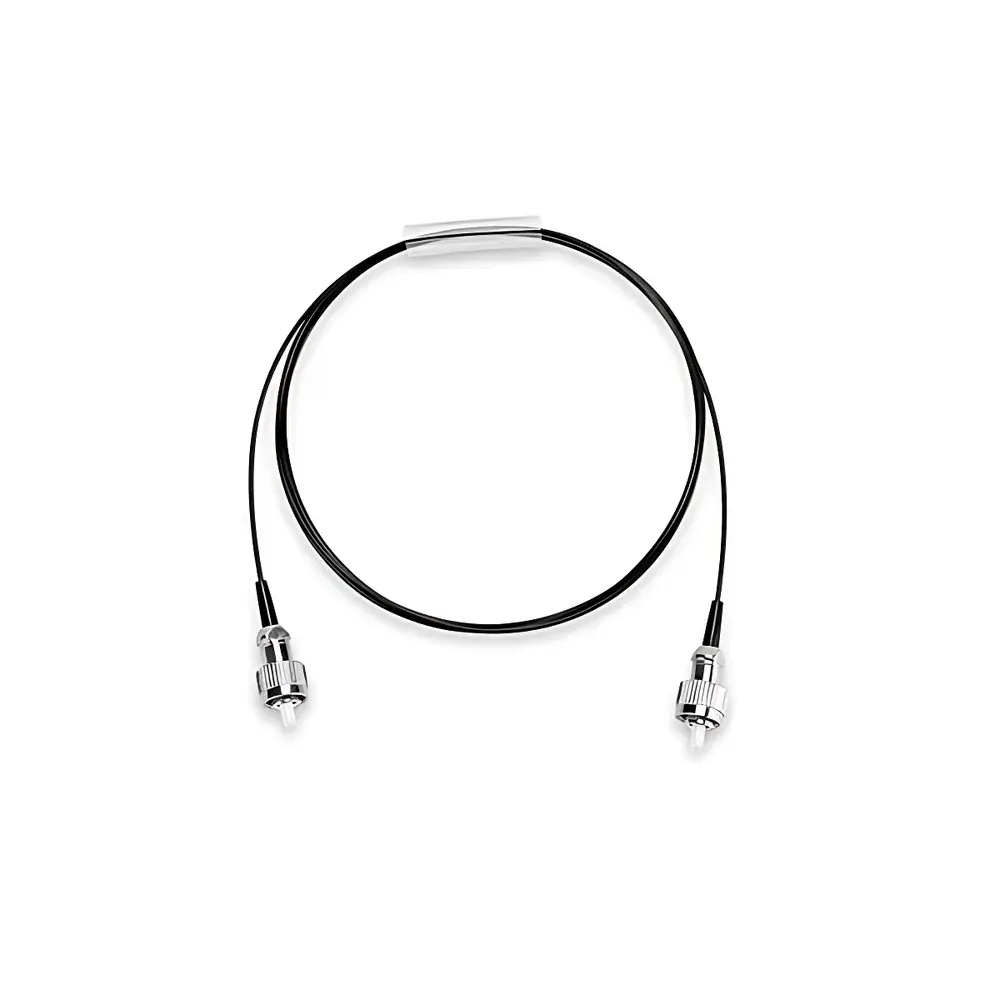
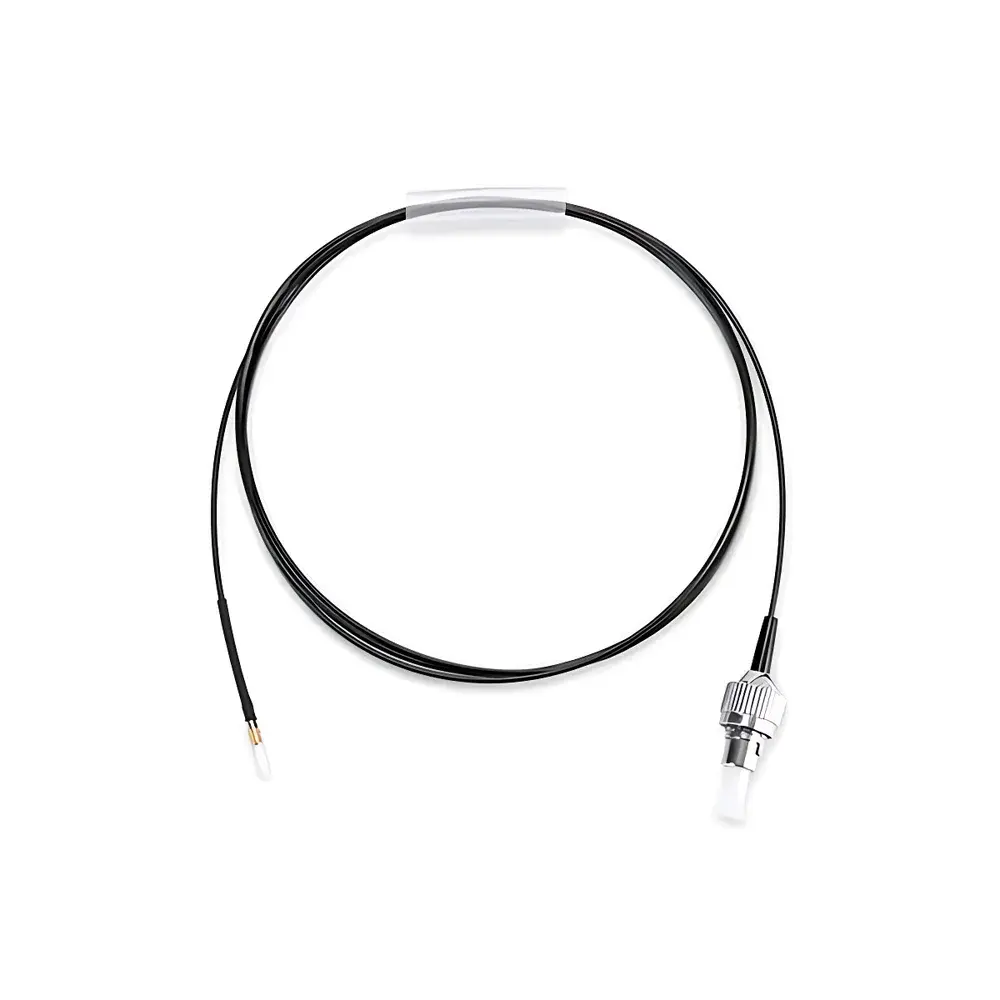
RWD Fiber Optic Ferrules, Sleeves & Dust Caps
| Brand | RWD |
|---|---|
| Origin | Shenzhen, China |
| Manufacturer Type | OEM/ODM Manufacturer |
| Product Origin | Domestic (China) |
| Model Range | Ferrule Ø1.25 mm / Ø2.5 mm, Core Diameters: 100–400 µm, NA: 0.22 / 0.37 / 0.50, Wavelength Range: 400–1100 nm |
| Material | Zirconia Ceramic (Stainless Steel Optional) |
| Packaging | 20 pcs per pack |
| Customization | Fiber Length (2–20 mm, 0.5 mm increments), Color Variant (Standard White / Black Upgrade with Light-Blocking Coating) |
Overview
RWD Fiber Optic Ferrules, Sleeves, and Dust Caps are precision-engineered optical interface components designed specifically for chronic in vivo optogenetics experiments in neuroscience research. These components form the critical mechanical and optical interface between implanted optical cannulas and external light delivery systems—enabling stable, low-loss, and reproducible coupling of laser or LED light into neural tissue. Each ferrule is manufactured from high-purity zirconia ceramic, offering exceptional thermal stability, biocompatibility, dimensional consistency, and resistance to mechanical wear during repeated insertion cycles. The Ø1.25 mm and Ø2.5 mm outer diameters correspond to distinct surgical and experimental requirements: the smaller diameter enables multi-site implantation in small rodents with minimal cortical displacement, while the larger variant provides enhanced mechanical anchoring via dental cement in larger models including non-human primates. All ferrules support standard multimode silica fibers with core diameters ranging from 100 µm to 400 µm and numerical apertures (NA) of 0.22, 0.37, or 0.50—allowing researchers to precisely match optical divergence, power density, and spatial resolution to target neural circuit architecture.
Key Features
- Zirconia ceramic construction ensures long-term structural integrity under chronic implantation conditions and repeated handling in sterile environments.
- Two standardized outer diameters: Ø1.25 mm (6.4 mm length) for high-density micro-implantation; Ø2.5 mm (10.5 mm length) for robust cranial fixation in larger species.
- Four fiber core options (100 µm, 200 µm, 300 µm, 400 µm) enable optimization of tissue penetration depth, photostimulation volume, and mechanical invasiveness.
- Three NA variants (0.22, 0.37, 0.50) provide controlled beam divergence—critical for targeting discrete nuclei versus broader cortical layers.
- Black upgrade series features proprietary light-blocking coating that eliminates peripheral leakage without altering optical throughput or NA performance—essential for minimizing off-target photostimulation and improving signal-to-noise ratio in behavioral assays.
- Fiber length customizable from 2 mm to 20 mm in 0.5 mm increments to accommodate varied implant depths and skull thickness across species.
- Compatible with RWD’s integrated optogenetics control platform, including rotary joints, laser drivers, and real-time power monitoring modules.
Sample Compatibility & Compliance
RWD ferrules are validated for use in GLP-compliant preclinical studies involving murine (C57BL/6, BALB/c), rat (Sprague-Dawley, Long-Evans), and non-human primate (Macaca fascicularis, Macaca mulatta) models. Their biocompatibility conforms to ISO 10993-5 (cytotoxicity) and ISO 10993-10 (irritation/sensitization) standards. The black-coated variant meets internal specifications for stray-light suppression per IEC 60825-1:2014 (laser product safety). All components are supplied sterile-packaged and certified for single-use or re-sterilizable protocols (autoclave-compatible up to 134 °C, 3 min cycle).
Software & Data Management
While ferrules themselves are passive optical components, they integrate seamlessly into RWD’s full-stack optogenetics ecosystem—including the RWD OptoControl™ software suite. This platform supports synchronized light delivery calibration, power logging (via integrated optical power meter), timestamped stimulation protocols, and export of audit-trail metadata compliant with FDA 21 CFR Part 11 requirements. Each ferrule batch is traceable via QR-coded packaging, linking physical hardware to manufacturing lot records, material certifications, and QA test reports stored in secure cloud archives.
Applications
- Chronic optogenetic interrogation of defined neural populations in freely behaving mice and rats—e.g., ventral tegmental area (VTA) dopamine neurons in reward learning paradigms.
- Multi-site photostimulation in layered cortical circuits, leveraging Ø1.25 mm ferrules for simultaneous targeting of superficial and deep layers.
- Longitudinal behavioral phenotyping in non-human primates using Ø2.5 mm ferrules anchored with titanium screws and dental acrylic for >6-month stability.
- Combined optogenetics-fMRI or optogenetics-electrophysiology experiments requiring minimal RF interference—enabled by non-metallic zirconia construction.
- High-throughput screening of opsins with varying excitation spectra (ChR2, ChrimsonR, ReaChR) across 400–1100 nm range.
FAQ
What is the difference between Ø1.25 mm and Ø2.5 mm ferrules?
The Ø1.25 mm ferrule minimizes tissue displacement and enables dense multi-cannula implants in small rodents; the Ø2.5 mm variant offers superior mechanical stability for chronic use in larger animals and facilitates stronger dental cement adhesion.
How does numerical aperture (NA) affect stimulation volume?
Lower NA (e.g., 0.22) produces a narrower, more collimated beam ideal for focal stimulation of submillimeter structures; higher NA (e.g., 0.50) yields wider angular spread, suitable for broad illumination of cortical surface or thalamic nuclei.
Is the black-coated ferrule compatible with all wavelengths in the 400–1100 nm range?
Yes—the light-blocking coating is spectrally neutral and does not absorb or scatter transmitted light; it only suppresses cladding-mode leakage.
Can these ferrules be reused after sterilization?
They are qualified for steam autoclaving (134 °C, 3 min) and ethylene oxide sterilization; however, repeated thermal cycling may affect adhesive bond integrity in assembled cannulas—RWD recommends single-use for highest experimental reproducibility.
Do you offer custom fiber lengths outside the 2–20 mm range?
Yes—custom lengths down to 1.0 mm or up to 30 mm are available upon request with extended lead time and minimum order quantity.