
RWD DSC-200 Automated Single-Cell Suspension Preparation System
| Brand | RWD |
|---|---|
| Origin | Guangdong, China |
| Manufacturer Type | Original Equipment Manufacturer (OEM) |
| Product Origin | Domestic (China) |
| Model | DSC-200 |
| Pricing | Upon Request |
| Automation Level | Fully Automated |
| Sample Weight Range | 20–4000 mg |
| Throughput | Dual-Channel Parallel Processing |
| Temperature Control | 37 °C ± 1 °C (with optional heating jacket) |
Overview
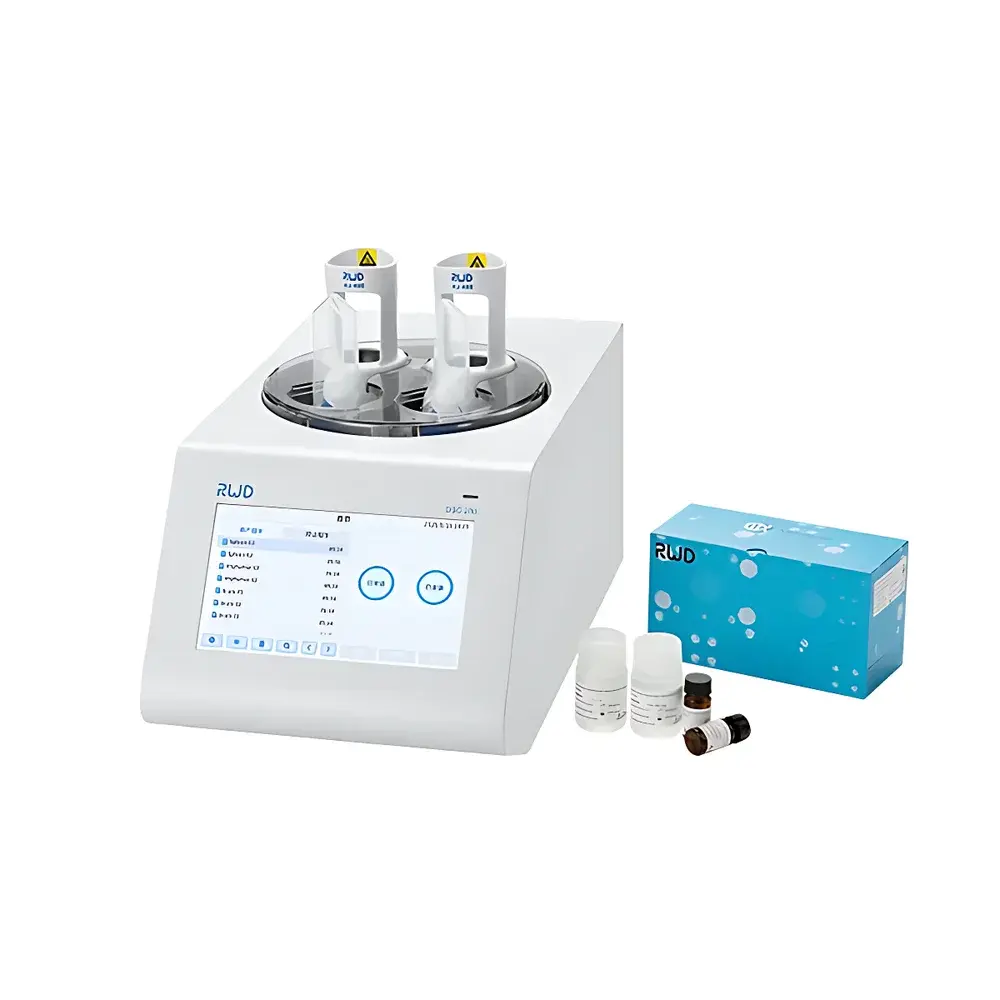
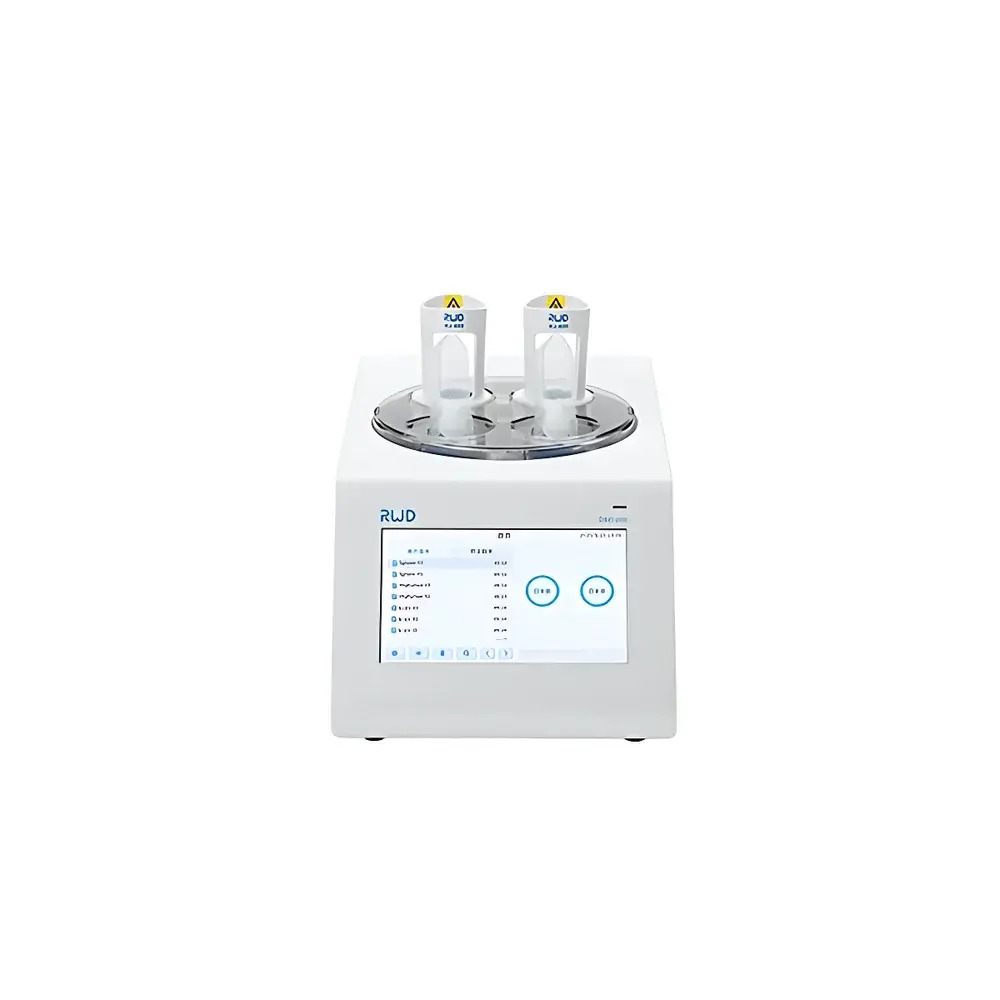
The RWD DSC-200 Automated Single-Cell Suspension Preparation System is an engineered solution for reproducible, gentle, and standardized dissociation of fresh or preserved tissue specimens into high-viability single-cell suspensions or homogenates. It operates on a controlled mechanical–enzymatic dissociation principle: combining programmable rotational agitation, precisely regulated temperature maintenance (37 °C), and optimized enzyme kinetics to minimize shear stress while maximizing cell yield and membrane integrity. Unlike manual or semi-automated methods prone to operator variability, the DSC-200 embeds tissue-specific processing protocols—validated across common murine and human solid tissues—including brain, tumor, spleen, lung, and intestinal samples. Its dual-channel architecture enables parallel, independent processing of two distinct samples under identical or customized conditions, supporting experimental scalability without compromising biological fidelity.
Key Features
- Dual-channel independent operation with real-time status monitoring per channel—ensuring process isolation and eliminating cross-contamination risk.
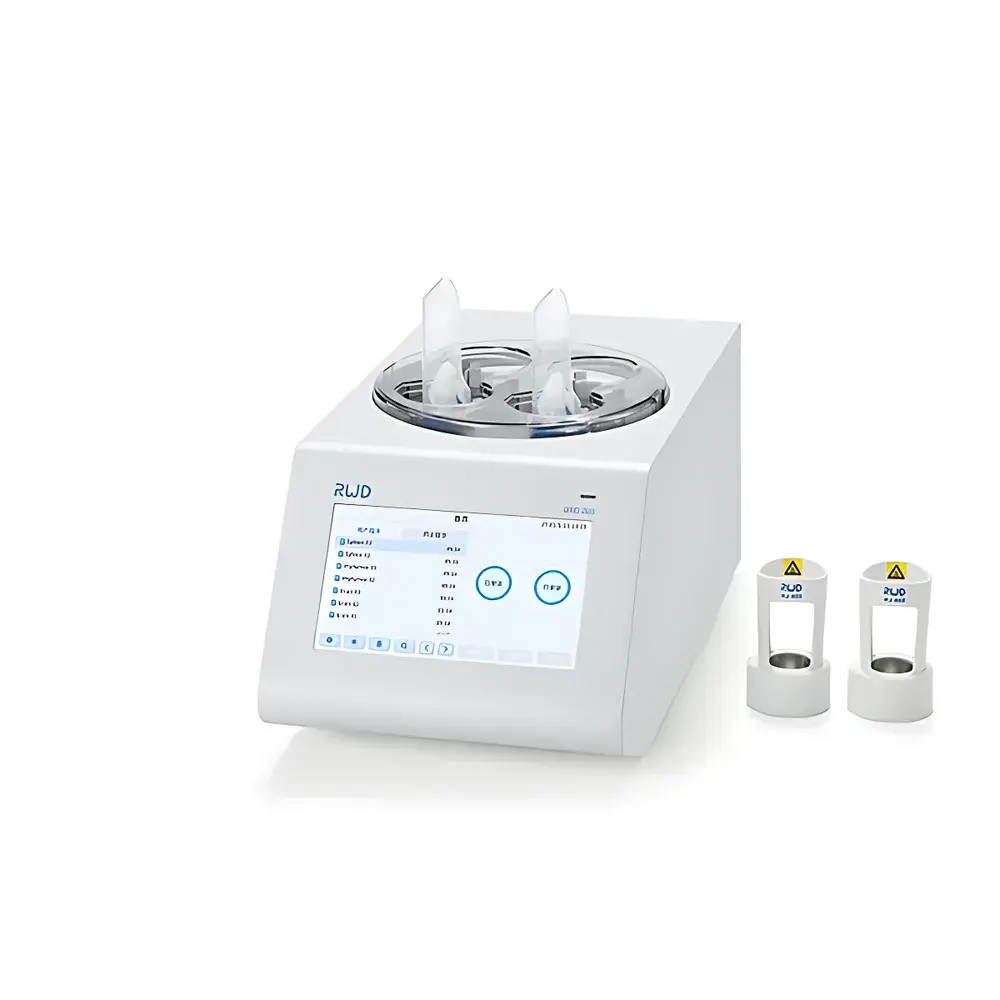
- Integrated 37 °C temperature-controlled heating jacket (optional accessory) for consistent enzymatic activity during digestion—critical for protease-sensitive tissues and primary cell viability preservation.
- Programmable motor control (0–4000 rpm, stepwise adjustable) enabling precise tuning of mechanical shear force to match tissue fibrosity and cellular adhesion strength.
- Standardized, pre-validated tissue dissociation protocols embedded in firmware—covering soft, medium, and dense tissues—with full visibility of runtime parameters (speed, time, temperature, agitation profile).
- 1000-program user storage capacity; protocols exportable/importable via USB for inter-laboratory standardization and multi-instrument synchronization.
- Hardware-level safety mechanisms: lid-in-place detection, tube presence verification, abnormal vibration recognition, and automatic emergency stop—compliant with IEC 61000-6-2/6-4 electromagnetic compatibility standards.
- Sealed, sterile-ready tissue processing tubes (not distributed in the U.S. market) designed to prevent aerosol generation and maintain biosafety level 2 (BSL-2) containment during operation.
Sample Compatibility & Compliance
The DSC-200 accommodates fresh, cryopreserved, or formalin-fixed paraffin-embedded (FFPE)-rehydrated tissues within the 20–4000 mg mass range. Compatibility extends to enzymatic reagents from major suppliers (e.g., collagenase IV, trypsin-EDTA, papain, Liberase™), provided they are validated for use with RWD’s proprietary tissue processing tubes. While the system itself does not carry FDA 510(k) clearance or CE-IVD marking, its operational design aligns with Good Laboratory Practice (GLP) documentation requirements—including timestamped protocol execution logs, user authentication trails, and audit-ready parameter history files. For laboratories operating under ISO/IEC 17025 or CLIA frameworks, the DSC-200 supports traceable, repeatable sample preparation—a prerequisite for downstream applications requiring analytical validation (e.g., flow cytometry gating consistency, scRNA-seq library complexity metrics).
Software & Data Management
The embedded control interface provides real-time visualization of all active parameters: rotational speed (rpm), elapsed time, setpoint temperature, and remaining protocol duration. All executed runs generate timestamped .csv log files containing full parameter sets and event flags (e.g., “heating stabilized”, “agitation started”, “protocol completed”). These logs are exportable via USB and compatible with LIMS integration through configurable CSV schema mapping. No cloud connectivity or remote access functionality is implemented—ensuring data sovereignty and compliance with institutional IT security policies. Software updates are delivered offline via encrypted USB firmware packages, maintaining air-gapped operation where required.
Applications
- Flow Cytometry & Cell Sorting: Generates suspensions with >90% viability (trypan blue exclusion) and <15% doublet rate—meeting stringent input requirements for spectral flow and high-parameter sorting platforms (e.g., BD FACSymphony™, Sony SH800).
- Primary Cell Culture: Preserves surface marker expression (e.g., CD44, EpCAM) and functional responsiveness post-isolation—enabling robust expansion of epithelial, immune, and stromal lineages for 3D organoid co-cultures and cytokine profiling assays.
- Single-Cell Multi-Omics: Delivers nuclei or intact cells suitable for 10x Genomics Chromium™, BD Rhapsody™, or Parse Biosciences Evercode™ workflows—demonstrated compatibility with ATAC-seq, CITE-seq, and spatial transcriptomics sample prep pipelines.
- Preclinical Drug Screening: Maintains pharmacodynamic receptor expression (e.g., EGFR, PD-L1) and intracellular signaling competence—facilitating ex vivo drug response assays with clinically relevant IC50 correlation.
FAQ
Is the DSC-200 compliant with FDA 21 CFR Part 11 for electronic records?
No—the system does not implement electronic signatures, role-based access control, or audit trail encryption required under Part 11. However, raw log files meet ALCOA+ principles (Attributable, Legible, Contemporaneous, Original, Accurate) when retained with metadata and instrument identification.
Can the DSC-200 process FFPE tissue sections?
Yes—when combined with validated deparaffinization and rehydration steps prior to loading, the DSC-200 has been used successfully for nucleic acid–preserving dissociation of FFPE-derived samples for downstream NGS library prep.
Are tissue processing tubes supplied with the instrument certified for sterile use?
Tubes are gamma-irradiated and supplied in individually sealed pouches; sterility is guaranteed for 24 months from manufacture date when stored per IFU. Note: U.S.-based customers must source alternative tube formats due to regulatory distribution restrictions.
Does the system support external temperature probes for validation?
The internal thermistor is factory-calibrated against NIST-traceable references. External probe integration is not supported; however, users may perform periodic independent calibration using Class A platinum RTDs per ISO/IEC 17025 guidelines.
What maintenance is required for long-term reliability?
Biannual inspection of drive coupling alignment and motor brush wear (if applicable), plus quarterly cleaning of the heating jacket contact surfaces with isopropyl alcohol—documented in the included maintenance logbook.




