
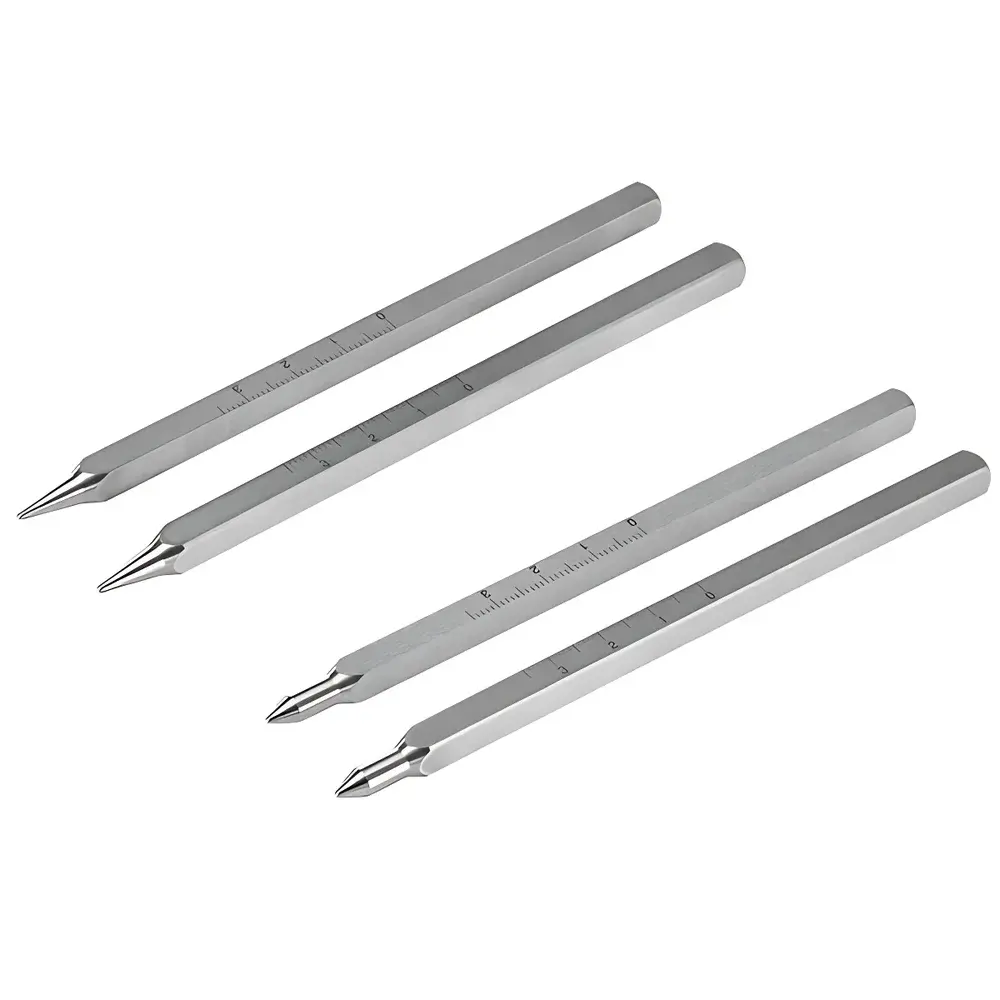
RWD 68301 Rat 18° Ear Bar
| Brand | RWD |
|---|---|
| Origin | Shenzhen, China |
| Manufacturer Type | Original Equipment Manufacturer (OEM) |
| Country of Origin | China |
| Model | 68301 |
| Pricing | Upon Request |
Overview
The RWD 68301 Rat 18° Ear Bar is a precision-engineered stereotactic accessory designed for secure and reproducible head fixation of adult rats during neurosurgical, electrophysiological, or imaging procedures. Its 18-degree angled tip is specifically contoured to follow the natural curvature of the rat external auditory canal, facilitating smoother insertion and improved alignment with the tympanic bulla. Unlike straight or shallow-angle ear bars, this geometry reduces mechanical resistance during placement while maintaining consistent depth engagement—critical for minimizing inter-trial variability in stereotactic coordinate registration. The device operates on passive mechanical fixation principles: bilateral insertion into the external auditory meatus applies controlled, symmetrical lateral force against the bony walls of the auditory bulla, thereby immobilizing the skull relative to the stereotactic frame. This method avoids invasive cranial screws or dental cement, preserving surgical flexibility and reducing acute tissue trauma associated with alternative fixation strategies.
Key Features
- 18° anatomically optimized tip angle for enhanced auditory canal access and reduced insertion torque
- Machined stainless steel construction (AISI 304 or equivalent) ensuring biocompatibility, corrosion resistance, and autoclavability (up to 134°C, 21 psi, 18 min)
- Smooth, polished surface finish (Ra ≤ 0.4 µm) to minimize epithelial abrasion and mitigate risk of otitis externa
- Integrated depth-stop collar to prevent over-insertion and inadvertent contact with the tympanic membrane
- Threaded proximal end compatible with standard RWD and Kopf-type stereotactic adapters (M6 × 0.75 mm metric thread)
- Calibrated bilateral symmetry: tip-to-tip angular deviation ≤ ±0.5°, ensuring balanced cranial stabilization
Sample Compatibility & Compliance
The RWD 68301 is validated for use with Sprague-Dawley, Wistar, and Long-Evans rats weighing 250–500 g. It is not recommended for juvenile rats (3 sessions over ≥7 days) should incorporate otoscopic monitoring and consider alternative fixation (e.g., custom-molded ear bars or skull-mounted platforms) due to documented risk of tympanic membrane perforation or chronic otitis with repeated use. The device complies with ISO 10993-5 (cytotoxicity) and ISO 10993-10 (irritation/sensitization) biocompatibility standards for short-term mucosal contact devices. All manufacturing adheres to ISO 13485:2016 quality management system requirements for medical device components.
Software & Data Management
As a mechanical stereotactic accessory, the RWD 68301 does not incorporate embedded electronics or firmware. However, it integrates seamlessly with industry-standard stereotactic navigation software suites—including NeuroStar™, Stereoinvestigator®, and open-source platforms such as QuickNII and BrainStorm—via standardized coordinate mapping protocols. When used with digital caliper-integrated frames (e.g., David Kopf Instruments Model 963), positional data from ear bar depth settings can be logged manually or via CSV export for GLP-compliant experimental recordkeeping. Audit trails for device sterilization cycles (timestamp, temperature, pressure, operator ID) must be maintained per institutional IACUC SOPs and align with NIH OLAW guidance on animal procedure documentation.
Applications
- Acute in vivo extracellular or patch-clamp recordings targeting hippocampus, cortex, or thalamus
- Stereotactic microinjection of viral vectors, tracers, or pharmacological agents
- Intraoperative optical coherence tomography (OCT) or two-photon imaging through cranial windows
- Functional ultrasound (fUS) or laser speckle contrast imaging (LSCI) under stable head restraint
- Validation of atlas-based coordinate registration accuracy in rat brain mapping studies
- Training platform for stereotactic technique proficiency in graduate neuroscience curricula
FAQ
Is the RWD 68301 suitable for chronic implantation studies?
No. It is intended for acute or short-term (<24 h) restraint. Repeated use increases risk of tympanic membrane injury and middle ear inflammation; alternative long-term fixation methods are advised.
What is the recommended insertion depth for adult Sprague-Dawley rats?
Typical insertion depth ranges from 4.2 to 5.0 mm from the tragal notch; depth must be verified by otoscopic visualization prior to frame locking.
Can these ear bars be resterilized?
Yes—autoclaving at 134°C for 18 minutes is validated. Ethylene oxide or hydrogen peroxide plasma sterilization is not recommended due to potential residue retention in threaded interfaces.
Does RWD provide calibration certificates or traceable metrology reports?
Upon request, RWD issues dimensional inspection reports (per ISO/IEC 17025-accredited third-party labs) covering tip angle tolerance, concentricity, and thread pitch compliance.
Are replacement tips or repair services available?
The unit is supplied as a monolithic component; tip replacement is not supported. Damaged units must be replaced in full to maintain angular and mechanical integrity.



