
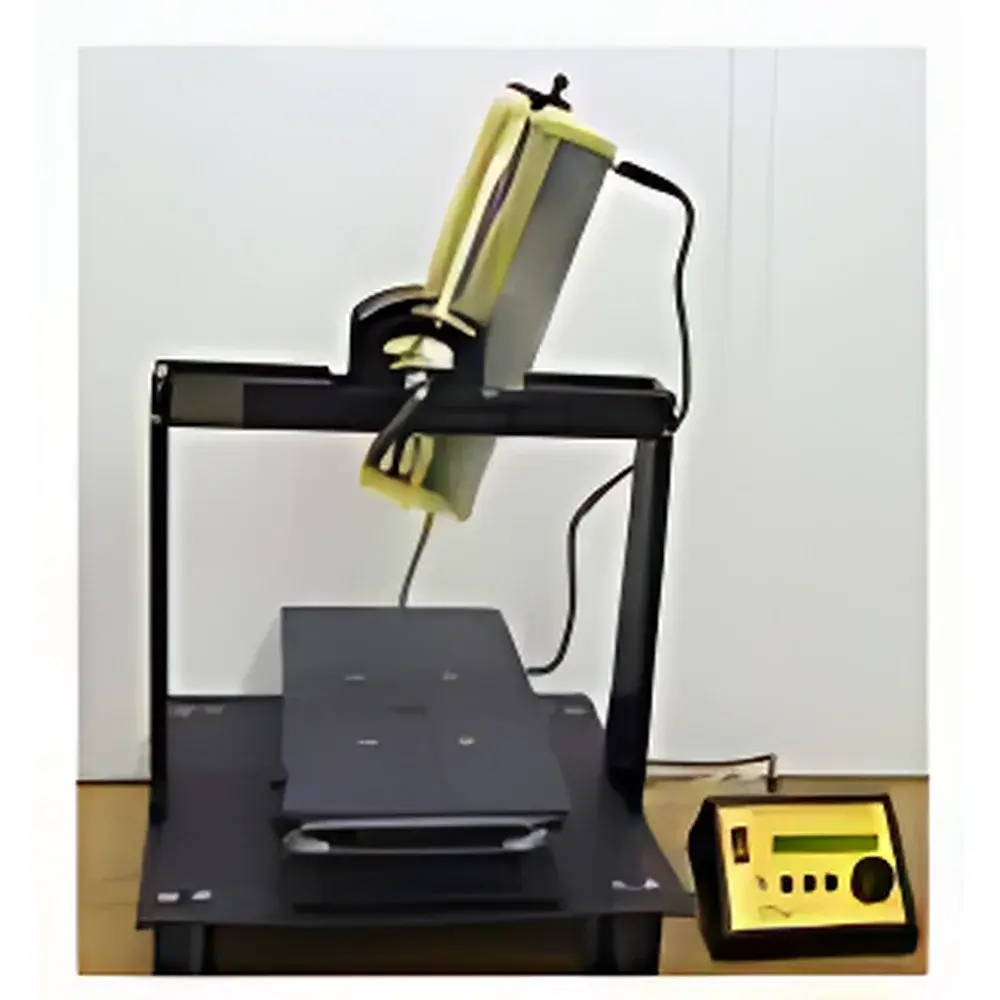
VCU Traumatic Brain Injury Modeling System for Preclinical Neuroscience Research
| Origin | USA |
|---|---|
| Manufacturer Type | Authorized Distributor |
| Origin Category | Imported |
| Model | VCU |
| Pricing | Available Upon Request |
Overview
The VCU Traumatic Brain Injury (TBI) Modeling System is a suite of three rigorously validated, CE-marked preclinical instrumentation platforms designed for reproducible, quantifiable induction of biomechanically relevant brain injury in rodent models. Engineered for translational neuroscience research, the system enables precise emulation of human TBI pathophysiology—including diffuse axonal injury, contusion, and focal cortical impact—through three complementary modalities: Fluid Percussion Injury (FPI), electronic Cortical Contusion Impactor (eCCI), and Cell Injury Controller II (CIC). Each module operates on well-established biomechanical principles: FPI delivers calibrated fluid pressure pulses to the dura via craniotomy; eCCI applies programmable velocity-controlled mechanical impact to exposed cortex; and CIC subjects adherent cultured cells to controlled biaxial strain via vacuum-actuated flexible membranes. Collectively, these instruments support mechanistic studies of neuroinflammation, blood–brain barrier disruption, excitotoxicity, and axonal transport failure under GLP-aligned experimental conditions.
Key Features
- FPI Module: Integrated high-fidelity pressure transducer (±0.5% FS accuracy) with real-time analog output; bubble-free hydraulic circuit design featuring calibrated syringe-driven fluid displacement; adjustable impact angle scale (0°–90°) with vernier locking mechanism; traceable pressure calibration via built-in reference port.
- eCCI Module: Digital closed-loop servo control enabling user-defined impact velocity (0.5–6.0 m/s), dwell time (1–1000 ms), and depth (0.1–3.0 mm); integrated force feedback and position encoder for post-hoc validation of impact parameters; compatibility with standard stereotaxic frames (e.g., Kopf, Stoelting) via universal mounting interface.
- CIC Module: Microprocessor-regulated vacuum manifold delivering uniform biaxial strain (0–25% elongation) across BioFlex® or Flex I® culture plates; programmable waveform profiles (sinusoidal, square, ramp); temperature- and CO2-compatible chamber integration for live-cell assays; compliance with ASTM F2947-14 for in vitro mechanical injury modeling.
Sample Compatibility & Compliance
The VCU system accommodates Sprague-Dawley and C57BL/6 mice (20–30 g) and Long-Evans rats (250–350 g) for in vivo FPI and eCCI protocols. For in vitro applications, the CIC supports primary cortical neurons, astrocytes, microglia, and iPSC-derived neural cultures plated on collagen- or poly-L-lysine-coated BioFlex® 57.75 cm² or Flex I® 29.45 cm² substrates. All modules meet ISO 13485:2016 design control requirements for research-use-only (RUO) medical devices. FPI and eCCI protocols align with NIH-funded TBI model standards (NINDS TBI Common Data Elements v3.0); CIC operation complies with FDA Guidance for Industry on In Vitro Neurotoxicity Testing (2021) and supports 21 CFR Part 11–compliant data audit trails when paired with optional VCU LogSuite software.
Software & Data Management
VCU ControlSuite v4.2 (Windows 10/11 compatible) provides synchronized acquisition of pressure waveforms (FPI), impact kinematics (eCCI), and strain profiles (CIC) at up to 10 kHz sampling rate. Raw data export in HDF5 and CSV formats ensures interoperability with MATLAB, Python (SciPy/Pandas), and commercial analysis platforms (e.g., Igor Pro, GraphPad Prism). Audit trail functionality logs operator ID, timestamp, parameter settings, and calibration history per session—fully compliant with ALCOA+ principles for preclinical data integrity. Optional VCU AnalysisPack includes validated algorithms for FPI pulse amplitude/duration quantification, eCCI force–depth hysteresis loop analysis, and CIC-induced cytoskeletal deformation mapping via immunofluorescence co-localization overlays.
Applications
- Characterization of secondary injury cascades: glutamate efflux kinetics, mitochondrial membrane potential collapse, and caspase-3 activation timelines post-FPI.
- Evaluation of neuroprotective agents (e.g., NMDA antagonists, PARP inhibitors) using eCCI-induced contusion volume quantification via MRI-based volumetric segmentation.
- Mechanotransduction studies in blood–brain barrier endothelial monolayers subjected to CIC-mediated cyclic strain (1 Hz, 10% elongation) to model shear-induced tight junction remodeling.
- High-content screening of microglial phagocytic response to axonal debris generated by standardized eCCI lesions in ex vivo brain slice preparations.
- Validation of diffusion tensor imaging (DTI) biomarkers against histologically confirmed white matter tract damage induced by graded FPI pressures (1.5–3.5 atm).
FAQ
What regulatory standards does the VCU system meet for preclinical use?
The FPI and eCCI modules are manufactured under ISO 13485:2016 quality management systems and classified as Research Use Only (RUO) devices per FDA 21 CFR §809.3. Documentation packages include Declaration of Conformity for CE marking and technical files supporting ICH S5(R3) reproductive toxicology study readiness.
Can the CIC module be used with non-neural cell types?
Yes—the CIC platform has been validated for epithelial, endothelial, and fibroblast monolayers. Strain parameters must be empirically optimized per cell line using published protocols (e.g., J Biomech. 2018;76:124–132) due to differential cytoskeletal stiffness and adhesion kinetics.
Is training provided for protocol implementation?
VCU-certified application scientists deliver on-site installation qualification (IQ), operational qualification (OQ), and hands-on protocol training covering anesthesia regimens, craniotomy positioning, postoperative care, and endpoint histopathology alignment per STAIR IV recommendations.
How is system calibration maintained over time?
Each module includes NIST-traceable calibration certificates. FPI requires annual pressure transducer recalibration; eCCI demands biannual encoder and load cell verification; CIC mandates quarterly vacuum manifold leak testing—all documented within the integrated audit trail.
Are replacement consumables available globally?
BioFlex® culture plates, FPI fluid reservoirs, and eCCI impactor tips are stocked in regional distribution centers (USA, Germany, Singapore) with 72-hour dispatch for orders placed before 14:00 local time.



