
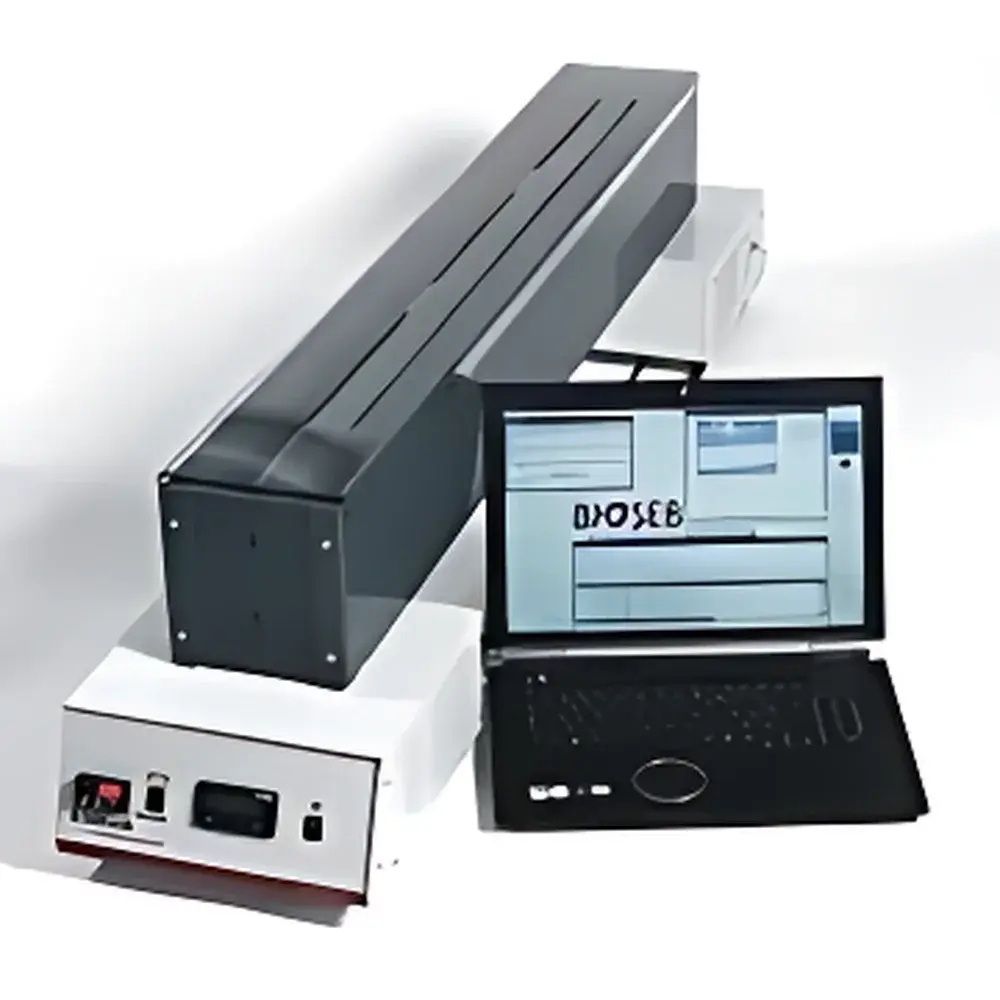
Bioseb TGT2 & TGT4 Thermal Gradient Test Systems for Rodent Thermosensory Behavior Analysis
| Origin | France |
|---|---|
| Manufacturer Type | Authorized Distributor |
| Origin Category | Imported Instrument |
| Model | TGT2 (1 rat + 2 mice) / TGT4 (2 rats + 4 mice) |
| Pricing | Available Upon Request |
Overview
The Bioseb TGT2 and TGT4 Thermal Gradient Test Systems are purpose-built, stand-alone platforms designed for quantitative, ethologically relevant assessment of thermosensory preference and thermal nociception in freely moving rodents. Based on the validated thermal gradient paradigm first described by Moqrich et al. (2005, Neuron), these systems establish a continuous, linear temperature gradient (15–55°C) across a 100+ cm heated aluminum track. Unlike forced-choice or reflex-based assays (e.g., hot plate, tail-flick), this method captures spontaneous, unconditioned behavioral thermoregulation—reflecting integrated central processing of thermal afferent input, motivational state, and environmental context. The system operates without physical restraint, pharmacological sedation, or experimenter intervention during testing, thereby minimizing stress artifacts and enhancing translational validity for preclinical pain and thermoregulatory neuroscience research.
Key Features
- Modular, self-contained hardware architecture with integrated Peltier-based heating/cooling modules and high-resolution infrared surface temperature mapping (±0.2°C accuracy across full gradient range)
- Dual configuration options: TGT2 supports simultaneous monitoring of one adult rat and two adult mice; TGT4 accommodates two rats and four mice in parallel, enabling efficient throughput without cross-contamination risk
- Real-time, high-frame-rate (30 fps) video tracking synchronized with thermal profile data, enabling precise spatial-temporal correlation of position, velocity, dwell time, and thermal zone occupancy
- Calibrated, traceable temperature gradient generation compliant with ISO/IEC 17025-accredited calibration protocols; gradient linearity maintained within ±0.5°C deviation over 100 cm
- Robust, non-reflective matte-finish aluminum test surface optimized for consistent thermal conduction and minimal glare interference with automated tracking
- CE-marked, Class I medical electrical equipment compliant with IEC 61000-6-3 (EMC) and IEC 61000-6-2 (immunity) standards
Sample Compatibility & Compliance
The TGT2/TGT4 systems are validated for use with Sprague-Dawley, Wistar, C57BL/6, BALB/c, and CD-1 rodents (both sexes, post-weaning to adult age). The open-field design permits natural locomotion, grooming, rearing, and exploratory behavior without confinement artifacts. All components meet EU Directive 2010/63/EU on the protection of animals used for scientific purposes. Data acquisition workflows support ALARA (As Low As Reasonably Achievable) thermal exposure principles, with automatic session termination if ambient or surface temperatures exceed predefined safety thresholds (e.g., >55°C sustained for >30 s). System documentation includes full traceability for temperature sensor calibration certificates (NIST-traceable reference standards), facilitating GLP-compliant study reporting.
Software & Data Management
Bioseb’s proprietary ThermoTrack v3.2 software provides end-to-end experimental control, real-time visualization, and standardized analysis. It enables definition of user-specified thermal zones (e.g., 25–32°C as “neutral”, 35–42°C as “noxious warm”, >45°C as “pain threshold”), automated calculation of key metrics—including mean preferred temperature (MPT), thermal preference index (TPI), latency to enter noxious zones, and cumulative dwell time per 1°C bin—and export of raw coordinate/time/temperature datasets in CSV and HDF5 formats. Audit trails comply with FDA 21 CFR Part 11 requirements: electronic signatures, immutable timestamped logs, role-based access control, and version-controlled protocol storage. Data files are compatible with MATLAB, Python (via h5py), and GraphPad Prism for advanced statistical modeling.
Applications
- Pharmacological profiling of TRPV1, TRPM8, and TRPA1 modulators in models of inflammatory, neuropathic, or chemotherapy-induced peripheral neuropathy
- Genetic screening of thermosensory mutants (e.g., Trpv1−/−, Trpm8−/−) under baseline and challenge conditions
- Longitudinal assessment of thermal dysregulation in neurodegenerative models (e.g., SOD1G93A ALS, APP/PS1 Alzheimer’s)
- Evaluation of thermoregulatory deficits following spinal cord injury or hypothalamic lesion
- Validation of novel analgesic mechanisms targeting central descending inhibitory pathways
- Standardized endpoint in OECD TG 407 (Repeated Dose 28-Day Oral Toxicity) and ICH S7A (Safety Pharmacology) studies
FAQ
What is the minimum required acclimation time before testing?
Animals must undergo ≥30 min habituation in the test room (22 ± 2°C, 50 ± 10% RH) prior to placement on the gradient track.
Can the system be used for longitudinal studies across multiple days?
Yes—software supports multi-session alignment using reference markers and auto-compensates for minor thermal drift via daily baseline calibration routines.
Is validation data available for regulatory submissions?
Bioseb provides a full Validation Package including IQ/OQ documentation, precision/reproducibility reports (intra- and inter-operator CV ≤ 3.2%), and method transfer protocols aligned with ASTM E2500-18 guidelines.
Does the system integrate with third-party electrophysiology or optogenetics rigs?
Synchronized TTL trigger outputs and LabVIEW-compatible API enable hardware-level integration with patch-clamp amplifiers, fiber photometry systems, or laser stimulation units.
What maintenance is required for long-term stability?
Biannual recalibration of thermal sensors and annual inspection of Peltier module thermal interface paste are recommended; all procedures are documented in the Service Manual (EN/FR/DE).
Related Products





