
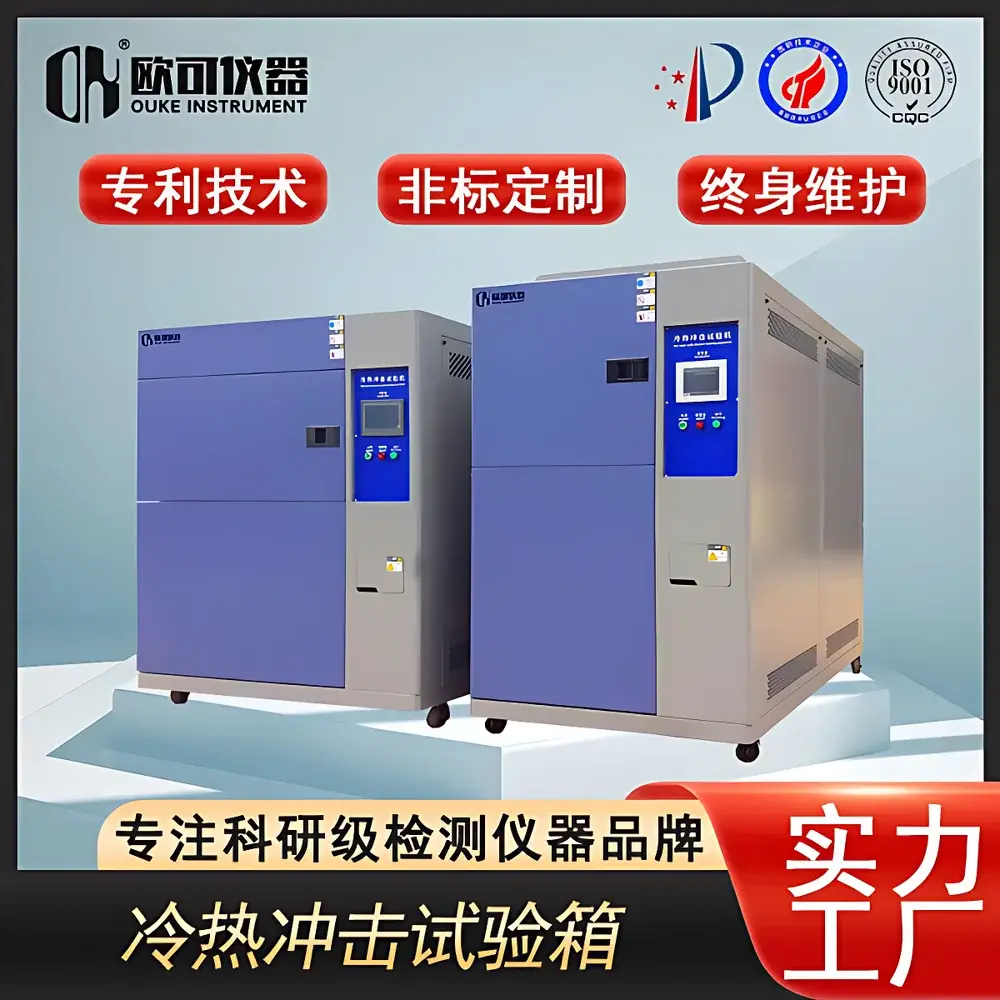
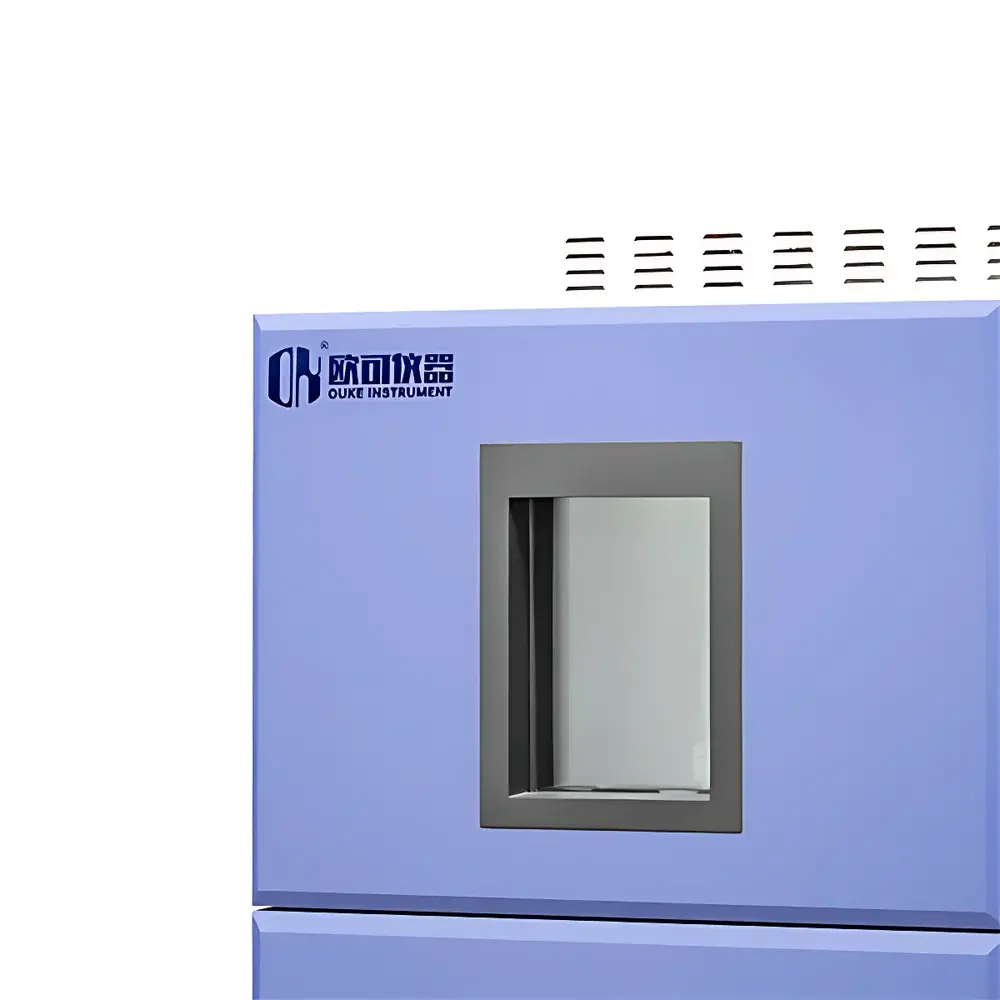
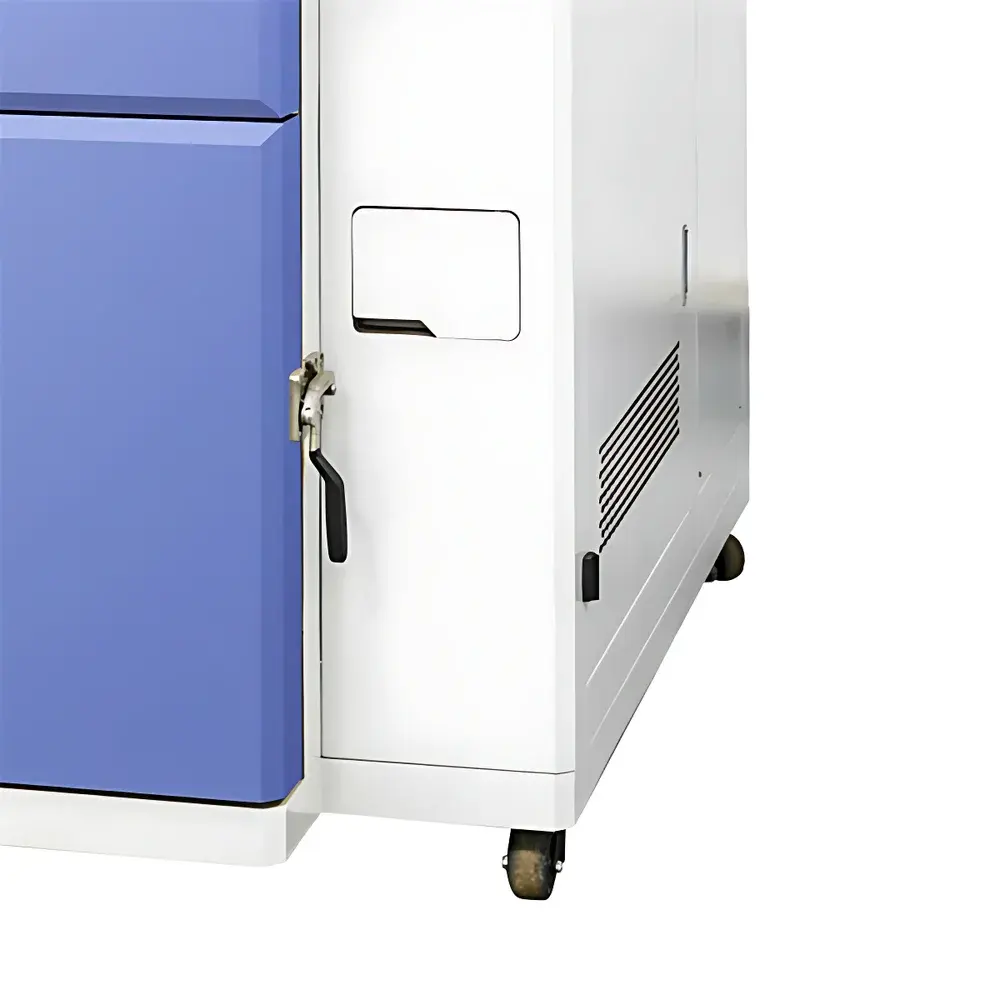
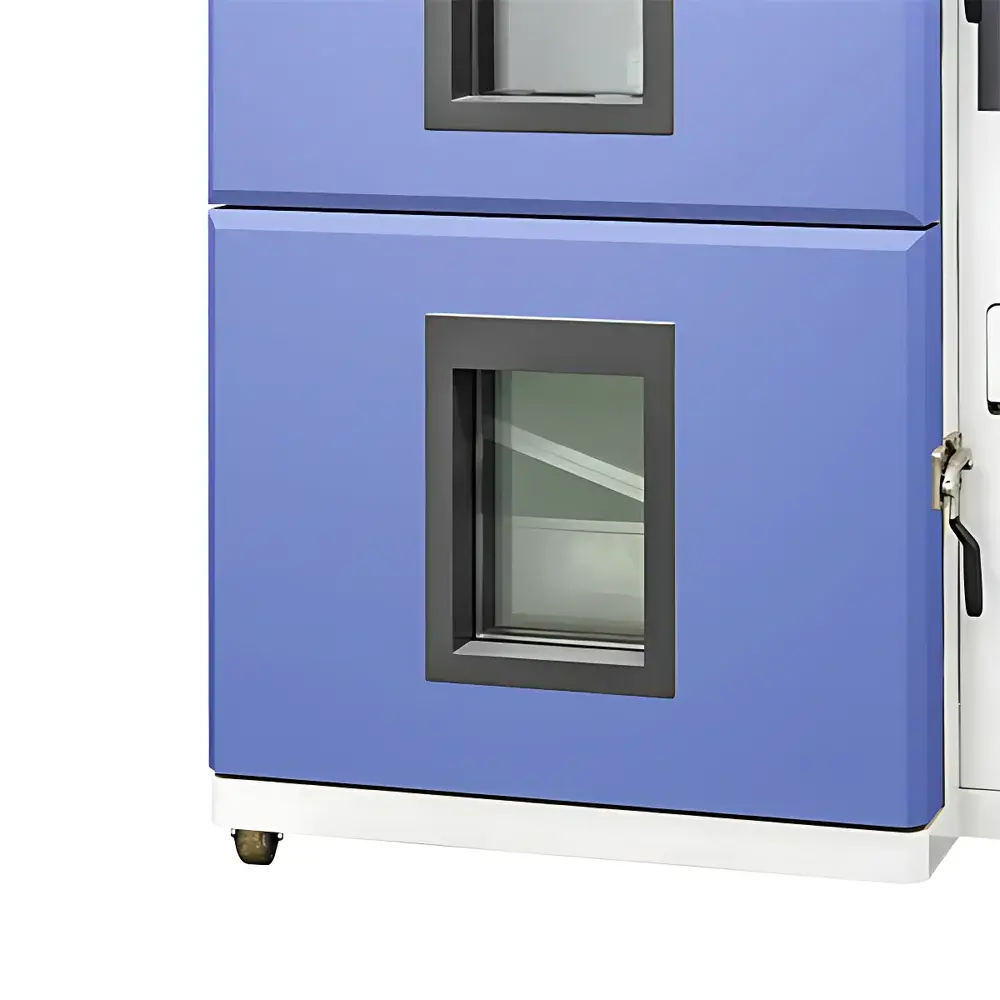
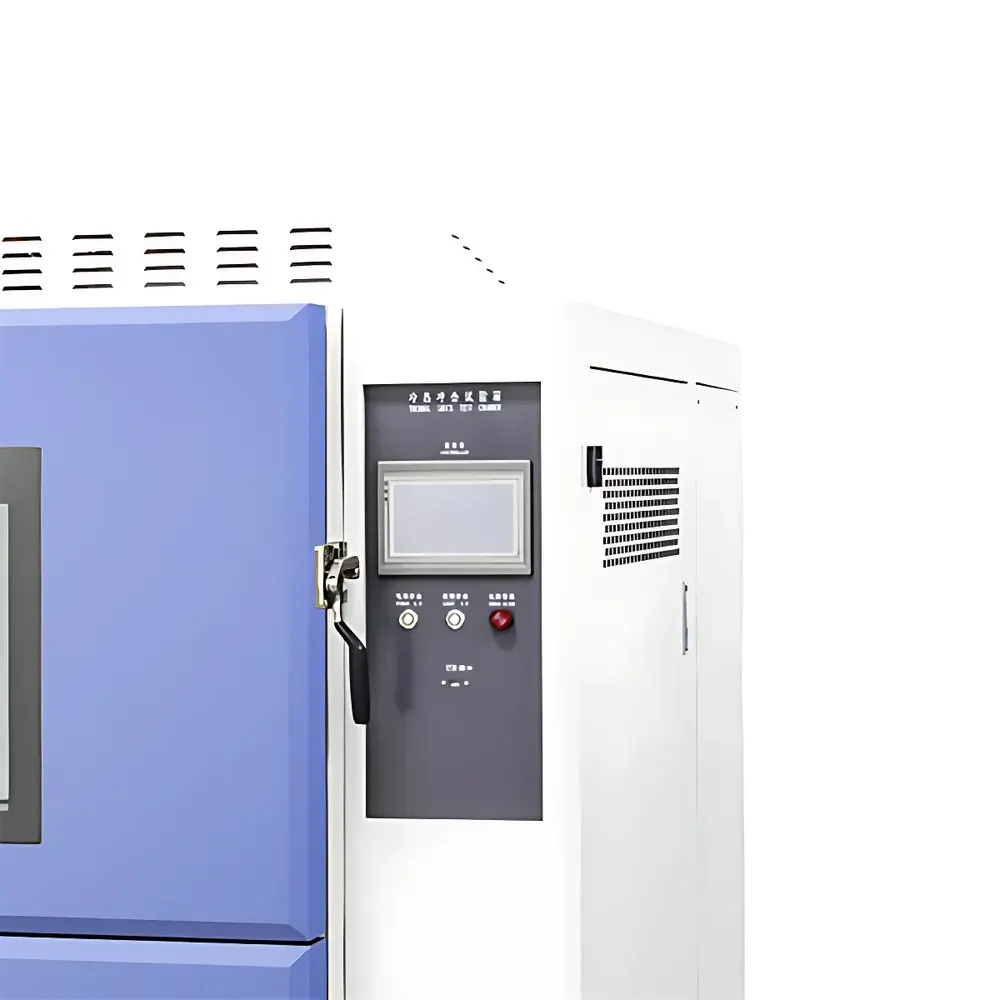
OK 0K-TS-150 Thermal Shock Test Chamber
| Brand | OK |
|---|---|
| Origin | Guangdong, China |
| Manufacturer Type | Direct Manufacturer |
| Model | 0K-TS-150 |
| High-Temperature Range | +150 °C |
| Low-Temperature Range | −60 °C |
| Thermal Shock Range | −60 °C to +150 °C |
| Temperature Stability | ±2 °C |
| Transition Time (Hot ↔ Cold) | ≤10 s |
| Heating/Cooling Rate (within chamber) | 15 °C/min |
Overview
The OK 0K-TS-150 Thermal Shock Test Chamber is an engineered solution for accelerated reliability assessment under extreme thermal transients. It operates on the principle of rapid thermal shock—defined by abrupt, stepwise temperature transitions between two or three thermally isolated zones—rather than gradual ramping. This methodology subjects test specimens to instantaneous mechanical stress induced by differential thermal expansion across material interfaces, thereby exposing latent defects such as solder joint fractures, delamination in multilayer PCBs, sealant cracking, interfacial debonding in encapsulated semiconductors, and contact resistance anomalies. Unlike environmental stress screening (ESS) chambers that emphasize thermal cycling endurance, the 0K-TS-150 is purpose-built for evaluating *instantaneous functional integrity* and *structural survivability* during abrupt thermal excursions—critical for qualification per MIL-STD-883 Method 1010, IEC 60068-2-14 (equivalent to GB/T 2423.22), and JEDEC JESD22-A104.
Key Features
- Two-chamber (basket-transfer) architecture optimized for high-fidelity shock exposure: sample carrier moves pneumatically between independently controlled hot (+150 °C) and cold (−60 °C) zones in ≤10 seconds—meeting stringent transition time requirements of major military and automotive standards.
- High-stability dual-refrigeration system with cascade low-temperature circuitry ensures stable operation at −60 °C without liquid nitrogen dependency; independent heating elements maintain precise +150 °C setpoints with ±2 °C uniformity across the test zone.
- Robust stainless-steel transfer basket rated for 15 kg load capacity; guided linear motion mechanism minimizes vibration transmission while enabling repeatable positioning accuracy within ±1 mm.
- Programmable controller with Ethernet interface supports up to 999 cycles, multi-segment profiles (soak-hold-transition), and real-time monitoring of chamber temperatures, basket position status, and transition timing logs.
- Compliance-ready design includes hardware-level safety interlocks (door, over-temperature, refrigerant pressure), redundant temperature sensors, and optional audit trail functionality aligned with GLP/GMP documentation workflows.
Sample Compatibility & Compliance
The 0K-TS-150 accommodates standard electronic assemblies (PCBA, modules, sensors), aerospace components (actuators, avionics housings), automotive ECUs, and hermetically sealed optoelectronic devices. Its basket-transfer configuration is ideal for discrete, portable, or bench-mountable units weighing ≤15 kg and fitting within a 400 × 400 × 400 mm internal test volume. The chamber meets essential regulatory and industry-specific compliance frameworks: IEC 60068-2-14 (thermal shock testing), MIL-STD-883H (Method 1010.8), JEDEC JESD22-A104D, and AEC-Q200 stress test protocols. All thermal performance data—including transition time verification, temperature overshoot, and recovery stabilization—are traceable to NIST-traceable calibration records. Optional third-party validation reports (e.g., TÜV SÜD or SGS) are available upon request to support ISO 9001:2015 or IATF 16949 certification audits.
Software & Data Management
Equipped with OK’s proprietary ThermaLog™ control software, the 0K-TS-150 delivers secure, timestamped logging of all critical parameters: chamber zone temperatures, basket position events, soak durations, transition timestamps, and cycle completion flags. Data export conforms to CSV and Excel-compatible formats for integration into LIMS or PLM systems. For regulated environments, optional 21 CFR Part 11-compliant firmware adds electronic signature capability, user role-based access control, and immutable audit trails—ensuring full data integrity throughout qualification campaigns. Remote monitoring via Modbus TCP or OPC UA enables centralized fleet management across multi-site R&D or production QA labs.
Applications
- Failure mode identification in lead-free solder joints subjected to CTE mismatch stress.
- Validation of thermal interface materials (TIMs) under repeated shock-induced delamination conditions.
- Qualification of MEMS packaging integrity against crack propagation under cryogenic-to-ambient transitions.
- Reliability screening of battery management systems (BMS) and power electronics before field deployment in electric vehicles.
- Accelerated life testing of optical sensor housings exposed to desert-to-alpine operational scenarios.
FAQ
What distinguishes thermal shock testing from thermal cycling or rapid temperature change (RTC) testing?
Thermal shock relies on discrete, near-instantaneous transfers between stable temperature zones (≤10 s transition), inducing mechanical strain via differential expansion. Thermal cycling applies linear ramps (e.g., 15 °C/min) across a single chamber—assessing fatigue rather than catastrophic failure.
Does the 0K-TS-150 support three-zone (hot/neutral/cold) operation?
No—the 0K-TS-150 implements a two-zone basket-transfer architecture. For static-sample, air-switching configurations, OK offers the 0K-TS-V series (vertical three-zone design).
Is liquid nitrogen required to achieve −60 °C?
No. The unit employs a dual-stage cascade refrigeration system capable of reaching and stabilizing at −60 °C without cryogenic assist.
Can test data be exported for external analysis or regulatory submission?
Yes. Raw time-series logs—including temperature traces, event timestamps, and cycle counters—are exportable in CSV format. With optional Part 11 firmware, data meets FDA electronic record retention requirements.
How is transition time verified and documented?
Transition time is measured using calibrated PT100 sensors mounted directly on the sample carrier surface. Verification reports include statistical analysis of ≥5 consecutive transfers per condition, conforming to IEC 60068-2-14 Annex B requirements.



