
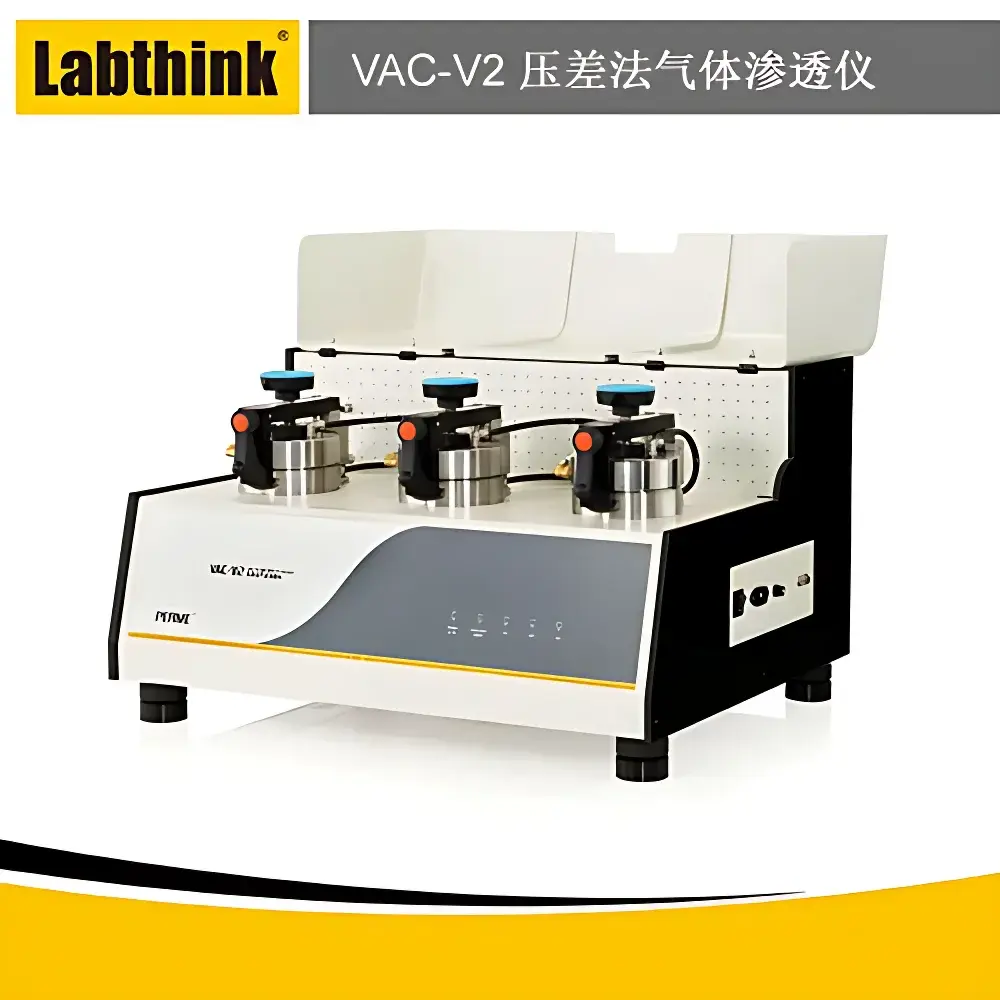
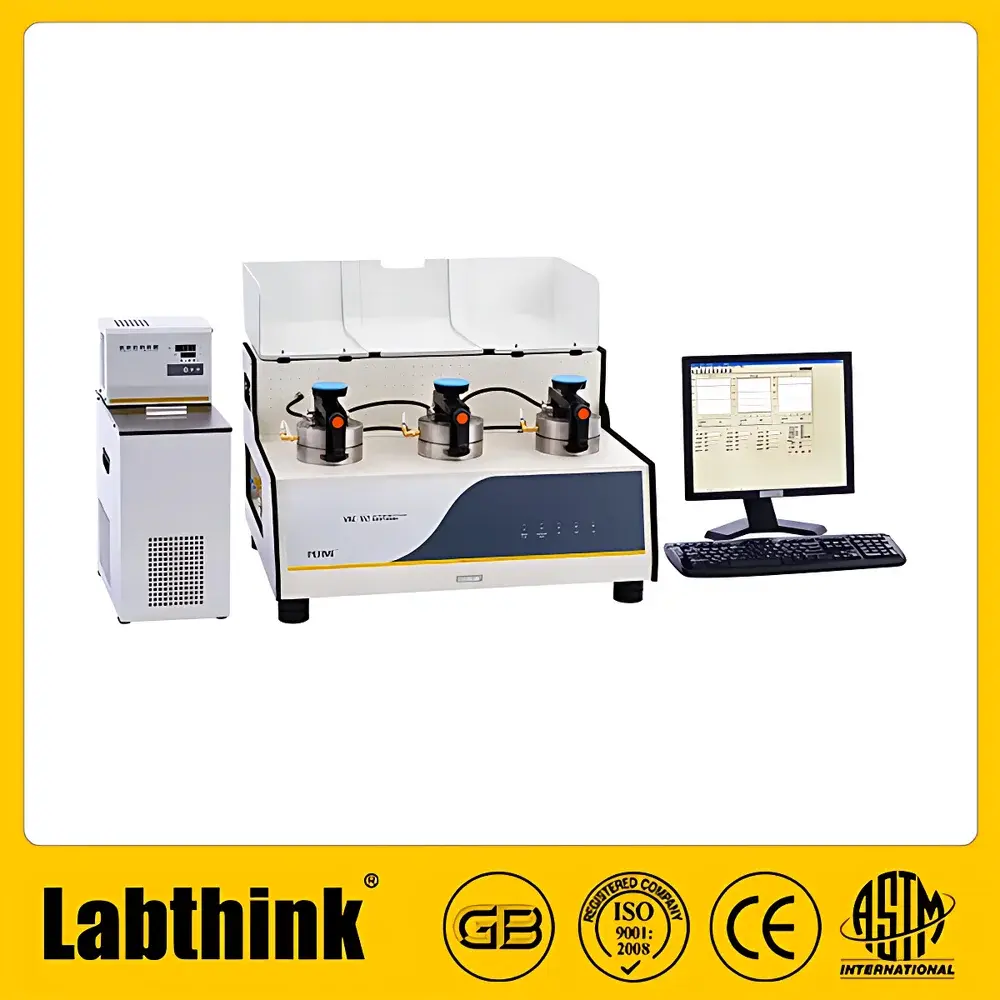
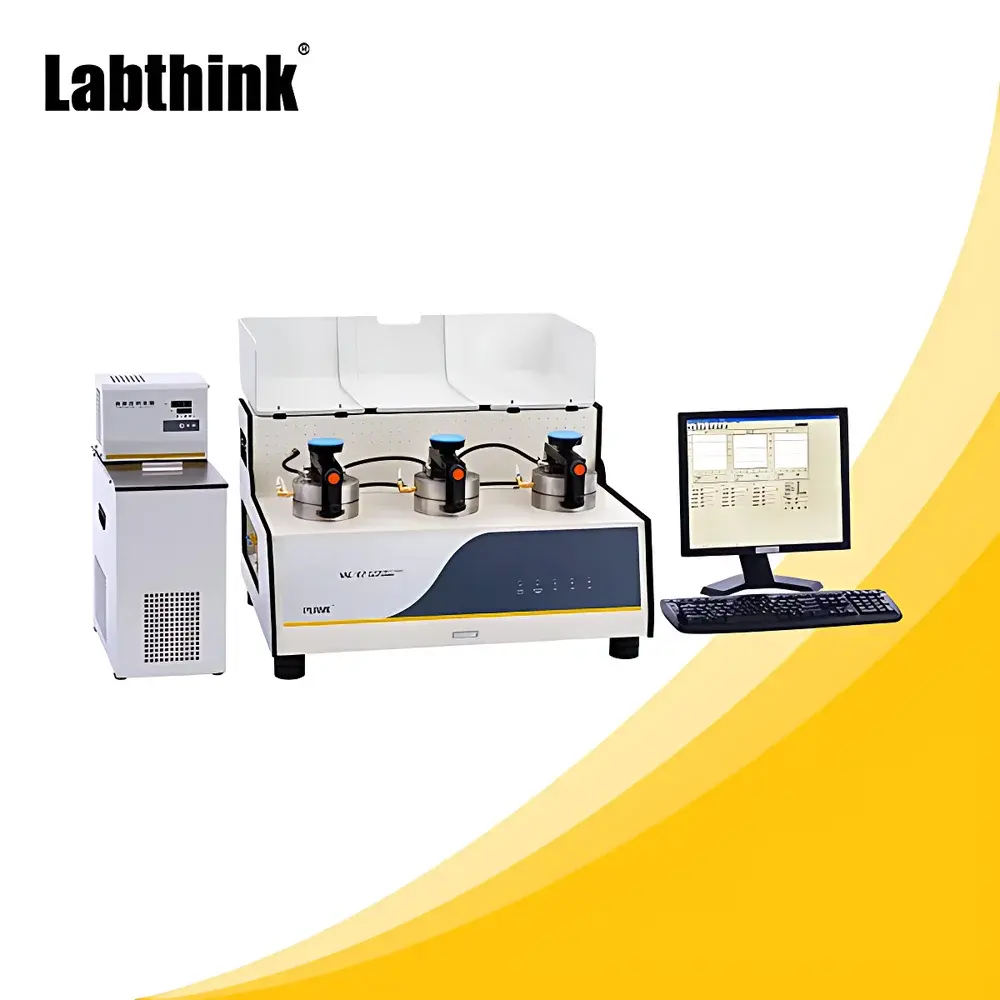
Labthink VAC-V2 Differential Pressure Method Gas Permeability Analyzer
| Brand | Labthink |
|---|---|
| Model | VAC-V2 PERME |
| Origin | Shandong, China |
| Manufacturer Type | Direct Manufacturer |
| Country of Origin | China |
| Price Range | USD 14,000 – 85,000 (FOB Qingdao) |
| Test Principle | Differential Pressure (Manometric) Method |
| Standards Compliance | ISO 15105-1, ISO 2556, ASTM D1434, GB/T 1038-2000, JIS K7126-1, YBB00082003 |
| Measurement Parameters | Oxygen (O₂), Nitrogen (N₂), Carbon Dioxide (CO₂), Sulfur Hexafluoride (SF₆), and other non-corrosive gases |
| Test Range | 0.05–50,000 cm³/m²·24h·0.1 MPa (standard) |
| Specimen Capacity | 3 independent test cells |
| Vacuum Resolution | 0.1 Pa |
| Chamber Vacuum Level | <20 Pa |
| Temperature Control Range | 5–95 °C |
| Temperature Accuracy | ±0.1 °C |
| Humidity Control Range | 0% RH, 2–98.5% RH, 100% RH (humidification module optional) |
| Humidity Accuracy | ±1% RH |
| Specimen Diameter | Φ97 mm |
| Effective Test Area | 38.48 cm² |
| Test Pressure Differential | –0.1 to +0.1 MPa |
| Supply Gas Pressure | 0.4–0.6 MPa |
| Interface | Ø6 mm polyurethane tubing |
| Dimensions (L×W×H) | 760 × 575 × 450 mm |
| Weight | 88 kg |
| Power Supply | 220 VAC 50 Hz / 120 VAC 60 Hz |
Overview
The Labthink VAC-V2 Differential Pressure Method Gas Permeability Analyzer is a precision-engineered instrument designed for quantitative determination of gas transmission behavior in polymeric films, laminates, foils, and elastomeric materials—including rubber compounds—under controlled temperature and humidity conditions. It operates on the fundamental principle of differential pressure (manometric) gas permeation, wherein a constant pressure gradient is established across a conditioned specimen separating two isolated chambers. Gas molecules diffuse through the material under this driving force, and their accumulation in the low-pressure chamber is monitored via high-resolution pressure transducers. By applying Fick’s first law and the solution-diffusion model, the system calculates three interdependent barrier parameters: gas permeability coefficient (P), diffusion coefficient (D), and solubility coefficient (S), where P = D × S. This tri-parameter output enables rigorous structure-property analysis essential for R&D validation, quality control, and regulatory documentation in packaging, elastomer formulation, electrical insulation (e.g., SF₆ containment), and functional barrier development.
Key Features
- Triple independent test chambers enable concurrent, statistically independent measurements of up to three specimens—identical or dissimilar—reducing experimental variance and accelerating throughput.
- High-stability thermal control (±0.1 °C over 5–95 °C range) with programmable ramping ensures reproducible kinetic data across accelerated aging or low-temperature barrier evaluation protocols.
- Dual-mode test logic: proportional control and fuzzy logic algorithms dynamically adjust vacuum and pressurization sequences to maintain optimal signal-to-noise ratio during transient and steady-state phases.
- Extended-range capability supports high-permeability materials (e.g., uncoated LDPE, silicone elastomers) with upper limit ≥500,000 cm³/m²·24h·0.1 MPa when equipped with optional large-volume sensor modules.
- Compatible with toxic and flammable gases—including sulfur hexafluoride (SF₆)—via factory-modified sealed gas-handling pathways and explosion-proof component integration (per IEC 60079-0 requirements).
- Integrated calibration routine using certified reference membranes (e.g., NIST-traceable PET or HDPE standards) ensures traceable accuracy and cross-laboratory comparability per ISO/IEC 17025 guidelines.
Sample Compatibility & Compliance
The VAC-V2 accommodates rigid and flexible planar specimens up to Φ97 mm diameter and 3 mm thickness, including vulcanized rubber sheets, fluoropolymer-coated elastomers, multilayer packaging laminates, metallized PET, aluminum foil composites, and ceramic-polymer hybrid barriers. Its mechanical clamping system ensures uniform edge sealing without deformation-induced artifacts. All measurement protocols align with internationally recognized standards: ISO 15105-1 (plastic films), ASTM D1434 (gas transmission rate), GB/T 1038-2000 (Chinese national standard for plastic film permeability), and YBB00082003 (Chinese pharmaceutical packaging regulation). For regulated environments, raw data files include full audit trails—time-stamped operator ID, environmental setpoints, calibration logs, and real-time pressure curves—supporting FDA 21 CFR Part 11 compliance when deployed with validated Lystem™ software configurations.
Software & Data Management
Controlled via Labthink’s Lystem™ Laboratory Data Management System (v3.2+), the VAC-V2 delivers fully automated test execution, parameter logging, and multi-variable curve fitting. The software implements nonlinear regression to extrapolate D, S, and P values at non-tested temperatures using Arrhenius-type models, enabling prediction of shelf-life performance under extreme storage conditions. Export formats include CSV, PDF test reports (with digital signature support), and XML for LIMS integration. Data integrity safeguards include role-based access control, electronic signatures, and immutable audit logs meeting GLP/GMP documentation requirements. RS232 and USB interfaces ensure compatibility with legacy lab infrastructure and modern networked environments.
Applications
- Quantifying SF₆ permeation resistance in high-voltage rubber gaskets and GIS (Gas-Insulated Switchgear) elastomeric seals.
- Evaluating O₂ and CO₂ transmission rates in medical device packaging (e.g., blister lidding films, pouches for sterile implants).
- Characterizing diffusion kinetics of hydrocarbon vapors through automotive EPDM and nitrile rubber components.
- Validating barrier performance of lithium-ion battery pouch films against electrolyte vapor and ambient moisture ingress.
- Supporting ISO 11607-1 packaging validation for terminally sterilized healthcare products.
- Generating input parameters for finite-element modeling of gas transport in composite polymer systems.
FAQ
What gases can be tested beyond O₂, N₂, and CO₂?
SF₆, He, H₂, CH₄, and other non-corrosive gases are supported; testing with reactive or corrosive gases (e.g., Cl₂, NH₃) requires custom wetted-material upgrades and is subject to engineering review.
Is humidity control built-in or optional?
Relative humidity control (2–98.5% RH) requires the separately ordered humidity generation module; dry (0% RH) and saturated (100% RH) conditions are achievable with standard configuration.
Can the instrument operate under GMP/GLP-compliant workflows?
Yes—when configured with Lystem™ v3.2+ in 21 CFR Part 11 mode, it provides electronic signatures, audit trails, and data encryption required for regulated quality systems.
How is calibration traceability maintained?
Certified reference membranes with NIST-traceable permeability values are supplied; calibration certificates include uncertainty budgets compliant with ISO/IEC 17025 Annex A.
What safety provisions exist for SF₆ testing?
SF₆-compatible units feature hermetically sealed gas manifolds, leak-tested stainless-steel fittings, and optional exhaust scrubbing interface—fully documented in the Factory Safety Addendum (FSA-021).





