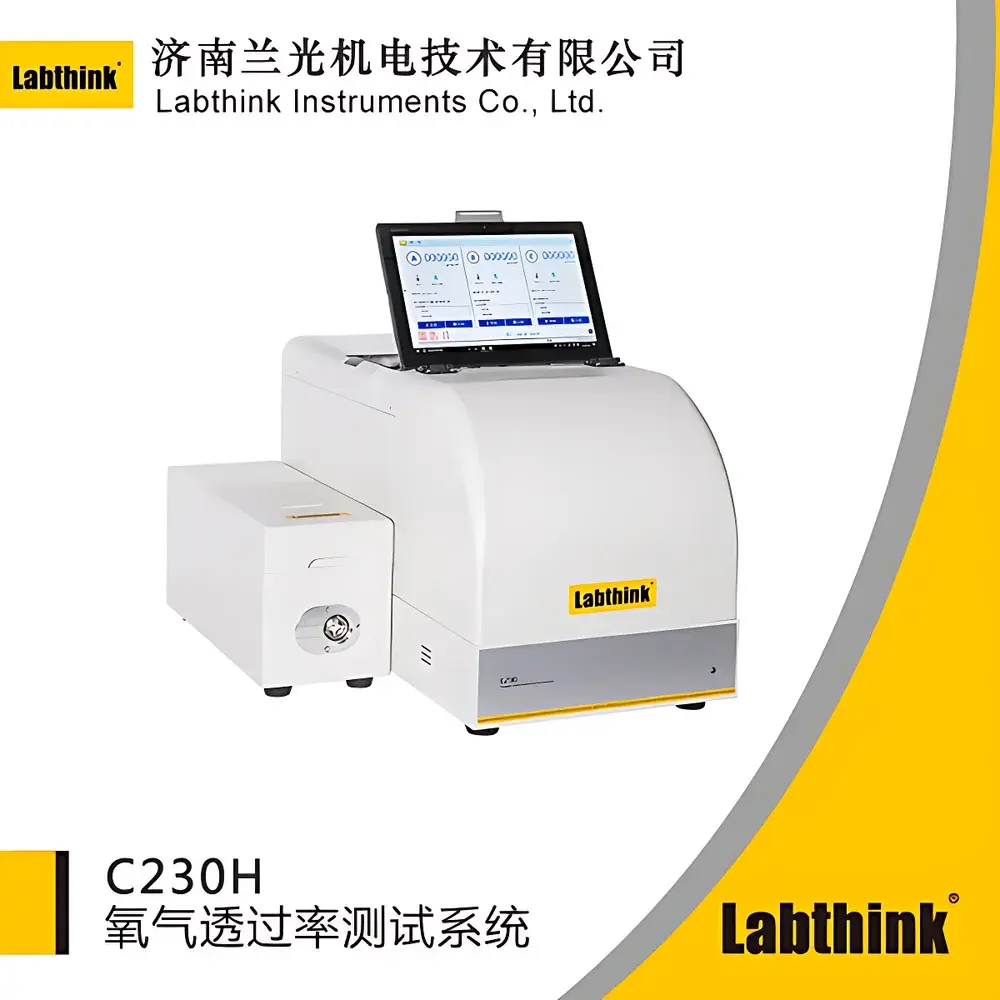
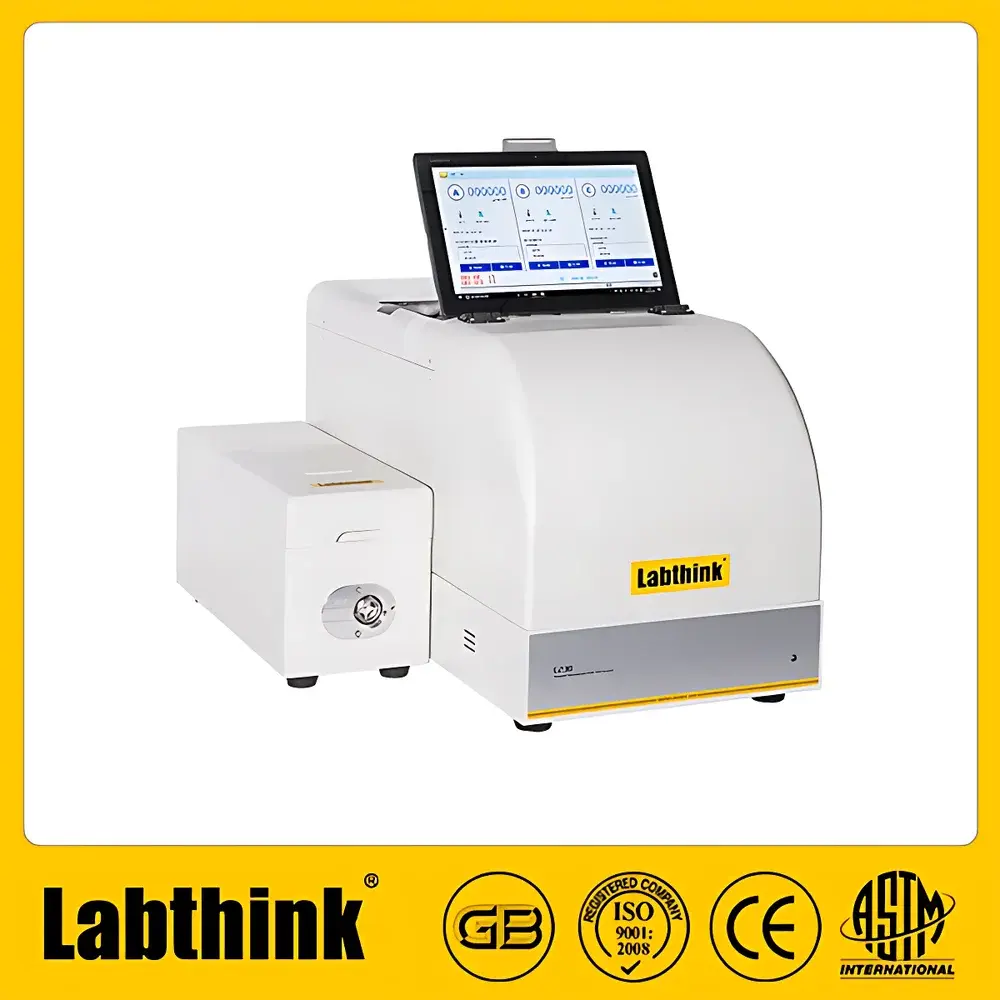
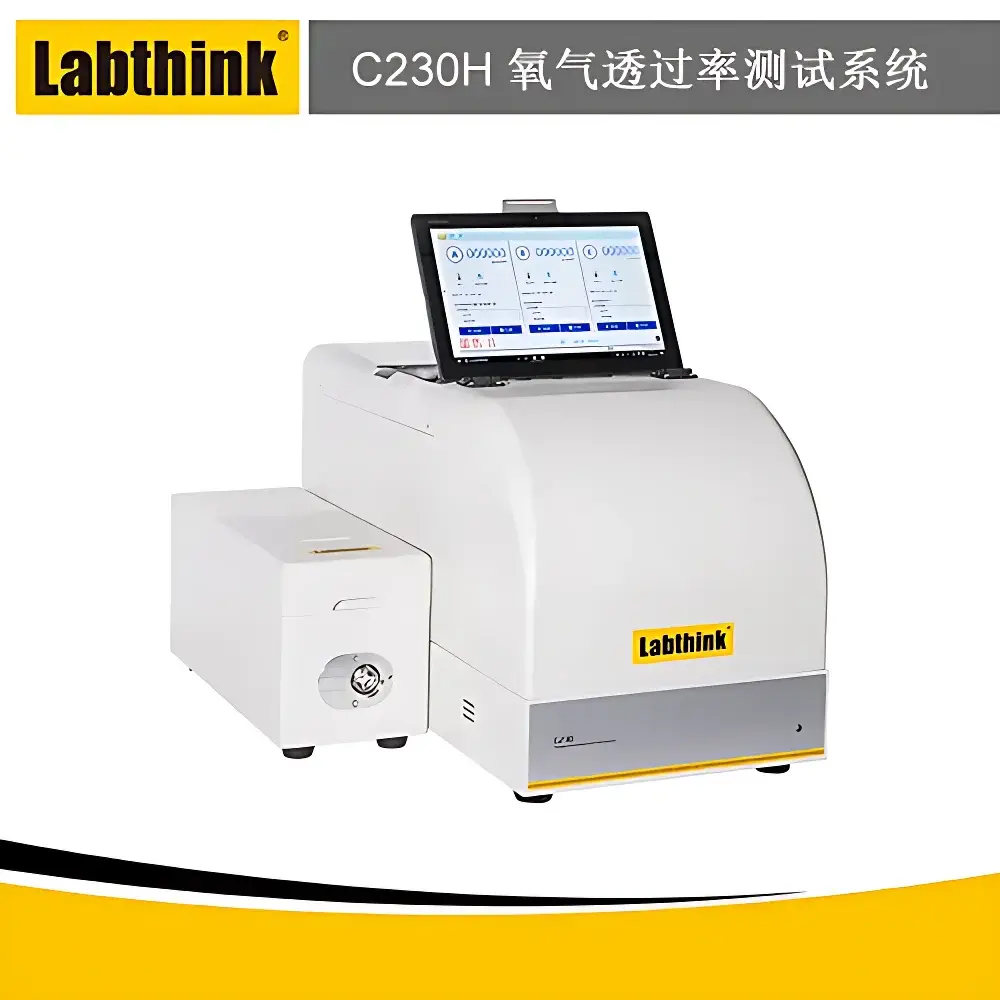
Labthink C230H Oxygen Transmission Rate (OTR) Tester for Automotive Plastic Fuel Tanks
| Brand | Labthink |
|---|---|
| Origin | Shandong, China |
| Manufacturer Type | Direct Manufacturer |
| Product Origin | Domestic |
| Model | C230H |
| Pricing | Upon Request |
| Test Principle | Coulometric Oxygen Sensor + Isobaric Method |
| Standards Compliance | ASTM D3985, ASTM F1307, ASTM F1927 (optional), GB/T 19789, GB/T 31354, DIN 53380-3, JIS K7126-2-B, YBB 00082003-2015 |
| Film OTR Range | 0.01–200 cm³/(m²·day) |
| Container OTR Range | 0.00005–1 cm³/(pkg·day) |
| Resolution | 0.001 cm³/(m²·day) |
| Repeatability | ±0.01 cm³/(m²·day) or ±2%, whichever is greater |
| Test Temperature | 10–55 °C (±0.2 °C) |
| RH Control | 0%, 5–90% (±1%), 100% (O₂ side) |
| Test Chambers | 3 independent chambers |
| Sample Size | 108 mm × 108 mm |
| Max Sample Thickness | ≤3 mm |
| Standard Test Area | 50 cm² |
| Carrier Gas | ≥99.999% high-purity N₂ (user-supplied) |
| Inlet Pressure | ≥0.28 MPa (40.6 psi) |
| Gas Interface | 1/8″ stainless steel tubing |
| Max Container Volume | 3 L (optional) |
| DataShield™ Data Integrity Module | Optional |
| GMP-Compliant Software & Audit Trail | Optional |
| 21 CFR Part 11 Compliance Support | Optional |
Overview
The Labthink C230H Oxygen Transmission Rate (OTR) Tester is an engineered solution for quantitative assessment of oxygen permeation through polymeric and laminated materials used in demanding automotive, pharmaceutical, food, and energy applications. Specifically designed to evaluate the oxygen barrier integrity of blow-molded plastic fuel tanks—critical for preventing fuel oxidation, vapor loss, and long-term hydrocarbon degradation—the C230H implements the isobaric (equal-pressure) method coupled with a high-stability coulometric oxygen sensor. This principle ensures direct, real-time measurement of oxygen molecules diffusing across a sample under controlled temperature and relative humidity conditions, delivering traceable, reproducible OTR data aligned with globally recognized regulatory frameworks.
Key Features
- Triple independent test chambers enable parallel evaluation of up to three samples—enhancing throughput without compromising inter-chamber isolation or environmental control.
- High-precision coulometric oxygen sensor with sub-ppm detection limit and linear response across the full dynamic range (0.01–200 cm³/(m²·day) for films; 0.00005–1 cm³/(pkg·day) for rigid and semi-rigid containers).
- Temperature-controlled test environment (10–55 °C, ±0.2 °C) with dual-zone RH capability (0%, 5–90% ±1%, or 100% on O₂ side; optional 5–90% ±2% on carrier gas side) to simulate real-world storage and operational conditions.
- Standardized 50 cm² test area and 108 mm × 108 mm clamping geometry ensure compliance with ASTM D3985 and ISO 15105-2 geometrical requirements, minimizing edge effects and improving measurement fidelity.
- Modular architecture supports seamless integration of optional regulatory modules—including DataShield™ for ALCOA+ data integrity, 21 CFR Part 11-compliant electronic signatures, and audit-trail-enabled GMP software packages.
- Carrier gas interface compatible with user-supplied ≥99.999% high-purity nitrogen (inlet pressure ≥0.28 MPa), ensuring minimal background interference and sensor longevity.
Sample Compatibility & Compliance
The C230H accommodates a broad spectrum of specimen formats: flat films (e.g., HDPE/EVOH/PA multilayers), rigid sheets (PP, PVC, PVDC, aluminum foil composites), and complex 3D packaging—including blow-molded plastic fuel tanks (up to 3 L volume), battery enclosures, solar backsheet laminates, medical blister packs, and beverage containers. Its dual-mode operation (film vs. package mode) adheres strictly to ASTM F1307 for container testing and ASTM D3985 for planar materials. All hardware and firmware configurations meet GLP and GMP design principles, with documentation packages supporting IQ/OQ/PQ validation protocols. Traceability is reinforced via NIST-traceable sensor calibration certificates and internal reference standards certified per ISO/IEC 17025.
Software & Data Management
Labthink’s proprietary OTRControl™ software provides full instrument orchestration, including automated parameter sequencing, real-time sensor diagnostics, and dynamic OTR calculation using Fickian diffusion models. Raw sensor voltage, temperature, humidity, and flow-rate logs are timestamped and stored in encrypted SQLite databases. With optional DataShield™ enabled, all data entries undergo cryptographic hashing, immutable versioning, and role-based access control—fulfilling ALCOA+ criteria (Attributable, Legible, Contemporaneous, Original, Accurate). For regulated environments, the 21 CFR Part 11 module adds electronic signature enforcement, biometric or token-based authentication, and comprehensive audit trails covering user actions, method changes, and result modifications.
Applications
- Automotive Engineering: Quantification of OTR in HDPE-based fuel tanks to validate resistance against ethanol-blended gasoline aging and meet OEM specifications (e.g., SAE J1742, VW TL 52208).
- Pharmaceutical Packaging: Barrier verification of cold-form blister lidding foils, PTP strips, and HDPE/PP pharmacy bottles per USP and YBB 00082003-2015.
- Food & Beverage: Shelf-life modeling support via OTR measurements on retort pouches, vacuum-sealed trays, and PET carbonated drink bottles (ASTM F1927-compliant container mode).
- Renewable Energy: Evaluation of oxygen ingress into photovoltaic module backsheets (TPT, TPE, fluoropolymer laminates) per IEC 61215-2 MQT19.
- Industrial Components: Testing of polymer-lined pipes (PPR, PE-RT), battery housings (Li-ion pouch and prismatic cells), and elastomeric gasket materials under accelerated aging conditions.
FAQ
What distinguishes the isobaric method (ASTM D3985) from the volumetric or coulometric methods used in other OTR instruments?
The isobaric method maintains equal partial pressure on both sides of the sample while sweeping high-purity nitrogen across the downstream side. This eliminates pressure-driven artifacts and enables true diffusion-controlled measurement—critical for low-permeability automotive fuel tank materials where accuracy below 0.1 cm³/(m²·day) is required.
Can the C230H test actual production-intent fuel tanks—not just flat coupons?
Yes. The optional 3-liter container test fixture allows direct evaluation of fully assembled, sealed plastic fuel tanks under simulated service conditions—including internal nitrogen purge and external oxygen exposure—per ASTM F1307 Annex A1.
Is sensor recalibration required between tests, and how is traceability maintained?
The coulometric sensor is factory-calibrated against NIST-traceable O₂ standards. Recalibration is only necessary after 12 months or following exposure to contaminants; Labthink provides certified calibration kits and SOPs compliant with ISO/IEC 17025.
Does the system support automated reporting for regulatory submissions (e.g., FDA, EMA)?
With the GMP software and 21 CFR Part 11 modules activated, the system generates PDF/A-1b compliant reports containing full metadata, audit logs, digital signatures, and raw data export in CSV and XML formats—ready for inclusion in IND, NDA, or MDR technical documentation.