
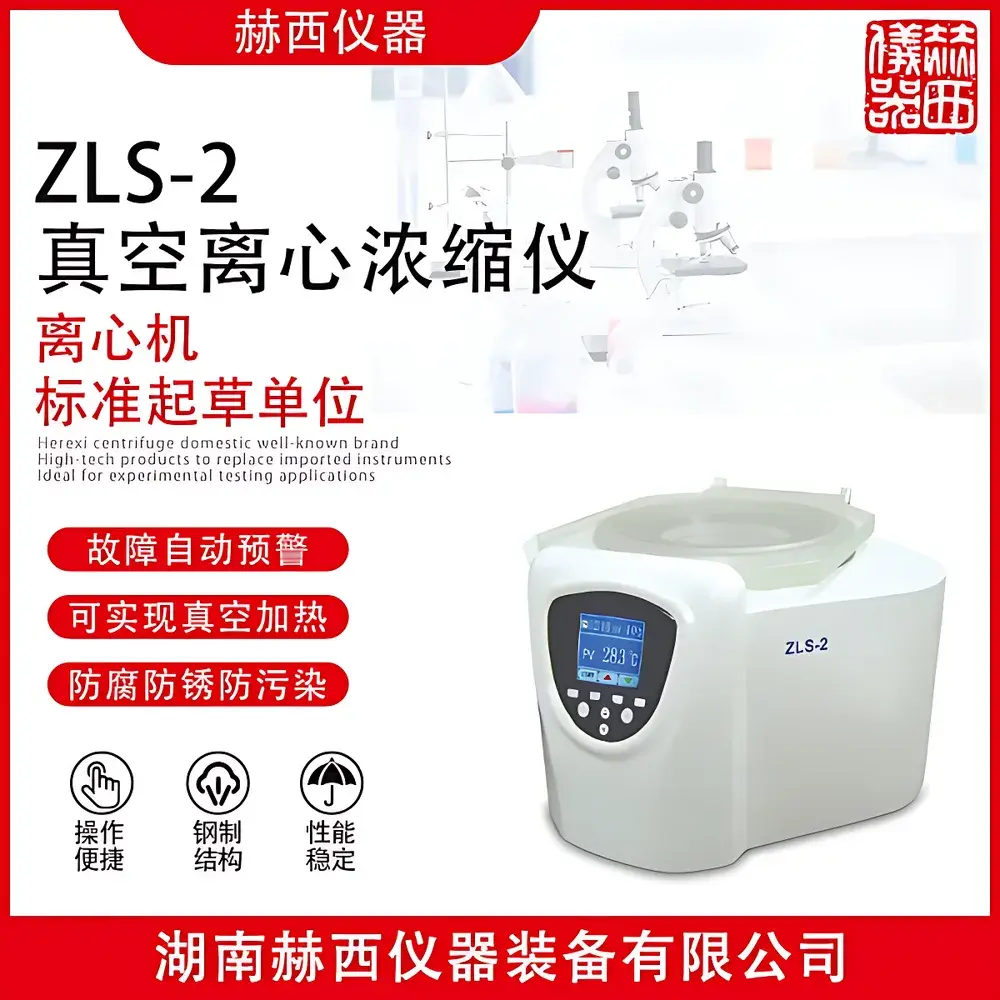
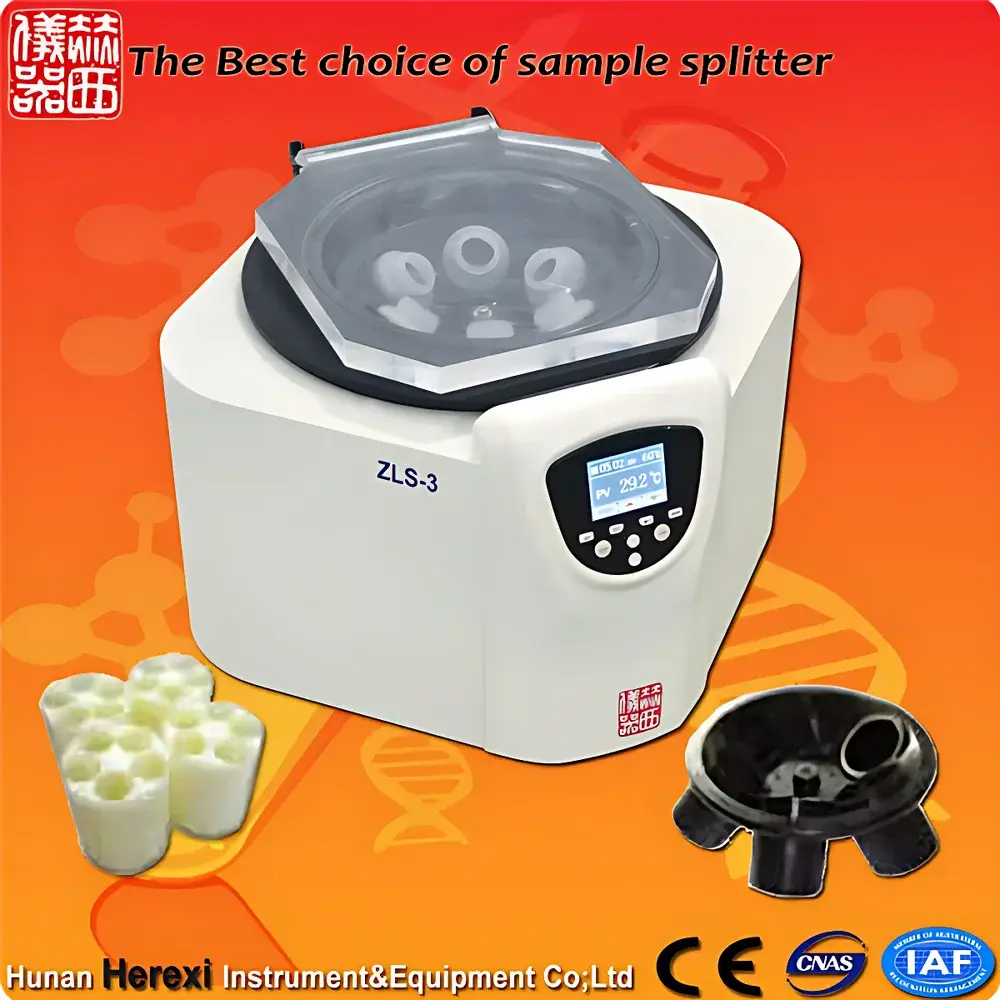
Hercy ZLS-2 Vacuum Centrifugal Concentrator
| Brand | Hercy |
|---|---|
| Origin | Hunan, China |
| Model | ZLS-2 |
| Instrument Type | Vacuum Centrifugal Concentrator |
| Temperature Range | Ambient to 60 °C |
| Temperature Control Accuracy | ±1 °C |
| Sample Capacity | 6 × 50 mL |
| Rotational Speed | 1500 rpm |
| Vacuum Interface | φ10 mm |
| Final Vacuum Level | 0.1 mbar |
| Dimensions (L×W×H) | 500 × 490 × 280 mm |
| Timer Range | 1 min – 99 h 59 min |
| Rotor Configurations | 62 × 1.5 mL |
| Over-Temperature Protection | 98 °C |
| Heating Method | Uniform Chamber Heating |
| Chamber Material | Anodized Aluminum Alloy |
| Lid Material | Polymethyl Methacrylate (PMMA) Transparent Cover |
| Drive System | Brushless DC Motor with Contactless Drive |
| Control Interface | TFT-LCD True Color Display with Dual Touch + Physical Keypad |
| Optional Accessories | CT-6 Cold Trap, External Vacuum Pump |
Overview
The Hercy ZLS-2 Vacuum Centrifugal Concentrator is an engineered solution for gentle, efficient solvent removal from heat-sensitive biological and chemical samples under reduced pressure and controlled temperature. It operates on the principle of simultaneous centrifugation, vacuum-induced evaporation, and regulated conductive heating—enabling rapid concentration without thermal degradation, foaming, or cross-contamination. Unlike conventional rotary evaporators or nitrogen blow-down systems, the ZLS-2 maintains sample integrity by applying low-speed centrifugal force (1500 rpm) to counteract bubble formation and prevent splashing, while vacuum lowers the boiling point of solvents (e.g., ethanol, methanol/water mixtures, aqueous buffers) to facilitate low-temperature drying. Its design prioritizes reproducibility in nucleic acid recovery (e.g., oligonucleotide synthesis), protein precipitation, metabolite purification, and post-extraction clean-up workflows common in molecular biology, pharmaceutical QC, and analytical chemistry laboratories.
Key Features
- Brushless DC motor with contactless drive system ensures maintenance-free operation, minimal vibration, and acoustic noise below 55 dB(A) — suitable for shared laboratory environments.
- Uniform chamber heating via embedded resistive elements achieves precise temperature control within ±1 °C across the full 0–60 °C range; over-temperature cutoff at 98 °C provides hardware-level safety redundancy.
- TFT-LCD true-color display supports dual-input operation (capacitive touch + tactile keys), with real-time simultaneous readouts of setpoint vs. actual temperature, rotational speed, elapsed time, and centrifugal force (RCF).
- Anodized aluminum centrifuge chamber resists corrosion from common organic solvents (ethanol, acetone, chloroform) and acidic/basic aqueous solutions, extending service life and simplifying decontamination.
- Optically transparent PMMA lid enables unobstructed visual monitoring of sample status throughout the entire concentration cycle — critical for endpoint determination in variable-volume protocols.
- Modular architecture allows flexible integration with optional accessories: CT-6 cold trap (−50 °C condensing capacity) and external vacuum pumps compatible with ISO-KF10 or NW10 flange standards.
- Programmable timer (1 minute to 99 hours 59 minutes) supports unattended overnight runs; automatic shutdown upon completion or fault detection (e.g., vacuum loss, overheating, lid open).
Sample Compatibility & Compliance
The ZLS-2 accommodates diverse sample formats including 1.5 mL microcentrifuge tubes (62 positions), 10 mL conical tubes (12 positions), and 50 mL centrifuge tubes (6 positions), making it suitable for high-throughput nucleic acid precipitation (e.g., ethanol/sodium acetate protocols), peptide desalting, and small-molecule library concentration. Its ambient-to-60 °C operational envelope aligns with USP guidance on analytical instrument qualification for non-destructive drying steps. While not certified to IEC 61010-1 or ISO/IEC 17025 out-of-the-box, the system’s hardware-level safety interlocks (lid switch, overtemp cutout, vacuum failure detection) support GLP-compliant documentation when integrated into validated workflows. All electrical components meet CE marking requirements for EMC and low-voltage directives.
Software & Data Management
The ZLS-2 operates via embedded firmware with no PC dependency; however, its parameter logging capability (via internal non-volatile memory) records timestamped entries for temperature, speed, vacuum status, and run duration — exportable manually via USB interface for audit trail generation. The interface supports user-defined method storage (up to 10 protocols), each retaining independent settings for temperature ramping, hold times, and final spin-down profiles. For regulated environments, the device can be incorporated into 21 CFR Part 11–compliant systems through external electronic lab notebook (ELN) integration, provided audit logs are captured externally and digital signatures applied during method execution.
Applications
- Concentration of DNA/RNA eluates following column-based or magnetic bead purification.
- Drying of synthetic oligonucleotides dissolved in ammonium hydroxide or TE buffer after deprotection.
- Removal of residual acetonitrile or trifluoroacetic acid from HPLC fractions prior to MS analysis.
- Stabilization of enzyme preparations and antibody conjugates by replacing volatile buffers with lyophilization-compatible matrices.
- Preparative-scale solvent exchange in medicinal chemistry (e.g., DMSO → PBS transfer for cytotoxicity assays).
FAQ
Is a vacuum pump included with the ZLS-2?
No — the ZLS-2 requires an externally connected vacuum source; a compatible pump (e.g., oil-free diaphragm type with ultimate vacuum ≤0.1 mbar) must be selected based on solvent compatibility and local exhaust regulations.
Can the ZLS-2 be used without heating?
Yes — the unit supports ambient-temperature operation (no active heating) for thermolabile samples such as certain fluorescent dyes or labile post-translational modifications.
What vacuum level is required for optimal performance with aqueous ethanol solutions?
A stable base pressure of ≤0.1 mbar is recommended to achieve efficient evaporation of 70% ethanol/water mixtures at ≤45 °C without bumping or aerosol formation.
Does the ZLS-2 support rotor imbalance detection?
Yes — the control system continuously monitors motor current draw and triggers immediate deceleration if rotational asymmetry exceeds ±5% tolerance, preventing mechanical stress on bearings or chamber deformation.
How often should the O-rings and vacuum seals be replaced?
Under standard use (≤5 cycles/day), fluorosilicone O-rings at the lid interface should be inspected quarterly and replaced annually or after exposure to aggressive solvents like DMSO or THF.



