
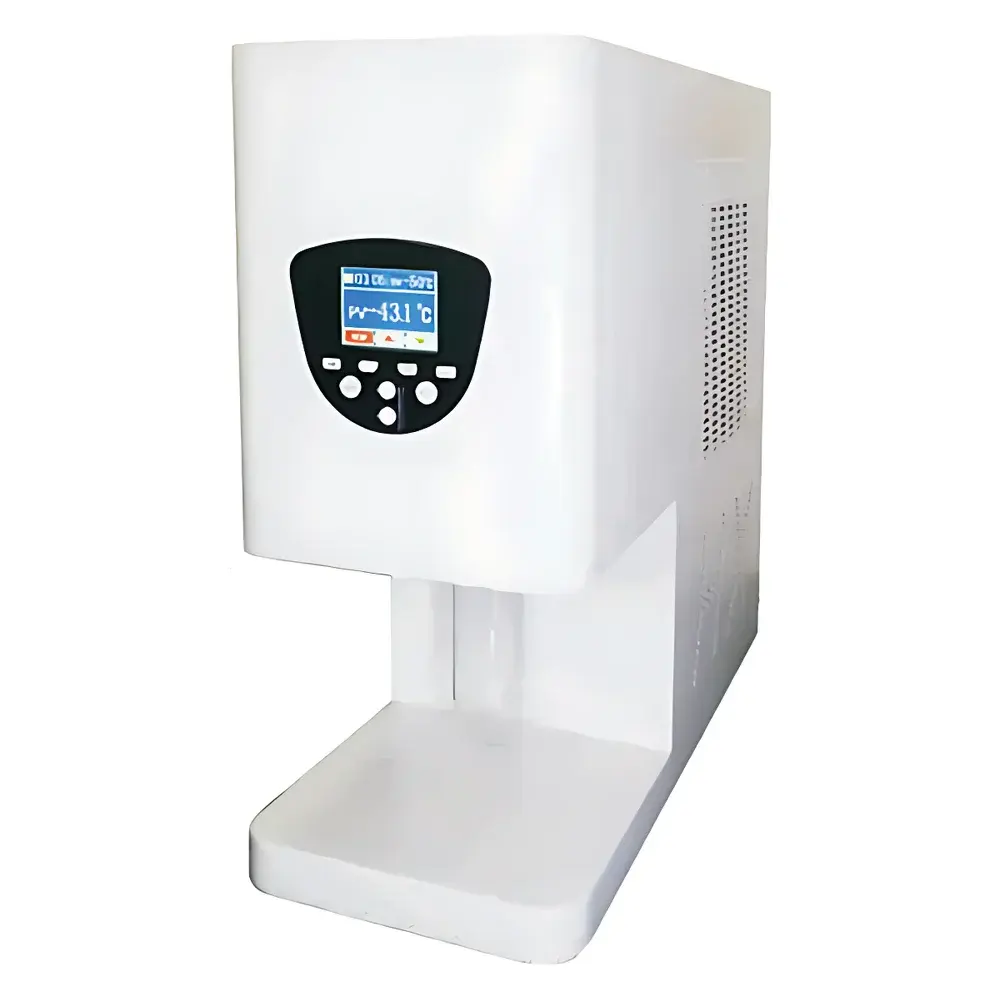
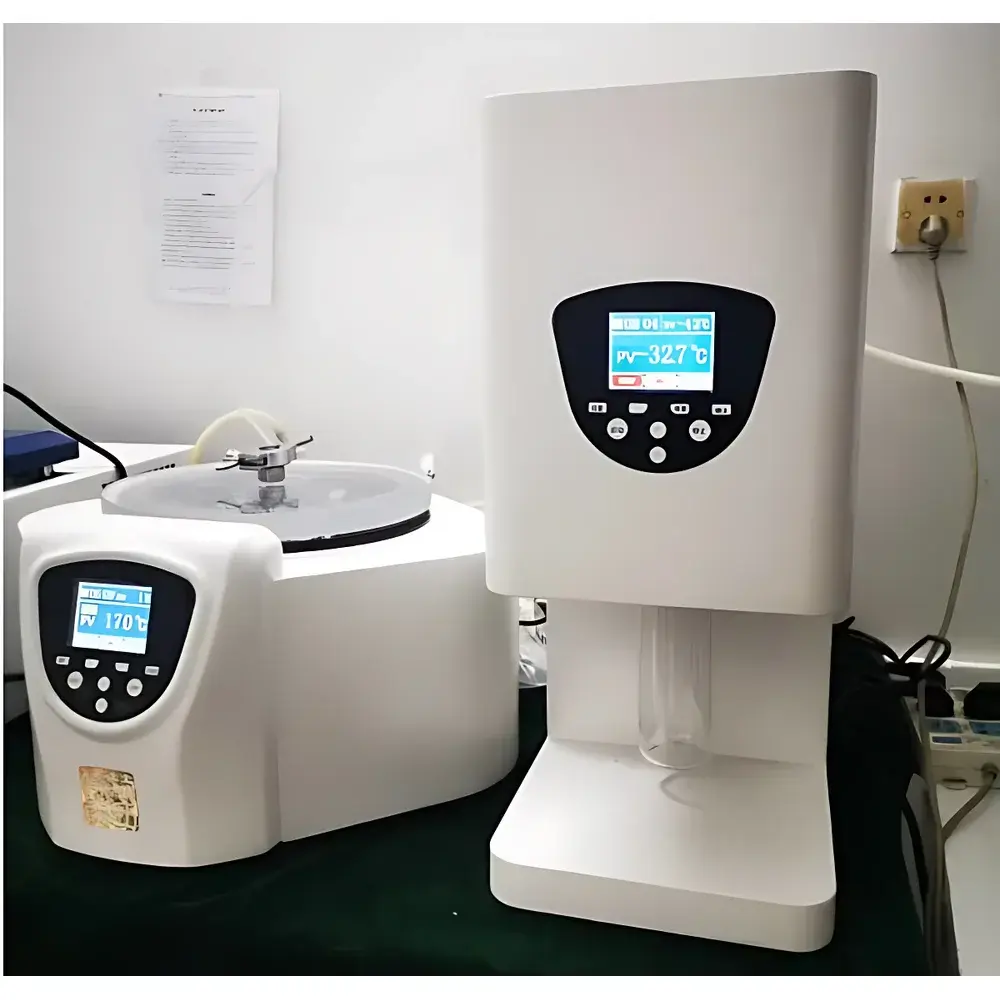
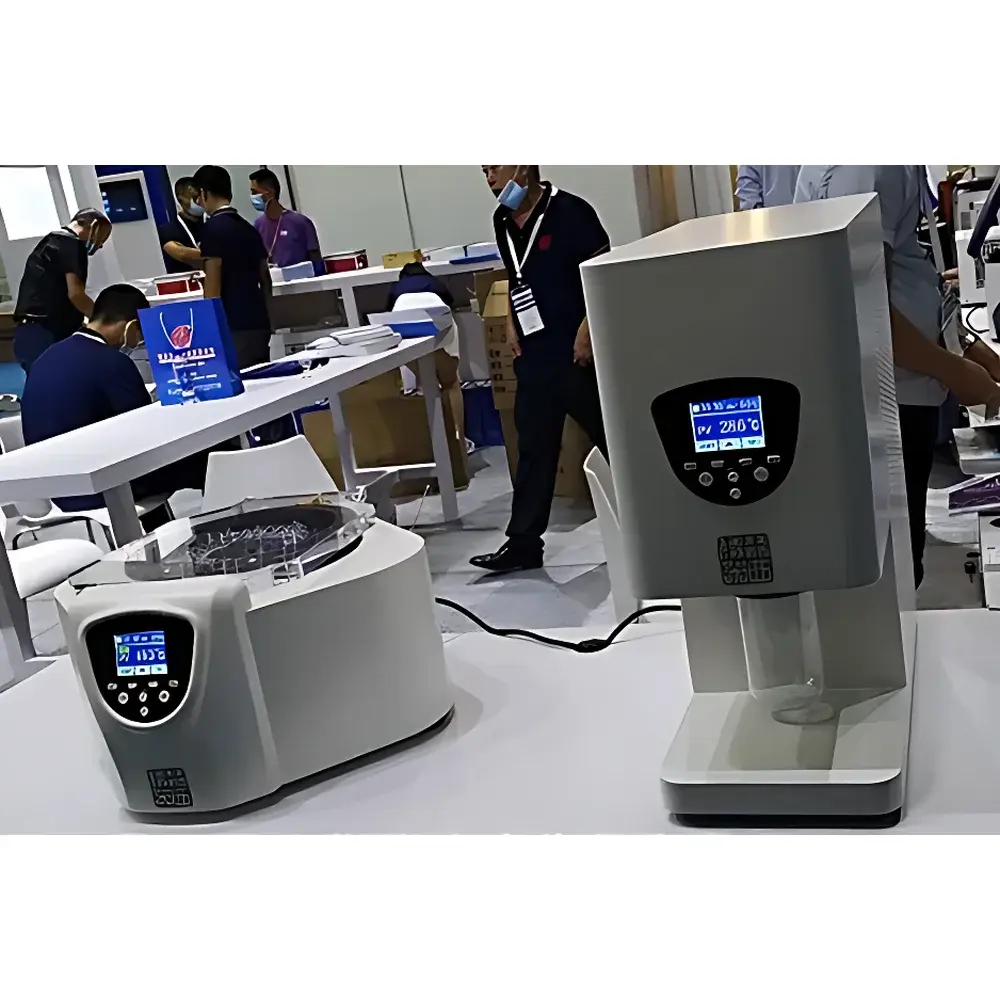
Hettich CT-40 Cryogenic Cold Trap
| Brand | Hettich |
|---|---|
| Model | CT-40 |
| Type | Cryogenic Cold Trap |
| Cooling Method | Compressor-based refrigeration with R404a |
| Temperature Range | –40 °C to ambient |
| Temp. Control Accuracy | ±1 °C |
| Condensing Surface Area | 760 cm² |
| Max. Capture Capacity | 284 mL ethanol / 6 h (at –35 °C to –40 °C) |
| Water Capture | 260 mL / 12 h (at –15 °C) |
| Power Consumption | 320 W |
| Dimensions (W×D×H) | 580 × 250 × 560 mm |
| Weight | 53 kg |
| Electrical Supply | AC 220 V, 50 Hz, 15 A |
| Safety Features | Compressor overload protection, high-pressure cut-off, timed compressor rest cycle, auto-defrost function, temperature self-regulation |
| Collection Vessel Options | 300 mL or 600 mL borosilicate glass (chemical-resistant, wide-mouth, sealed) |
Overview
The Hettich CT-40 Cryogenic Cold Trap is a precision-engineered vacuum accessory designed for high-efficiency vapor condensation in rotary evaporation, freeze-drying, and vacuum concentration systems. Operating on the principle of cryogenic condensation—where volatile vapors are thermodynamically driven to phase-change upon contact with a sub-zero surface—the CT-40 delivers stable, reproducible cold trapping performance across a controlled temperature range from ambient down to –40 °C. Unlike passive traps relying on dry ice or liquid nitrogen, this unit employs a hermetically sealed, oil-free compressor system using environmentally compliant R404a refrigerant, enabling continuous, maintenance-light operation without consumables. Its compact footprint (0.8 m³ volume) and optimized 760 cm² condensing surface area maximize heat transfer efficiency per unit volume, directly enhancing vacuum integrity by reducing backstreaming vapor load and increasing effective pumping speed. The device is not a standalone vacuum source but functions as a critical interface between vacuum pumps and sensitive downstream instrumentation—preventing solvent ingress into pump oils and protecting mass spectrometers, residual gas analyzers, or turbomolecular pumps from contamination and corrosion.
Key Features
- True-color 4.3″ TFT-LCD touchscreen display with dual-input control (touch + physical keys), simultaneously showing setpoint, real-time trap temperature, operational status, and safety alerts.
- Chemically inert, wide-mouth collection flask fabricated from high-purity borosilicate glass (not sodium-calcium); available in 300 mL and 600 mL configurations to match solvent volatility and process duration requirements.
- Imported hermetic compressor assembly with intelligent thermal management: pre-cooling mode initiates rapid cooldown to target temperature; standby cooling maintains setpoint during idle periods, minimizing thermal drift before process start.
- Fully enclosed refrigerant loop—no external venting or ambient air exchange—ensures operator safety and eliminates laboratory cross-contamination from solvent-laden exhaust streams.
- Integrated multi-layer safety architecture: compressor overcurrent protection, high-pressure switch cutoff, adaptive defrost cycling, and closed-loop temperature self-regulation prevent ice bridging and thermal runaway.
- Standardized 12 mm outer diameter conical port (DIN 29/32 compatible) ensures leak-tight connection to common rotary evaporators, vacuum manifolds, and lyophilizer condenser ports.
Sample Compatibility & Compliance
The CT-40 is validated for condensation of water, methanol, ethanol, acetone, ethyl acetate, dichloromethane, and other low-to-moderate boiling point solvents (BP < 150 °C at 1 atm). It is not rated for halogenated hydrocarbons with high global warming potential (e.g., chloroform, carbon tetrachloride) without prior compatibility assessment. All wetted surfaces comply with ISO 8573-1:2010 Class 4 purity standards for compressed air systems, and the glass collection vessel meets ASTM E438 Type I, Class A specifications for volumetric accuracy and thermal shock resistance. The unit’s electrical design conforms to IEC 61010-1:2010 for laboratory equipment safety, including reinforced insulation, grounding continuity verification, and transient overvoltage protection. While not certified for GMP manufacturing environments, its audit-ready temperature logging capability (via optional RS485/Modbus interface) supports GLP-compliant documentation in QC laboratories performing USP , , or ISO 17025–accredited evaporation validation protocols.
Software & Data Management
The CT-40 operates autonomously via embedded firmware with non-volatile parameter storage—retaining user-defined setpoints, safety thresholds, and calibration offsets after power loss. For integration into networked lab environments, an optional RS485 communication module enables bidirectional Modbus RTU protocol support, allowing remote temperature monitoring, setpoint adjustment, and alarm status polling via LIMS or SCADA platforms. Timestamped temperature logs (1-min resolution, 30-day buffer) can be exported in CSV format for traceability. The system supports FDA 21 CFR Part 11–compliant electronic record workflows when deployed with validated third-party data acquisition software that provides role-based access control, electronic signatures, and immutable audit trails—essential for regulated pharmaceutical or contract research applications.
Applications
- Vacuum-assisted sample concentration in analytical chemistry workflows (e.g., LC-MS sample prep, environmental extract cleanup).
- Protection of oil-sealed and dry scroll vacuum pumps during rotary evaporation of polar and protic solvents.
- Enhancing condensation efficiency in freeze-dryer secondary drying phases where residual solvent removal is critical.
- Preventing condensable vapor ingress into turbomolecular pumps used in high-vacuum deposition systems (e.g., PVD, CVD).
- Stabilizing base pressure in vacuum ovens and glovebox antechambers during solvent outgassing procedures.
- Enabling repeatable cold trapping of volatile organic compounds (VOCs) for subsequent thermal desorption analysis per EPA Method TO-17.
FAQ
What is the recommended operating temperature for optimal ethanol capture?
For maximum ethanol condensation efficiency (284 mL/6 h), maintain the cold trap at –35 °C to –40 °C and use the 600 mL collection flask to accommodate expansion and minimize splashing.
Can the CT-40 be used with aggressive solvents like chloroform or THF?
THF is compatible under standard conditions; chloroform requires verification of gasket material compatibility (standard EPDM seals are not recommended—fluoroelastomer upgrade advised) and strict adherence to local ventilation and explosion-proof requirements.
Is the unit suitable for continuous 24/7 operation?
Yes—the compressor duty cycle is engineered for uninterrupted service; however, routine inspection of condensate level and periodic defrost cycle verification (every 72 h under sustained load) are required to sustain long-term reliability.
Does the CT-40 include vacuum gauge connectivity?
No—vacuum measurement is external; the unit interfaces with standard vacuum lines via the 12 mm conical port and assumes upstream pressure monitoring is handled by the host system.
How does the CT-40 improve vacuum system longevity?
By condensing >95% of solvent vapors before they reach the pump inlet, it reduces oil degradation, minimizes vapor-phase corrosion of pump internals, and extends service intervals by up to 3× compared to non-trapped configurations.



