
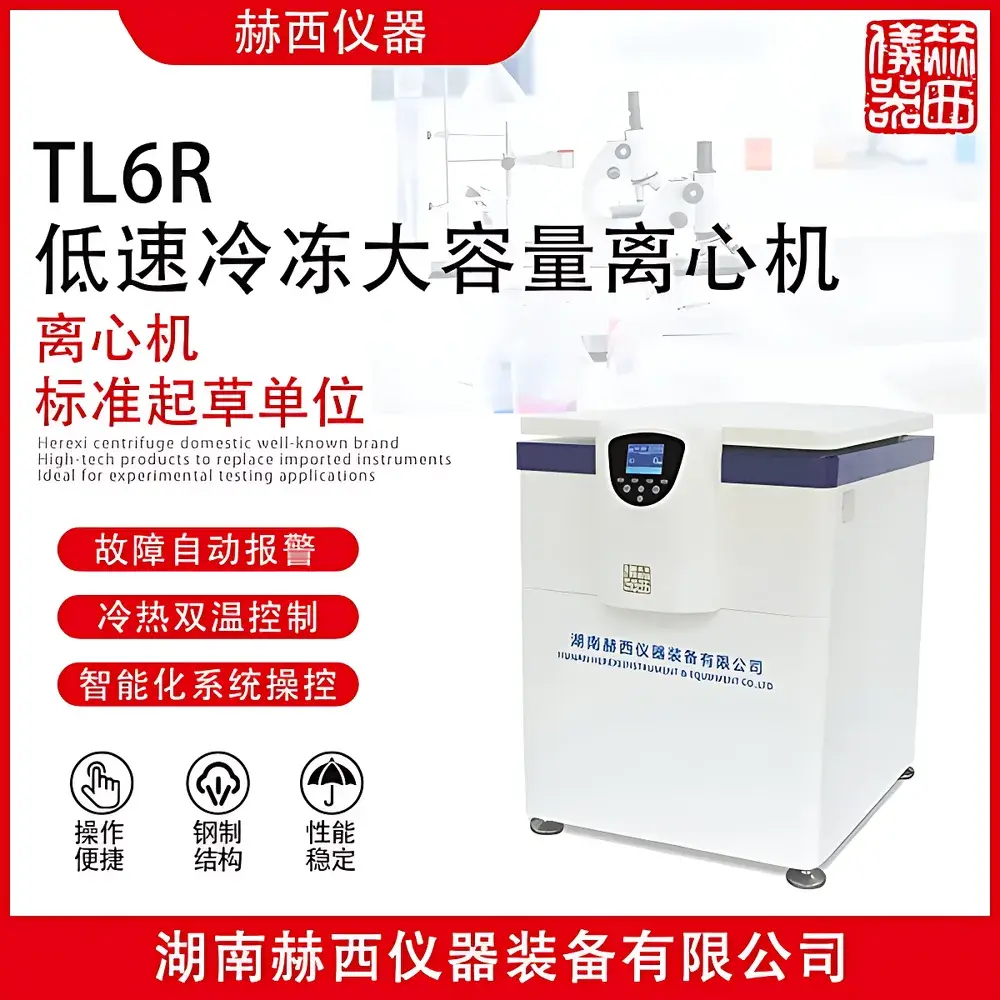
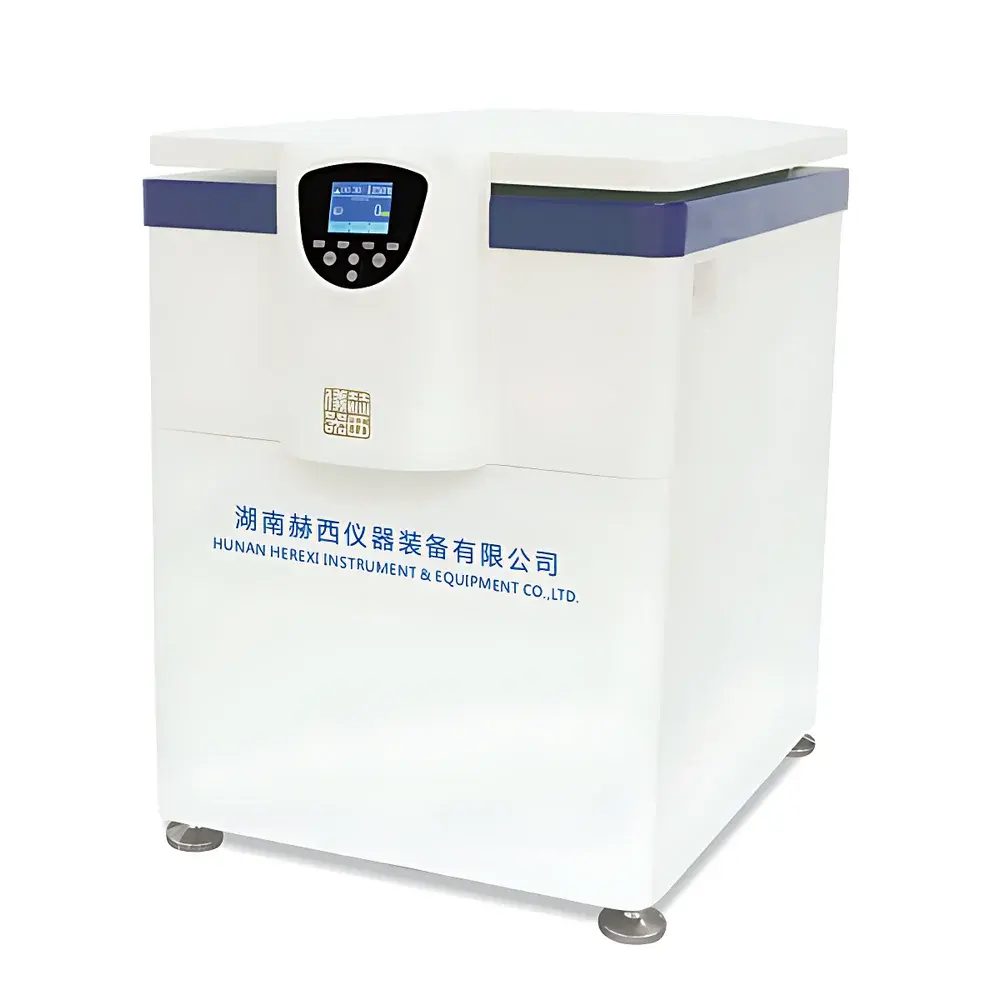
Hexion TL6R Low-Speed High-Capacity Refrigerated Centrifuge
| Brand | Hexion |
|---|---|
| Origin | Hunan, China |
| Model | TL6R |
| Type | Floor-Standing Refrigerated Centrifuge |
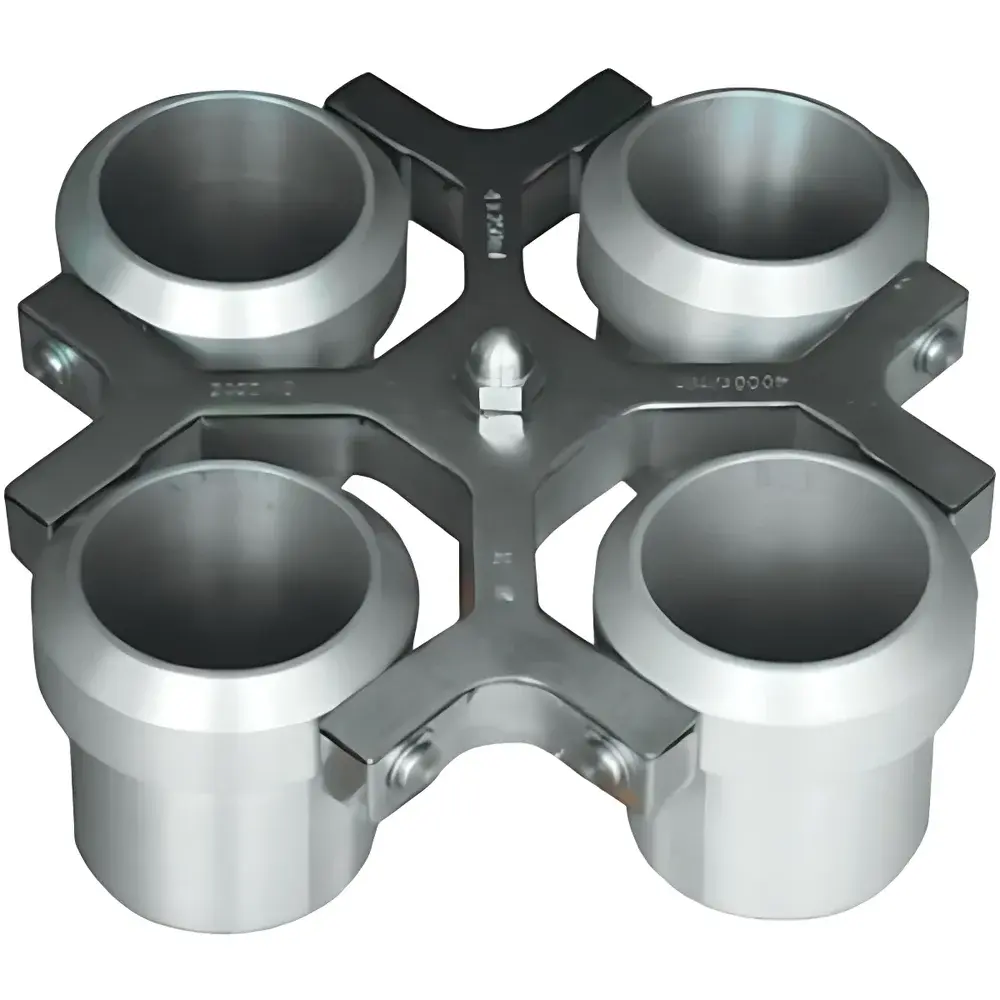
| Max. Capacity | 4 × 750 mL |
| Max. Speed | 6,500 rpm |
| Max. RCF | 4,800 × g |
| Temperature Range | −20 °C to +40 °C |
| Dimensions (W×D×H) | 710 × 560 × 770 mm |
| Drive System | AC Brushless Motor with Inverter Control |
| Display | TFT-LCD Touchscreen with Dual Keypad Interface |
| Safety Certifications | CFDA Registered, ISO 9001:2015 & ISO 13485:2016 Certified |
| Compliance | RoHS 2015/863 (Silicone Rubber Seals), CE Marking (IEC 61010-1, IEC 61010-2-020) |
Overview
The Hexion TL6R is a floor-standing, refrigerated low-speed centrifuge engineered for high-throughput sample processing in clinical, pharmaceutical, and life science laboratories. Designed around the principles of sedimentation equilibrium and differential centrifugation, the TL6R delivers stable, reproducible separation of biological suspensions—including whole blood, cell cultures, tissue homogenates, and large-volume buffer solutions—at rotational speeds up to 6,500 rpm and relative centrifugal forces (RCF) up to 4,800 × g. Its 4 × 750 mL horizontal rotor configuration supports batch processing of up to 3 L per run—making it suitable for blood bank operations, bioprocessing scale-up, and routine QC workflows where thermal stability and mechanical robustness are critical. The unit integrates a hermetically sealed refrigeration system using R404a refrigerant and an imported non-CFC compressor, enabling precise temperature control from −20 °C to +40 °C during active rotation—a capability essential for preserving labile analytes such as plasma proteins, exosomes, and primary immune cells.
Key Features
- AC brushless motor with variable-frequency drive and dual-stage damping: ensures smooth acceleration/deceleration profiles, low acoustic emission (<65 dB(A) at 1 m), and extended bearing service life.
- Intelligent thermal management system: includes pre-cooling mode, standby cooling maintenance, and automatic defrost cycling—enabling rapid equilibration and uninterrupted temperature integrity across multi-hour runs.
- TFT-LCD full-color touchscreen with bilingual (English/Chinese) GUI and physical shortcut keys: displays real-time RCF, speed, temperature, time, and rotor ID; allows parameter modification mid-run without rotor stoppage.
- Biocontainment-compliant horizontal rotor assembly: features integrated silicone rubber sealing rings compliant with EU RoHS Directive 2015/863, minimizing aerosol generation during high-volume pelleting.
- Triple-layer safety architecture: 304 stainless-steel centrifuge chamber, reinforced steel front panel, and three-point mechanical door interlock with silent electromagnetic latch—certified to IEC 61010-2-020 for Class II equipment.
- Programmable operation: stores up to 20 user-defined protocols with independent ramp/brake rate selection (10-step acceleration/deceleration grading) and automatic rotor recognition via embedded RFID tags.
Sample Compatibility & Compliance
The TL6R accommodates standard 50 mL, 100 mL, and 250 mL conical tubes, as well as custom-designed 750 mL bottles compatible with ISO 8573-1 purity class 4 air handling systems. It supports both aqueous and density-gradient media (e.g., Ficoll-Paque, Percoll) under controlled thermal conditions. All consumables—including rotor bodies, buckets, and adapters—are validated for autoclaving at 121 °C for 20 minutes. Regulatory documentation includes CFDA registration (Class II medical device), ISO 9001:2015 quality management system certification, and ISO 13485:2016 certification for in vitro diagnostic (IVD) manufacturing processes. The instrument meets GLP audit requirements for traceable parameter logging, electronic signature support (via optional software module), and secure data export in CSV/PDF formats.
Software & Data Management
While the TL6R operates autonomously via its onboard controller, optional PC-based HexionCentriLink v3.2 software enables remote monitoring, protocol synchronization across multiple units, and audit-trail generation compliant with FDA 21 CFR Part 11 Annex 11 requirements. Data logs include timestamped entries for speed, temperature, RCF, rotor ID, error codes, and door cycle events—with SHA-256 hash verification for integrity assurance. Exported datasets retain native SI units and metadata fields required for LIMS integration (e.g., ASTM E1578-22, ISO/IEC 17025:2017).
Applications
- Clinical diagnostics: plasma/serum separation from whole blood (400–600 mL batches per cycle), PBMC isolation, platelet-rich plasma (PRP) preparation.
- Biopharmaceutical QC: clarification of microbial fermentation broths, harvest of recombinant protein aggregates, and downstream buffer exchange validation.
- Agricultural & food testing: sedimentation of milk fat globules, pesticide residue extraction in fruit juice matrices, and mycotoxin pellet recovery from grain extracts.
- Academic research: preparative isolation of mitochondria, nuclei, and microvesicles from mammalian tissues; long-duration density gradient ultracentrifugation pre-equilibration.
FAQ
What is the maximum permissible imbalance tolerance for the TL6R’s 4×750 mL rotor?
The rotor is balanced to ISO 1940 G2.5 grade; maximum allowable mass asymmetry is ±5 g per bucket pair at full speed.
Can the TL6R maintain −20 °C during continuous operation at 6,500 rpm?
Yes—the refrigeration system is rated for sustained thermal load at maximum speed and full capacity, verified per ISO 13485 clause 7.5.10.
Is rotor calibration traceable to NIST or equivalent national standards?
Each rotor undergoes dynamic balancing on a certified gravimetric balancer (TÜV SÜD accredited); calibration certificates include serial-numbered traceability to DIN EN ISO/IEC 17025.
Does the instrument support 21 CFR Part 11-compliant electronic signatures?
Native firmware does not include e-signature; however, HexionCentriLink v3.2 provides role-based access control, biometric login integration, and digital signature capture when deployed on validated Windows OS environments.
What maintenance intervals are recommended for the refrigeration system?
Compressor oil and filter replacement every 36 months or 6,000 operational hours; annual validation of temperature uniformity per ISO/IEC 17025 clause 5.10.4.



