
PSI FluorCam Mobile Field-Deployable Chlorophyll Fluorescence Imaging System
| Brand | PSI (Czech Republic) |
|---|---|
| Origin | Czech Republic |
| Model | FluorCam Mobile |
| Imaging Area | 35 × 35 cm |
| Adjustable Height Range | 20–150 cm |
| CCD Sensor | 2/3″, 1392 × 1040 pixels (15 fps), pixel size 6.45 µm |
| Excitation Sources | Orange, white & NIR LEDs (72 × 72 cm panel, 3 × 64 LEDs) |
| Actinic Lights | Dual-color, 350 & 550 µmol photons·m⁻²·s⁻¹ |
| Saturation Pulse | Up to 3500 µmol photons·m⁻²·s⁻¹ |
| Fluorescence Parameters | >50 including F₀, Fₘ, Fᵥ/Fₘ, NPQ, QY, Rfd, qP, qN, ΦPSII, etc. |
| Data Acquisition | Time-stamped automated protocols, USB 2.0 (480 Mbit/s) |
| Power Supply | 380 V three-phase AC or optional DC generator unit |
| IP Rating | Optional waterproof housing for field use |
| Dimensions | 192 × 125 × 100 cm (H × W × D) |
Overview
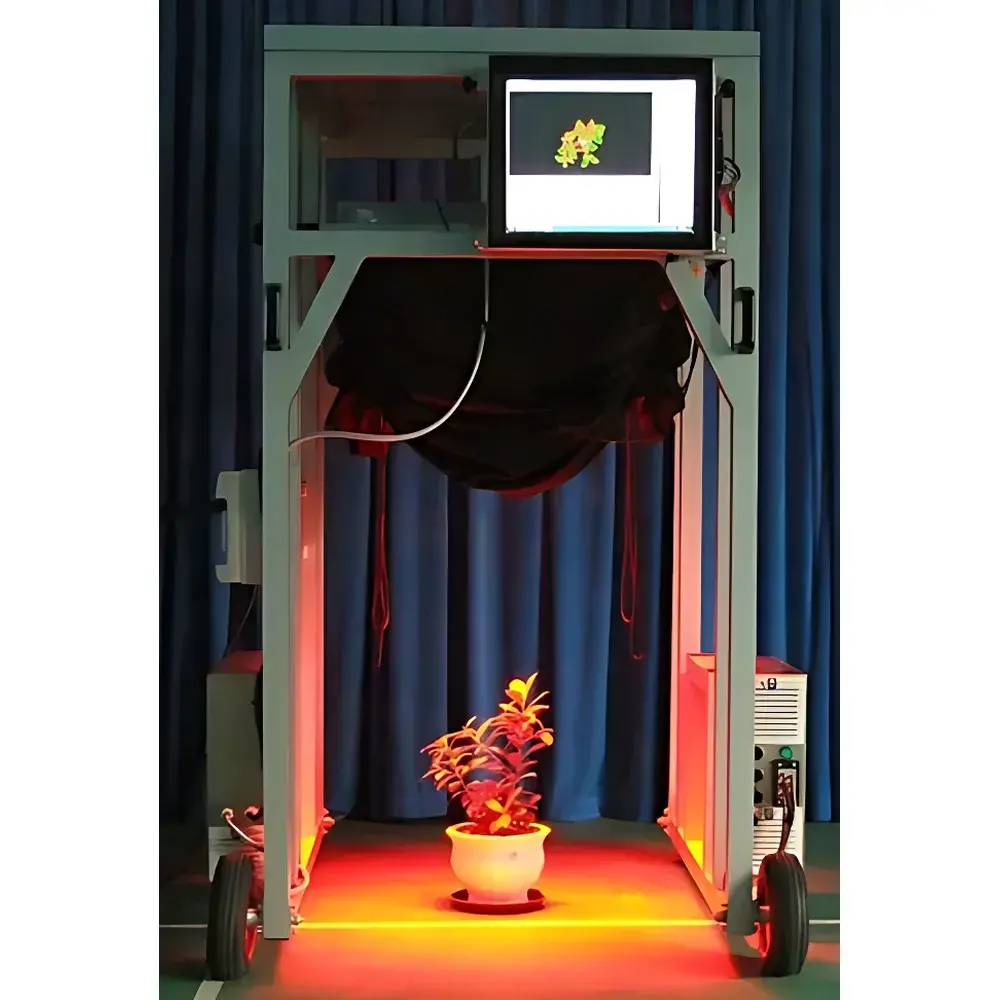
The PSI FluorCam Mobile Field-Deployable Chlorophyll Fluorescence Imaging System is an engineered solution for non-invasive, in situ chlorophyll fluorescence imaging of intact plants under natural or semi-controlled environmental conditions. Based on pulse-amplitude modulated (PAM) fluorometry principles, the system quantifies photochemical efficiency of Photosystem II (PSII) by measuring transient and steady-state fluorescence kinetics following controlled light exposures. Its large-format 35 × 35 cm imaging area enables simultaneous assessment of whole plants or multi-plant arrays—critical for high-throughput phenotyping, stress physiology, and ecological field trials where spatial heterogeneity and plant architecture must be preserved. Designed for operational flexibility, the system mounts on a four-wheel mobile frame with vertical height adjustment (20–150 cm), allowing precise optical alignment across diverse growth forms—from rosette herbs to tall cereals—without transplantation or leaf excision.
Key Features
- World’s largest single-frame chlorophyll fluorescence imaging area (35 × 35 cm), supporting whole-plant and multi-plant analysis without cropping or stitching artifacts.
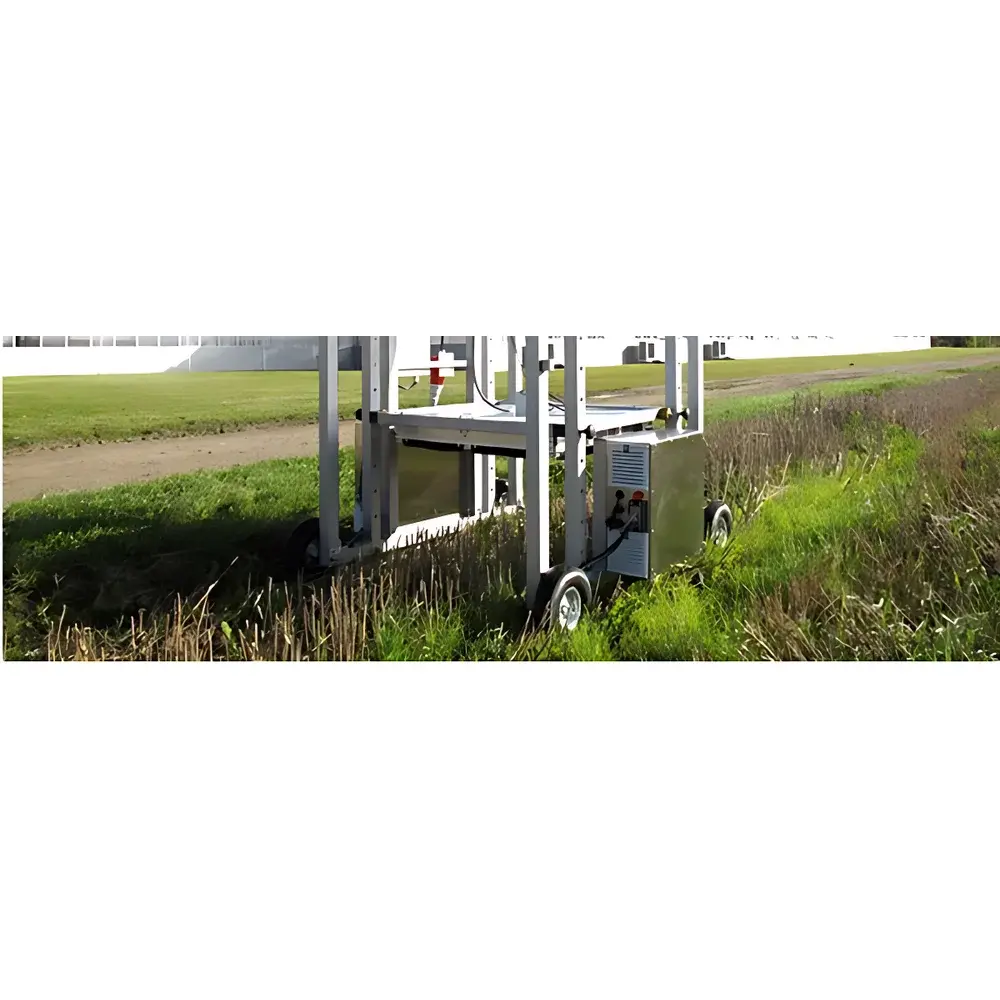
- Modular mobile platform with lockable casters and telescopic column for rapid deployment in greenhouses, growth chambers, and open-field environments.
- Dual-protocol automation: Two user-defined experimental sequences can be scheduled for unattended cyclic imaging, with time-stamped data files automatically saved to local storage.
- Integrated RGB imaging module (optional) enables concurrent morphometric analysis—including projected leaf area, canopy cover, and color-based stress indicators—for multimodal phenotyping.
- Triple-wavelength excitation (orange, white, near-infrared) combined with dual actinic light sources (350 & 550 µmol photons·m⁻²·s⁻¹) and programmable saturation pulses (up to 3500 µmol photons·m⁻²·s⁻¹) support standardized protocols per ASTM E2923 and ISO 10211.
- High-sensitivity 2/3″ CCD sensor (1392 × 1040 pixels, 6.45 µm pixel pitch) with configurable binning (2×2 to 4×4) and real-time USB 2.0 transfer (480 Mbit/s) ensures robust signal capture under variable ambient light conditions.
- Optional waterproof enclosure (IP65-rated) and DC power interface enable extended operation in rain, dew, or remote off-grid locations using portable generators.
Sample Compatibility & Compliance
The FluorCam Mobile accommodates living, upright plants ranging from Arabidopsis thaliana to mature maize or tomato canopies. Its adjustable height and wide field-of-view eliminate constraints imposed by pot size, growth stage, or architectural complexity. The system adheres to internationally recognized measurement standards: fluorescence parameters are calculated using algorithms aligned with the JIP-test formalism (Strasser et al., 2004) and comply with recommendations from the International Society of Photosynthesis Research (ISPR). Data acquisition workflows support GLP-compliant documentation via timestamped metadata embedding, audit-trail-enabled protocol versioning, and export-ready formats (TIFF, CSV, HDF5) compatible with LIMS integration. Optional firmware validation packages facilitate FDA 21 CFR Part 11 compliance for regulated breeding or agrochemical efficacy studies.
Software & Data Management
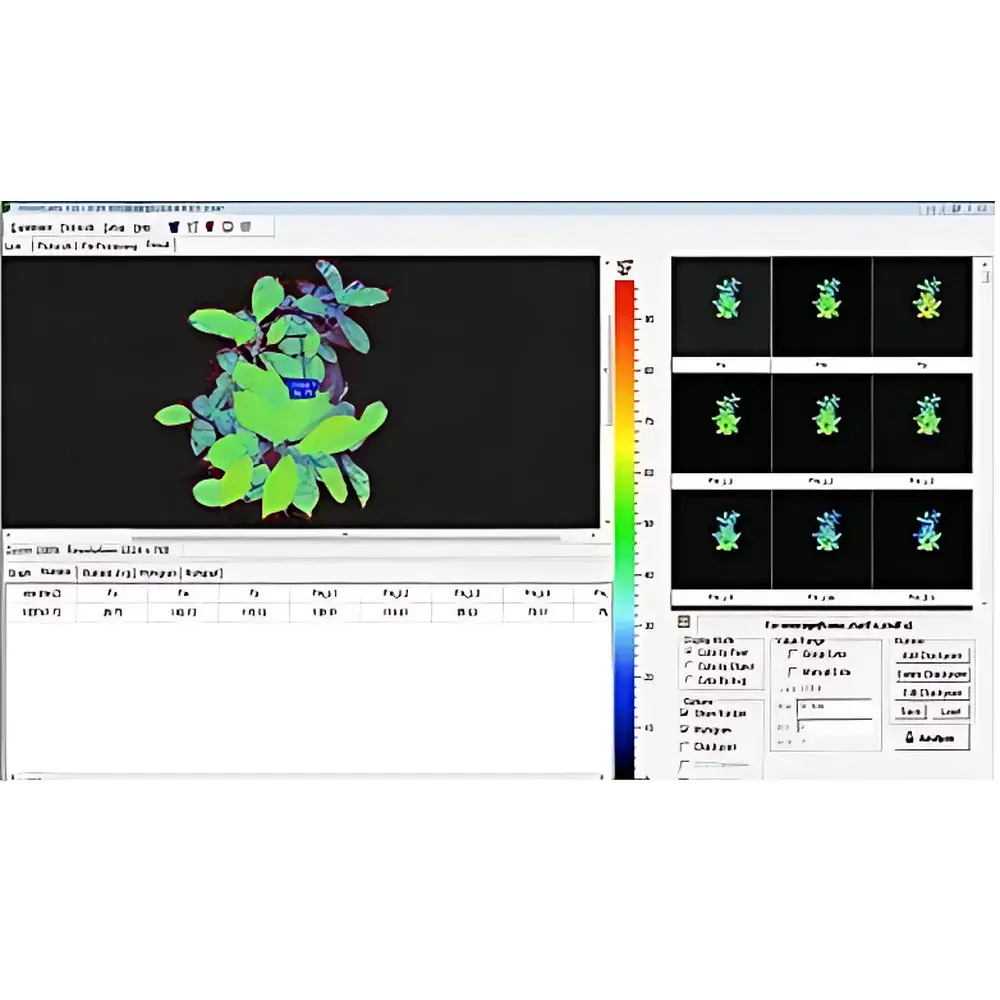
FluorCam Control & Analysis Software provides a unified interface for experiment design, real-time monitoring, ROI-based quantification, and statistical visualization. The software architecture includes four core modules: Live (for immediate preview and focus optimization), Protocol (for editing or importing standardized measurement routines—including Fv/Fm, Kautsky induction, light-response curves, and custom dynamic protocols), Pre-processing (supporting automatic or manual ROI definition across arbitrary shapes and quantities), and Result (delivering spatiotemporal fluorescence maps, kinetic traces, histograms, and tabular parameter exports). Advanced signal processing modes—“calculate-then-average” (optimal for high-SNR conditions) and “average-then-calculate” (optimized for low-light or noisy field acquisitions)—minimize systematic bias in derived quantum yield and quenching coefficients. Touchscreen operation (integrated 10.1″ display) allows glove-compatible navigation in outdoor settings.
Applications
- Field-based high-throughput phenotyping for drought, heat, salinity, heavy metal, or pathogen stress responses.
- Non-destructive longitudinal monitoring of photosynthetic performance during crop development or breeding trials.
- Eco-physiological studies of plant community dynamics, invasive species competitiveness, and climate change adaptation.
- Toxicity screening in phytoremediation and ecotoxicology, including herbicide mode-of-action analysis and allelopathic interaction mapping.
- Validation of remote sensing indices (e.g., PRI, NDVI) through ground-truth fluorescence parameter correlation.
- Functional genomics research linking chloroplast gene expression to real-time PSII behavior under controlled or natural irradiance regimes.
FAQ
What is the minimum and maximum plant height the system can accommodate?
The optical head height is adjustable from 20 cm to 150 cm above the sample plane, enabling imaging of seedlings up to mature shrubs.
Can the system operate overnight or during variable ambient light conditions?
Yes—integrated dark-adaptation screens and programmable shutter control allow full-night measurements; ambient light compensation algorithms are embedded in the acquisition firmware.
Is raw image data accessible for third-party analysis?
All acquired frames (16-bit TIFF) and processed parameter matrices (CSV/HDF5) are fully exportable without proprietary codec restrictions.
Does the software support batch processing of multiple experiments?
Yes—the Batch Processor module enables parallel analysis of time-series datasets across ROIs, treatments, and replicates with customizable statistical output templates.
What calibration procedures are required before field deployment?
Factory-calibrated LED intensities and sensor linearity are traceable to NIST standards; users perform only routine dark-current and uniformity checks using supplied reference targets.



