
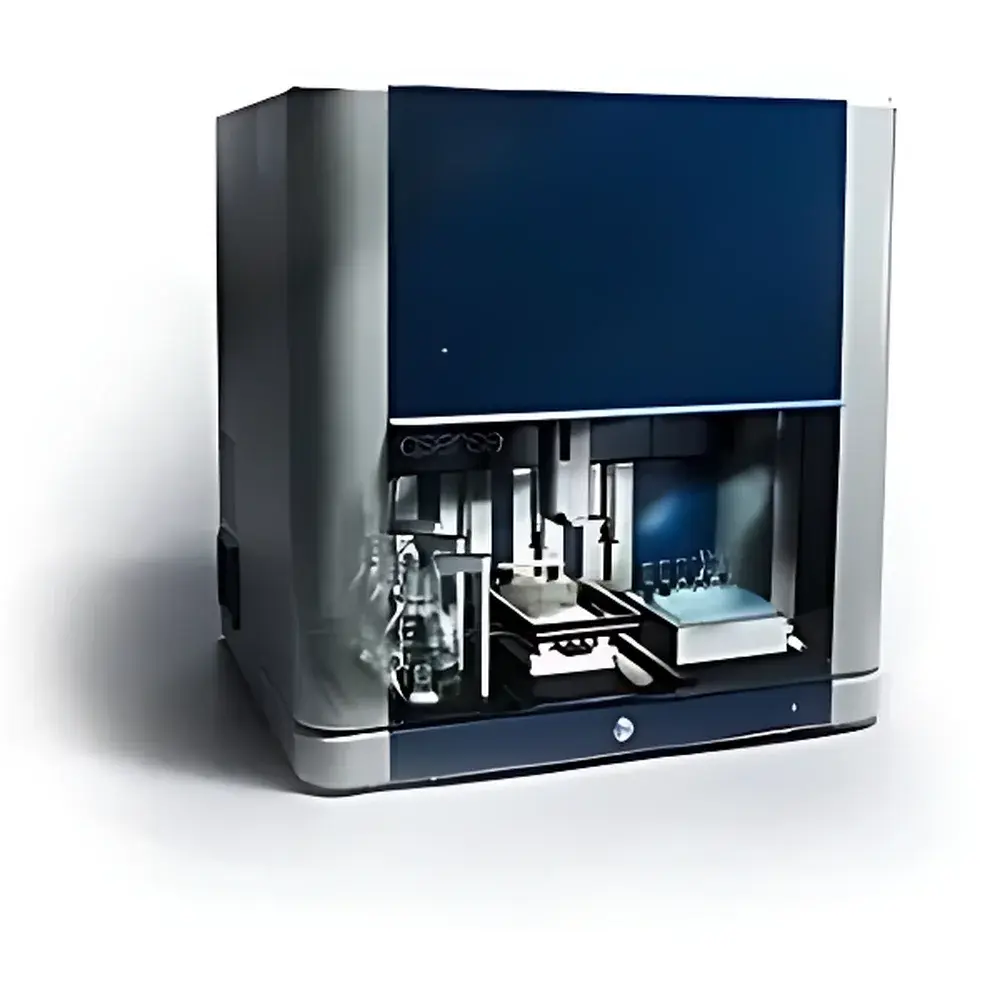
QSense Pro Automated 8-Channel Quartz Crystal Microbalance with Dissipation Monitoring (QCM-D)
| Brand | QSense |
|---|---|
| Origin | Finland |
| Model | Pro |
| Minimum Sample Volume | 40 µL |
| Temperature Range | 15–65 °C |
| Frequency Range | 1–70 MHz |
Overview
The QSense Pro Automated 8-Channel Quartz Crystal Microbalance with Dissipation Monitoring (QCM-D) is a high-precision, real-time surface interaction analysis platform engineered for quantitative, label-free characterization of interfacial molecular processes in liquid and gas phases. At its core, the instrument leverages the piezoelectric properties of AT-cut quartz crystals (typically 5 MHz, 14 mm diameter, gold-coated electrodes) to transduce nanoscale mass changes and viscoelastic structural alterations at solid–liquid or solid–gas interfaces. When an alternating voltage is applied across the crystal electrodes, shear-horizontal acoustic waves are excited at the fundamental resonance frequency and its overtones. Adsorption, desorption, swelling, conformational rearrangement, or crosslinking of molecular layers on the sensor surface induce measurable shifts in resonance frequency (Δf) and energy dissipation (ΔD), where Δf correlates with coupled mass (including hydrodynamically coupled solvent) and ΔD reflects the softness, hydration, and mechanical compliance of the adlayer. Unlike conventional QCM systems relying solely on the Sauerbrey equation—valid only for rigid, thin films—the QSense Pro acquires multi-harmonic f and D data (up to 13 overtones, spanning 1–70 MHz) and applies rigorous viscoelastic modeling (e.g., Voigt-based or Kelvin–Voigt layered models) to decouple hydrated mass, thickness, shear viscosity, and shear elasticity. This enables quantitative interpretation of dynamic structural evolution during protein adsorption, polyelectrolyte layer-by-layer assembly, cell adhesion, lipid bilayer formation, enzymatic degradation, and stimuli-responsive polymer swelling.
Key Features
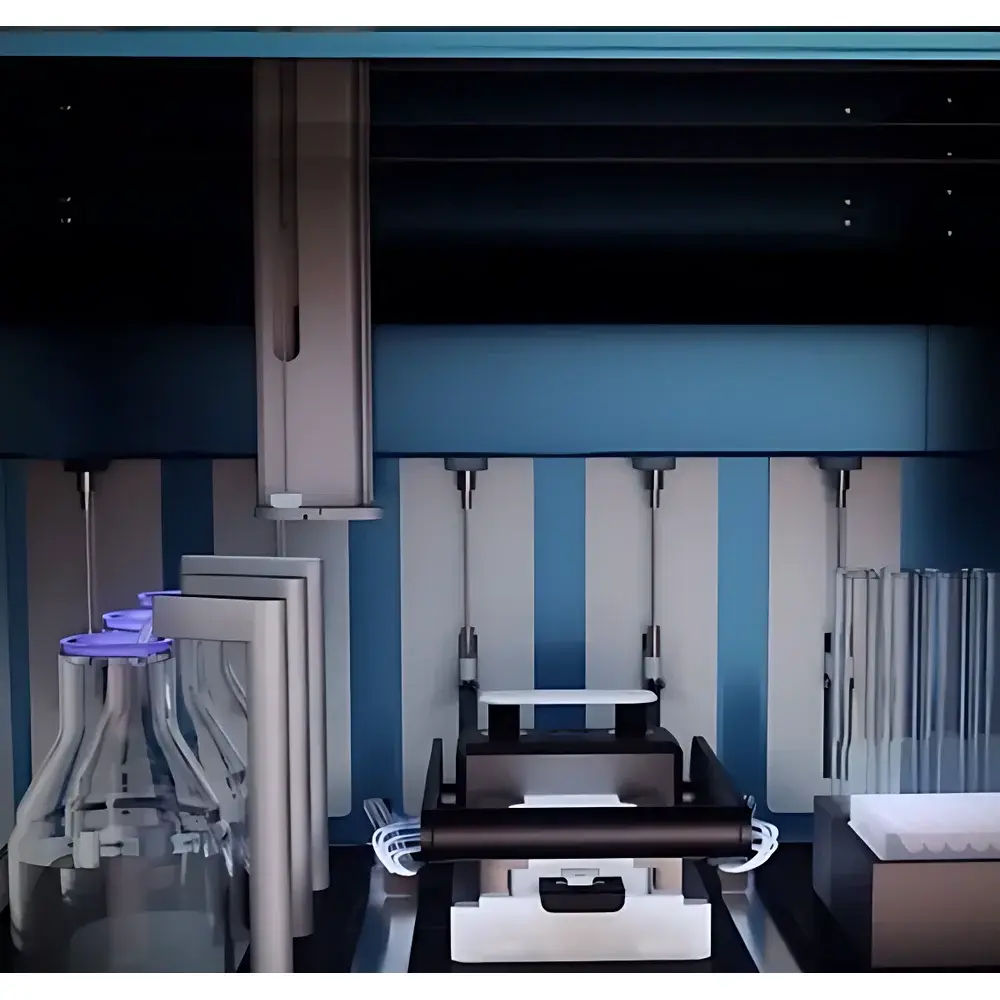
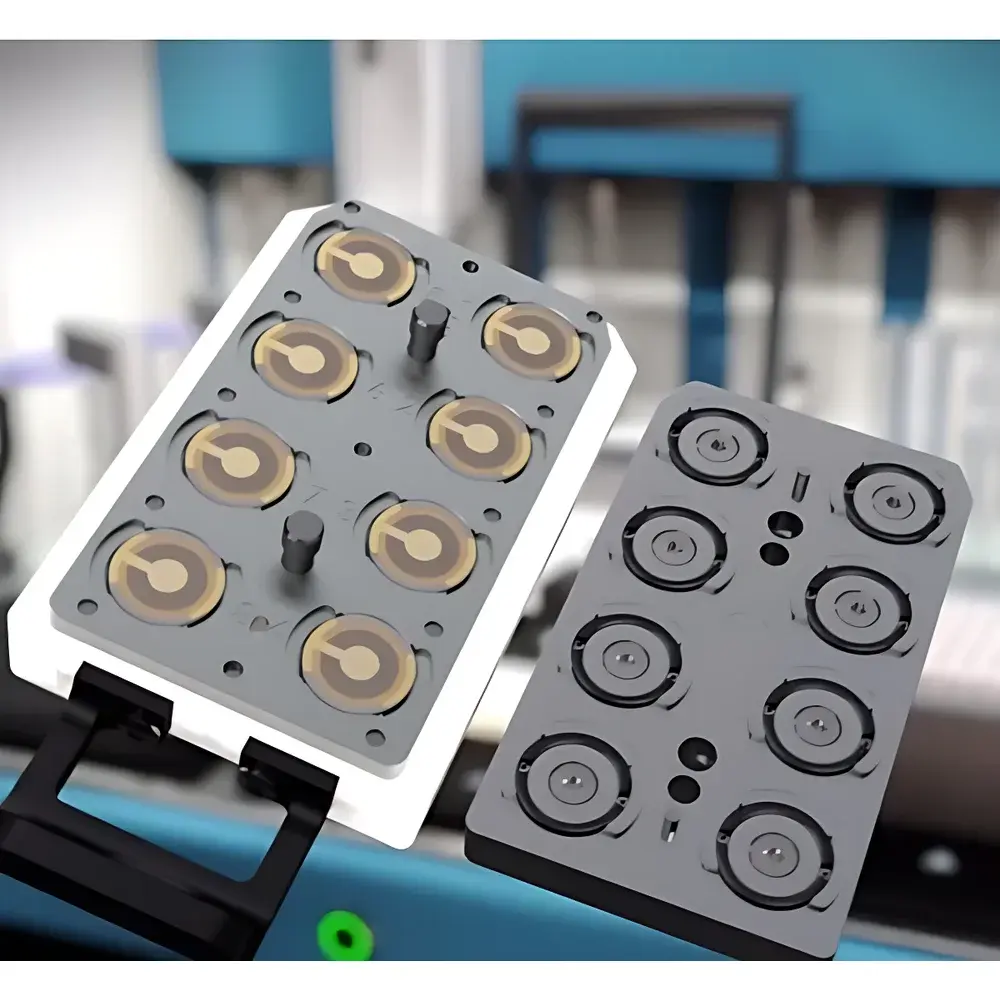
- Automated 8-sensor flow module architecture supporting up to four parallel, independent experiments with full hardware synchronization and software-controlled sequencing.
- Ultra-low sample consumption: minimum required volume of 40 µL per assay; precise fluid handling via individually programmable syringe pumps enabling sub-microliter dispensing (1 µL resolution) and automated concentration gradients.
- Integrated thermostatic control: software-regulated temperature range from 15 to 65 °C with ±0.02 °C stability; optional pre-conditioned sample racks for thermal equilibration prior to injection.
- High temporal resolution: up to 200 data points per second per frequency channel, ensuring capture of rapid kinetic transitions (e.g., initial binding events, burst-phase swelling).
- Modular compatibility: seamless integration with complementary techniques including electrochemical QCM-D cells, ellipsometry flow cells, and inverted microscopy stages for correlative multimodal surface analysis.
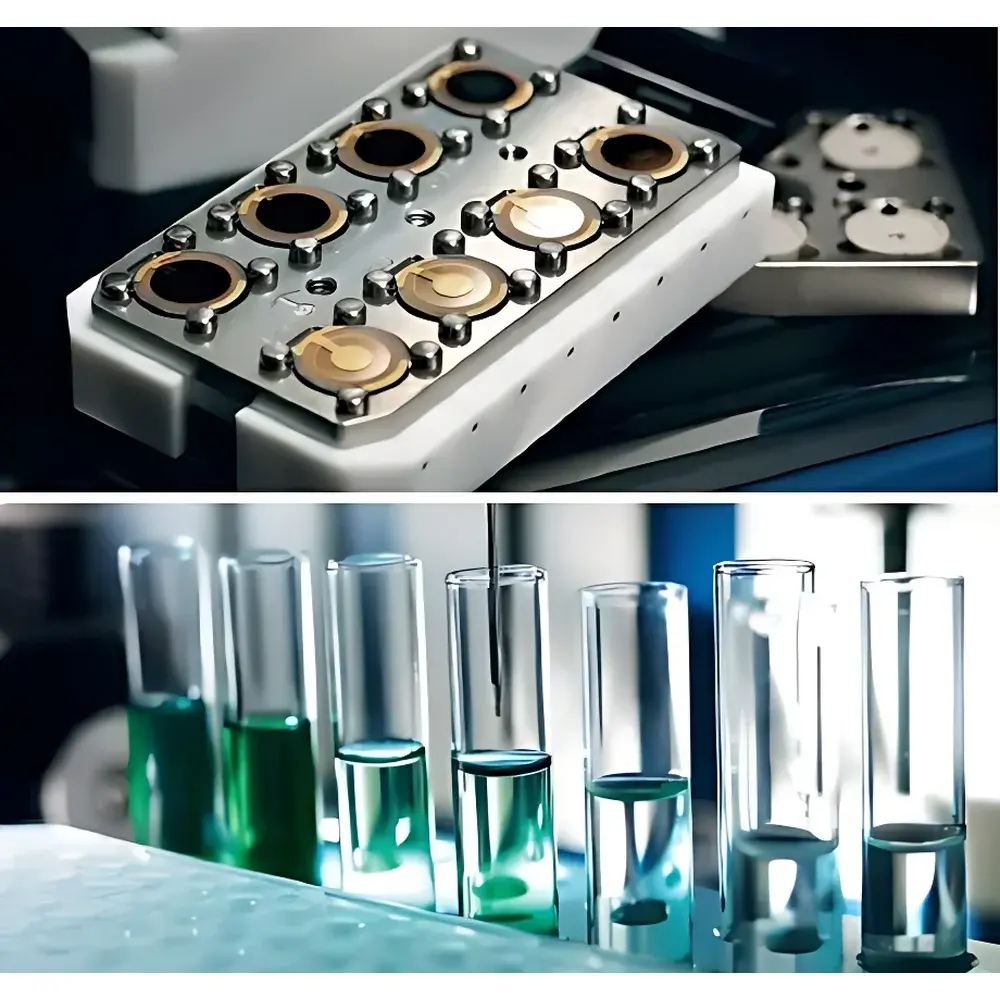
- Fully validated hardware design: all wetted components—including flow paths, sensor holders, and tubing—are autoclavable or ultrasonically cleanable; sensors feature standardized 14 mm diameter, 5 MHz AT-cut quartz with evaporated gold electrodes.
Sample Compatibility & Compliance
The QSense Pro accommodates diverse sample formats: 3×12 rack configurations for 13/16/18 mm tubes, 3×24 racks for 2 mL microtubes, or direct 96-well plate interfacing. It supports aqueous buffers, organic solvents (with compatible wetted materials), surfactant solutions, colloidal dispersions, cell suspensions, and viscous biopolymer formulations. The system meets requirements for GLP-compliant environments through audit-trail-enabled software (QSoft v5.x), electronic signature support, and configurable user access levels. While not inherently FDA 21 CFR Part 11-certified out-of-the-box, the platform’s data integrity framework—including immutable raw data storage (.qsd binary format), metadata tagging, and version-controlled analysis protocols—facilitates validation for regulated applications in pharmaceutical development (e.g., USP , ICH Q5E), biomaterials characterization (ISO 10993-1), and catalysis research (ASTM E2527).
Software & Data Management
QSoft software provides end-to-end workflow management—from experimental design and real-time monitoring to advanced model fitting and reporting. Predefined method templates accelerate routine assays (e.g., protein adsorption kinetics, LbL buildup), while custom scripting (via Python API) enables automated batch processing and integration into laboratory information management systems (LIMS). Raw f/D time-series data are stored in vendor-neutral HDF5 containers alongside comprehensive metadata (sensor ID, temperature log, flow rate profile, user annotations). Quantitative outputs include hydrated mass (ng/cm²), thickness (nm), shear viscosity (Pa·s), and shear modulus (kPa), exportable to Excel, CSV, or image formats (BMP, PNG, TIFF). All curve-fitting procedures employ non-linear least-squares optimization with uncertainty estimation, and model selection criteria (AIC/BIC) guide appropriate viscoelastic model assignment.
Applications
- Real-time quantification of protein–surface interactions, including orientation-dependent adsorption, denaturation, and competitive binding under physiological flow conditions.
- Structural characterization of supported lipid bilayers (SLBs), tethered vesicle fusion, and membrane protein reconstitution dynamics.
- Kinetic and mechanistic analysis of enzyme-catalyzed hydrolysis or cleavage events directly on functionalized sensor surfaces.
- Development and optimization of antifouling coatings, drug-eluting stent surfaces, and biosensor recognition layers.
- Swelling kinetics and solvent penetration depth mapping in hydrogels, stimuli-responsive polymers, and corrosion-inhibiting thin films.
- In situ monitoring of electrochemical deposition/dissolution processes using integrated QCM-D/electrochemistry modules.
- Cell adhesion, spreading, and detachment studies—including mechanotransduction responses to substrate stiffness or ligand density gradients.
FAQ
What is the difference between QCM and QCM-D?
QCM measures only frequency shift (Δf), assuming rigid film behavior via the Sauerbrey relation. QCM-D adds simultaneous dissipation (ΔD) monitoring, enabling detection of energy loss due to viscoelasticity—critical for soft, hydrated, or porous layers.
Can QSense Pro operate in air or only in liquid?
The system supports both liquid-phase and gas-phase operation; however, most applications leverage liquid environments to study biointerfacial phenomena under physiologically relevant conditions.
Is it possible to perform electrochemical measurements simultaneously with QCM-D?
Yes—using the optional QSense EC module, users can integrate potentiostatic/galvanostatic control with QCM-D acquisition for real-time correlation of charge transfer and mass/viscoelastic changes.
How is data reproducibility ensured across multiple sensors or days?
Hardware calibration routines (frequency baseline verification, D-factor zeroing), temperature-stabilized flow cells, and standardized sensor cleaning protocols (piranha, UV-ozone, plasma) ensure inter-sensor and inter-day consistency within ±0.5 ng/cm² mass deviation.
Does the software support third-party data import/export for machine learning workflows?
Yes—raw time-series data export in HDF5 and CSV formats, combined with Python SDK access, enables integration with scikit-learn, TensorFlow, or MATLAB for predictive modeling of adsorption isotherms or structural transitions.





