

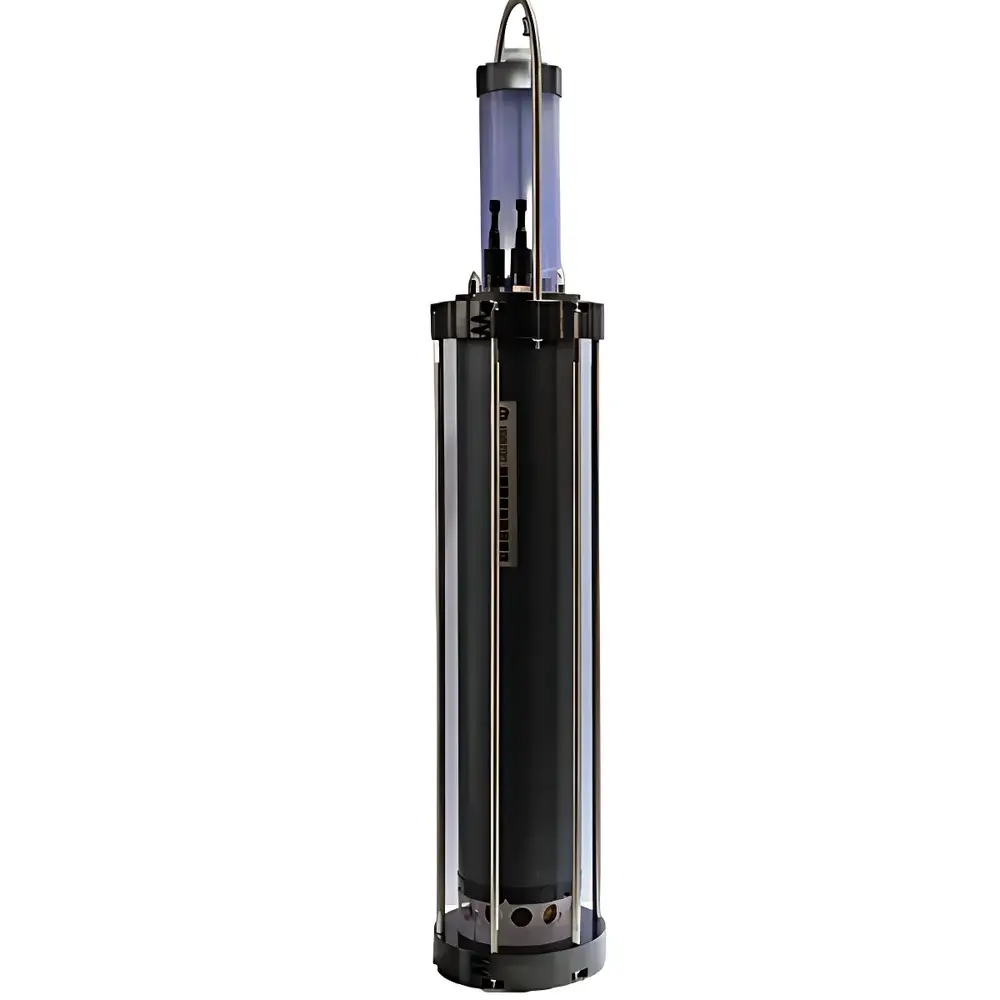
Zming Environmental HQ-8000 Series In Situ Nutrient Auto-Analyzer (Seawater Version)
| Brand | Zming Environmental Technology Co., Ltd. |
|---|---|
| Origin | Shanghai, China |
| Manufacturer Type | Authorized Distributor |
| Regional Classification | Domestic (China) |
| Model | HQ-8000 |
| Pricing | Upon Request |
Overview
The Zming Environmental HQ-8000 Series In Situ Nutrient Auto-Analyzer (Seawater Version) is an integrated, submersible wet-chemistry analyzer engineered for real-time, on-site quantification of major dissolved nutrient species in marine and estuarine environments. Operating on segmented flow analysis (SFA) principles with spectrophotometric detection, the system performs automated colorimetric assays—including persulfate UV digestion for total nitrogen (TN) and total phosphorus (TP), as well as selective enzymatic or diazotization-based reactions for ammonium (NH₄⁺), nitrate (NO₃⁻), nitrite (NO₂⁻), orthophosphate (PO₄³⁻), and silicate (SiO₄⁴⁻). Designed specifically for high-salinity matrices, the analyzer incorporates corrosion-resistant titanium and PEEK fluidic pathways, seawater-compatible reagent formulations, and salinity-compensated calibration algorithms to ensure measurement integrity across 0–40 PSU. Its fully submersible architecture enables deployment at depths up to 100 m, supporting long-term unattended operation aboard buoys, moorings, autonomous surface vehicles (ASVs), and offshore platforms.
Key Features
- Submersible design rated to 100 m depth, with pressure-compensated optical cells and IP68-rated electronics housing
- Integrated turbidity sensor (ISO 7027-compliant nephelometry) with adaptive measurement mode—automatically switches between low-scatter (clear seawater) and high-scatter (turbid coastal/estuarine) protocols
- Onboard environmental monitoring: simultaneous real-time logging of water temperature (±0.1 °C), ambient humidity, and internal cabinet temperature
- Leak-detection system utilizing capacitive fluid sensors at critical junctions (pump manifolds, digestion chamber, waste line), triggering immediate valve isolation and alarm notification
- Fast-cycle thermal digestion module: achieves complete oxidation of refractory organic N/P compounds in ≤8 min at 120 °C under pressurized conditions
- Low detection capability: sub-ppb (ng/L) quantification limits for phosphate and nitrate in filtered seawater matrices, validated per ISO 15681-2 and ASTM D5179
- Compact modular chassis (W × D × H: 420 × 310 × 580 mm) housed in a ruggedized, waterproof roll-along case compliant with IATA Section II transport standards
- Detachable handheld touchscreen interface (7″ LCD, Android-based OS) enabling field configuration, diagnostic access, and manual sample initiation without PC connectivity
Sample Compatibility & Compliance
The HQ-8000 Seawater Version accepts raw, unfiltered seawater samples (0.2–50 NTU turbidity range) and supports optional in-line 0.45 µm filtration for ultra-trace nutrient work. It meets ISO/IEC 17025 method validation requirements for in situ nutrient analysis when operated within defined matrix acceptance criteria (salinity 25–40 PSU; temperature 2–30 °C; DOC < 5 mg/L). All onboard reagents are formulated to minimize chloride interference and comply with MARPOL Annex IV discharge guidelines. The system supports audit-ready data capture aligned with GLP and GMP principles, including electronic signatures, full change logs, and time-stamped calibration history—all exportable in CSV and NetCDF formats.
Software & Data Management
Firmware v3.2+ includes embedded data acquisition logic compliant with IEEE 1451.2 smart transducer interface standards. Raw absorbance values, reaction kinetics curves, and QC flag metadata are stored locally on industrial-grade microSD (up to 128 GB) with automatic rollover. Remote telemetry is supported via RS-485 (Modbus RTU), Ethernet (TCP/IP), or optional 4G LTE-M with TLS 1.2 encryption. The Zming Analytical Suite (Windows/macOS) provides method editor, multi-parameter trend visualization, drift correction tools, and automated report generation per US EPA Method 365.4 and ISO 15681-1 templates. All software modules conform to FDA 21 CFR Part 11 requirements for electronic records and signatures.
Applications
- Long-term nutrient flux monitoring in continental shelf and coastal upwelling zones
- Real-time eutrophication assessment on oceanographic buoys and glider-integrated payloads
- Validation of satellite-derived chlorophyll-a and primary productivity models
- Regulatory compliance monitoring for mariculture effluent discharge (IMO MSC.1/Circ.1512)
- Time-series studies of DIN:DIP ratios in hypoxic zone formation dynamics
- Calibration and ground-truthing of autonomous nutrient sensors (e.g., UV-Vis nitrate analyzers, electrochemical ammonium probes)
FAQ
What sample volume is required per analysis cycle?
Typical reagent/sample consumption is 8–12 mL per full nutrient panel (TN, TP, NH₄⁺, NO₃⁻, NO₂⁻, PO₄³⁻, SiO₄⁴⁻), optimized for minimal seawater draw.
Can the system operate continuously for >30 days without maintenance?
Yes—when deployed with 20-L reagent reservoirs and scheduled cleaning cycles (every 72 h), field endurance exceeds 45 days at 1-hr sampling intervals.
Is remote firmware update supported over cellular networks?
Yes, secure OTA updates are enabled via signed binary packages authenticated using ECDSA-256 keys.
Does the analyzer meet IMO or IHO certification requirements for marine instrumentation?
While not formally IHO-certified, the mechanical and electrical design complies with IEC 60945 (Marine Navigation and Radiocommunication Equipment) and MIL-STD-810G for shock/vibration resistance.
How is spectral interferences from colored dissolved organic matter (CDOM) mitigated?
Dual-wavelength correction (e.g., 700 nm reference for 880 nm PO₄³⁻ assay) and baseline drift compensation via pre-reaction blank measurement are applied algorithmically per ISO 15681-2 Annex B.
Related Products







