
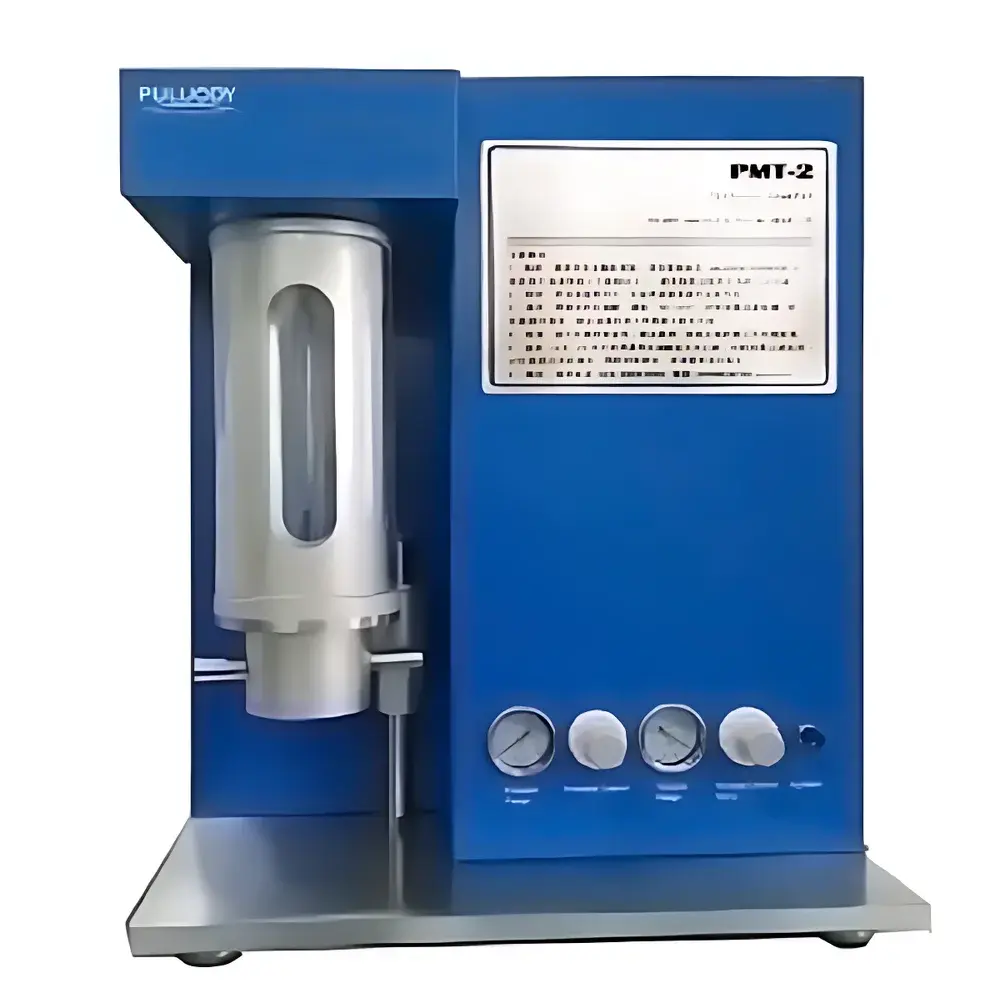
PULUODY PMT-2-4 Optical Particle Counter for Acidic and Alkaline Chemicals
| Brand | PULUODY |
|---|---|
| Model | PMT-2-4 |
| Instrument Type | Optical Particle Counter |
| Detection Principle | Dual-Laser Narrow-Beam Light Scattering |
| Detection Range | 0.1–100 µm (configurable sub-ranges: 0.1–1.0 µm, 0.2–2.0 µm, 0.5–5.0 µm, 0.5–20.0 µm, 4–70 µm(c)) |
| Accuracy | ±3% typical |
| Sampling Precision | <±1% |
| Coincidence Limit | 1000 particles/mL (2.5% coincidence error) |
| Flow Control | Precision Plunger Pump + Electromagnetic Flow Regulation |
| Calibration Standards | ISO 21501, JJG 1061, NIST-traceable Latex Spheres |
| Compliance | Chinese Pharmacopoeia 2015/2020, USP <788>, EP 2.9.19, BP, GB 8368 |
| Output Interface | 4–20 mA analog output,超标 alarm (customizable) |
| Data Acquisition | iPad-integrated wireless acquisition |
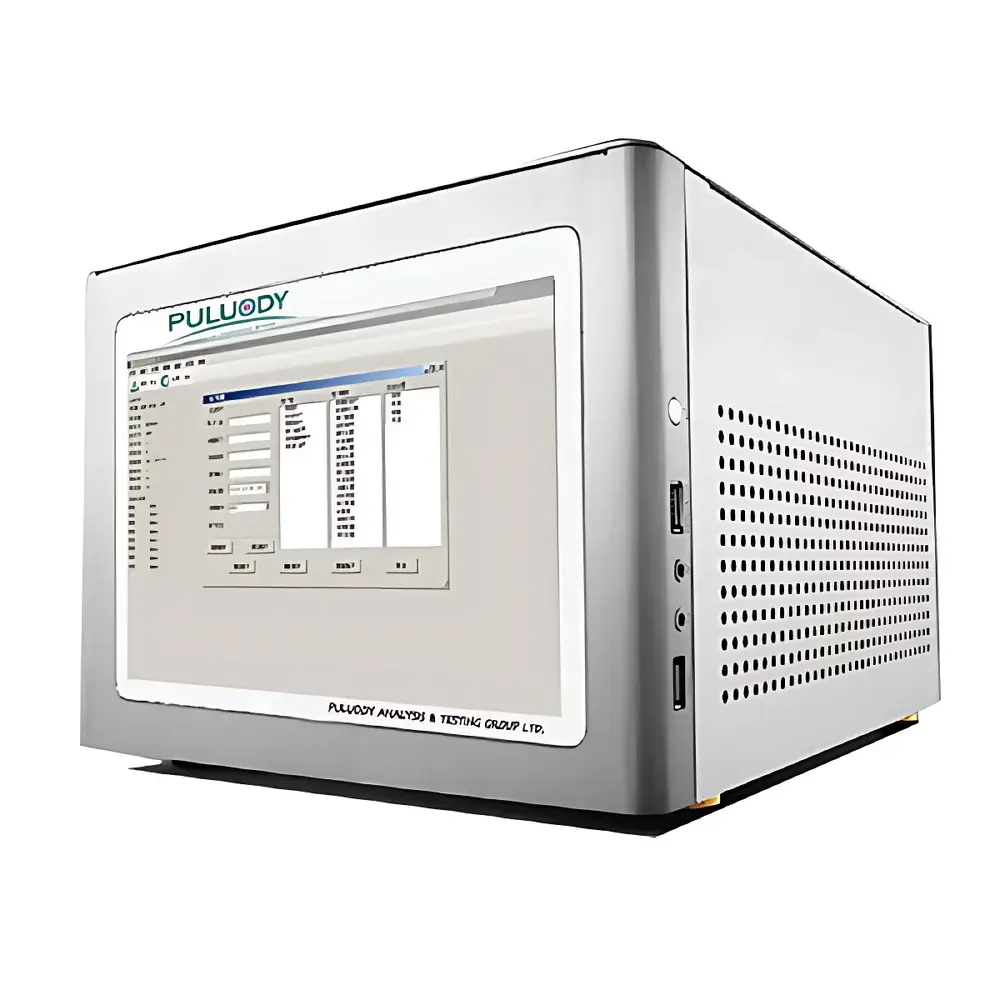
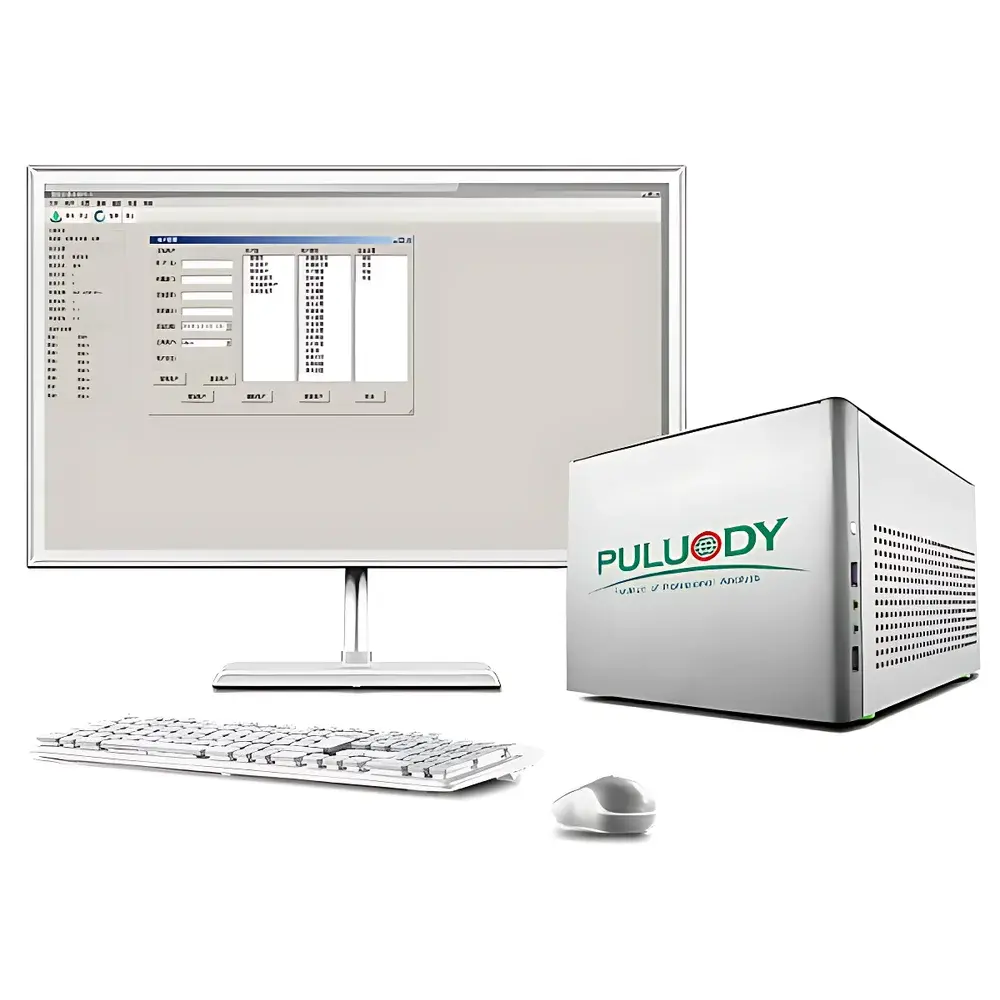
| Software | V8.3 Integrated Analysis & Calibration Software (PC + embedded touchscreen) |
| Display | Color LCD touchscreen + optional wireless keyboard/mouse |
| Power Input | 100–265 VAC, 50–60 Hz |
| Application Domain | High-purity acidic/alkaline process liquids, semiconductor CMP slurries, ultrapure water (UPW), electronic cleaning agents, photovoltaic etchants, TFT-LCD rinse solutions |
Overview
The PULUODY PMT-2-4 Optical Particle Counter is a high-sensitivity, dual-laser narrow-beam liquid particle analyzer engineered for rigorous contamination monitoring in aggressive chemical environments—including strong acids (e.g., HF, HNO₃, H₂SO₄), alkaline solutions (e.g., KOH, TMAH), and ultra-low-conductivity media such as semiconductor-grade ultrapure water (UPW) and photoresist developers. Unlike conventional single-wavelength optical counters, the PMT-2-4 employs eighth-generation dual-laser excitation (typically 405 nm and 638 nm) with collimated narrow-beam geometry to minimize Mie scattering distortion and enhance signal-to-noise ratio across sub-micron regimes. This architecture enables stable, reproducible detection of insoluble particulates from 0.1 µm to 100 µm—critical for process control in wafer fabrication, flat-panel display manufacturing, and pharmaceutical excipient synthesis where ionic interference or refractive index mismatch would compromise conventional sensors. The instrument operates on the principle of light extinction and forward-scatter coincidence analysis, validated per ISO 21501-4 for liquid-borne particle counting and calibrated traceably to NIST-certified latex standards.
Key Features
- Dual-laser narrow-beam optical sensor with independent wavelength channels for cross-validated sizing and improved refractive index insensitivity
- Ultra-stable fluidic path constructed from chemically inert materials (e.g., sapphire flow cell, PFA/ETFE wetted parts) rated for pH 0–14 and temperatures up to 60 °C
- Precision plunger pump coupled with electromagnetic flow regulation ensures volumetric accuracy <±1% and repeatability critical for regulatory reporting
- Configurable detection thresholds: standard ranges include 0.1–1.0 µm, 0.2–2.0 µm, 0.5–5.0 µm, and 0.5–20.0 µm; custom bins support 4–70 µm(c) or user-defined 1–100 µm intervals
- Embedded V8.3 software separates calibration routines from routine analysis workflows—eliminating software-induced drift during GMP/GLP audits
- Real-time analog output (4–20 mA) with programmable alarm thresholds for integration into DCS/SCADA systems in cleanroom fabs or chemical dispensing cabinets
- Touchscreen interface with optional wireless keyboard/mouse support enables glove-compatible operation in Class 100 cleanrooms
Sample Compatibility & Compliance
The PMT-2-4 is validated for direct analysis of non-aqueous and highly corrosive matrices without dilution or filtration—enabling true “as-used” particle assessment in acid etchants (e.g., 49% HF for silicon micromachining), alkaline developers (e.g., 2.38% TMAH for photoresist stripping), and high-purity solvents (e.g., PGMEA, EL). Its flow cell design prevents surface adsorption and electrostatic retention common in silica-based sensors. Regulatory alignment includes full compliance with Chinese Pharmacopoeia ChP 2015/2020 General Chapter 0903, USP and , European Pharmacopoeia 2.9.19, British Pharmacopoeia Appendix XVII, and GB 8368–2018 for medical device rinsates. Calibration traceability follows JJG 1061–2010 (China National Metrology Verification Regulation) and ISO 21501-4:2018, with documented uncertainty budgets available per ISO/IEC 17025 requirements.
Software & Data Management
The V8.3 software suite provides dual-mode operation: embedded firmware for standalone measurement and PC-hosted application for advanced statistical reporting. All raw scatter pulse data are retained with timestamp, temperature, pressure, and flow-rate metadata—enabling full audit trail reconstruction per FDA 21 CFR Part 11 Annex 11 requirements. The system supports ALCOA+ principles (Attributable, Legible, Contemporaneous, Original, Accurate) via electronic signatures, role-based access control, and immutable data archiving. Reports export directly to PDF, CSV, or XML formats compliant with LIMS integration protocols. iPad-based wireless acquisition allows remote sampling coordination across multiple toolsets in a fab environment without USB tethering or network exposure.
Applications
- Semiconductor front-end: real-time monitoring of CMP slurry purity, photomask rinse water, and lithography track effluents
- Flat-panel display: quantification of abrasive agglomerates in ITO etchants and residual particles in color filter array rinses
- Pharmaceutical manufacturing: insoluble particle testing of parenteral drug intermediates dissolved in acidic/alkaline media per USP
- Battery materials: contamination screening of LiPF₆ electrolyte solutions and cathode precursor slurries
- Nanofiltration validation: challenge testing of membrane integrity using polydisperse latex spikes in caustic cleaning solutions
- Research laboratories: fundamental studies of nucleation kinetics and colloidal stability in extreme pH environments
FAQ
Can the PMT-2-4 measure particles in hydrofluoric acid (HF) solutions without sensor degradation?
Yes—the flow cell uses sapphire optics and PFA/ETFE wetted components certified for continuous exposure to ≤49% HF at ambient temperature. Optional cooling jackets extend operational range to 60 °C.
Does it support 21 CFR Part 11-compliant electronic records?
Yes—V8.3 implements full Part 11 functionality including audit trails, electronic signatures, and data integrity controls verified by third-party validation packages.
How is calibration verified when analyzing low-refractive-index particles in organic solvents?
Dual-wavelength scatter ratio analysis compensates for RI-dependent signal attenuation; calibration is performed using ISO 21501-4–compliant polystyrene latex standards suspended in matched refractive index carriers.
Is offline portable operation supported for field verification?
Yes—battery-powered iPad acquisition mode enables mobile deployment; the instrument retains full metrological performance without external power or network connectivity.
What maintenance intervals are recommended for high-throughput acidic process monitoring?
Flow cell inspection every 200 hours; laser alignment verification quarterly; full sensor recalibration annually or after 10,000 sample cycles—documented per ISO/IEC 17025 internal procedure templates.



